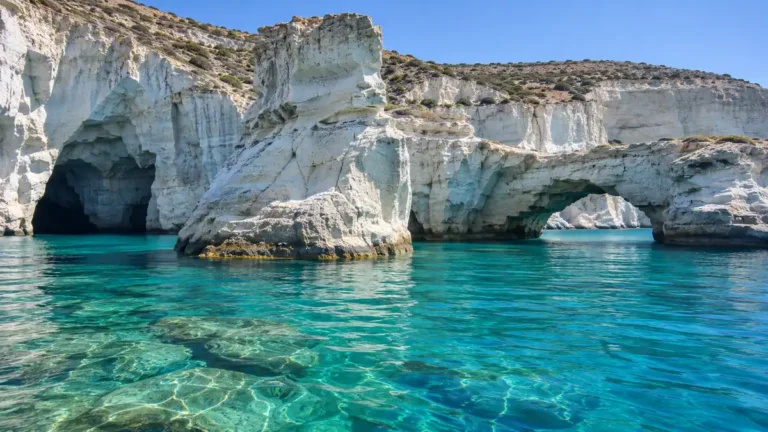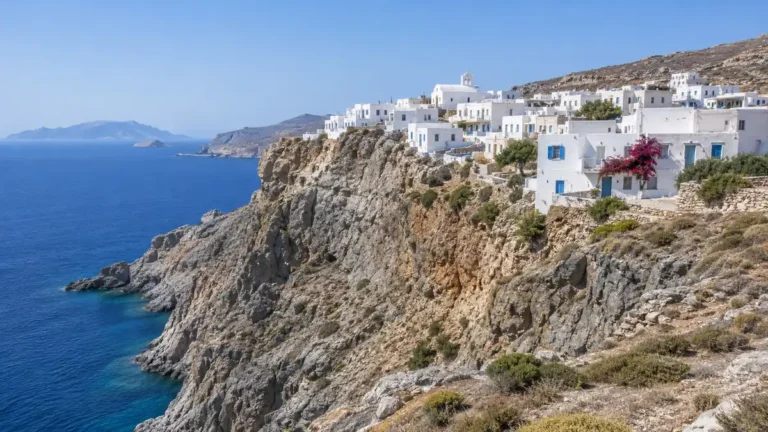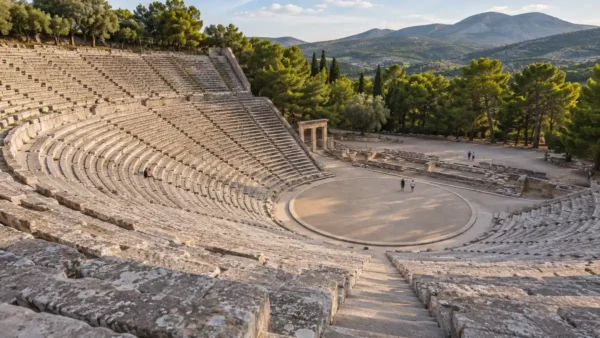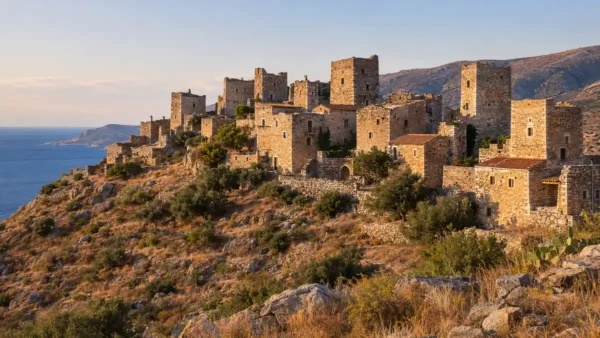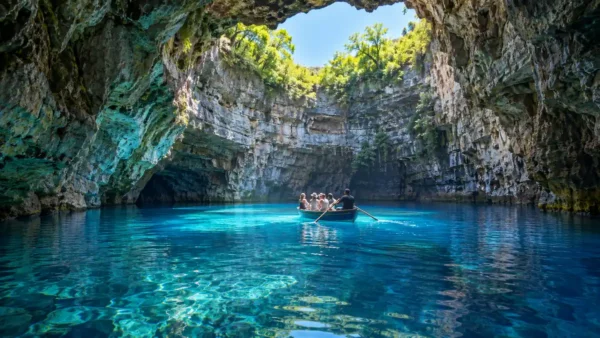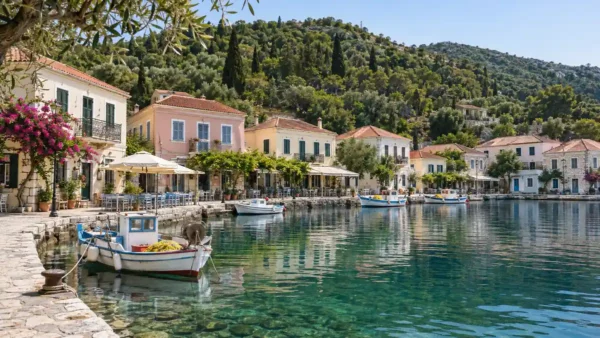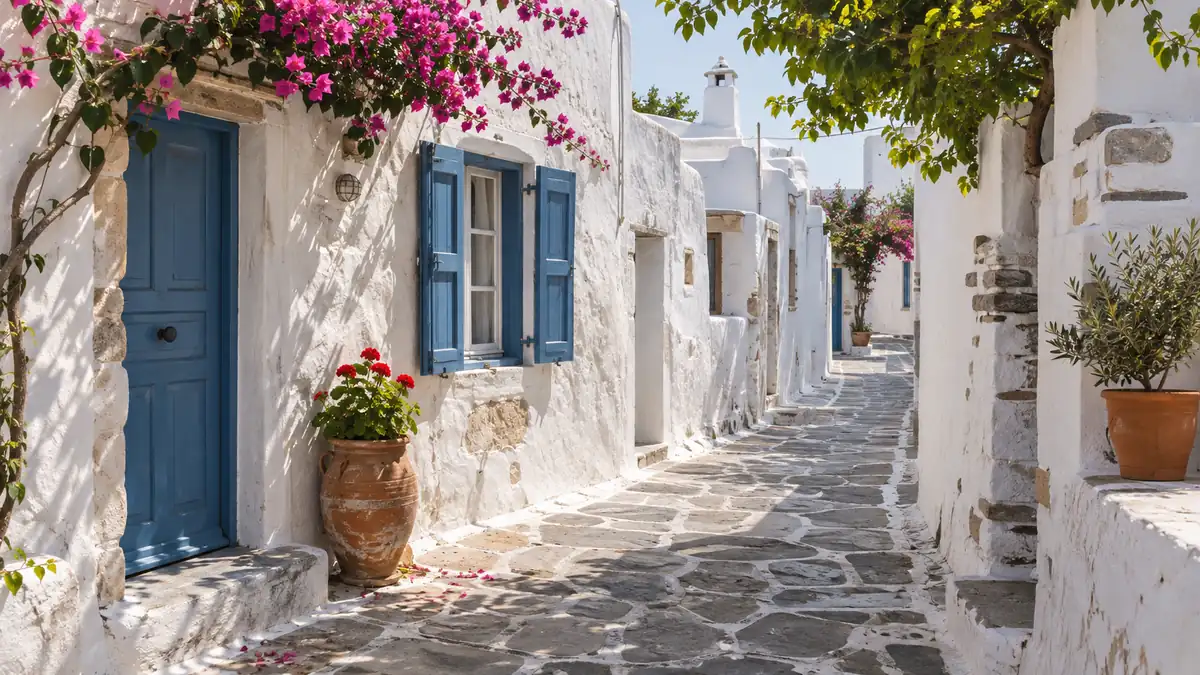
The quietest part of Paros is the east side, and its strongest single stop is Marpissa’s old quarter under Kefalos hill, with the Molos beach chain on the coast below. The hidden corners fall into inland villages, east and northeast beaches, and marble country; most need a car, and some a dirt road. Swimmers who want dunes and nothing organised should pick Lageri instead.
You have picked Paros, settled on Parikia or Naoussa, and sketched your days around the stops everyone mentions. This guide covers the rest of the island: the places that stay quiet while the harbour towns fill. It sorts them into the east-side villages, the beaches along the east and northeast coast, and the marble country inland, with a short detour to the southeast. Each pick gets three things. First, what makes it different from the famous stops. Second, the honest trade-off — a dirt road, no sunbeds, a stiff wind. Third, the traveler it suits best. Use it to add a quiet day or two to a trip already built around the highlights, and to skip the corners that will not suit you before you spend a morning driving to them.
Which Hidden Corner of Paros Should You Choose?
Choose by what you want from the day — village lanes, empty sand, or the marble story — not by distance. Walkers and culture-seekers belong in Marpissa and Marmara, space-seekers on the Molos chain, swimmers at Lageri, and anyone skipping the beach in marble country. Every choice costs something: a dirt road, missing facilities or wind exposure.
- Beach-seekers: Molos and Kalogeros for sheer space, with a dirt road to Kalogeros and nothing organised.
- Families: Lolantonis for its afternoon cliff shade, though the bags have to be carried down the path from the parking.
- Strong swimmers: Lageri and Stefano for dunes and open water, at the cost of a dirt road plus a walk.
- Walkers: Marpissa and the Kefalos hill climb for the east-coast view; the trade-off is a climb in the heat.
- Culture-first travelers: Kostos, Marathi and Marmara for the marble story, with no beach attached.
Families should weigh the walk from the car more than the beach itself. Lageri’s dune crossing is a pleasure alone and a chore with a cool box and toddlers.
| Area | Picks | Getting there | Best for |
|---|---|---|---|
| East villages | Marpissa, Kefalos hill and Marmara | Village roads; path or dirt road uphill | Walkers and travelers who want village life |
| East beach chain | Molos, Kalogeros, Tsoukalia, Glyfades and Lolantonis | Car, with dirt road or path for some | Space-seekers who bring their own water and shade |
| Northeast headland | Lageri and Stefano beyond Santa Maria | Dirt road, then a walk over dunes | Strong swimmers who want nothing organised |
| Marble country | Kostos and the Marathi quarries | On or near the Parikia–Lefkes road | Culture-first travelers and non-beach days |
| Southeast coast | Drios and its ancient ship grooves | Car to the southeast coast | Travelers who like history beside the sea |
Tours and activities
Book skip-the-line tickets, day trips and local tours with free cancellation on most activities.
You can also browse everything on getyourguide.com.
Tripstou may earn a commission if you book through this link, at no extra cost to you.
Where Paros Hides Its Quiet Side
Paros’s quiet corners sit on the east side and the northeast headland, away from the two resort towns. Marpissa, Marmara and the beaches under Kefalos hill see far less traffic than Naoussa and Parikia, and the marble interior stays quiet because it has no beach. The busy north and west coast is not where to look.
The famous Paros is already well covered. Kolymbithres and Golden Beach draw most visitors, and they belong with the island’s headline things to do in Paros. Paros itself sits on every list of the best places to visit in Greece. That fame is exactly why its quiet corners need a separate guide.
On Paros, the line between famous and hidden usually falls where the asphalt ends: Kalogeros, Lageri and Kefalos hill all begin with a dirt road or a path.
Every place on this page passes the same three tests:
- Distinct: it offers something the famous stops do not, from coloured clay sand to ancient quarries.
- Honest access: each entry names its trade-off — dirt roads, missing facilities, wind exposure.
- Clear fit: each names the one traveler it suits best.
Is the Paros Butterfly Valley (Petaloudes) worth it?
Petaloudes is worth a short summer stop, but it is a known, ticketed site, not a hidden corner. The insects that give the valley its name gather there only seasonally, so outside summer it has little to show. Check that it is open before you go, since it does not open year-round.
Are Paros Park and the Korakas lighthouse worth the detour?
Yes for a coastal walk, but the park is semi-known, not hidden. Paros Park covers the Agios Ioannis Detis headland across the bay from Naoussa, and walks there often head toward the Korakas lighthouse. It features on most Paros lists, so expect company; for genuine solitude, the east coast and the northeast headland beyond Santa Maria deliver more.
The Quiet East-Coast Beaches Trade Facilities for Space
Paros’s emptiest beaches line the east coast around Molos, and all of them trade facilities for space: expect dirt tracks, footpaths, few or no sunbeds and little shade beyond the trees. The reward is sand that stays uncrowded while the famous north-coast beaches fill.
On this coast, the compass matters more than the map. Tsoukalia and Glyfades face northeast, straight into the summer meltemi, so on a windy day a more sheltered stretch makes the better choice. The south coast is generally calmer in a northerly wind, so Drios suits a windy day better. Facilities across the whole group are thin and seasonal. Bring water and shade.
Molos and Kalogeros
Molos is the east coast’s big empty beach. A vast stretch of sand lies between the Kefalos and Antikefalos hills, backed by sea pines, and its isolation is the whole appeal. Kalogeros, next door, is smaller and stranger. A dirt road crosses a small peninsula to reach it, and its sand is coloured by green and red clay.
Neither beach is developed. The pair works as one outing. Molos gives room to spread out; Kalogeros adds the novelty of the clay. Molos is worth it for anyone who wants sand without a sunbed grid, provided they arrive carrying everything the day needs.
Tsoukalia and Glyfades
Tsoukalia sits under Antikefalos, just north of Molos, with few facilities and a shore that faces northeast. That exposure defines it. When the summer wind blows, it raises real waves here, a warning for families and a draw for anyone who likes a lively sea.
Glyfades is the larger sandy neighbour, near the road between Lefkes and Naoussa, which makes it the easier of the two to reach. On a calm day both beaches are simply quiet. On a windy one, they turn rough. Check the wind before you drive, and treat the wave exposure as the reason to come or the reason to stay away. The pair belongs to swimmers who read the sea before the map and like a beach with some movement.
Lolantonis
Lolantonis is the quiet beach with natural shade. A path leads down from the parking area, sea pines line the sand, and the cliff behind the beach throws shade across it in the afternoon. That shade is rare on this coast, where most beaches offer only sun and whatever you bring.
The path keeps Lolantonis calmer than a roadside beach. It also means carrying bags on foot. Arrive after lunch and the cliff does the job an umbrella would. For travelers who burn easily, that makes it the most comfortable empty beach on the east side.
Lageri and Stefano: The Northeast Headland for Strong Swimmers
Lageri, the wild beach of the northeast headland beyond Santa Maria, is the pick for anyone who swims seriously and wants dunes and open water. Cedars grow among the sand, nothing is organised, and some visitors swim nude. Stefano, beside it, is a quieter strip of sand that runs out toward a small islet.
The dune walk is the filter. To reach Lageri, drive past Santa Maria, take the dirt road, and finish on foot across the dunes. That last stretch keeps the crowds of the organised beaches nearby away. Pack everything before you leave the car. Stefano rewards anyone who keeps walking a little further along the shore.
East of Naoussa, the small fishing hamlet of Ambelas is semi-known and worth a look on the way to the wilder beaches.
The East-Side Villages Are Paros’s Best-Kept Secret
Marpissa and Marmara, on the east side, are the villages most visitors never reach. Both keep a lived-in core of whitewashed lanes, chapels and old houses, and both sit off the usual island-tour circuit. That makes them the place to see village Paros without the day-trip crowds.
Kefalos hill is what turns Marpissa from a pretty village into a destination. Skip the climb and the east side looks like any quiet Cycladic stop. Make it, and you get the whole coast at once.
Marpissa’s Old Quarter and Kefalos Hill
Marpissa is the best reason to leave the resort coast. The village spreads like an amphitheatre over a low hill on the east side, and its older houses date from the 16th and 17th centuries. Piso Livadi, below, is its port. The old quarter above stays residential and slow.
Kefalos hill completes the visit. The Agios Antonios monastery stands on top, beside the site of the Venetian Sommaripa castle. A path or a dirt road climbs from the Marpissa windmills. From the summit, the view runs down the east coast and across the water to Naxos. Bring water for the climb. Choose it when one village and one viewpoint have to show you the island without its crowds.
Marmara, the Village Built From Marble Scraps
Marmara is the village for travelers who notice what a place is built from. It sits north of Marpissa and Prodromos, and its houses were built with pieces of marble. The island’s famous stone turns up in ordinary walls. No other village on this page makes its material so visible.
The visit is about lanes more than sights. The chapel of Agia Kyriaki gives the wander a focal point. Most travelers pair Marmara with Marpissa on the same drive east. There are no big set pieces. What you get is a working village where the marble sits in house walls instead of behind museum glass. Come for the material history and the quiet lanes, not for a viewpoint.
The interior’s famous side is a different trip. Lefkes, Prodromos and the Byzantine path already sit on every day-tour route, so they belong with the main things to do in Paros.
Marble Country and the Quiet South: Kostos, Marathi and Drios
The marble slopes above the Parikia–Lefkes road and Drios on the southeast coast are the most overlooked detours on Paros. Marathi’s ancient quarries supplied the stone for classical sculpture, and Drios keeps ship grooves cut into its shoreline. Neither depends on a good beach day.
Marathi sits right on the Parikia–Lefkes road. That makes the quarries the easiest quiet detour on the island to add without a dirt track, even on a day built around something else.
Kostos and the Marathi Quarries
Kostos and Marathi tell the story of Parian marble in one stop. Marathi’s ancient quarries lie on the Parikia–Lefkes road, and their stone was used for the Venus de Milo and the Hermes of Praxiteles. Kostos sits on the eastern mountain slope below the quarries, known as a balcony village for its raised position.
The quarries draw travelers who care where things come from. Kostos adds the village half of the visit. The ground around the quarries is rough, so wear proper shoes. Together, the two fill a short detour that no beach on the island can match for context. Make the swap when the stone behind famous sculpture matters more to you than another swim.
Drios
Drios is the quiet archaeology stop of the southeast coast. Its narrow strip of sand and pebbles holds a feature no other beach on this page offers: ancient man-made grooves carved into the shore for ships. The beach itself is modest. The grooves are the reason to come.
Drios suits a slow stop on the south coast. It is not a big-beach day. Look for the carved channels first, then swim from the pebbles. The village stays low-key, which suits the history on its shoreline and keeps the visit unhurried from start to finish. It is archaeology you can stand on, right beside the sea.
Are the Alyki salt ponds worth a stop?
Yes, for a short, quiet walk, not a full outing. The salt ponds near the village of Alyki are one of the low-key natural corners of Paros: flat, open and unhurried. They fit best as a brief stop on a day already spent in the south of the island, not as a special trip.
How to Fit a Hidden Day Around a Parikia or Naoussa Base
From Naoussa, the northeast headland is the natural hidden day; from Parikia, it is marble country and the east villages. Naoussa sits nearest Lageri and Stefano, Parikia nearest Marathi and Kostos, and the east coast is reachable from either by car. Matching pick to base keeps more of the day for the place itself.
Naoussa-based travelers have the headland close. Lageri and Stefano sit beyond Santa Maria, so a swim there fits around an ordinary day in town.
Parikia-based travelers start on the right road. The Parikia–Lefkes road passes Marathi, Kostos sits above it, and the same direction leads on toward Marmara, Marpissa and the east coast.
Either base reaches the Molos chain by car. Let the shade set the order. Lolantonis gets its cliff shade in the afternoon, so it suits the end of a hidden day, and the villages suit the cooler morning.
The car question has a short answer. The quiet beaches and villages on this page are car-dependent, with dirt roads to Kalogeros, Lageri and Kefalos hill and villages scattered off the main routes. KTEL buses run the main Parikia–Lefkes–Marpissa–Piso Livadi–Drios road on timetables that change with the season. Marmara lies on the same line. Molos and Lolantonis are off the bus line, and no bus reaches the dirt tracks.
Everything else — ferries, bus routes, timing and how long to stay — belongs to the wider planning in our Paros guide.
For more places like these beyond Paros, see our guide to hidden gems in Greece.
How These Quiet Corners Were Picked
This page is a curated selection of the quieter places on Paros — the east-side villages, the empty east and northeast beaches, marble country and Drios — chosen for what sets each apart from the famous stops, how honest its access is and who it suits; it is not a full Paros guide, an itinerary, a list of things to do or a guide to where to stay.
Alex Perrut, working in tourism since 2015, went over these Paros corners and their trade-offs for the Tripstou editorial team once the text had been written with AI assistance; the editorial process page says how that works.
Official sources consulted: Visit Greece, Greek Ministry of Tourism.
Did this guide save you time or money? Tripstou is independent and reader-funded — if you'd like to give something back, you can support the site with a crypto contribution of any size.