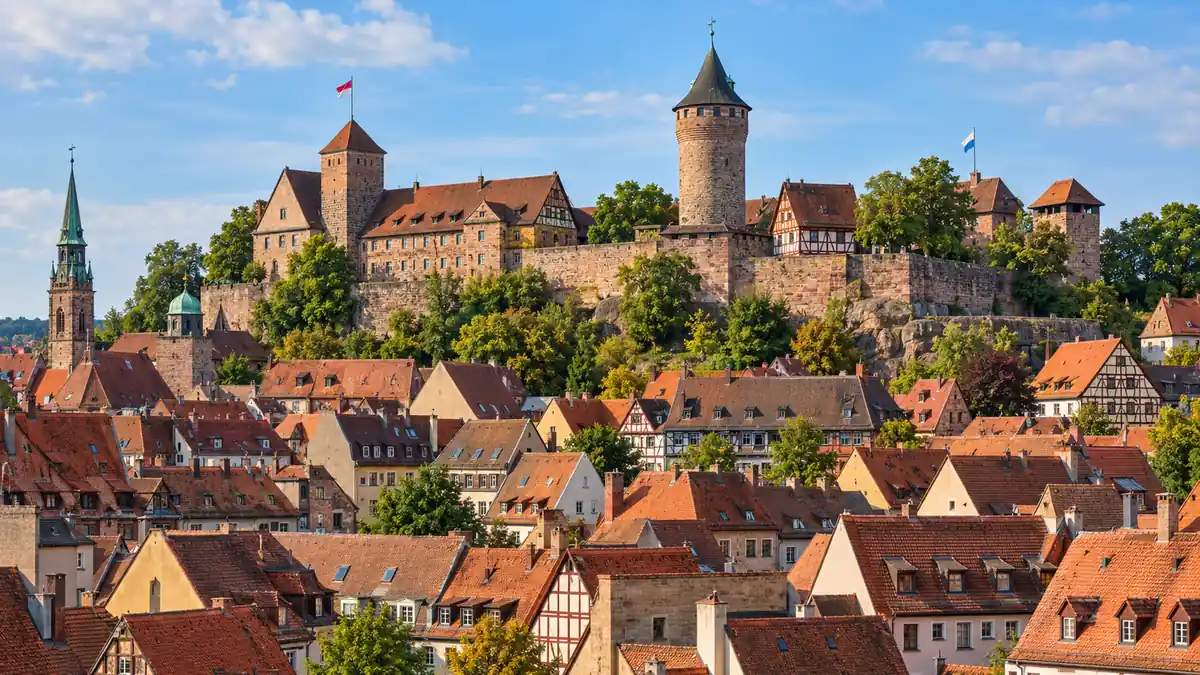
The best things to do in Nuremberg are the Imperial Castle with the walled Old Town below it, and the Nazi-era sites outside the walls: the Documentation Center at the former Rally Grounds and Courtroom 600, where the Nuremberg Trials were held. Lead with the castle if you came for the medieval town, with the history sites if you came for WWII. Time settles the rest: one day covers the Old Town plus one history site, two days cover both zones and an underground tour.
The picks below are grouped the way the city works on the ground: the walled Old Town, the history sites beyond the walls, the tunnels and cellars underneath, the museums and the food. A closing section covers the readers for whom the default is the wrong call: families with small children, a wet day and Advent.
The Short List
- Start with the Imperial Castle and walk downhill through the Old Town if you came for the medieval city, because the Kaiserburg is the sight that defines Nuremberg.
- For WWII history, the Documentation Center at the former Rally Grounds and Courtroom 600 outrank the castle, and both lie outside the walls, reached by tram, S-Bahn or U-Bahn.
- One day fits the Old Town plus one history site; two days fit both zones with an underground tour on top.
- Every underground site needs a guided tour, so check the language before booking: the rock-cut cellars run an English-language tour, but their standard tour is in German.
- Families with young children get more from the Toy Museum, the Zoo and the Castle Gardens than from Courtroom 600 or the dungeons.
- On a wet day, put the Germanisches Nationalmuseum first and an underground tour second, and leave the open-air Rally Grounds for drier weather.
Nuremberg Splits Into Two Zones, and Your Day Depends on It
Nuremberg’s sights fall into two zones. The walled Old Town is walked on foot from the Hauptbahnhof; the Rally Grounds and Courtroom 600 lie outside the walls and need the tram, S-Bahn or U-Bahn. One day fits the Old Town plus one history site. Two days fit both zones with an underground tour on top, and that is the honest answer to whether one day is enough.
Medieval-town readers start at the castle and walk downhill, leaving one history site for the afternoon. WWII-history readers do the reverse: a morning at the Rally Grounds or in Courtroom 600, then the Old Town by late afternoon. Squeezing both history sites and the castle into a single day leaves too little time for any of them.
Nuremberg also works as a day trip on a fast ICE connection; if you are weighing it against other day trips from Munich, that page makes the comparison. For an overnight stay, a bed inside the walls puts the castle and the evening lanes on your doorstep, while a hotel near the Hauptbahnhof is quicker for the trams out to the history sites. Entry rules, money and trains across the country sit in the Germany travel guide.
| Zone | Headline picks | How you reach it | Who it is for |
|---|---|---|---|
| Old Town | Imperial Castle, Hauptmarkt, St. Lorenz, Dürer’s House | On foot from the Hauptbahnhof | First-timers and medieval-town readers |
| History sites | Documentation Center and Rally Grounds, Courtroom 600 | Tram, S-Bahn or U-Bahn from the centre | WWII and Nuremberg Trials readers |
| Underground | Castle tunnels, rock-cut cellars, dungeons, art bunker | On foot inside the Old Town, guided tour only | Second-day visitors and rainy days |
The Walled Old Town: Castle, Churches and Dürer’s House
The Old Town is the pick for first-timers and anyone who came for the medieval city, and the Imperial Castle is the one sight to start with. From the castle rock the rest is a walk downhill: Dürer’s House, St. Sebald, the Hauptmarkt, then across the Pegnitz to St. Lorenz.
Imperial Castle (Kaiserburg)
The Kaiserburg is the sight that defines Nuremberg, and the one worth paying to go inside. The castle crowns the northern edge of the Old Town, and its terraces give the classic view over the red roofs. Inside, the Palas and double chapel show where emperors stayed; the Sinwell Tower is the climb for the view; the Deep Well is the curiosity most visitors remember.
How the visit works:
- Tickets are sold only at the cash desk in the outer courtyard; there is no online sale, and the desk takes cash or card.
- One combination ticket covers the Palas and double chapel, the Imperial Castle Museum, the Deep Well and the Sinwell Tower.
- The Deep Well can only be seen on the guided tour.
- The Castle Gardens are free to enter.
Skip the interiors only if you are short of time and care more for views than rooms: the courtyards and terraces still deliver the panorama.
Hauptmarkt, Schöner Brunnen and the Frauenkirche
The Hauptmarkt is the Old Town’s hub, and noon is the moment to be there. At midday the Männleinlaufen clock on the Frauenkirche sets its figures in motion, and the square fills to watch. The gilded Schöner Brunnen fountain stands at the corner; the market stalls around it are the easiest place for a first sausage roll.
St. Lorenz and St. Sebald
St. Lorenz is the church to prioritise if you only have time for one. Its twin-towered Gothic front closes the main shopping street south of the river, and the interior is the grander of the two. St. Sebald, the older parish church near the castle, sits on the route down from the Kaiserburg, so most visitors pass it anyway; step inside if you are already there.
Albrecht Dürer’s House and Tiergärtnertorplatz
Art and history readers should put Albrecht Dürer’s House on the list. The half-timbered house below the castle walls is where the painter lived and worked. Visitors with no particular interest in Dürer can skip the interior and simply stop on Tiergärtnertorplatz, the small square in front, one of the most photographed corners of the Old Town.
Weißgerbergasse, Henkersteg and the City Walls
The lane-and-walls walk is the free half-day that holds the Old Town together. Weißgerbergasse is the best-preserved street of half-timbered tanners’ houses; the Henkersteg, the hangman’s footbridge, crosses the Pegnitz nearby. Follow the city walls between the gates and you pass the Ehekarussell fountain, a bold bronze take on marriage, and the roofless Katharinenruine.
The Handwerkerhof by the Königstor, a walled courtyard of craft workshops, is the first thing many visitors see from the station. It is a short stop for souvenirs, not a reason to linger.
The Nazi-Era Sites Are Why Many Visitors Come
For travelers interested in WWII, the Rally Grounds and Courtroom 600 outrank the castle. They sit outside the walls in two different directions, so give each a half-day or pick one if Nuremberg is a day trip.
Documentation Center and the Rally Grounds
The former Nazi Party Rally Grounds are where the party staged its mass rallies in the 1930s, southeast of the centre; the site is now a memorial. The Documentation Center in the Congress Hall holds the permanent exhibition and is the place to start. From there, a walk along the Dutzendteich lake leads to the Zeppelin Field and its grandstand. Reach the grounds by tram or S-Bahn from the centre.
Courtroom 600 and the Memorium Nuremberg Trials
Courtroom 600 is the room where the International Military Tribunal tried leading Nazis, sitting from November 1945 to October 1946. It is part of the Palace of Justice, west of the Old Town and reached by U-Bahn. The Memorium Nuremberg Trials, on the top floor of the building, tells the story of the trials, and the courtroom itself carries a media installation. The courtroom can close for court events, so check before building the day around it.
If you only have time for one, choose by the question you came with. The Documentation Center explains how the regime staged its power; Courtroom 600 shows how that power was put on trial. A day trip with a single slot is the clearest case: the trials room is the shorter, more focused visit, the Rally Grounds the bigger story.
Which Underground Tour Should You Book?
Every underground site in Nuremberg needs a guided tour, so pick by interest. Choose the castle tunnels and wall passages for medieval defence, the rock-cut cellars for beer heritage and an English-language tour, the dungeons for the grim side of the Old Town Hall, and the Kunstbunker for how the city’s art survived WWII.
Castle Tunnels and City-Wall Passages
The passages inside the walls and below the castle are the underground tour with the broadest appeal. They show how the city defended itself and suit anyone who enjoyed the castle and wants its hidden side.
Rock-Cut Cellars (Felsengänge) and the Red-Beer Tour
The sandstone under the Old Town is honeycombed with cellars carved to brew and store beer. The operator runs an English-language rock-cut cellar tour, while its standard historic rock-corridor tour is in German, so check the language before you go; bookings go through the operator’s own ticket system. The red-beer tour adds the local Rotbier, and you can reserve a tasting spot for it. This is the beer drinker’s pick.
Medieval Dungeons Under the Old Town Hall (Lochgefängnisse)
The cramped cells beneath the Old Town Hall are the darkest hour you can spend in the city, and a tour that tends to grip teenagers; book the dungeon tour ahead if your day is tight. Skip it with small children.
Historischer Kunstbunker (WWII Art Bunker)
This cellar in the castle rock is where Nuremberg sheltered its art treasures from the air raids. It bridges the medieval Old Town and the WWII story, which makes it a strong second-day choice for history readers; reserve the bunker tour to fix a time.
Tours and activities
Book skip-the-line tickets, day trips and local tours with free cancellation on most activities.
You can also browse everything on getyourguide.com.
Tripstou may earn a commission if you book through this link, at no extra cost to you.
Museums Worth Your Time, and the Rainy-Day Order
The Germanisches Nationalmuseum is the one museum in Nuremberg that justifies a half-day on its own; the rest are picks by interest. On a wet day, take the Nationalmuseum first, then the Toy Museum with children or the DB Museum for rail readers, with an underground tour as the other rain plan. The Fembo-Haus, the City Museum in a merchant’s house near the castle, suits readers who want the city’s own story.
Germanisches Nationalmuseum
The Germanisches Nationalmuseum is Germany’s great museum of cultural history, with a collection that runs from prehistory to the present. Highlights include Dürer paintings and the Erdapfel, one of the oldest surviving globes. Outside the entrance, the Way of Human Rights lines a street with white columns, each carrying an article of the Universal Declaration of Human Rights.
Toy Museum
The Toy Museum is the museum families should choose. Nuremberg was a centre of toymaking for centuries, and the collection of dolls, tin toys and model railways appeals to adults as much as children. It sits in the Old Town, an easy stop between other sights (more family picks are in the last section).
DB Museum and Neues Museum
Rail enthusiasts head for the DB Museum: the German railways’ own museum, with historic locomotives and the story of the country’s first railway, which ran from Nuremberg to Fürth. The Neues Museum suits a different reader. It shows modern and contemporary art and design behind a curving glass front, and works as a short visit for anyone who has had enough of the medieval.
What to Eat in Nuremberg: Rostbratwurst, Schäufele and Lebkuchen
The local order is short. Eat Nürnberger Rostbratwurst on the street or on a plate, Schäufele for a sit-down meal, Lebkuchen to carry home, and Rotbier to drink.
- Nürnberger Rostbratwurst: small, thin pork sausages grilled over an open fire, served several to a plate with sauerkraut.
- Drei im Weggla: three of those sausages in a bread roll, the street version.
- Schäufele: roast Franconian pork shoulder with crackling, served with a potato dumpling.
- Lebkuchen and Elisenlebkuchen: spiced gingerbread, with Elisenlebkuchen the richest grade, heavy on nuts and light on flour.
- Rotbier: the city’s amber-red beer.
The sausage roll is a market-stall meal: the Hauptmarkt stalls are where most visitors eat their first. The plate version belongs in one of the old sausage kitchens in the lanes around St. Sebald, where the grill sits in view. Rotbier ties back to the rock-cut cellars, and the red-beer tour is the way to taste it where it was once stored.
With Kids, in the Rain or in Advent: When the Top Picks Change
The castle-plus-history-sites default is the wrong plan for three readers. Families with young children do better with the Toy Museum and the outdoors, a rainy day moves the weight indoors and underground, and in Advent the Old Town itself becomes the main event.
With young children. Swap Courtroom 600 for the Toy Museum, the Zoo and the open shore of the Wöhrder See. The Castle Gardens give children room to run while adults take in the view, and the sightseeing train through the Old Town saves small legs on the cobbles. The dungeons and the Documentation Center are better left for older children.
On a rainy day. Put the Germanisches Nationalmuseum first and book an underground tour for the afternoon; the Rally Grounds are an outdoor walk, and rain takes the point out of it. In summer the reverse applies: Schütt island in the Pegnitz and the Wöhrder See are where locals spend warm evenings.
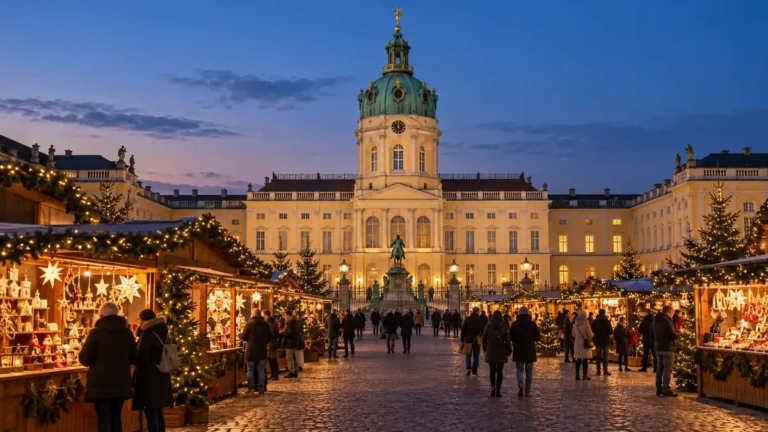
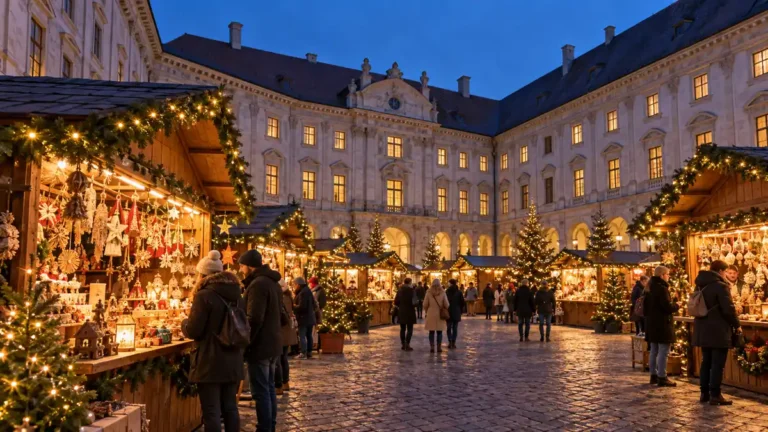
In Advent. From the start of Advent until Christmas Eve, the Hauptmarkt hosts the Christkindlesmarkt and the Old Town fills accordingly. Plan the market for late afternoon and evening, and use the morning for the history sites, the quiet half of the day in this season. For how it sits among other Christmas markets in Germany, see the national selection.
For a second medieval day, Bamberg or Rothenburg ob der Tauber are the usual next stops.
About This Selection
This page is a curated pick of Nuremberg’s sights, tours, museums and food for a one- or two-day stay, grouped by zone and theme and judged on who each suits; it does not cover arrival, hotels or costs, and it is neither a day-by-day itinerary nor a Christmas-market guide.
Alex Perrut, working in tourism since 2015, went over this selection for the Tripstou editorial team after it was written with AI assistance. How that works is set out in our editorial process.
Official sources consulted: Imperial Castle of Nuremberg, Nuremberg Municipal Museums, Historische Felsengänge, Nuremberg Tourist Board, Nuremberg Christkindlesmarkt.
Nuremberg Questions Worth a Straight Answer
Is Nuremberg worth visiting?
Yes, for two separate reasons: a walled medieval Old Town under an imperial castle, and the places where the Nazi regime staged its rallies and was later put on trial. It is a thinner choice for travelers who want a big-city break or a nightlife trip; the city’s strength is what you see by day.
Is the Nuremberg Card worth it?
It pays off over two museum-heavy days that include the trip out to the Rally Grounds, not on a single day walking the Old Town. The card runs for 48 hours and gives free entry to the museums and sights it includes, plus free public transport in Zone A, which covers Nuremberg, Fürth and Stein. Match the list of included sights against your plan before buying.
Keep Planning Germany
- Day trips from Munich: if Nuremberg is one of several candidates for a day out from Munich.
- Christmas markets in Germany: if your trip falls in Advent and the markets are the point.
- Planning a trip to Germany: entry, money and getting around the country.
Did this guide save you time or money? Tripstou is independent and reader-funded — if you'd like to give something back, you can support the site with a crypto contribution of any size.