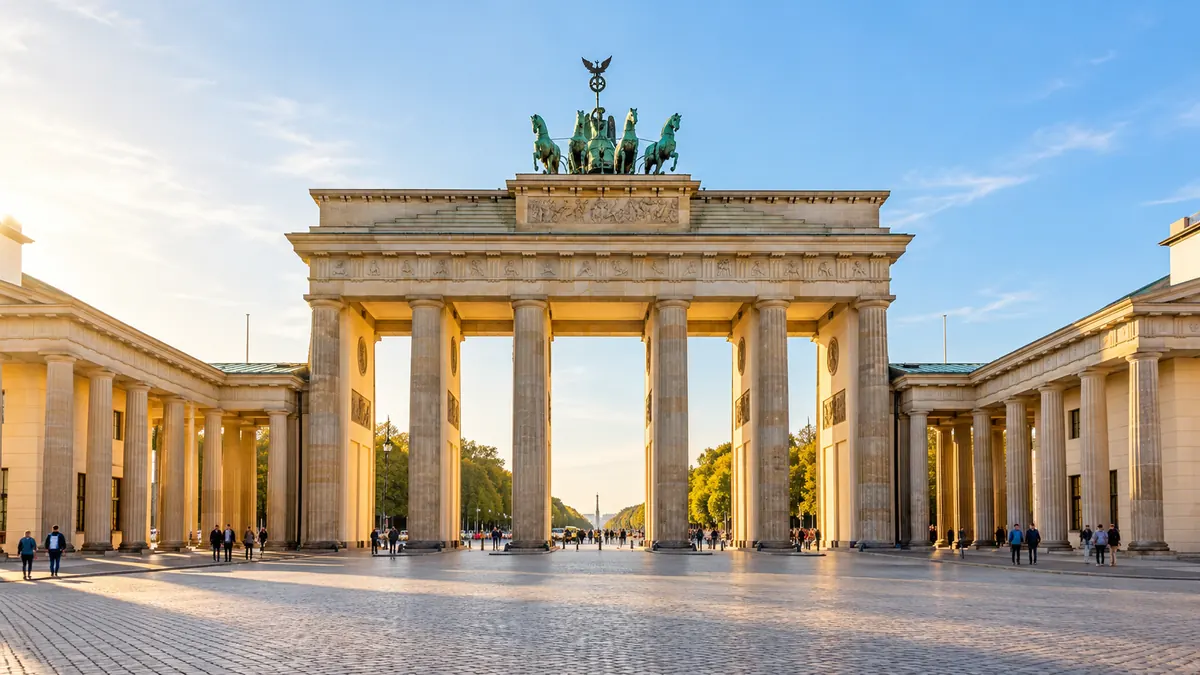
On a first visit to Berlin, the sights that justify their time are the Reichstag dome, the Brandenburg Gate, Museum Island, one Berlin Wall site, the Memorial to the Murdered Jews of Europe and the Topography of Terror. Which Wall site depends on what you want from it: Bernauer Strasse to understand how the border worked, the East Side Gallery for the long painted stretch by the river.
Most of that shortlist is free. The Reichstag dome is the one sight that needs planning, because it runs on registration. The Pergamonmuseum, still the headline on many lists, is closed for refurbishment. And Checkpoint Charlie is the famous name that repays the fewest minutes.
How This Shortlist Was Chosen
These picks select and group the Berlin sights and experiences worth a visitor’s time, with who each one suits, which cost nothing, which need a ticket or a registration and which are shut; the days, transport, costs and hotels for a Berlin trip live on the Berlin hub and its sibling guides.
Written with AI assistance. Alex Perrut, working in tourism since 2015, went through every pick for the Tripstou editorial team, and our editorial process sets out how that check works.
Official sources consulted: German Bundestag, Staatliche Museen zu Berlin, Berlin Wall Foundation, Jewish Museum Berlin, Berliner Fernsehturm.
What to see in Berlin first: the shortlist and how it was chosen
See the Reichstag dome, the Brandenburg Gate, Museum Island, one Wall site, the Memorial to the Murdered Jews of Europe and the Topography of Terror first, because each is the only place in Berlin that does its particular job. The dome puts you on top of a working parliament. The Gate is the symbol the whole country recognises. Museum Island gathers the city’s antiquities and classic European art on one walkable stretch of the Spree.
The Wall site and the two memorials carry the story that sets Berlin apart from other European capitals. Skip all three and you see a pleasant green city without knowing why it has empty lots, a border strip turned into a park and a government quarter built along a river that once divided it.
Some famous names are places you cross on the way and rarely need to plan for. Gendarmenmarkt with its concert hall between two domed churches, the linked courtyards of the Hackesche Höfe and the glass towers of Potsdamer Platz deserve the minutes it takes to walk through them, and no slot of their own.
The TV Tower misses the shortlist and the Topography of Terror makes it, for one reason: in Berlin the sites with no ticket desk tend to carry more of the city than the paid attractions do. Fitting all of this into a short stay is a sequencing job, and a three-day Berlin itinerary puts the shortlist into days in walking order.
History and memory: the Wall, the memorials and the Reichstag
If time is short, do the Reichstag dome and one Wall site, and give the Topography of Terror the free hour that explains everything else. The Brandenburg Gate, the Reichstag and the Memorial to the Murdered Jews of Europe stand within a short walk of each other at the edge of the Tiergarten, so that cluster costs almost no transit time.
Panels and audio do most of the explaining at these sites. Travelers who would sooner hear the Third Reich and Cold War layers told on the street can book a guided walk through them.
Reichstag dome: free, but only with a registration
The Reichstag dome is free, and you get in only by registering ahead through the Bundestag’s online form. It is the best free view in the city and the one shortlist sight that punishes a lack of planning.
There is a walk-in route at the service centre on Platz der Republik, but it works only if places remain, and the registration has to be made at least two hours before the visit. Everyone aged 16 or over shows original photo ID at the entrance. Copies are refused.
Walk-in is a fallback to keep in reserve. On a busy day the places go, and even a successful walk-in leaves a two-hour gap to fill in the government quarter before you can go up.
Brandenburg Gate and the Memorial to the Murdered Jews of Europe
The Brandenburg Gate and the Memorial to the Murdered Jews of Europe are both open-air and a few minutes apart on foot, and they do different jobs: the Gate is a photograph, the Memorial is the stop that stays with people.
The Memorial is a field of grey concrete stelae of uneven heights set on sloping ground. Walk in and the paths narrow, the blocks rise above your head and the traffic noise falls away. Underneath sits an information centre that gives names and family histories to what the field above leaves abstract. See the Gate first and end at the Memorial; the order matters more than the minutes either one takes.
Topography of Terror: the free documentation centre that explains the rest
The Topography of Terror is free, and it is the place that makes the Wall and the memorial sites legible. It stands on the grounds of the former Gestapo and SS headquarters, with a surviving stretch of the Wall along its edge.
A history-first traveler can spend half a day inside. Everyone else gets the essential frame in about an hour, which is why it earns a place on even a short first visit.
Which Berlin Wall site should you see?
See the Berlin Wall Memorial at Bernauer Strasse to understand how the border worked, or the East Side Gallery for the long painted stretch of the Wall. Most first visits do one of the two, and both are free.
The Berlin Wall Memorial keeps a section of the border strip as it stood: the wall, the open ground between the barriers and a watchtower, with a documentation centre and outdoor information along the street. Admission is free and the outdoor grounds are open every day. It suits the reader who wants to know how a city lived with a wall through its streets.
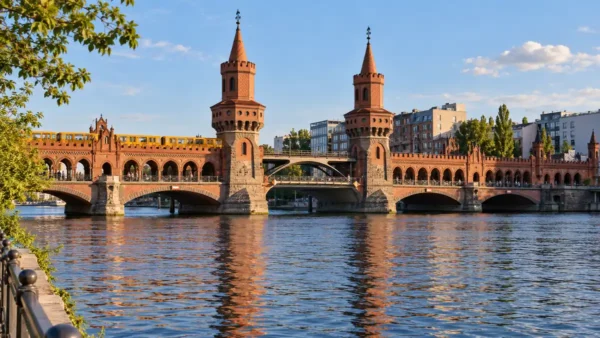
The East Side Gallery is the open-air stretch of the Wall on the Friedrichshain bank of the Spree, near the Oberbaumbrücke, covered in murals. It is outdoors and walkable end to end, so it suits travelers who want the Wall as street art and a riverside walk more than as a history lesson.
Bernauer Strasse is the one Wall site where the gap between the inner and outer barriers is still visible, and that gap (the killing ground behind the wall) is what most visitors misread about how the border worked.
Checkpoint Charlie is context, and a few minutes there are enough. The famous crossing point is now a busy junction with a reconstructed guard hut and souvenir stalls. For the Cold War border told quietly, the Tränenpalast at Friedrichstrasse station, the former departure hall where East and West Berliners said goodbye, does the job far better.
Tours and activities
Book skip-the-line tickets, day trips and local tours with free cancellation on most activities.
You can also browse everything on getyourguide.com.
Tripstou may earn a commission if you book through this link, at no extra cost to you.
Museum Island with the Pergamon closed: which museum should you visit?
Visit the Neues Museum: the Pergamonmuseum is closed for a major refurbishment, but the rest of Museum Island is open and the Neues is the strongest pick for a first visit. For the Pergamon’s antiquities, “Pergamonmuseum. Das Panorama”, opposite the island, is the stand-in while the main building stays shut.
Neues, Altes, Alte Nationalgalerie, Bode: what each house is for
Neues Museum. Egypt and prehistory, with the bust of Nefertiti as the face everyone comes for. It is the one house to choose if the visit allows only one.
Altes Museum. Greek and Roman antiquities behind the colonnade facing the Lustgarten. It is the natural second stop for anyone the Pergamon’s closure has disappointed.
Alte Nationalgalerie. Painting and sculpture from the age of German Romanticism and Impressionism, in a temple-like building that is usually the quietest on the island. Art lovers get the most from it.
Bode-Museum. Sculpture and a large coin collection at the island’s northern tip, under a dome over the water. It rewards a slow visitor more than a first-timer with one afternoon.
The James-Simon-Galerie is the entrance building for the island, with tickets and visitor services. Many Berlin museums close on one weekday, usually Monday or Tuesday, so check before you go.
Jewish Museum and DDR Museum: two very different Berlins
The Jewish Museum is the pick for architecture and depth; the DDR Museum is the pick for a hands-on hour of everyday life in East Germany. They answer different questions and rarely suit the same mood.
The Jewish Museum’s zigzag building by Daniel Libeskind is part of the visit: its voids and slanted floors carry meaning before you read a single label. The core exhibition is free, but book a time slot ahead, and expect some temporary exhibitions to be paid. It suits travelers ready to give the subject a long afternoon.
The DDR Museum, on the Spree opposite Berlin Cathedral, is built to be touched: drawers to open, a flat to walk through, a car to sit in. It suits families and anyone who wants the East German story told lightly. For something quieter still, the Museum der Dinge holds a small collection of everyday design objects.
Is the Museum Pass Berlin worth it?
The Museum Pass Berlin is worth it only for a museum-first visitor planning several state museums over three consecutive days; for one or two museums, single tickets are the simpler buy.
The pass covers more than 30 museums for three consecutive days, as a rule for their permanent exhibitions. Some special exhibitions need a separate paid time-slot ticket. Several museums in the scheme are currently closed, the Pergamonmuseum among them, so check which houses are open on your dates before you buy.
With the Pergamon out, the pass pays for itself mainly on a trip that spends one day on Museum Island and comes back for more museums on the next two.
Is the TV Tower worth it, or is the best view in Berlin free?
The Reichstag dome is the best free view in Berlin and the TV Tower is the highest paid one. Choose by two things: whether you registered for the dome in time, and whether you want the whole skyline from above or the government quarter and the Tiergarten from inside a glass dome.
- TV Tower at Alexanderplatz: the city laid out in every direction, for first-timers who want the full map at once. Tickets are bought online, with a skip-the-ticket-desk option, though the admission queue still applies. The Sphere, a revolving restaurant on the tower, turns the view into a meal.
- Reichstag dome: free and set above the parliament itself, for travelers who registered ahead under the rules in the Reichstag section above.
- Berlin Cathedral dome: a ticketed climb with the view over Museum Island and the Spree, the easy add-on for anyone already on the island.
- Victory Column: a climb in the middle of the Tiergarten with the long view down the Strasse des 17. Juni towards the Brandenburg Gate, for walkers crossing the park anyway.
The choice comes down to paying and queuing against planning ahead for free. Travelers who missed the Reichstag registration can book a tower ticket online, and the tower still gives the one view in which the Reichstag, Museum Island and the Tiergarten all sit in the same frame.
What is free in Berlin, and what you must book or register ahead
Much of the first-visit shortlist costs nothing: the Brandenburg Gate, the Memorial to the Murdered Jews of Europe, the Topography of Terror, the East Side Gallery, the Berlin Wall Memorial and the parks are all free. The Reichstag dome is free too, but it is the one free sight you cannot simply walk up to. The TV Tower and the Museum Island houses are ticketed.
| Sight | Cost | Book or register? | Note |
|---|---|---|---|
| Brandenburg Gate | Free, outdoor | Walk up | A photo stop; pair it with the Memorial |
| Memorial to the Murdered Jews of Europe | Free, outdoor | Walk up | Information centre underneath |
| Topography of Terror | Free | Walk up | The frame for the other history sites |
| Reichstag dome | Free | Register online ahead | Original photo ID from age 16 |
| East Side Gallery | Free, outdoor | Walk up | Painted stretch of the Wall by the Spree |
| Berlin Wall Memorial | Free | Walk up | Outdoor grounds open daily |
| Museum Island houses | Ticketed | Check each house | Pergamonmuseum closed; Panorama open |
| TV Tower | Ticketed | Buy online | The admission queue still applies |
| Jewish Museum | Free core exhibition | Book a time slot | Some temporary exhibitions are paid |
A whole free day is easy to build. Walk the Tiergarten between the Gate and the Victory Column, cross to the East Side Gallery, spend a Sunday at Mauerpark or a windy hour on the runways of Tempelhofer Feld, and fill the gaps with the neighbourhood walks below. Because so much of Berlin’s history costs nothing, put the ticket money where the city charges for something it alone has: the Neues Museum and Museum Island.
Green Berlin: Tiergarten, Tempelhofer Feld, Mauerpark and the river
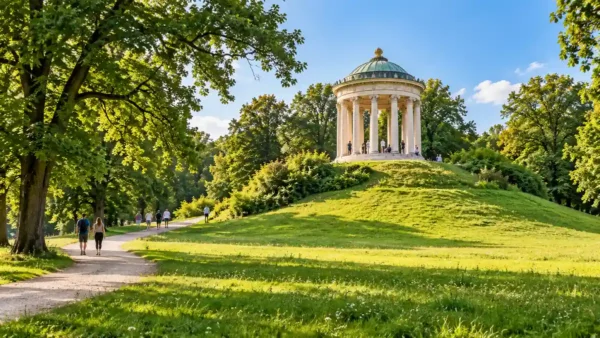
Berlin’s open spaces are a thing to do in their own right, and the pick depends on the day: the Tiergarten for a walk between the landmarks, Tempelhofer Feld for the unusual sight of a former airport turned park, Mauerpark on a Sunday, and the Spree by boat for the one lazy stretch of the trip.
Tempelhofer Feld and Mauerpark: the two Berlin parks nothing else resembles
Tempelhofer Feld is a former airport that the city turned into a public park, runways and all. On a windy afternoon the tarmac fills with kite-flyers, cyclists and skaters, and the sense of open sky in the middle of a capital is hard to find anywhere else in Europe. It suits travelers who have done the monuments and want to see how Berliners spend a free afternoon.
Mauerpark, on a former stretch of the border strip in Prenzlauer Berg, comes alive on Sundays with its flea market and open-air karaoke in the amphitheatre. On a weekday it is an ordinary park, so save it for the weekend.
Is a Spree river cruise worth it?
A Spree river cruise is worth it for a first visit that wants the government quarter and Museum Island from the water in one sitting; it is a waste for anyone short of time who has already walked the riverbank.
The central stretch of the river passes the Reichstag and the modern government buildings along the bank, then Museum Island and Berlin Cathedral, so the boat strings together sights that take a long walk to link on foot. It suits tired legs, a grey afternoon and travelers who like a commentary. Skip it if the river walk from the Reichstag to Museum Island is already in your plans.
Charlottenburg Palace: the west-side half day
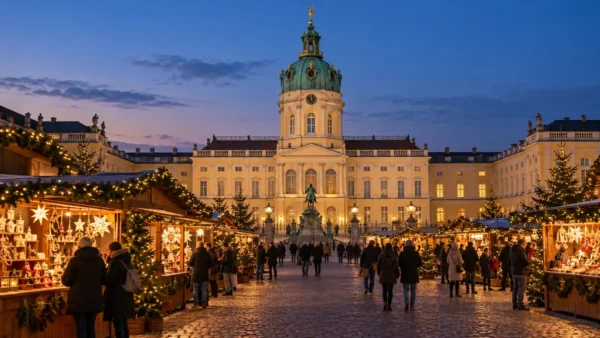
Charlottenburg Palace and its gardens are the pick for a reader who wants the royal Prussian Berlin the centre does not offer, at the cost of a half day in the west. The baroque palace and the formal gardens behind it make the visit; the river-side park beyond them is the quiet part.
The west’s other landmark, the Kaiser Wilhelm Memorial Church with its war-damaged spire on Breitscheidplatz, is worth the stop on the way back.
Further out, Teufelsberg, the abandoned listening station on a hill in the Grunewald, draws urban explorers and street-art fans, and the lakes on the city’s edge are where Berliners go on a hot day.
Kreuzberg, Friedrichshain and Prenzlauer Berg: Berlin as a place to walk, eat and stay out
The neighbourhoods are the half of Berlin the landmarks do not show, and the way to do them is a walk that ends at a market and a meal: Kreuzberg for the canal and the Turkish Market, Friedrichshain for Boxhagener Platz and the end of the East Side Gallery, Prenzlauer Berg for cafés and Mauerpark.
Kreuzberg is the liveliest walk. Start on Oranienstrasse for the bars and shopfronts, drift down to the Landwehr Canal, and time it for the Turkish Market on the Maybachufer bank. Markthalle Neun, a restored market hall, is the indoor alternative for food stalls under one roof.
Friedrichshain picks up where the East Side Gallery ends. The weekend market on Boxhagener Platz and the streets around it are the neighbourhood’s centre, and the Spree bank is a short walk away.
Prenzlauer Berg is the calmer option: tree-lined streets, cafés, restored apartment blocks and Mauerpark on a Sunday. Neukölln, south of Kreuzberg, is the next step on a second visit, when the first set of neighbourhoods feels familiar.
Eating here counts as a thing to do. Order a currywurst at Curry 36 in Kreuzberg or at Konnopke’s Imbiss in Prenzlauer Berg, eat a döner standing up, and try a Berliner Weisse in a beer garden. In the west, the KaDeWe food hall is the indoor hour for a cold day.
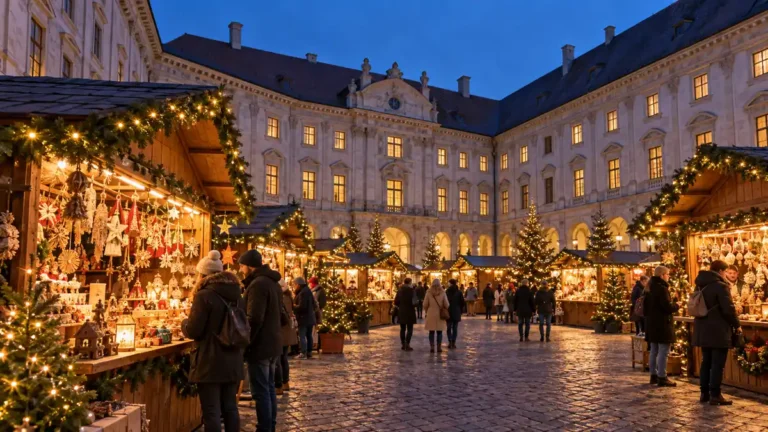
Berlin’s nights carry a reputation of their own, built on the club scene of Kreuzberg and Friedrichshain, with Berghain as the name everyone knows. In winter the market squares across the city host Berlin’s Christmas markets.
Many travelers end up wanting to sleep in the neighbourhood they liked walking, and the guide to where to stay in Berlin matches each district to the kind of trip it suits.
Which Berlin sights suit you? Picks by the kind of trip you are taking
The shortlist holds for everyone, but the second and third day change with the traveler. The biggest swap is for the museum skeptic, who trades Museum Island for the Berlin Wall Memorial and Tempelhofer Feld.
- History first: the Topography of Terror, the Berlin Wall Memorial and the Tränenpalast, then the Sachsenhausen day trip covered in the last section.
- Museum first: the Neues Museum, the Jewish Museum and the Pergamon Panorama, with the Museum Pass if you have three days to fill.
- Families: the dinosaur hall of the Natural History Museum (Museum für Naturkunde), the trains and aircraft of the German Museum of Technology, kites on Tempelhofer Feld and the lift up the TV Tower.
- Nights out: Kreuzberg and Friedrichshain after dark, Berghain by reputation and the evening food stalls at Markthalle Neun.
- Parks and cafés: the Tiergarten, a slow coffee in Prenzlauer Berg, Mauerpark on Sunday and a Spree cruise to rest the legs.
- Rainy day: Museum Island, the Jewish Museum, the DDR Museum, the Pergamon Panorama and the KaDeWe food hall.
When Museum Island is the wrong pick
Museum Island is the wrong pick for a traveler who does not enjoy museums, or one with a single day in Berlin. A scarce day spent indoors on collections is a day taken from what only Berlin offers.
The better day combines the Berlin Wall Memorial, the Topography of Terror and either Tempelhofer Feld or the East Side Gallery walk. What you give up is the Neues Museum and Nefertiti, the one loss worth weighing before you decide.
Potsdam and Sachsenhausen: the two trips worth leaving Berlin for
Two day trips earn a day from a first visit: Potsdam’s Sanssouci for palaces and gardens, and the Sachsenhausen Memorial for the history-first traveler. Most short trips do only one, and the choice follows the reader.
Potsdam is the trip for anyone who enjoyed Charlottenburg and wants more: Frederick the Great’s Sanssouci palace and its terraced park. Sachsenhausen, a former concentration camp north of the city, is a heavy day and the essential one for travelers following the history thread; those who want a guide can book this day trip from Berlin. Rail times and the way to reach both sit in the Berlin travel guide.
If You Only Read This
- On a first visit, put the Reichstag dome, the Brandenburg Gate, Museum Island, one Berlin Wall site, the Memorial to the Murdered Jews of Europe and the Topography of Terror ahead of everything else.
- Pick the Berlin Wall Memorial at Bernauer Strasse to understand how the border worked and the East Side Gallery for the painted riverside stretch, and give Checkpoint Charlie no more than a few minutes.
- The Pergamonmuseum is closed for refurbishment, but the rest of Museum Island is open, the Neues Museum is the house to choose and the Pergamon Panorama opposite the island stands in for the antiquities.
- The Reichstag dome is the best free view in Berlin but works only with an advance registration, while the TV Tower gives the view from highest up for a ticket bought online.
- The Topography of Terror, the Berlin Wall Memorial and the Jewish Museum’s core exhibition all cost nothing, so ticket money goes furthest on Museum Island.
- A traveler who does not enjoy museums gets more from a day at the Berlin Wall Memorial, the Topography of Terror and Tempelhofer Feld than from Museum Island.
- For markets and walking, Kreuzberg has the canal and the Turkish Market, and Prenzlauer Berg has the cafés and Mauerpark on a Sunday.
Plan the Rest of the Berlin Trip
- Berlin travel guide: how many days, when to go, arriving, costs and the day-trip connections.
- Berlin itinerary for three days: the shortlist put into days in walking order.
- Where to stay in Berlin: a base near the sights and neighbourhoods you chose.
Did this guide save you time or money? Tripstou is independent and reader-funded — if you'd like to give something back, you can support the site with a crypto contribution of any size.