For a first visit, the Cologne Christmas markets to see are the four central ones: the Cathedral market for the backdrop, Heinzels Wintermärchen for families and the ice rink, Markt der Engel after dark, and the harbour market for the Rhine setting. All four fit into one day on foot. A second day pays off only if you want time on the ice, the harbour at leisure and a slower evening among the angels. Friday and Saturday evenings are the busiest, so a weekday or a late-afternoon start changes the experience more than the order you pick.
The markets sit close enough to walk between, and Cologne’s tourist office maps an order for doing it, from the cathedral square out to Rudolfplatz. This page follows that order, then sets out when in the season each market runs, what to eat and drink, and how paying works.
Two German words come up throughout. A Weihnachtsmarkt is a Christmas market, and Glühwein is the hot spiced wine every one of them pours.
The Short Version
- The Cathedral market on Roncalliplatz is the classic backdrop and the busiest of the four, so see it in daylight or on a weekday.
- Heinzels Wintermärchen, split across Alter Markt and Heumarkt, is the pick for families, craft stalls and skating on the Heumarkt rink.
- Markt der Engel at Neumarkt is the market to save for after dark, when its sky of stars is lit and the mood is calmer and more local.
- The official walk runs from the cathedral to Alter Markt and Heumarkt, along Schildergasse to Neumarkt and on to Rudolfplatz, with the harbour market as a detour along the Rhine.
- One day on foot covers the central markets, and a second day buys the harbour at leisure, time on the ice and a slower evening at Neumarkt.
- Avoid Friday and Saturday evenings at the cathedral, and remember that on Totensonntag, the Sunday before the first Advent weekend, the Cathedral market and Markt der Engel stay closed.
Which Cologne Christmas market is the best?
No single Cologne Christmas market is best for everyone; three verdicts cover most visitors. The Cathedral market on Roncalliplatz is the classic, the one everyone photographs, and the busiest. Heinzels Wintermärchen is the pick for families, crafts and skating. Markt der Engel at Neumarkt is the one locals and after-dark visitors prefer. The most famous backdrop costs you the calmest atmosphere.
The Cathedral market is the wrong first stop on a Friday or Saturday evening, with small children in tow, or when you want to sit down with a drink. Start at Heinzels instead. Its two squares spread the crowd, and the rink, carousel and Ferris wheel keep children busy. Come back to the cathedral square in daylight.
The harbour market is the setting-led pick. It is the only one of the four on the Rhine, with a ship at the quay and a Ferris wheel that looks back at the cathedral. Choose it when the river view matters more to you than old-town bustle.
See the Cathedral market by daylight and give your evening to Neumarkt: the spires frame the stalls best before the crowds peak, and the angel market only comes into its own once its star sky is lit.
| Market | Where | Best for | Season shape |
|---|---|---|---|
| Cathedral market | Roncalliplatz | The classic cathedral backdrop | Mid-November until just before Christmas |
| Heinzels (Alter Markt) | Alter Markt | Craft stalls and children’s attractions | Opens about a week later; closes before Christmas |
| Heinzels (Heumarkt) | Heumarkt | Skating and Eisstock | Opens about a week later; runs into January |
| Markt der Engel | Neumarkt | Atmosphere after dark | Mid-November until just before Christmas |
| Harbour market | Im Zollhafen, by the Chocolate Museum | The Rhine setting | Opens first; runs into early January |
| Smaller markets | Rudolfplatz, Friesenplatz area, Stadtgarten | A stop on the walk | Line-up shifts from season to season |
How many Christmas markets does Cologne have?
Cologne has four big central Christmas markets, and any higher number depends on where you stop counting. The four are the ones the mini-train links: the Cathedral market, Heinzels Wintermärchen (spread over Alter Markt and Heumarkt), Markt der Engel and the harbour market. The official walk adds smaller ones — Nikolausdorf, Heavenue and, as an extension, Stadtgarten — and neighbourhood markets run beyond the centre. That is why blogs quote anything from four to eight: some count Heinzels twice, some include the neighbourhood markets, and the smaller line-up changes from one season to the next.
The four central markets: Cathedral, Heinzels, Markt der Engel and the harbour
The four central markets are the ones a first visit is built around, and each does one thing better than the others: the Cathedral market gives the backdrop, Heinzels the family attractions and the ice, Markt der Engel the atmosphere, and the harbour market the Rhine. The Christmas Market Express mini-train links all four.
Weihnachtsmarkt am Kölner Dom: the classic backdrop on Roncalliplatz
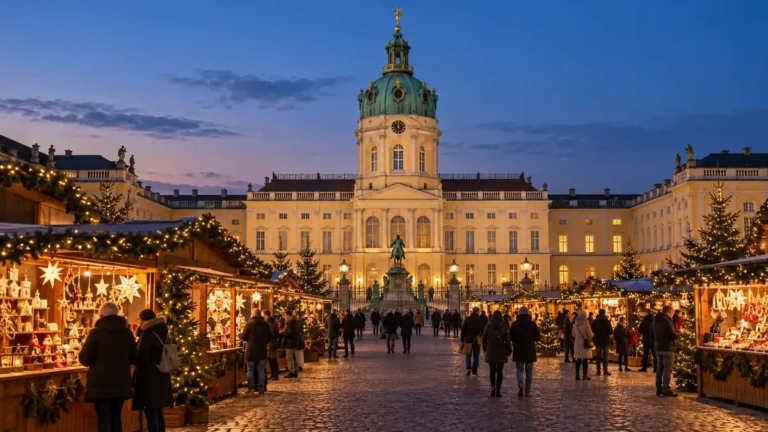
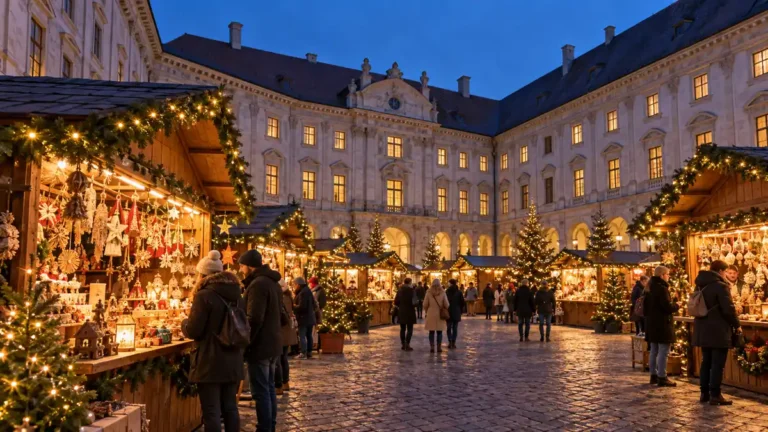
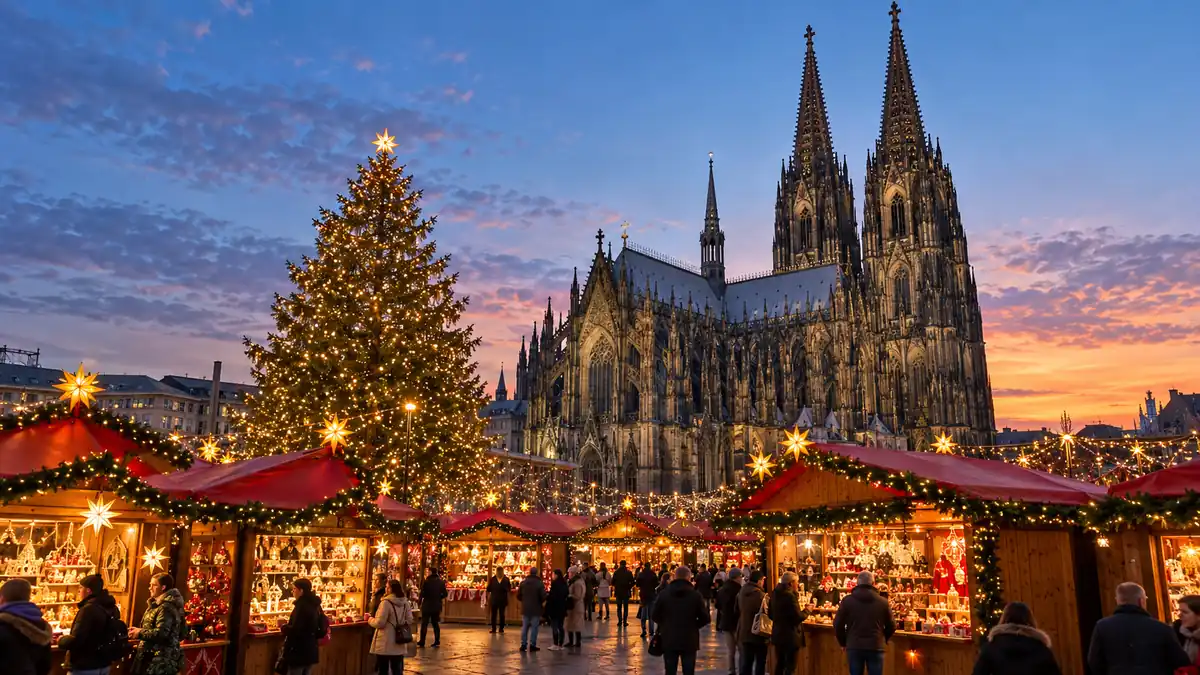
The Weihnachtsmarkt am Kölner Dom fills Roncalliplatz, the square in front of the cathedral, with up to 140 stalls gathered around a tall natural Christmas tree. A light tent glows above the stalls, and a stage programme runs through the season. Children get a historic carousel and activities of their own. The market also has its own mug, the Wimmeltasse.
No market is easier to reach. Stadtbahn lines 5, 16 and 18 stop at Dom/Hauptbahnhof, at the edge of the square, so arriving by train puts you at the stalls within minutes.
The cathedral is also the hinge of the whole market map. The square in front of it hosts the main market; Alter Markt and Heumarkt lie a short walk into the old town; and the Hohenzollern Bridge and the Rhine promenade lead along the river to the harbour market.
Come here for the postcard version of a Cologne Christmas, with the twin spires rising over the stall roofs, and come early in the day to see it without the evening crush.
Heinzels Wintermärchen: Alter Markt, Heumarkt and the ice rink
Heinzels Wintermärchen takes its theme from the Heinzelmännchen, the helpful house gnomes of a Cologne legend, and spreads across two neighbouring old-town squares. The two halves feel different enough to plan separately.
Alter Markt is the craft half. Its Handwerkergasse is a lane of craft stalls, and the market adds a Ferris wheel, a carousel and a children’s Christmas post office for letters to Santa.
Heumarkt is the ice half. A rink loops around the equestrian statue in the middle of the square, with lanes for Eisstock, the German cousin of curling. Rink tickets sell online or at the box office.
Heinzels opens about a week after the other central markets. Its Heumarkt half, ice rink included, keeps going into January. Bring the children here, or anyone who wants to skate between mugs of Glühwein.
Markt der Engel at Neumarkt: the one to save for after dark
Markt der Engel is the Cologne market that rewards an evening visit most. Its stalls sit under a lit sky of stars, and angels walk among the visitors. The Engelbar, its drinks bar, is the place to stop with a mug and watch the square.
The mood is calmer and more local than at the cathedral. This is the market for the visitor who prefers atmosphere to spectacle, and it is at its best once the lights are on.
Hafen-Weihnachtsmarkt: the Rhine market by the Chocolate Museum
The Hafen-Weihnachtsmarkt is the only central market on the water, set out at Im Zollhafen on the Rhine. White sail-like pagoda tents line the quay, mulled wine is served aboard a three-masted ship, and sea shanties and a pirate programme set the tone. Its Ferris wheel looks across to the cathedral and the river.
The Chocolate Museum is the landmark that finds it: the market fills the quay right beside the museum. That makes the two an easy pairing, with the museum earlier in the day and the harbour stalls once the lights come on.
The harbour market opens first and runs into early January. Pick it for the river with your Glühwein, or for a visit after Christmas, when it is one of the few markets still trading.
Nikolausdorf, Heavenue and Stadtgarten: the smaller markets worth adding
None of the three smaller markets is a reason to come to Cologne, but each earns a stop when it lies on your way: Nikolausdorf for a village feel at the old city gate, Heavenue for a loud late-evening finish, and Stadtgarten for a small local market in the park. All three sit on the official walk or just off it, and the smaller line-up shifts from season to season.
Nikolausdorf, the St Nicholas village, fills Rudolfplatz in front of the Hahnentorburg, one of Cologne’s medieval city gates. Its village-style layout and family focus make it the natural pause for parents whose children are flagging by the far end of the walk.
Heavenue is Cologne’s LGBTQ+ Christmas market: flashy, LED-lit and loud with music. It sits near Rudolfplatz and Friesenplatz and marks the end of the official walk. Save it for a group that wants the night to keep going.
Stadtgarten is a small, local market in the park near the Belgian Quarter, reached by the optional extension of the walk. It suits travelers who have done the big four and want a quieter finish among Cologne residents.
How to see Cologne’s Christmas markets in a day or two
One day, or one long afternoon running into the evening, covers Cologne’s central Christmas markets on foot. Two days add the harbour market at leisure, time on the Heumarkt ice rink and a slower evening at Markt der Engel. The harbour decides it: it sits off the walking line, so a one-day plan treats it as a detour, while a two-day plan gives it an afternoon of its own.
Cologne’s tourist office maps the walk between the markets in this order:
- Roncalliplatz, for the Cathedral market
- Alter Markt and Heumarkt, for Heinzels Wintermärchen
- Along the Schildergasse shopping street to Neumarkt, for Markt der Engel
- Along Mittelstraße to Rudolfplatz, for Nikolausdorf
- On to Heavenue, near Friesenplatz, where the walk ends
The whole route is about 3 km, or about 45 minutes of walking before any stops. From the end you can extend through the Belgian Quarter to Stadtgarten, then take tram line 5 back to the cathedral.
The harbour market is a detour from the cathedral or Heumarkt side along the Rhine promenade, not a stop on the walk. On a one-day plan, fit it in between the old-town squares and Neumarkt, or hand the return leg to the mini-train.
Walk the route in the official order and the timing takes care of itself. The cathedral square and the Alter Markt craft lane come up in daylight, and you reach the angels at Neumarkt just as the lights take over.
A second day can also go further afield. The Aachen add-on and how Cologne compares with other market cities are covered in our guide to Germany’s best Christmas markets.
When does the Christmas Market Express help?
The Christmas Market Express helps when you want the harbour market without walking back along the Rhine, or when small children or tired legs set the pace; between the three old-town stops, walking is usually quicker. The mini-train links the Cathedral, Alter Markt for Heinzels, the Chocolate Museum for the harbour market, and Neumarkt for Markt der Engel. A round-trip ticket lets you hop on and off at any of the four stops; buy tickets online or at the stops. Use it for the long Rhine leg and keep the old-town stretch on foot.
Tours and activities
Book skip-the-line tickets, day trips and local tours with free cancellation on most activities.
You can also browse everything on getyourguide.com.
Tripstou may earn a commission if you book through this link, at no extra cost to you.
When to go: the season shape, Totensonntag and the quieter hours
Cologne’s Christmas markets open from mid-November and most close just before Christmas, while the harbour market and the Heumarkt ice rink stay open into early January. A pre-Christmas visit gets every market; a visit between Christmas and New Year still gets two. Within any week, weekdays and late afternoons beat Friday and Saturday evenings.
The season follows three patterns:
- The harbour market opens first, in mid-November, and runs into early January.
- The Cathedral market and Markt der Engel run from mid-November until just before Christmas.
- Heinzels Wintermärchen opens about a week after the others; its Alter Markt part closes before Christmas, while the Heumarkt part with the ice rink runs into January.
Most markets open from late morning until around 9 or 10 pm, with the later closing usually on Friday and Saturday.
The Cathedral market draws the heaviest crowds on Friday and Saturday evenings. Go there on a weekday, or in the afternoon, and keep the dark hours for Markt der Engel. Dress for standing outdoors for a whole evening; the walk keeps you moving, but the queues for Glühwein do not.
Between Christmas and New Year the choice narrows to the harbour and the Heumarkt rink, which makes that week better for skating than for market-hopping.
If the markets are one stop on a longer trip, our guide to planning a trip to Germany covers routing the rest of the country around them.
Are Cologne’s Christmas markets open on Sunday?
Yes, Cologne’s Christmas markets open on ordinary Advent Sundays, with one exception: Totensonntag, the German day of remembrance for the dead, which falls on the Sunday before the first Advent weekend. That day the Cathedral market and Markt der Engel stay closed, and the harbour market opens only in the evening.
What to eat and drink at Cologne’s Christmas markets
Glühwein in a deposit mug is the ritual at Cologne’s Christmas markets, Feuerzangenbowle is the stronger show-piece, and the food to look for is bratwurst, Flammlachs, Käsespätzle, Flammkuchen and roasted almonds, with each market adding stalls of its own.
- Feuerzangenbowle: mulled wine with a rum-soaked sugar loaf set alight above it.
- Bratwurst: grilled sausage in a bread roll, the standard walking snack.
- Flammlachs: salmon fillets fixed to wooden planks and flame-grilled beside an open fire.
- Käsespätzle: soft egg noodles baked with cheese and topped with onions.
- Flammkuchen: a thin, crisp flatbread with cream, onions and bacon.
- Gebrannte Mandeln: roasted almonds in a crunchy sugar coating.
Two drinks are worth matching to their market. The Engelbar at Neumarkt is the place for a sit-down Glühwein under the star sky, and at the harbour the mulled wine comes aboard the three-master. With children, look for Kinderpunsch, an alcohol-free fruit punch.
Do Cologne Christmas markets take cards, and how does the mug deposit work?
Some stalls take cards, but card acceptance varies by stall, so bring some cash. Hot drinks come in a mug with a deposit, called Pfand, added to the price. Hand the mug back and the deposit is returned; keep it and the deposit is what you paid for a souvenir. The Cathedral market’s Wimmeltasse is the one worth keeping if you want a mug from Cologne.
How We Checked This
This page is a curated pick among Cologne’s central Christmas markets and the order to walk them; it is not a guide to the city or a ranking of Germany’s market towns, and because it describes the season by its shape, it prints no dates or prices.
Written with AI assistance, this page had its market details and walking order checked by Alex Perrut, working in tourism since 2015, for the Tripstou editorial team. Our editorial process sets out the steps.
Official sources consulted: Köln.de city portal, KölnTourismus, Heinzels Wintermärchen, Markt der Engel, NRW Tourism.
Did this guide save you time or money? Tripstou is independent and reader-funded — if you'd like to give something back, you can support the site with a crypto contribution of any size.