Nuremberg is the best city in Germany for a first Christmas market trip: its Christkindlesmarkt on the Hauptmarkt is the most famous in the country, opened each season by the Nuremberg Christkind and built around Rostbratwürste and Lebkuchen. Dresden is the pick for the oldest documented tradition and Christstollen, Cologne for a market at the foot of the cathedral with several more in walking range, and Berlin for the widest choice and the longest season. The one thing that changes the answer is trip style: one headline city, or two paired by train.
The sections below match each of the big five to a kind of traveler, then show where a small walled town beats them all, which two cities pair well without a car, and how the season runs. No dates appear here: the markets open in late November, and each city page carries its own detail.
Nuremberg is the first-timer’s pick; the rest depends on your trip
Nuremberg wins a first visit on fame, setting and food tradition at once: the Hauptmarkt sits in the heart of the old town, and the market looks the way most people picture a German Christmas market. The ranking here follows the character of each market and the town around it, not its size. The trade-off runs through every choice on this page: the most famous markets are also the most crowded.
- Tradition and a first visit: Nuremberg, for the Christkindlesmarkt, the Christkind opening and the sausages and gingerbread that made it famous.
- The oldest market and the best Stollen: Dresden, where the Striezelmarkt is usually called Germany’s oldest.
- A cathedral backdrop: Cologne, with the market am Dom on the cathedral square.
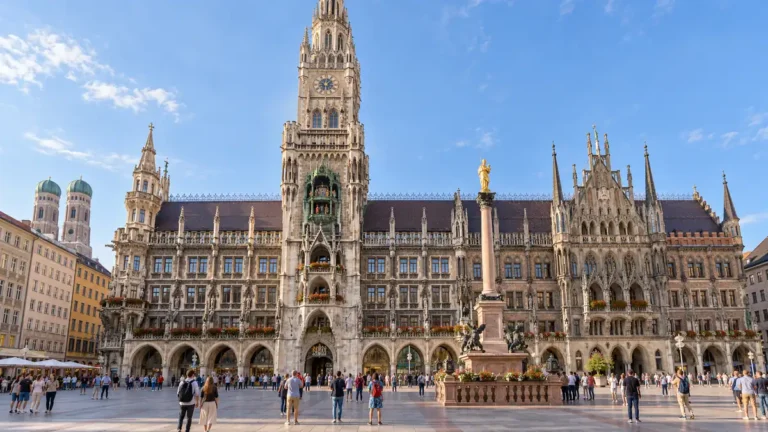
- A Bavarian old town: Munich, centred on Marienplatz and its town hall.
- The most choice: Berlin, with dozens of markets spread across one big city.
- Small-town atmosphere: Rothenburg ob der Tauber or Esslingen am Neckar, for old walls and one market done well.
The big five and what each one does best
Nuremberg, Dresden, Cologne, Munich and Berlin top every shortlist, and they differ by character, not quality: Nuremberg is the famous one, Dresden the oldest, Cologne the cathedral market, Munich the Bavarian one and Berlin the biggest. Pick the character that fits your trip and skip to it.
Nuremberg: the Christkindlesmarkt everyone pictures
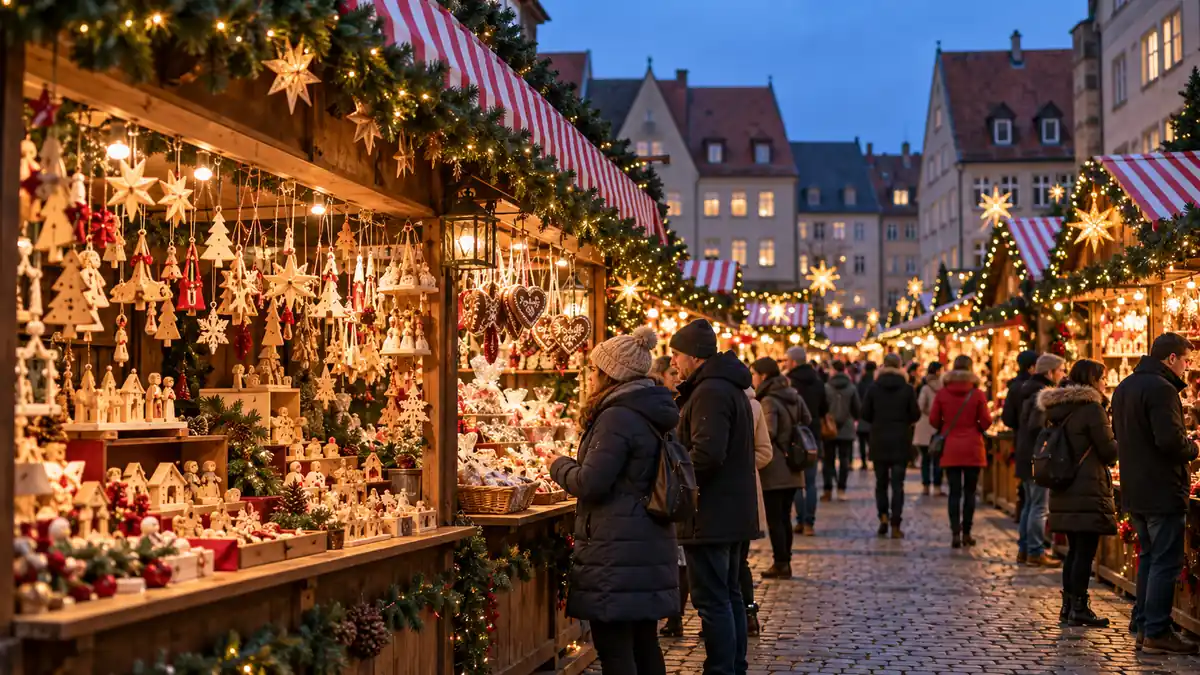
The Christkindlesmarkt on the Hauptmarkt is Germany’s most famous Christmas market. The Nuremberg Christkind opens it on the Friday before the first Advent, a ceremony that draws the season’s first big crowd. Its roots go back to the sixteenth century, and the first written record dates from the seventeenth.
Food is half the reason to come. Nürnberger Rostbratwürste, the city’s small grilled sausages, and Lebkuchen, its spiced gingerbread, are the two things to eat on the square. Two extras set it apart from the other big markets: the Market of the Sister Cities, with stalls from Nuremberg’s twin towns, and a dedicated children’s area, which makes it the easiest of the five with kids in tow.
Come here for a first German Christmas market, or with a family. The market fills one day; the old town fills the rest, so read up on what else to do in Nuremberg before deciding how long to stay.
Dresden: the oldest documented market and the home of Stollen
Dresden’s Striezelmarkt on the Altmarkt dates back to the fifteenth century and is usually called Germany’s oldest Christmas market. Dresdner Christstollen is the city’s signature bake, and it is the reason food-led travelers put Dresden first.
Two more markets sit within a short walk: a medieval Christmas market in the Stallhof courtyard and a market at the Frauenkirche. Dresden suits travelers who care more about history and baking than about a famous opening ceremony.
Cologne: the cathedral market plus several more on foot
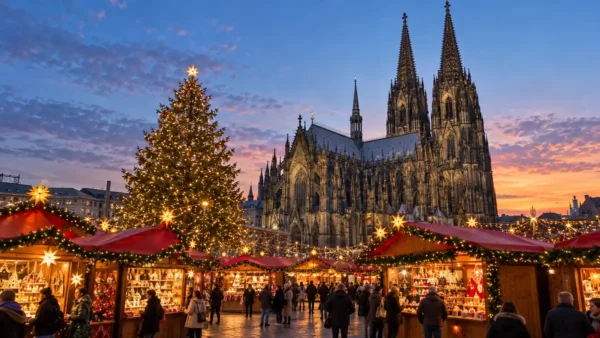
Cologne’s strength is the setting. The market am Dom fills Roncalliplatz right beside the cathedral, and no other German market has a backdrop as dramatic. Two more are a short walk apart:
- Markt der Engel, the Angel’s Market, on Neumarkt;
- Heinzels Wintermärchen on the Alter Markt, in the heart of the old town.
Cologne is the city for one striking backdrop and real variety in a single evening. For the full set and the order to walk them in, see the guide to Cologne’s Christmas markets.
Munich: Marienplatz under the Alps’ shadow
Munich’s Christkindlmarkt fills Marienplatz in front of the town hall, and it is the most Bavarian of the big five. The stalls spread from the square into the pedestrian streets of the old town, so the best way to take it in is slowly on foot, eating and drinking from one stall to the next.
For a contrast, the medieval market on Wittelsbacherplatz swaps the classic stalls for a period setting. Munich fits travelers who want Bavarian old-town atmosphere and a big-city base, and it pairs naturally with Nuremberg. The rest of the city’s markets are covered in Munich’s Christmas markets.
Berlin: the widest choice and the longest season
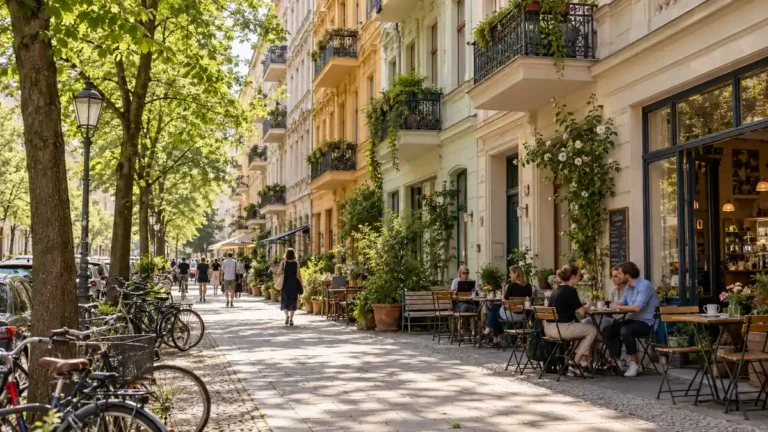
Berlin has dozens of Christmas markets, more choice than any other German city, and some Berlin markets stay open past Christmas, so a traveler arriving in the last days of December still finds stalls lit when most of the country has packed up.
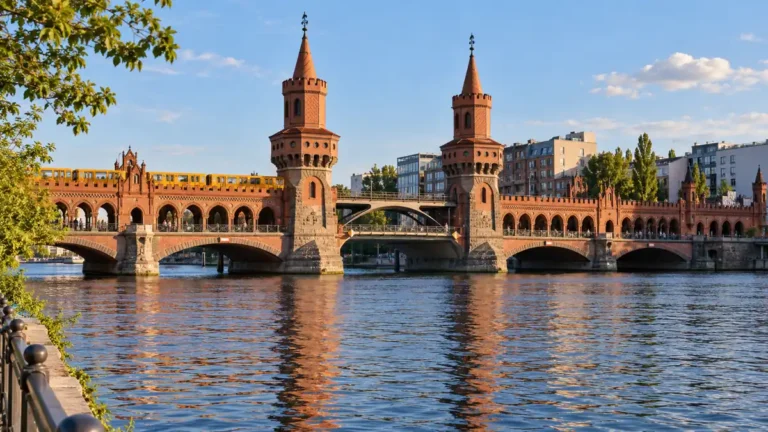
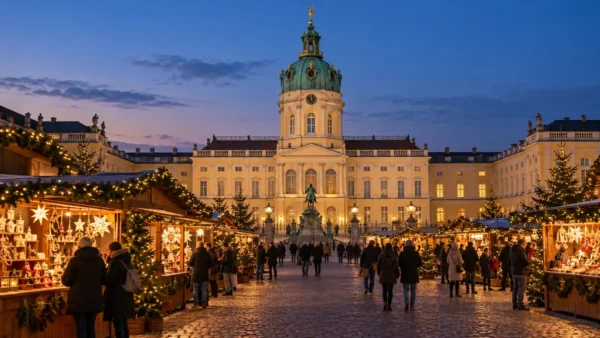
WeihnachtsZauber at Gendarmenmarkt is the classic, set on one of the city’s grandest squares. The market in front of Charlottenburg Palace is the palace-backdrop alternative. Berlin works best when the markets are one layer of a big-city trip, not its whole point. To narrow down the list, start with Berlin’s Christmas markets.
The table puts the five side by side so the choice comes down to one line.
| City | Strongest for | Signature market | Pairs well with |
|---|---|---|---|
| Nuremberg | First visit, families | Christkindlesmarkt, Hauptmarkt | Munich |
| Dresden | Tradition, Stollen | Striezelmarkt, Altmarkt | Berlin, Leipzig |
| Cologne | Cathedral setting, variety | Market am Dom, Roncalliplatz | Aachen |
| Munich | Bavarian old town | Christkindlmarkt, Marienplatz | Nuremberg |
| Berlin | Most choice, big-city trip | WeihnachtsZauber, Gendarmenmarkt | Dresden, Leipzig |
Tours and activities
Book skip-the-line tickets, day trips and local tours with free cancellation on most activities.
You can also browse everything on getyourguide.com.
Tripstou may earn a commission if you book through this link, at no extra cost to you.
When does a small town beat the big names?
A small town beats the big names when atmosphere matters more than choice. You get a walled old town, one or two markets and thinner crowds, and you give up things to do once the stalls close. This is the one case where Nuremberg is not the best answer.
Rothenburg ob der Tauber: the Reiterlesmarkt inside the walls
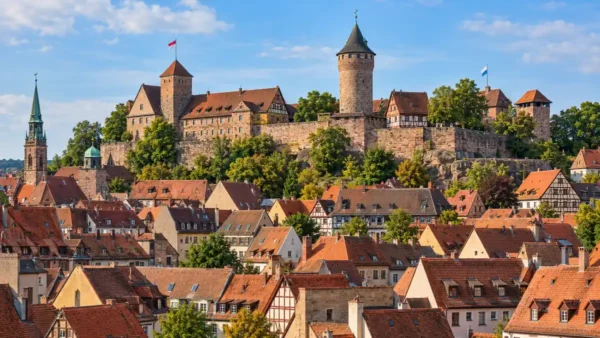
Rothenburg’s Reiterlesmarkt is the postcard version of a German Christmas market: stalls in a medieval old town, inside its town walls. The town is small, so the market is too, and weekends get busy with day visitors. It works best as a stop on a Munich or Nuremberg trip, not as a base for several nights.
Esslingen am Neckar: the medieval market
Esslingen’s medieval Christmas market is the strongest answer for anyone searching for a medieval market in Germany. Costumes and crafts take the place of the usual rows of Glühwein huts. Go for the spectacle and the handmade goods; the standard Christmas-market experience is better elsewhere.
Also worth knowing: Leipzig, Aachen, Hamburg and the Ravenna Gorge
Leipzig’s market fills the Marktplatz and slots neatly into a Berlin and Dresden trip. Aachen’s spreads around the cathedral and the Rathaus, an easy add-on to Cologne.
Hamburg has two very different markets: the historic one on the Rathausmarkt and Santa Pauli on Spielbudenplatz, an adults-oriented market by the Reeperbahn. If the city is on your route, plan two days in Hamburg around them.
The Ravenna Gorge market in the Black Forest sits beneath a viaduct, one of the most striking settings in the country, but it opens on weekends only.
How to see two markets on one trip by train
Three pairings work well without a car: Munich with Nuremberg, Berlin with Dresden (Leipzig as an optional third), and Cologne with Aachen. Each is an easy train hop, so the second city can be a same-day trip from the first or a short second stay.
Munich and Nuremberg combine a big-city base with the most famous market in the country. Base in Munich for the choice of evenings out and reach Nuremberg by train for its Christkindlesmarkt; Rothenburg can join the plan if you want a small town too.
Berlin and Dresden pair the capital’s range with the oldest market and its Stollen. Leipzig sits between them and makes a natural third stop on a longer trip, not on a long weekend.
Cologne and Aachen are cathedral plus cathedral: two markets set around their cathedrals, close enough that Aachen fits into an afternoon and evening from a Cologne base.
Two cities is the sensible ceiling for a long weekend. A third turns the trip into train platforms, and the markets look their best after dark, when you want to be on a square, not in a carriage. For the rest of the trip around the markets, the Germany travel guide covers the wider planning.
When do German Christmas markets open?
German Christmas markets run from late November to the days before Christmas, and most wind down just before Christmas Eve. In Nuremberg the traditional opening is the Friday before the first Advent, when the Christkind opens the Christkindlesmarkt.
Two exceptions change the choice of city. Some Berlin markets stay open past Christmas, so a late-December arrival points there. Small or rural markets, such as the one in the Ravenna Gorge, open on weekends only, which rules them out for a midweek trip. The city pages carry the opening detail for each market.
How We Chose and Checked These Markets
This page picks the German city, or pair of cities, that suits a Christmas market trip, judged by trip type and how easily two cities combine by train; it does not list every market in a city, plan an itinerary or give opening dates, which belong on the city pages.
For the Tripstou editorial team, Alex Perrut, working in tourism since 2015, went over this selection of cities; it was written with AI assistance, following the steps in our editorial process.
Official sources consulted: Nuremberg Christkindlesmarkt (City of Nuremberg).
Christmas Market Questions, Answered
How does the mug deposit work at German Christmas markets?
You pay a small deposit of a few euros on top of the drink, and you get it back when you return the mug. Glühwein is served in a collectible mug rather than a paper cup, so the deposit is what keeps the mugs coming back. If you want the mug as a souvenir, simply keep it and the deposit covers it.
Do German Christmas markets take cards?
Some stalls do, but not all of them, so carry cash. Card acceptance is patchy and varies from stall to stall, and a few euros in coins also makes the mug deposit and small food purchases quicker at a busy counter.
When is the best time to avoid crowds at German Christmas markets?
Weekday daytime is the quietest time to visit; evenings and weekends are the busiest. Dark comes early in December, so the lights are on from late afternoon, and a weekday visit around dusk gives you the lit-up market before the evening crowd builds.
Plan the Rest of the Trip
- Germany travel guide: the wider trip around the markets, from routes to when to go.
- Berlin’s Christmas markets: which of the capital’s many markets to pick.
- Munich’s Christmas markets: the city’s markets beyond Marienplatz.
- Cologne Christmas market guide: the cathedral market and its neighbours in walking order.
Did this guide save you time or money? Tripstou is independent and reader-funded — if you'd like to give something back, you can support the site with a crypto contribution of any size.