Bologna is a food city and a working city, and both facts shape how a trip here goes. The world’s oldest continuously operating university keeps the centre young and busy, and the fairground on the city’s edge fills hotels with delegates several times a year. There is no unmissable monument to queue for. What there is instead: a compact historic centre laced with covered porticoes, a kitchen tradition locals take seriously, and a set of habits that reward visitors who arrive knowing them. This page is the preparation layer — what to order and what never to ask for, when the city actually eats, what needs booking before you land, how coperto and tipping work, and why you walk everywhere and leave the car outside. These Bologna travel tips cover behaviour, not logistics: no fares, no budgets, no day-by-day plans.
Quick Answer
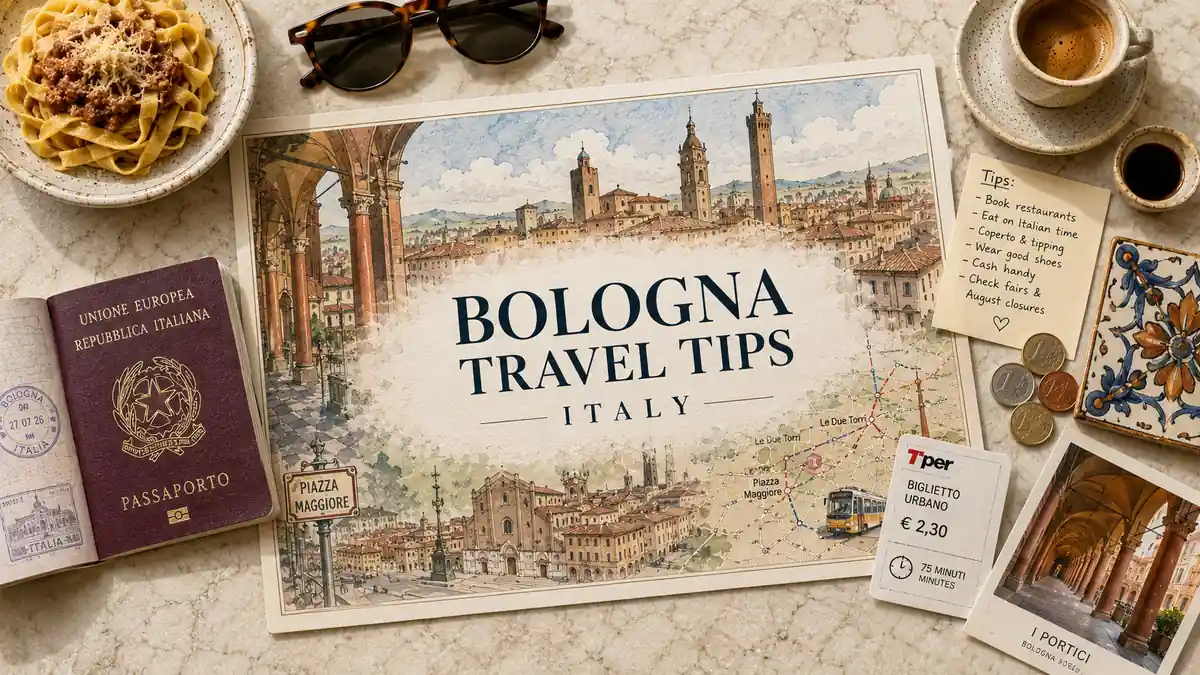
Order tagliatelle al ragù and book restaurants days ahead; spaghetti bolognese is not a local dish. Bologna eats on an Italian clock and its compact centre is porticoed and largely car-free, so timing and shoes matter more than transport. Carry a little cash, expect a coperto, and check your dates against mid-August and trade-fair weeks.
Trust Layer
Tripstou planning guide for travelers resolving one travel decision. Covers the main variable, traveler context, and practical tradeoffs.
Produced with AI assistance and reviewed by Alex Perrut, working in tourism since 2015, for the Tripstou editorial team. See our editorial process for details.
Last factual review: July 28, 2026.
Official sources consulted: Italia.it, ENIT.
Key Takeaways
- Order tagliatelle al ragù, never spaghetti bolognese — a menu offering the latter is cooking for people passing through.
- Book two or three dinners before you fly; Bologna’s small trattorias fill days ahead, especially at weekends and during fairs.
- Eat on the Italian clock: kitchens close between lunch and dinner, so an aperitivo bridges the afternoon gap.
- Treat coperto as a normal cover charge, tip only by rounding up, and ask for the bill when ready.
- Pack real shoes and follow the porticoes; the centre is walkable end to end and mostly covered.
- Check your dates against mid-August closures and trade-fair weeks, then book accommodation first when a fair is running.
Table of Contents
What should you know before visiting Bologna?
Bologna rewards eating and walking far more than sight-queuing. It is a working university and trade-fair city with a compact, porticoed historic centre that is largely closed to cars. Come expecting long lunches, covered streets and a lived-in centre, and the city delivers immediately; come chasing a headline monument and it can feel underwhelming.
Three things about Bologna change how you plan. It is genuinely compact, so almost nothing needs transport. It is a real working city, so its calendar is set by students and trade fairs more than by the tourist season. And it takes food seriously enough that a badly chosen dinner is a wasted evening in a way it would not be elsewhere.
- Food leads. Meals are the main event here, so build days around them instead of around opening hours.
- The centre is covered. Porticoes shelter most of the walkable core from sun and rain.
- Cars stay out. The historic centre is a camera-enforced limited-traffic zone.
- The city works. Students, professors and fair delegates fill the streets and the restaurants all year.
Orientation questions — whether Bologna is worth it, how many days it takes, how the centre fits together — belong to the city hub, and our Bologna travel guide answers them. This page assumes the trip is already decided and gets you ready for it.
Do people speak English in Bologna?
English is widely spoken in Bologna’s hotels, shops and city-centre restaurants, though not universally. The huge student and academic population keeps everyday English better than in many Italian cities of similar size. Step into a family trattoria, a market stall or a neighbourhood bar, however, and you will meet plenty of people who do not speak it at all.
A few Italian words go further here than fluent English does. Buongiorno on entering, grazie on leaving and il conto, per favore when you want the bill cover almost every interaction you will have. Bologna is not a city that performs for visitors, and being treated as a guest rather than a customer starts with those three phrases.
What to order in Bologna — and what never to ask for
Tagliatelle al ragù is what the world calls bolognese, and it is the dish to order here. Spaghetti bolognese is not a Bolognese dish; local kitchens do not serve it, and asking marks you instantly. The ragù belongs with fresh egg tagliatelle, whose rough surface holds a slow-cooked meat sauce that spaghetti simply sheds.
The local repertoire is small, meat-led and rich, and it repeats across the city because it works. Order within it and you will eat well almost anywhere.
- Tagliatelle al ragù — fresh egg pasta with the slow-cooked meat sauce the city is famous for.
- Tortellini in brodo — small filled pasta served in clear broth, the true local special-occasion dish.
- Lasagne alla bolognese — green spinach pasta layered with ragù and béchamel.
- Mortadella — the city’s cured pork, sliced thin, and nothing like the imitation sold abroad.
- Tigelle, crescentine and gnocco fritto — warm breads and fried dough eaten with cured meats and soft cheese.
The pasta shape is the tell. A menu that offers spaghetti bolognese is cooking for people passing through, and it usually cooks everything else that way too — treat it as a signal to walk on, not as an insult to argue about.
When do restaurants serve lunch and dinner in Bologna?
Bologna eats in two fixed windows, and both fall later than most visitors expect. Kitchens serve lunch in the middle of the day, close for the afternoon, then reopen for dinner in the evening. Between those windows you will find bars and cafés serving, but few restaurants cooking. Arrive on a northern-European schedule and you will be too early.
The afternoon gap is real and it catches people out. A restaurant with lights on and staff inside in mid-afternoon is resetting for dinner, not waiting for you. Bars, bakeries and the aperitivo hour bridge the gap, and an aperitivo — a drink with snacks before dinner — is the standard way locals fill the last stretch before the kitchens reopen.
Take the later slot when a kitchen offers you a choice. The earliest tables tend to fill with visitors, and the room only turns properly Bolognese once the students and the office crowd arrive.
Do you need to book restaurants in Bologna in advance?
Yes — book Bologna restaurants days ahead, not on the night. The city’s well-regarded trattorias are small, and they fill with locals, students and visiting business travellers long before you walk past the door. Weekends and trade-fair weeks are tightest. A short list of reservations made before you travel is the highest-value planning you can do here.
This is the habit that separates a good Bologna trip from a frustrating one. Walking a food city looking for a free table on a Saturday evening is how visitors end up in the one place with a laminated menu and space for everyone.
- Book before you fly. Two or three dinners locked in is enough; leave the rest loose.
- Weekends first. Friday and Saturday evenings go earliest and fill hardest.
- Call or email. Many small trattorias take reservations by phone and never appear on booking platforms.
- Confirm the day before. Small kitchens hold tables tightly and appreciate the courtesy.
Weekday lunch is Bologna’s loophole. Tables that are impossible on a Saturday evening often open at midday midweek, and in a working city the lunch menus are built for people who have to be back at a desk afterwards — same kitchen, shorter wait, lighter bill.
What else is worth booking before you arrive?
Book anything with fixed capacity: food tours, tastings, guided walks and any timed-entry attraction you are set on seeing. Bologna’s food experiences run in genuinely small groups, so they sell out earlier than the city’s size suggests. Museums and towers with timed entry work the same way, and access to individual monuments can change during restoration work, so confirm before you build a day around one.
Everything else needs no ticket at all. The porticoes, the market lanes, the piazzas and the food shop windows are free, open and available on the day.
Tours and activities
Book skip-the-line tickets, day trips and local tours with free cancellation on most activities.
You can also browse everything on getyourguide.com.
Tripstou may earn a commission if you book through this link, at no extra cost to you.
What is coperto, and do you tip in Bologna?
Coperto is a standard per-person cover charge added to sit-down restaurant bills, and it is not a scam. It covers the table setting and bread, appears on the menu, and is charged to locals too. Tipping on top is optional and modest, never the obligatory percentage many visitors are used to.
Service is already accounted for in the price of the meal, so a tip in Bologna is a gesture and not an arithmetic exercise. Rounding up, or leaving a small note after a memorable dinner, is plenty. Adding a large percentage does not read as generous so much as foreign, and staff will not expect it either way.
The coperto is also why nobody rushes you. You have paid for the seat, so the bill will not arrive unasked and the table is yours until you request it — say il conto, per favore when you are ready, and not before.
Broader national habits — cappuccino timing, general tipping norms, SIM cards, tap water — sit one level up, and our Italy travel tips cover them so this page can stay Bolognese.
Is Bologna walkable, and what are the porticoes like?
Yes — Bologna’s historic centre is walkable end to end, and much of it is covered. The city’s porticoes form an extensive UNESCO-listed network of arcaded walkways that shelter the main routes from sun and rain. You will walk almost everywhere here, often without getting wet, and the surfaces underfoot are old stone.
Pack real shoes. Cobbles, worn flagstones and long covered stretches punish thin soles quickly, and the walking adds up faster than the map suggests because the centre invites wandering. The porticoes also make the city unusually pleasant in bad weather, which is a genuine planning advantage.
Follow the covered routes even when they are not the direct line. Bologna is one of very few Italian cities where rain or hard sun barely changes the plan, and that only works if you use the arcades instead of cutting across open squares.
If you arrive by car, leave it outside the centre. The historic core is a camera-enforced limited-traffic zone, and the fine arrives by post long after you are home.
Walking the centre feels comfortable, including after dark in the busy porticoed core, with the ordinary big-city caution around the station and crowded nightlife streets. For the honest detail on pickpockets and street awareness, see our guide to Bologna safety.
Do you need cash in Bologna, or is card enough?
Cards work almost everywhere in Bologna, but a little cash still makes life easier. Contactless payment is standard in restaurants, shops, museums and bars, and outright refusal of cards is rare. The gaps are small and predictable: market stalls, some stand-up coffee counters, a tip left on the table. Carry a modest amount and you will never be stuck.
The places where cash matters most are the ones you are most likely to want something from on impulse — the old food-market lanes behind Piazza Maggiore, where a vendor slicing mortadella or wrapping cheese has no interest in a card machine for a small purchase. Keep coins and small notes for exactly that. A card covers everything else, including dinner.
Two timing traps: mid-August and trade-fair weeks
Two calendar patterns can quietly wreck a Bologna trip: mid-August and trade-fair weeks. Around the mid-August holiday many family-run restaurants and shops close while owners take their break, leaving a quieter, thinner city. During major fairs the opposite happens — rooms sell out across the city and prices climb, because delegates book them first.
Neither pattern is a reason to avoid Bologna. Both are a reason to check your dates before you book anything.
- Mid-August. Expect shuttered trattorias and quiet streets; the places that stay open are busier than usual.
- Fair weeks. The exhibition centre hosts large international trade fairs that absorb the city’s hotel rooms.
- Check the fair calendar. Look up scheduled events for your dates before you commit to accommodation.
- Book accommodation first. During a fair, rooms disappear well before restaurants do.
The two traps pull in opposite directions: mid-August leaves the city half-asleep, while a fair week leaves it full, expensive and wide awake. Only one is fixable after you land. In August you can simply choose different places to eat; a fair week you can only solve by booking a room early.
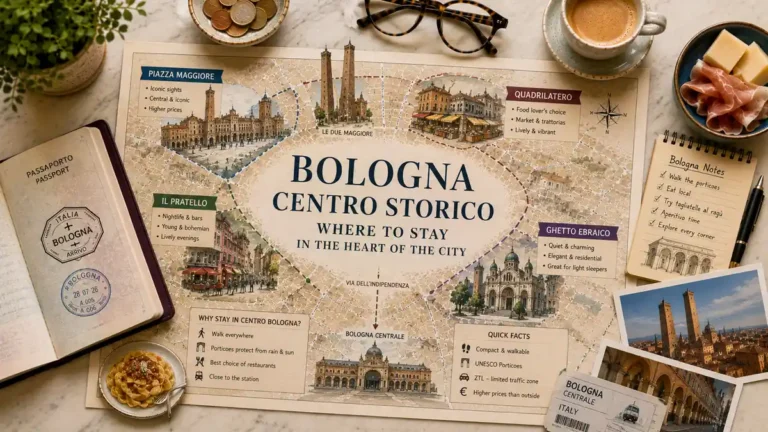
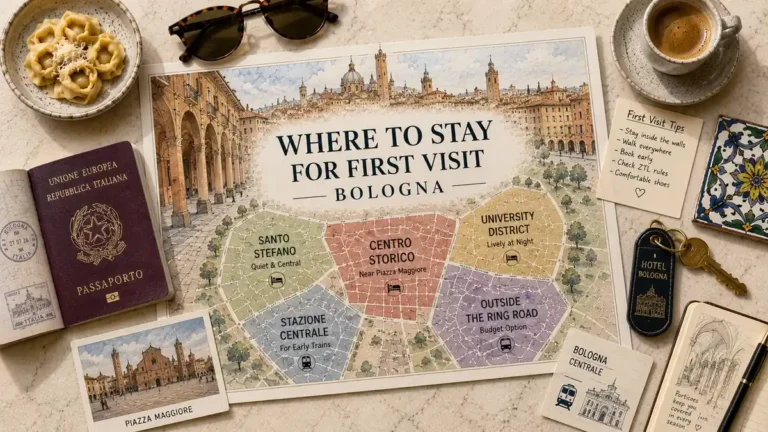
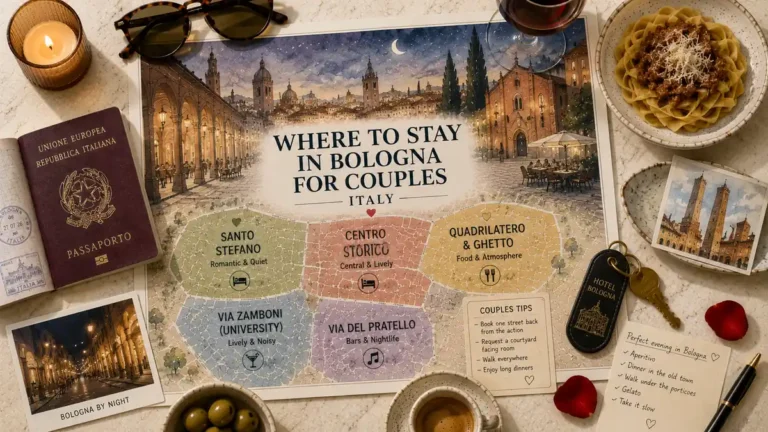
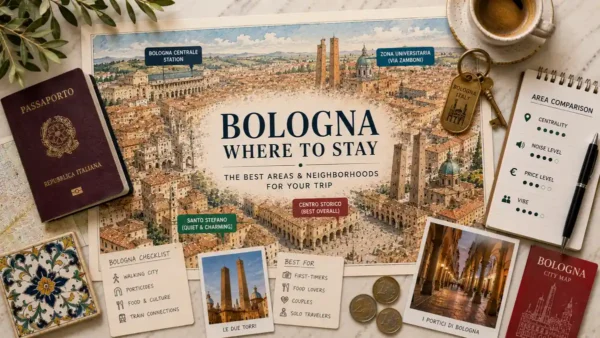
That makes the accommodation decision the one to settle first, and settling it centrally keeps you inside the walkable, porticoed core when the city is at its busiest. Our guide to where to stay in Bologna handles the area choice.
Hotels and places to stay
Compare hotels, apartments and stays for your dates in one search.
Search hotels and stays on hotels.com →
Tripstou may earn a commission if you book through this link, at no extra cost to you.
Frequently Asked Questions
How many days do you need in Bologna?
A long weekend is the usual answer for a first visit, which is long enough to eat properly, walk the porticoed centre and still slow down. Add a day if you want tastings, markets and the food-experience side without rushing meals. Any shorter and meals crowd out everything else.
Can you climb the Asinelli Tower?
Do not plan a trip around climbing it. Access to the Asinelli Tower has been affected by consolidation work on the neighbouring Garisenda, and no reopening date has been confirmed. Check the official Bologna tourist board close to your dates before building an afternoon or a ticket purchase around the towers.
Is Bologna good for vegetarians?
Workable, but it takes planning. The classic Bolognese repertoire is meat-led — ragù, tortellini in brodo, mortadella, cured meats with warm bread — so the signature dishes are mostly off the table. Vegetarian options exist, especially with fresh pasta, cheese and vegetable dishes, but choose restaurants deliberately instead of walking in hungry.
Is the Bologna Welcome Card worth it?
Only if you will genuinely use what it covers. The card bundles access to attractions and services, so it pays off for visitors planning several paid sights in a short stay, and not for a trip built around eating and walking. Check the current inclusions on the official tourist board site before buying.
What shoes should you wear in Bologna?
Flat shoes with grip, already broken in. The centre’s cobbles, worn flagstones and polished portico paving turn slippery in rain, and smooth soles or heels catch in the gaps between stones. Trainers or sturdy flats handle a full day of walking; new or stiff pairs will not survive the distances the centre invites.
Do you need an umbrella in Bologna?
Usually not. The portico network shelters most of the routes you will actually walk, so a wet afternoon in the centre rarely needs one. Pack a compact folding umbrella for the uncovered gaps between arcades, the crossings over open piazzas, and anything you do beyond the historic core.
Related Guides
Keep planning with these Bologna and Italy resources, each covering a decision this page deliberately leaves to a specialist guide.
- Bologna travel guide — orientation, how many days to give the city, and how the centre fits together.
- Where to stay in Bologna — choosing an area and a base, including around fair weeks.
- Bologna safety — pickpocket awareness and street-smart detail for the centre and station area.
- Italy travel tips — the national etiquette, money and everyday habits layer beyond Bologna.
- Getting around Bologna — tickets, passes and the practicalities of the ZTL.
- Bologna trip cost — daily budgets and what a stay in the city typically costs.
Did this guide save you time or money? Tripstou is independent and reader-funded — if you'd like to give something back, you can support the site with a crypto contribution of any size.