The Peloponnese experiences to build a trip on are the Argolid ruins, an Epidaurus performance night and a Monemvasia overnight. How many nights you have changes the rest: a guided day trip from Athens covers Mycenae, Epidaurus and Nafplio, and two or more nights add Olympia, Mystras, the Mani and Diros. Self-drivers sleeping inside the region get the best version, seeing ruins early or late in summer.
The Peloponnese holds more worthwhile ruins, fortress towns and wild landscapes than one trip can absorb. The real question is which experiences to build the trip around, and which version of each to do. A Bronze Age citadel, a night at an ancient theatre, a Byzantine town on a sea rock, a cave explored by boat and mountain trails above the Messinian Gulf all compete for the same few days.
This guide gives a verdict on each experience: who it suits, what it costs you in time and effort, and who should skip it. It settles the most common question first — whether the Argolid works as a day trip from Athens — and then weighs the experiences that only open up once you sleep inside the region. It ends with a picking rule matched to the number of nights you have.
Coverage and Review
This page weighs which Peloponnese experiences, from Mycenae’s citadel to the Mani trails, are worth your time and which version of each to do; it does not rank towns, plan a day-by-day route or cover bases and car hire, which the linked guides handle.
The verdicts on these Peloponnese experiences began as a draft written with AI assistance and were then edited by Alex Perrut, working in tourism since 2015, for the Tripstou editorial team. What that edit covers is set out in our editorial process.
Official sources consulted: Visit Greece, Greek Ministry of Tourism.
On This Page
The Best Things to Do in the Peloponnese, and Who Each Suits
Mycenae’s citadel, an Epidaurus theatre night and a Monemvasia overnight anchor the strongest Peloponnese trips. Olympia, Mystras, the Diros caves by boat and walking in the Mani or Arcadia complete the set. History-led travelers get the most from it; walkers and slow travelers come second, because the southern experiences need nights, not day trips.
Each experience below earns its place for a different kind of traveler, and who it suits decides more than the sight itself.
- Walk through the Lion Gate at Mycenae. The Bronze Age citadel of the Homeric kings, with Cyclopean walls and beehive tombs on an open hillside. Travelers who know the Agamemnon story get to stand where it is set.
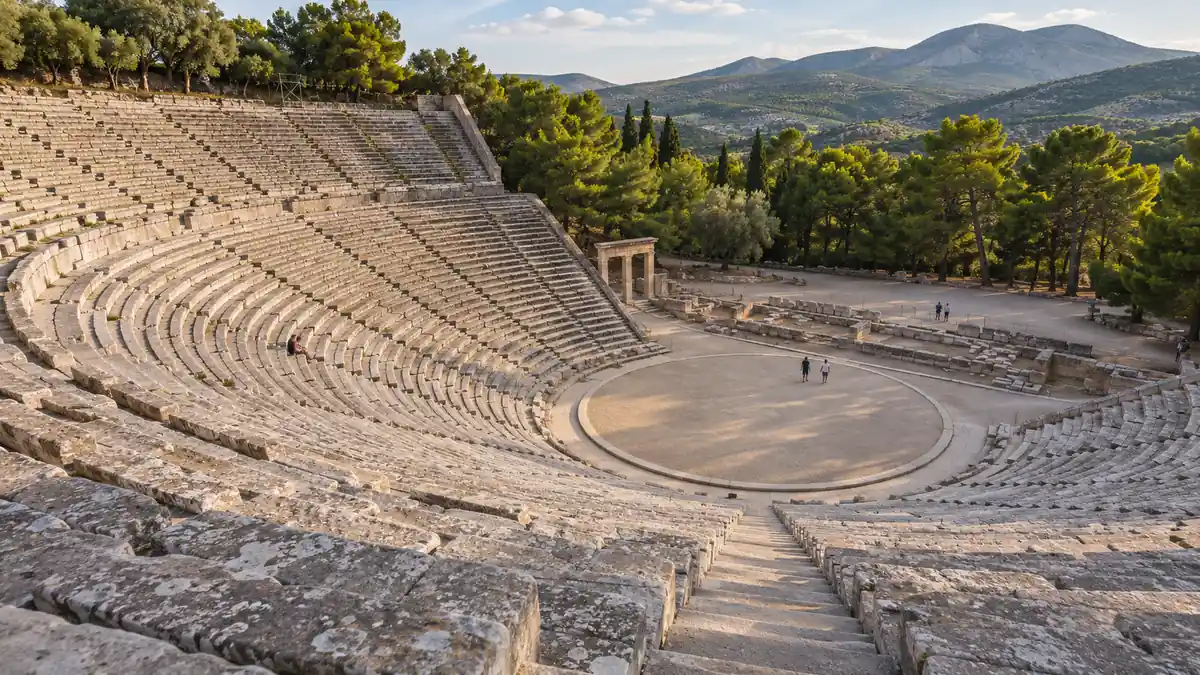
- Watch a play in the theatre of Epidaurus. The 4th-century-BC theatre still hosts performances of the Athens Epidaurus Festival on summer nights. Culture-led couples gain the most, provided their travel dates fall inside the festival season.
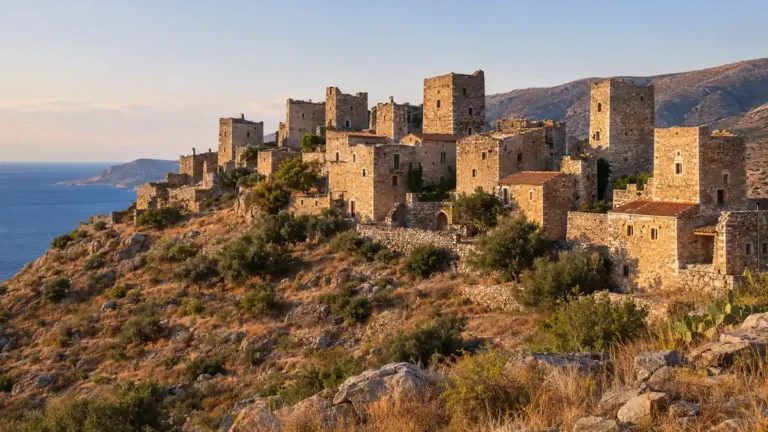
- Sleep inside the walls of Monemvasia. A fortified Byzantine town on a rock, joined to the mainland by a causeway and car-free inside. Slow travelers stay for the lanes after the day visitors leave.
- Run the ancient stadium at Olympia. The birthplace of the Games, with the Temple of Zeus and an on-site archaeological museum. It earns the drive for families and sports-history fans on a loop that already heads west.
- Climb through the Byzantine city of Mystras. A hillside town near Sparta where churches still carry their frescoes. Go if you found Mycenae too ruined and want standing buildings.
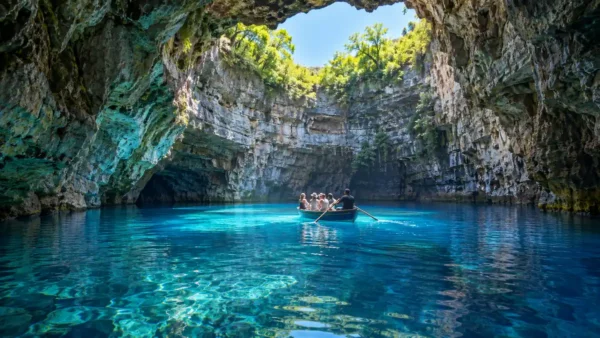
- Ride the boat through the Diros caves. An underground lake near Areopoli, toured partly by boat under hanging formations. A strong pick for families who need a cool, short break from the Mani’s summer heat.
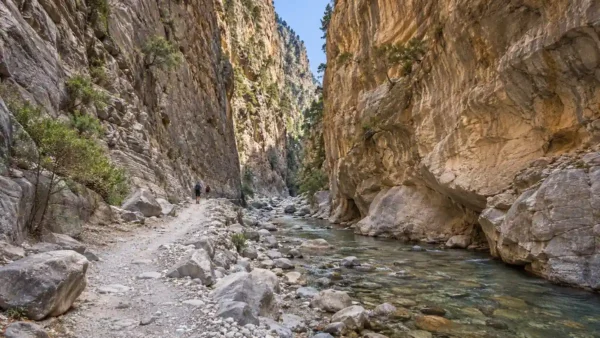
- Walk the mountains of the Mani and Arcadia. Taygetos trails from Kardamyli, the Lousios Gorge and the long-distance Menalon Trail. This one is for walkers who would trade a museum morning for a ridge or a gorge.
The Peloponnese holds five UNESCO World Heritage sites — Mycenae and Tiryns, the Sanctuary of Asklepios at Epidaurus, Olympia, Mystras and the Temple of Apollo Epicurius at Bassae. Only the Argolid pair fits comfortably into a day from Athens. Everything that makes the region distinct beyond that needs a bed inside it.
This page resolves which experiences to do. If you are still choosing which towns and places to build a Greece trip around, that comparison lives in its own guide, and the national shortlist of things to do across Greece covers experiences beyond this region.
Tour or Self-Drive for Mycenae, Epidaurus and Nafplio from Athens?
A guided group tour is the right version for one day from Athens without a car. Self-drive wins for anyone with two or more days, or anyone who wants Nafplio in the evening. The tour trades flexibility for zero logistics; driving trades effort for early ruins and a quieter town after the coaches leave.
Three versions cover almost every traveler:
- Group day tour from Athens — suits travelers without a car who have one day to give the Argolid. The price of that ease is a long full day on a fixed order, which usually puts you at the ruins in the midday heat.
- Private tour or driver-guide — the version for families and small groups who want pace control and a guide’s context at each site. Expect a clear cost step-up over the group coach, and it still runs on a day-trip clock.
- Self-drive with a night in Nafplio — right for anyone with two days and a licence. The driving and parking are yours to handle. The reward is Mycenae in the cool of the morning and Nafplio after the tour groups have gone.
Mycenae and Epidaurus pair naturally on one day, with Nafplio between them as the lunch or evening stop. Do Mycenae first, as early as you can, because it is the more exposed site; the theatre at Epidaurus is the easier afternoon stop. From Athens, the round trip makes for a long day’s driving either way.
The night in Nafplio is what turns the Argolid trio from a checklist into a trip. It moves Mycenae to the first cool hours, frees the evening for an Epidaurus performance in season, and puts you in the old town when it is at its best.
For car hire, roads and where to base yourself beyond Nafplio, see the guide to getting around the Peloponnese and where to base yourself.
Tours and activities
Book skip-the-line tickets, day trips and local tours with free cancellation on most activities.
You can also browse everything on getyourguide.com.
Tripstou may earn a commission if you book through this link, at no extra cost to you.
Is Mycenae Worth Visiting?
Mycenae is worth visiting for anyone curious about the Bronze Age or the Homeric story. The Lion Gate, the Cyclopean walls and the beehive tombs make the myth physical. Travelers who want intact buildings over foundations and walls should skip it and spend the time at Epidaurus or Mystras instead.
The site pays back in proportion to what you bring to it. History readers and anyone who knows the Trojan War cycle will find it the most atmospheric stop in the Argolid. Families do well with a short story told at the gate. Travelers who simply want a pleasant day out may find a hillside of low walls hard to read without a guide.
Mycenae is open and almost shadeless. At midday in summer, the climb to the top of the citadel is the hardest part of the visit. Go at opening time or late in the afternoon, carry water, and wear a hat.
Do not leave without the Treasury of Atreus. This beehive tomb sits a short walk down the road from the citadel, and its corbelled dome is the one structure at Mycenae that still stands whole. Many visitors on a tight tour clock miss it. Walk down.
Plan on a couple of hours for the citadel and the tomb. Tiryns, a second Bronze Age citadel under the same UNESCO listing, sits close to Nafplio and makes a quieter add-on for anyone after more Cyclopean masonry without the crowds.
An Epidaurus Performance Night Is Worth Planning Around
An Epidaurus performance night is worth bending summer travel dates for. Watching drama in the 4th-century-BC theatre uses the site as it was built to be used. Outside the festival season, the daytime visit still earns its place for the famous acoustics and the Sanctuary of Asklepios, both part of one UNESCO listing.
The daytime visit is a strong experience on its own. Stand at the centre of the orchestra, drop a coin or speak at normal volume, and listen from the top rows: the acoustics are the theatre’s reputation, and they hold up. The sanctuary below was a healing centre dedicated to Asklepios, and walking it gives the theatre its original context.
A festival night is a different thing. The Athens Epidaurus Festival still stages performances in the ancient theatre, and a crowd filling the stone seats at dusk shows what the building was designed to do.
It suits culture-led travelers, couples, and anyone already based in Nafplio. The limits are real:
- Performances run on summer weekend nights only, so the dates must fit the programme.
- The repertoire is mostly ancient Greek drama, often with surtitles; a traveler with no interest in theatre will not be won over by the setting alone.
- Tickets sell out, and the programme changes every year.
Book through the festival’s official channels once the season is announced, and arrive well ahead of curtain for parking and seating. Nafplio is the natural base: the return after the performance is late, and the drive back to Athens after midnight is the wrong end to the evening.
Is Ancient Olympia Worth the Detour?
Ancient Olympia is worth the detour on a multi-night trip, though not as a day from Athens. The ancient stadium, the Temple of Zeus and the on-site archaeological museum justify the drive west. Sports-history fans and families gain the most; travelers limited to a single day should keep the Argolid and skip it.
Olympia is the easiest ancient site in the Peloponnese to understand. The stadium is still a stadium. Children, and plenty of adults, run its length, and that sprint is the moment most families remember from the whole trip.
Classical-art lovers get the other half of the value in the museum. See it after the site: the sculpture from the Temple of Zeus makes sense of the fallen columns you have just walked past, and the order matters more than the time you spend.
The tradeoff is geography. Olympia sits on the far west side of the Peloponnese, away from the Argolid and the Byzantine south, so it either costs a travel day or reshapes the whole loop. Plan on half a day with the museum.
Whether the detour fits depends on the rest of your route; a Greece itinerary that fits the Peloponnese in shows where it slots against Athens and the islands.
Monemvasia and Mystras Reward an Overnight in the Byzantine South
Monemvasia is worth it only as an overnight, because the rock town empties at dusk. A midday day trip sees the lanes at their most crowded and misses the quiet that defines the place. Mystras is the Byzantine half-day that pairs with it, for history-led travelers after standing churches and frescoes.
Should you stay overnight in Monemvasia or day-trip it?
Stay overnight. Monemvasia is a fortified Byzantine town on a rock joined to the mainland by a causeway, and its character belongs to the evening and early morning, when the lanes, the sea walls and the upper town are nearly empty. Couples and slow travelers get the most from it. The practical side asks more of you: it is a long drive from anywhere, the town is car-free inside the walls, and luggage goes on foot over stone paving. The stay decision is simple. Sleeping inside the walls buys the atmosphere; sleeping in Gefyra on the mainland side buys easier parking and a walk across. Skip it if a tight loop would land you at midday and pull you out by five.
Mystras as the Byzantine half-day
Mystras is a UNESCO-listed Byzantine city spread over a hillside near Sparta, and it is worth it for the churches and the frescoes that survive inside them. The site rewards history-led travelers who found Mycenae too ruined to read, because here the buildings still stand. The terrain is the catch: the site is steep and hot, with long stretches in full sun. Start at the upper gate and walk downhill, early in the day. Give it half a day. Mystras sits on the same southern axis as Monemvasia and the Mani, so it slots into either leg without a separate trip, and pairs well with an overnight in the rock town the evening before or after.
Diros Caves and the Mani: The Wild South by Boat and on Foot
The Mani is the Peloponnese experience for travelers who want landscape over ruins. Its three anchors are a boat ride across the underground lake of the Diros caves, a slow drive through tower villages, and the Taygetos trails above Kardamyli. It suits self-drivers and walkers; travelers without a car will find it hard to reach.
Is the Diros caves boat tour worth it?
Yes, for families and for anyone crossing the Mani in the heat of summer. The Diros caves near Areopoli are toured partly by boat on an underground lake, gliding under stalactites in cool, still air. It is short, easy and memorable, which makes it a strong reset between long drives. Children tend to rank it above any ruin. Two things count against it: the queues in high season and the fixed pace of the boats, which leaves no room to linger over a chamber you like. Arrive early in the day to cut the wait.
The Mani tower-village drive
The drive itself is the experience: from Kardamyli south through Areopoli toward the cape, past stone tower houses, bare hillsides and small coves. Self-drivers who enjoy stopping often and keep no fixed schedule are the ones it is made for. Expect slow, winding roads, little shade, and sparse services once you pass Areopoli, so fuel up and carry water. Do it in one direction and sleep at the far end. Travelers who dislike driving should skip it; the Mani seen from a car window is still the Mani.
Hiking: Taygetos, Lousios Gorge and the Menalon Trail
Three walking options cover different levels of commitment:
- Taygetos day walks from Kardamyli — for fit walkers who want mountain views over the Messinian Gulf, with old paths linking villages.
- The Lousios Gorge in Arcadia — a half-day walk past monasteries built into the cliffs, with shade and water along the river.
- The Menalon Trail — a waymarked multi-day route through the Arcadian mountains, for hikers who plan the trip around walking.
Spring and autumn are the right seasons for all three. Summer heat makes the exposed Taygetos paths hard work after mid-morning.
Pick by the Nights You Have, and Plan Around the Heat
Pick Peloponnese experiences by the nights you have, and plan open-air sites around the heat. One day suits the Argolid trio by tour; two or three days suit self-drive with a Nafplio base, plus a festival night or Olympia; four or more add Monemvasia, Mystras and the Mani. Spring and autumn are the sweet spot.
The picking rule, by trip length:
- One day from Athens — buys Mycenae, Epidaurus and a stop in Nafplio on a group tour. Fits travelers without a car who want the headline ruins and nothing else.
- Two to three days — buys self-drive with a Nafplio base, cool mornings at the ruins, and either an Epidaurus performance night or the drive west to Olympia. Fits history-led travelers and couples.
- Four days or more — buys everything above plus a Monemvasia overnight, a half-day at Mystras and the Mani by boat, car and foot. Fits slow travelers, walkers and families who want variety.
Heat shapes every open-air site here. Mycenae, Mystras and Olympia offer little shade, so in summer the good hours are the first after opening and the last before closing. Midday belongs to the Diros caves, a museum or a long lunch.
Sites keep long summer hours and short winter hours; check the Ministry of Culture schedule before you go. The festival is the one summer-only variable. If your dates catch it, build the Argolid nights around a performance.
For bases, car hire and when to visit the region as a whole, the Peloponnese guide is the planning page. To place these experiences inside a longer route, start from the Greece itinerary.
Short Stops In and Around the Argolid
Is wine tasting in Nemea worth a stop?
Yes, if you enjoy red wine and are driving between Corinth and the Argolid. Nemea is the Peloponnese’s best-known wine area, known for reds made from the Agiorgitiko grape, and several wineries sit near the road to Mycenae. Treat it as a half-day or a long lunch stop, and let a non-drinker take the wheel.
Is climbing Palamidi fortress in Nafplio worth it?
Yes, for the view over Nafplio and the Argolic Gulf, but only in the cool hours. The version choice is the long stone staircase from the old town or a road that reaches the upper gate by car. Fit walkers should climb early in the morning or late in the afternoon; everyone else should drive up and walk down.
Is the Corinth Canal worth stopping at?
Yes, as a short stop, not a destination. The canal is a narrow, steep-sided cut through the isthmus that links the Peloponnese to the mainland, and the road from Athens crosses it on the way to the Argolid. Pull over, walk onto a bridge for the view straight down, and move on.
Did this guide save you time or money? Tripstou is independent and reader-funded — if you'd like to give something back, you can support the site with a crypto contribution of any size.