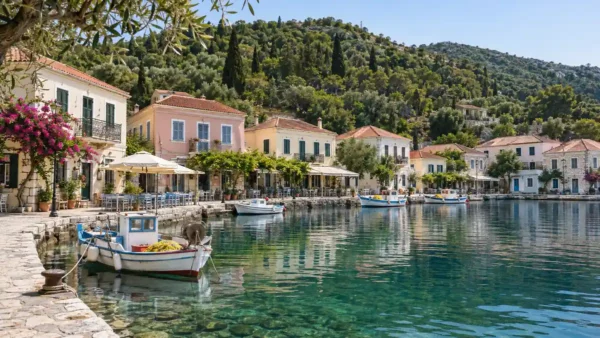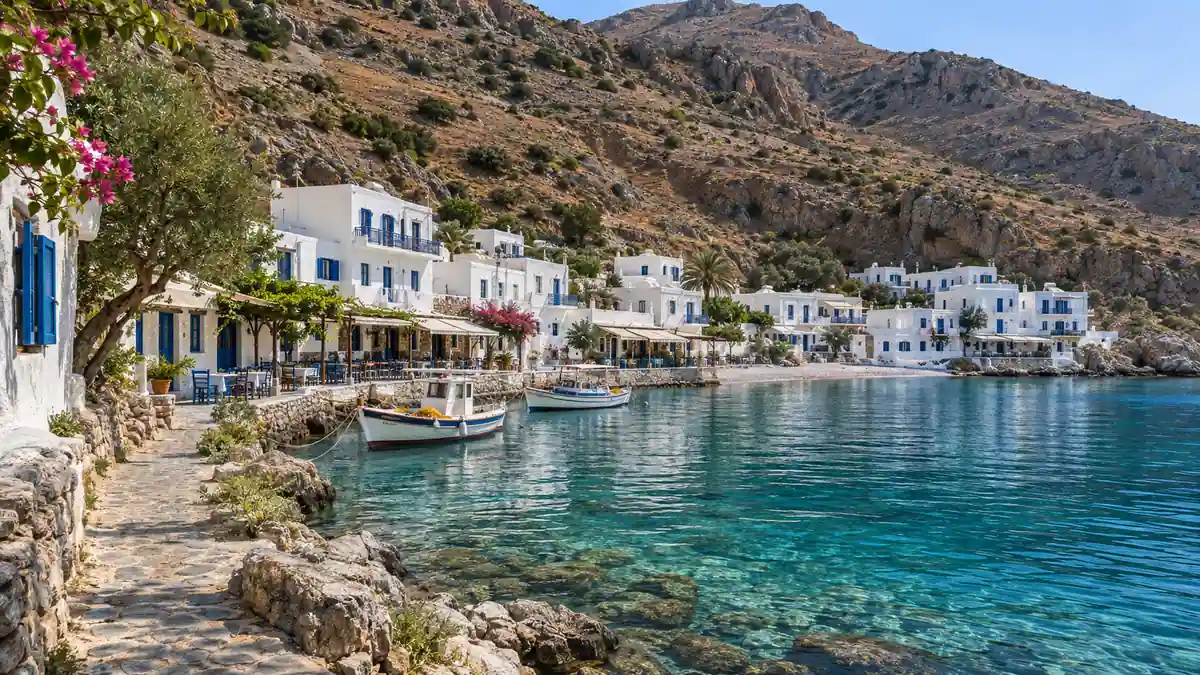
Crete’s real hidden gems are the south-west coast villages, the far east around Sitia, and the mountain interior. Access decides the pick: the south-west boat villages work without a car, while the east and the mountains need one. Choose Loutro for a car-free beach base, or Anogia for village life in the mountains.
Most visitors to Crete sleep on the north coast, in or around Chania, Rethymno and Heraklion. That is where the main airports, the resorts and the famous sights cluster, and it is where the island feels busiest. The quiet island lies elsewhere: along the south-west coast between Sfakia and Paleochora, in the far east around Sitia, and in the mountain villages of the interior.
This guide is a shortlist of villages, towns and small districts grouped by those three zones. Each pick comes with its access reality — boat, road or foot — the trade-off it asks of you, and the kind of traveler it suits. The aim is practical: to help you decide where to spend nights, not just where to stop for lunch. Famous Crete appears only as the contrast, and the activities around each pick live in their own guides.
What This Crete Shortlist Covers
This page is a curated selection of quieter villages, towns and districts in Crete’s south-west, far east and mountain interior, chosen on access, trade-off and traveler fit; it is not a guide to planning the whole island, an itinerary, or a roundup of Crete’s beaches, gorges and famous sights.
Each village block below began as text produced with AI assistance and ended with a read-through by Alex Perrut, working in tourism since 2015, for the Tripstou editorial team. What happens in between is on our editorial process page.
Official sources consulted: Visit Greece, Greek Ministry of Tourism.
Where is the least touristy part of Crete?
The least touristy part of Crete is the south-west coast, the far east and the mountain interior. All three sit away from the north coast, where the cities, airports and resorts concentrate. In Crete, “hidden” means off that coast, not undiscovered: these places have visitors, just far fewer, and much quieter evenings.
Crete’s crowds follow the north-coast road. Chania, Rethymno and Heraklion hold most of the beds, and the headline sights — Balos, Elafonisi, Knossos, Spinalonga — draw day-trippers from them. Those places belong on a different list: our guide to the best places to visit in Greece covers famous Crete. This page covers where the pressure drops.
Access is the filter that decides everything else. The south-west coast is linked by boat and footpath, so some of its villages work without a car. The far east and the mountain villages depend on one. Services thin out in all three zones. Expect fewer shops, earlier closing and fewer buses.
Choosing a base for the whole island is a separate decision, and the Crete guide sets out the regions, the bases and the car question. For quiet corners elsewhere in the country, see hidden gems in Greece; this page stays on the island.
Most of Crete’s crowd is day-trip traffic out of north-coast hotels, so the quiet you find depends on where you sleep more than on where you go by day.
Which hidden pick fits your trip?
Without a car, choose Loutro or Chora Sfakion; with a car, the far east and the mountain villages open up. Access narrows the list faster than taste does, so start with how you will move. Then match the zone to your trip style: beaches and hikes point south-west, village life points inland, emptiness points east.
Off-the-beaten-path Crete without a car works on the south-west coast and almost nowhere else. The boat villages are built for it. Buses thin away from the north coast, so the far east and the interior are hard to reach and harder to enjoy on public transport. The south-west is the exception: a bus to Chora Sfakion or Paleochora puts you on the boat line serving Loutro and Sougia. An ordinary rental car suits every pick on this page; the challenge is the winding mountain roads, and no pick here is chosen for dirt-track access.
| Traveler type | Best picks | Access | Main trade-off |
|---|---|---|---|
| No car | Loutro, with Chora Sfakion as gateway | Boat or on foot, bus to Chora Sfakion | Depends on warm-season boat schedules |
| Hikers | Paleochora or Sougia on the gorge coast | Road plus the coastal boat line | Walks and returns hinge on boat timing |
| Beach-idlers | Loutro for a car-free bay | Boat or on foot only | Few services and very quiet evenings |
| Village and culture | Anogia or the Amari Valley | Car needed on mountain roads | No beaches, services close early |
| Families | Paleochora or the Apokoronas villages | Road, with town services nearby | Less remote than the other picks |
| Remoteness seekers | Kato Zakros or Mochlos in the east | Car needed for a long drive | Basic supplies, far from everything else |
Families are the one group for whom the quietest pick is usually the wrong one: Paleochora’s shops and choice of beaches matter more to them than Loutro’s stillness.
Train and bus tickets
Compare routes, schedules and prices across rail and bus operators in one search, with mobile tickets on your phone.
New to Omio? Code NEW10 takes 10% off your first booking — or APPNEW10 if you book inside the Omio app. Both apply to bookings up to €80.
Search routes and compare prices on Omio →
Tripstou may earn a commission if you book through this link, at no extra cost to you.
The south-west coast is the lead zone for car-free villages
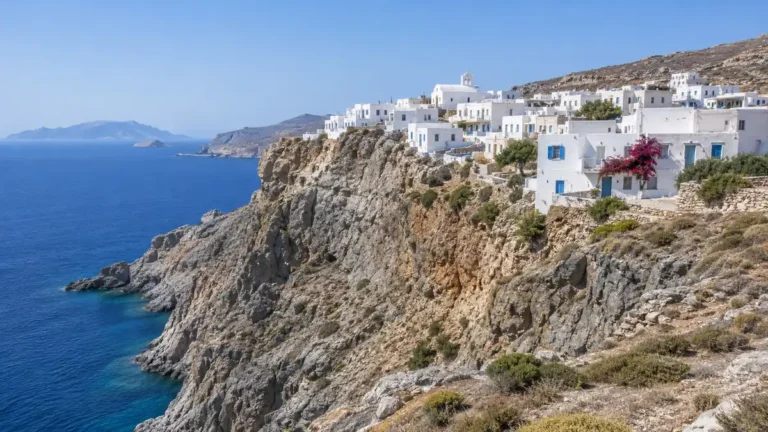
The south-west coast is Crete’s strongest hidden zone because its villages are linked by boat instead of road. The stretch from Chora Sfakion to Paleochora sits below the White Mountains, cut by gorges, with small villages spaced along it. It is the one zone where a car-free stay works, and where evenings stay reliably quiet.
ANENDYK Seaways runs the coastal line that ties the zone together, calling at Chora Sfakion, Loutro, Agia Roumeli, Sougia, Paleochora and out to Gavdos. Boats run mainly in the warm season. Check the schedule before you build a stay around them.
Hikers come for the gorges that reach the sea here, Samaria among them; the walks themselves are covered in our guide to things to do in Crete. This section is about where to sleep between them.
Loutro, Sougia and Paleochora answer different needs. Loutro removes the car entirely, Sougia strips away almost everything else, and Paleochora keeps a town’s services on a quiet coast.
On this coast the boat schedule sets the itinerary more than the map does: a village one bay away can be out of reach on a day without a sailing.
Loutro
Loutro has no road: you arrive by boat or on foot, on the ANENDYK coastal line or along the coastal path. That single fact is why it made the list. The village is a small cluster of houses around a sheltered bay, and with no traffic at all the evenings are unusually still. Choose it for a beach base where no car is needed for the whole stay.
What sets Loutro apart from the other picks is that a car plays no part in the stay. Everything you need sits along the waterfront, and the rest of the coast is a boat ride or a hike away. The trade-off is dependence on the boats and on a short list of services. Check that your stay is open outside the main season.
Chora Sfakion
Chora Sfakion is the road-connected service village of the Sfakia coast, with a harbour, shops and a pharmacy. It earns its place as the working hinge of the south-west: the road over the mountains from the north arrives here, and the coastal boats to Loutro leave from its quay.
Function is what sets it apart. It is the closest road-and-boat gateway to the car-free villages, which makes it the practical base for anyone who wants Loutro and the gorge coast without giving up their own wheels. What it gives up is atmosphere. It is a harbour village built for coming and going, and it sees more traffic than the places it serves. Base yourself here to have the boat coast with your car parked a short walk from the quay.
Sougia
Sougia is a small, one-street village on a bay between the gorges of the south-west coast. Quiet is the reason it is here: it is reachable by road and on the coastal boat line, yet it draws far less attention than the better-known stretches of the island.
What marks it out is how little it offers, on purpose. Compared with Paleochora it has fewer shops and fewer places to eat, and compared with Loutro it keeps a road link, so you can arrive by car and still feel removed. Gorge walks start close by, which makes it a natural stop for hikers. Range is the cost: evenings are short and choice is limited. Come here for the fewest people and the fewest services on the coast.
Paleochora
Paleochora is a small town on a peninsula at the foot of the White Mountains, and it is the south-west’s best base for coastal hikes. Its case rests on combining a quiet coast with the services of a real town.
Scale is the difference. It is the only south-west pick that functions as a town, with shops, places to eat and a beach on each side of the peninsula. The coastal path and the boats both head east from here toward Sougia and the gorges. On the other hand, it is the least hidden pick on this coast, and the drive in from the north is long and winding. It suits a longer stay better than a quick visit: give it a week on the quiet coast, with real shops, several beaches and hikes from the door.
Is Gavdos worth visiting?
Gavdos is worth it only for travelers who want true isolation and have flexible dates. The small island lies off Crete’s south-west coast and is reached by boat on the same coastal line that serves Paleochora and Chora Sfakion. Crossings depend on the weather, so leave spare days at both ends of the stay.
Tours and activities
Book skip-the-line tickets, day trips and local tours with free cancellation on most activities.
You can also browse everything on getyourguide.com.
Tripstou may earn a commission if you book through this link, at no extra cost to you.
The far east is the quietest corner you can still drive to
Eastern Crete is worth the trip for travelers with a car who want the emptiest coast on the island. The area around Sitia sits at the far end of Crete, a long drive from Heraklion, and most itineraries turn back before reaching it. The reward is space and quiet; the cost is time on the road.
The drive is the price of entry. Buses thin away from the north coast, and the villages at the far end are spread out, so a car is what turns the east into a proper stay. Plan to base yourself here.
The landmarks of the east are reasons to come, and they are covered elsewhere: the palm beach at Vai, Toplou Monastery and the Zakros gorge all appear in our guide to things to do in Crete. The picks below are about where to sleep while you see them.
In the east, sleeping at the end of the drive is the whole point: a day trip from the north coast spends most of its daylight on the road.
Sitia
Sitia is a working town in the far north-east and the natural base for the Vai, Toplou and Zakros area. It made the list because it gives the east a proper centre: a harbour town with a daily life of its own, plus a small airport.
Its distinction is rhythm. Sitia is the only pick on this page that runs like an ordinary town, shaped less by tourism than the north-coast resorts, and its airport is the only one inside a hidden zone. The trade-off is that the town itself is pleasant more than striking. The beaches you would drive east for lie outside it, so you will still drive most days. With Sitia, you get a real town around you and the east’s sites within reach.
Mochlos
Mochlos is a small fishing hamlet on the north-east coast, facing its islet just offshore. It offers the quiet of the east in its most compact form: a quay, a few places to eat and the sea in front of you.
The hamlet is small enough to cross in minutes, which makes it the pick for anyone content to do very little once the day’s driving is done. It sits west of Sitia, on the side of the zone closer to the rest of the island. Choice is limited, though, and you will drive for almost everything beyond a swim.
Kato Zakros
Kato Zakros is a coastal hamlet beside a Minoan palace site, at the mouth of the Zakros gorge. It is where the road ends: a bay, a handful of houses and places to eat, and very little else.
It is the most remote pick on this page, and it is the only one with an ancient site and a gorge on the doorstep. Xerokampos, further down the coast to the south, offers a similar end-of-the-road feel, with sand in place of history. Services are what you give up. Supplies are basic, choices are few, and you should check that your stay is open outside the main season. Sleep here and the palace site and the gorge are your neighbours.
Mountain villages are where Crete’s traditions still run daily life
Crete’s mountain villages are the hidden pick for travelers who value village life over beaches. Anogia, the Amari Valley and the villages of Apokoronas keep a pace set by farming and local life. They need a car, close early, and reward travelers who treat the village itself as the destination.
The trade-off here is the most direct on the page. A car is close to essential, services are few, and evenings end early. There are no beaches at the door. In return you get the part of Crete that most visiting cars pass through without stopping.
Most travelers use a mountain village as one half of a trip, paired with a coast base. Our guide to planning Crete explains how the island’s regions and bases fit together; the pairing logic for this page sits in the final section.
Staying the night is what separates the interior from a drive-through: these villages feel most like themselves in the evening, once the day traffic has gone.
Anogia
Anogia is a mountain village on the slopes of Psiloritis, Crete’s highest mountain. No place on this page has a more distinct character. The village is known for its music, its weaving and its shepherding tradition, and it wears that identity openly.
The other mountain picks are a valley and a district; Anogia is one village with a clear sense of itself, and the high ground of Psiloritis starts just beyond its last houses. It is a working village first. It offers texture and atmosphere, few sights to tick off, and a long drive to any beach.
Amari Valley
The Amari Valley is an inland valley of villages in Rethymno prefecture, and this page treats it as one pick. It offers the quietest form of village Crete: a green valley under the mountains, dotted with small villages and few visitors.
Here you drive between villages, stopping for a church, a café or a view, and the valley itself becomes the experience. No single village carries the stay. Nothing here is a headline, though. Travelers who need a landmark will find the days slow, and services in each village are thin, so plan meals and fuel ahead. Slow days linking villages by car, with almost no other visitors, are the reason to come.
Apokoronas (Gavalochori and Vamos)
Apokoronas is the district east of Chania between the White Mountains and the coast, and Gavalochori and Vamos are its best-known villages. It brings village Crete within easy reach of a famous base.
Proximity is its case. It is the only interior pick close to Chania and the north-coast beaches, so it suits travelers who want quiet nights without giving up easy day trips. Gavalochori and Vamos both keep a traditional village core. That proximity costs some of the hidden quality: Apokoronas feels less remote than Anogia or the Amari Valley, and it sees more visitors than either.
Is the Lasithi Plateau worth it?
The Lasithi Plateau is worth it if you stay the night. The high plain in the Dikti mountains, known for its windmills and for Psychro village by the Diktaean Cave, is a popular coach-tour stop by day. After the tours leave, it turns quiet, which is when it behaves like a hidden gem.
Pair a hidden zone with the north-coast city nearest it
The strongest Crete trip pairs one north-coast base with one hidden zone, chosen by geography. Each famous city sits closest to a different quiet corner, so the pairing mostly chooses itself. Splitting the stay this way keeps the famous sights within reach and gives the trip quiet evenings without crossing the island twice.
These are the natural pairs:
- Chania with the south-west coast or Apokoronas: the city and its famous beaches, then either the car-free boat villages or village nights close to town.
- Heraklion with the far east or Anogia: the capital and Knossos, then either the long drive east or a mountain village inland.
- Rethymno with the Amari Valley: the old town, then the valley of villages that lies inland behind it.
In the far west, Kissamos is an overlooked alternative to Chania as the famous-side base. It is a quieter north-coast town, closer to the west’s best-known beaches.
The full base logic and the car verdict are in our guide on where to base in Crete. The famous half of each pair is covered under famous Crete and the best places to visit in Greece. If Crete is one stop on a longer route, hidden gems in Greece lists quiet alternatives across the country.
A hidden base at the wrong end of the island turns the second half of the trip into a transfer day: Chania pairs west and south-west, Heraklion pairs east and inland.
More Questions on Crete’s Quiet Corners
When is the best time to visit Crete without crowds?
May, September and October are the quietest good months to visit Crete, with pleasant weather and far fewer people than midsummer. The hidden zones feel emptiest then too. At the edges of the season, check that the south-west boats are sailing and that your village stay is open before you commit to dates.
Is Plakias still a hidden gem?
Plakias is better described as quiet than hidden. The village on the south coast below Rethymno is often called a secret, but it is well known and more developed than Loutro or Sougia. It suits travelers who want a calmer south-coast beach base and do not need true remoteness from other visitors.
Did this guide save you time or money? Tripstou is independent and reader-funded — if you'd like to give something back, you can support the site with a crypto contribution of any size.