
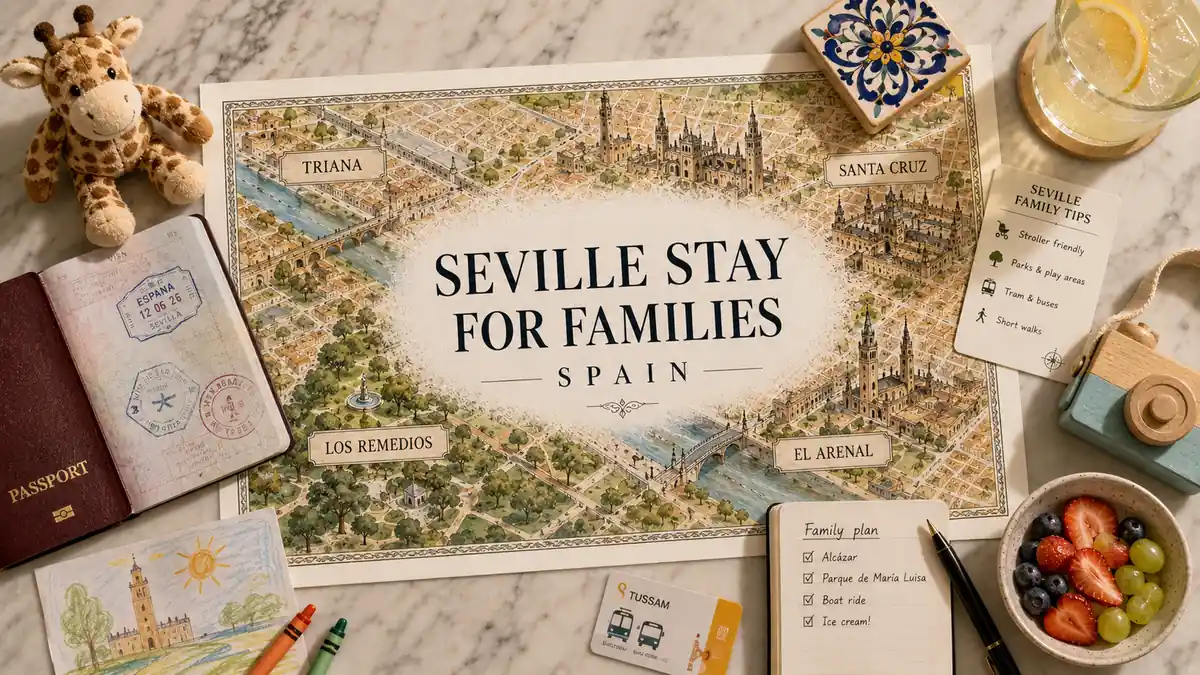
Choosing where to stay in Seville with kids comes down to four things: night noise, stroller and walkability, transport access, and how close you are to sights and green space. The right area for a family is not the same as the best area for couples or nightlife. Families need flat, quiet streets, room to move a pushchair, and a park within reach more than they need to be steps from the busiest tapas lanes. This guide gives a clear default base, then ranks the strongest alternatives by family type and your children’s ages. It covers the trade-off every family faces here: staying central but busy and cramped, or calmer and greener a little further out. You will finish knowing exactly which area to book and where to go next for neighborhood and hotel detail.
Quick Answer
Los Remedios is the best overall family base in Seville: quiet, with wide stroller-friendly avenues beside Parque de los Príncipes. It sits slightly further from the historic core than central options, so reaching major sights takes a short walk or tram. Triana is the strongest alternative for families wanting local life with easy central access.
Trust Layer
Tripstou stay guide for travelers choosing where to base. Covers area atmosphere, budget, convenience, noise, and traveler fit.
Produced with AI assistance and reviewed by Alex Perrut, working in tourism since 2015, for the Tripstou editorial team. See our editorial process for details.
Last factual review: June 7, 2026.
Official sources consulted: Travel Europe, European Union.
Key Takeaways
- Los Remedios is the best overall family base, with quiet streets, wide pavements, and Parque de los Príncipes for young children.
- The core trade-off is staying central but cramped and noisy versus calmer and greener a short tram ride further out.
- Triana is the strongest alternative, offering authentic local life and an easy walk across the bridge into the historic core.
- Your best area shifts with kids’ ages: toddlers favour quiet Los Remedios, while older children handle central Santa Cruz.
- Avoid booking the narrow, noisy historic core with toddlers; its cobbled lanes and late-night bars make strollers and sleep hard.
Table of Contents
Los Remedios is the best overall base for families
Los Remedios is the best overall base for families in Seville. It offers quiet, wide, stroller-friendly streets, the green space of Parque de los Príncipes, and an easy tram or walk into the historic core. For most families with young children, it balances calm and convenience better than anywhere central.
The appeal is practical. Los Remedios is a residential district laid out on broad, flat avenues, so pushchairs and tired little legs cope easily and there is little late-night bar noise to disrupt sleep. Parque de los Príncipes gives kids room to run within the neighborhood, and the historic core sits a short tram ride or riverside walk away, so you stay connected without being in the crush.
The trade-off is proximity. You are across the river from the main sights, so spontaneous dashes back to the room mid-afternoon take a little longer than they would from a central base. Families who want to be among the monuments from the moment they step outside may prefer a more central area and accept the noise that comes with it.
- Good for: families with toddlers or strollers, early bedtimes, longer stays, and anyone prioritising calm over being central.
- Watch out for: a slightly longer trip to the headline sights; quieter evening dining than the old town.
For actual properties, route your search to family-friendly hotels in Seville rather than booking blind.
Hotels and places to stay
Compare hotels, apartments and stays for your dates in one search.
Search hotels and stays on hotels.com →
Tripstou may earn a commission if you book through this link, at no extra cost to you.
Triana is the strongest alternative for local life with easy access
Triana is the strongest alternative for families who want authentic local life with simple access to the centre. This riverside district stays walkable and residential, sits just across the bridge from the old town, and keeps a real neighborhood feel. It suits families happy to trade absolute quiet for character and central proximity.
Triana gives kids a sense of place that the tourist core cannot. Markets, ceramic workshops, and ordinary local life sit alongside the river, and the Isabel II bridge puts the cathedral and main sights within an easy walk. Streets are flatter and more open than Santa Cruz, so the neighborhood handles strollers better while keeping you close to everything.
The trade-off is energy. Triana is livelier in the evenings than Los Remedios, with busy riverside bars near the bridge, so light-sleeping families should choose a street set back from the waterfront. For the full picture of streets, atmosphere, and where families settle, read the full Triana neighborhood guide.
- Good for: families wanting local character, easy central access, and a walkable riverside base.
- Watch out for: evening noise near the bridge and riverfront bars; pick a quieter interior street.
Is Santa Cruz a good base for families with young kids?
Santa Cruz is a good base for families with older children but a poor fit for those with toddlers. The old Jewish quarter is central and walkable, yet its narrow lanes, evening noise, and tight pavements make strollers awkward. Choose it when your kids walk comfortably and late-night sound will not disrupt sleep.
The upside is unbeatable location. You stay beside the Alcázar gardens and cathedral, so sightseeing starts the moment you leave the door and there is no transport to plan. Older children who walk well get the most out of this, turning the maze of lanes into part of the adventure rather than a logistics problem.
The downside is the same maze with a pushchair. Cobbles, steps, and barely-there pavements make stroller travel slow, and the bars and restaurants packed into the quarter keep evenings loud well past young children’s bedtimes. For families set on staying here, the Santa Cruz neighborhood guide covers the layout in detail, and if you are weighing it directly against the riverside option, see Santa Cruz vs Triana compared.
- Good for: families with older, walking-age children who want to be in the heart of the monuments.
- Watch out for: narrow cobbled lanes, awkward stroller access, and noisy evenings near the bars.
El Arenal suits families wanting a central riverside base
El Arenal works for families who want a central, riverside base without the busiest tourist crush. It sits between the cathedral and the Guadalquivir, with wider streets than Santa Cruz and quick access to the river path and bullring. It suits families wanting to stay central while keeping things calmer and more open.
El Arenal is the practical middle ground. You keep the old town within a short walk, but the streets are broader and the crowds thinner than in Santa Cruz, which makes everyday family movement easier. The riverside walk gives kids open space close to the room, and the area stays well connected on foot to the main sights.
The trade-off is that it is still a busy, central district, so it will never be as hushed as Los Remedios after dark. Families who want both centrality and calm get a sensible balance here. For the street-level detail on where to base within it, see the El Arenal neighborhood guide.
- Good for: families set on a central base who want wider streets and river access without the heaviest crowds.
- Watch out for: a central location is never silent at night; less green space than the outer areas.
Where to stay for more space and quiet
Trade centrality for space when your family needs room more than a short walk to sights. Calmer outer areas like Distrito Sur or the Alameda fringe offer larger apartments, quieter nights, and easier parking, at the cost of a longer trip to the historic core. They suit longer stays and bigger families.
This is the right call in specific cases. Larger families, families with a car, or anyone staying a week or more often value an extra bedroom and a calm night over being five minutes from the cathedral. Outer residential pockets typically give you more apartment for the same outlay and far less evening noise, which matters when small children are asleep by eight.
The trade-off is daily travel. You will rely on a bus or tram for sightseeing rather than walking out into the monuments, and the area itself offers less to do on the doorstep. Treat these areas as a space-and-quiet decision, not a sightseeing base, and book centrally if monument access is your priority.
- Good for: longer stays, bigger families, travelers with a car, and anyone prioritising space and silence.
- Watch out for: a real commute to the sights and less atmosphere within walking distance.
What matters most when choosing a family base
Four criteria decide a family base in Seville: noise, walkability, transport, and distance to sights and green space. With young kids, weigh night noise and stroller access first, then proximity. The table below scores each main area against these factors so you can match an area to your family’s priorities.
With young children, night noise and stroller access usually outweigh everything else, because a calm night and an easy push to breakfast shape the whole trip. As children get older, proximity to sights climbs the list and a little evening noise matters less. Use the table to rank areas against the factors that matter most to your family, then route to the broader Seville where-to-stay overview for all travelers if you also need non-family context.
| Area | Night noise | Stroller access | Transport access | Sights & green space |
|---|---|---|---|---|
| Los Remedios | Quiet residential evenings, very little nightlife disturbance | Wide flat avenues, easy pushchair movement throughout | Tram and bus into the core within minutes | Parque de los Príncipes; short hop to sights |
| Triana | Lively riverside, but calmer than the old town | Mostly walkable, some busier streets near the bridge | Walk or quick bus across to the centre | River access; central sights a short walk away |
| Santa Cruz | Noisy evenings near bars and busy tapas lanes | Narrow lanes and tight pavements challenge strollers | Walk everywhere; you are already in the core | Alcázar gardens and cathedral on your doorstep |
| El Arenal | Moderate; calmer than Santa Cruz after dark | Wider streets make pushchair travel fairly easy | Central walking access; near river and bullring | Cathedral and river path within easy reach |
| Outer areas | Generally quiet, especially in residential pockets | More space and flat streets, varying by block | Longer rides; needs bus or tram for sights | Local parks; central sights are further away |
Does the best area change with your kids’ ages?
Yes, the best area shifts with your children’s ages. Toddlers and stroller-stage kids favour quiet, flat bases like Los Remedios, where calm nights and wide pavements matter most. Older children who walk well and sleep through noise can handle central Santa Cruz or El Arenal, putting sights on the doorstep.
With babies and toddlers, the priorities are sleep and stroller ease, so the calmer riverside and outer areas win. A quiet night and a flat walk to breakfast do more for the trip than shaving ten minutes off the route to the cathedral. Los Remedios is the natural default at this stage, with Triana a strong second for families wanting more local life.
As children reach walking and school age, the balance tips toward proximity. They cope with cobbles, longer days, and a little evening buzz, so a central base like Santa Cruz or El Arenal pays off by putting the monuments at the door. For the wider trip context that surrounds your stay choice, see the complete Seville travel guide.
Frequently Asked Questions
What is the safest area in Seville for families?
Seville is generally a safe, family-friendly city, and quieter residential areas like Los Remedios and Triana feel especially calm for families. Both offer wide, well-used streets and a settled neighborhood atmosphere away from late-night crowds. Standard city awareness around busy tourist hotspots and transport hubs is enough for most family trips.
Is Seville walkable with a stroller?
Seville is walkable with a stroller in its flatter, wider districts, but not everywhere. Los Remedios, Triana, and El Arenal have broad, level streets that handle pushchairs easily. The historic Santa Cruz quarter is harder, with narrow cobbled lanes, steps, and tight pavements that make stroller travel slow and awkward, so choose your base accordingly.
Are apartments or hotels better for families in Seville?
Both work, and the right choice depends on your trip length and family size. Apartments suit longer stays and bigger families, offering extra bedrooms, a kitchen for early breakfasts, and more space to spread out. Hotels suit shorter visits where daily service, easy check-in, and central locations matter more than room. Match the format to your priorities.
How far is Los Remedios from Seville’s main sights?
Los Remedios sits just across the Guadalquivir from the historic core, so the main sights are close but not on the doorstep. Reaching the cathedral and Alcázar means a riverside walk or a short tram or bus ride rather than stepping straight into the monuments. For families, that small distance buys quieter, greener surroundings.
Do you need a car to stay in Seville with kids?
No, most families do not need a car in Seville. The historic core and the best family areas are compact and well linked by tram, bus, and walkable streets, so you can reach sights without driving. A car mainly helps if you stay in outer areas or plan day trips beyond the city.
Which area is best for a short family city break in Seville?
For a short family break, a central or near-central base works best, since it saves travel time and puts sights within reach. El Arenal offers wider streets and calm close to the centre, while Triana balances local character with an easy walk across the bridge. Reserve quieter Los Remedios for longer, slower-paced stays.
Related Guides
- Where to stay in Seville: the overview for all travelers
- Triana neighborhood guide
- Santa Cruz neighborhood guide
- El Arenal neighborhood guide
- Santa Cruz vs Triana compared
- Boutique and family-friendly hotels in Seville
- Complete Seville travel guide
Did this guide save you time or money? Tripstou is independent and reader-funded — if you'd like to give something back, you can support the site with a crypto contribution of any size.