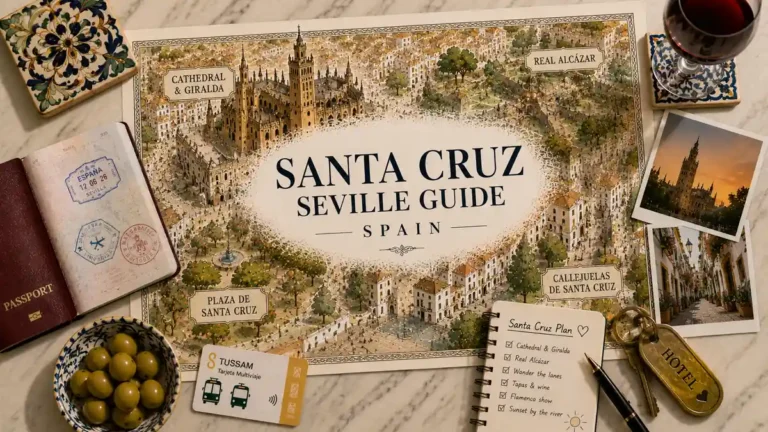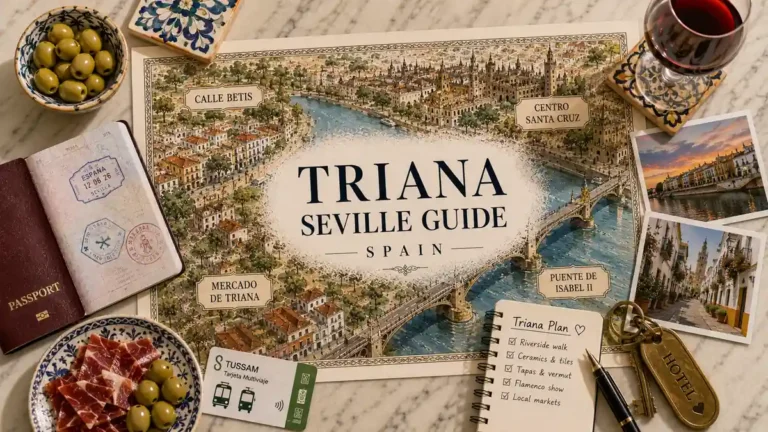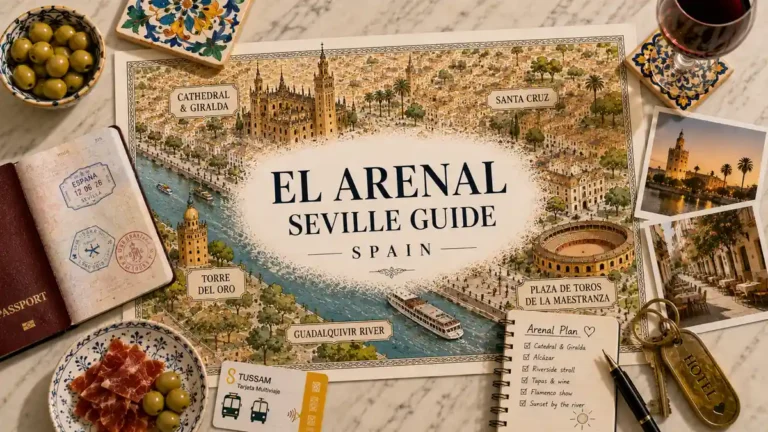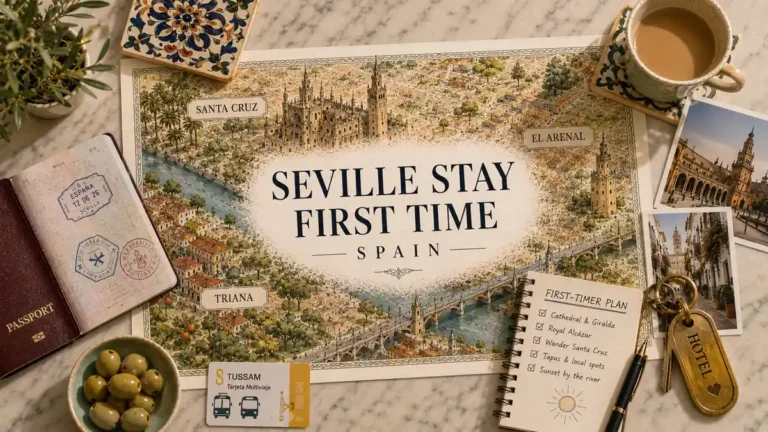
Two days in Seville is tight, but it is genuinely enough to cover the city’s main anchors if you sequence them well. Seville’s historic core is compact and walkable, so the real challenge is not distance but order: grouping stops by area so you never double back, and slotting the flamenco evening where it fits the day’s rhythm. This itinerary gives you a confident, day-by-day plan. Day 1 stays in the monumental old center, and Day 2 swings out to the wider city and across the river. Each stop earns its place in the route, with a clear reason it comes when it does. Follow the plan below and you will see the essentials at a comfortable pace.
Quick Answer
Two days is enough to see Seville’s main sights on foot without rushing. Spend Day 1 on the old-center monuments and Day 2 on the plaza, park, and Triana. Cluster stops by area to avoid backtracking, and book the Alcázar and Cathedral ahead. It suits first-time visitors who want the highlights at a relaxed pace.
Trust Layer
Tripstou itinerary guide for travelers planning a route. Covers pacing, stop count, stop order, base logic, and trip length.
Produced with AI assistance and reviewed by Alex Perrut, working in tourism since 2015, for the Tripstou editorial team. See our editorial process for details.
Last factual review: June 6, 2026.
Official sources consulted: travel-europe.europa.eu, european-union.europa.eu.
Key Takeaways
- Two days is enough to cover Seville’s main anchors on foot, since the historic core is compact and walkable.
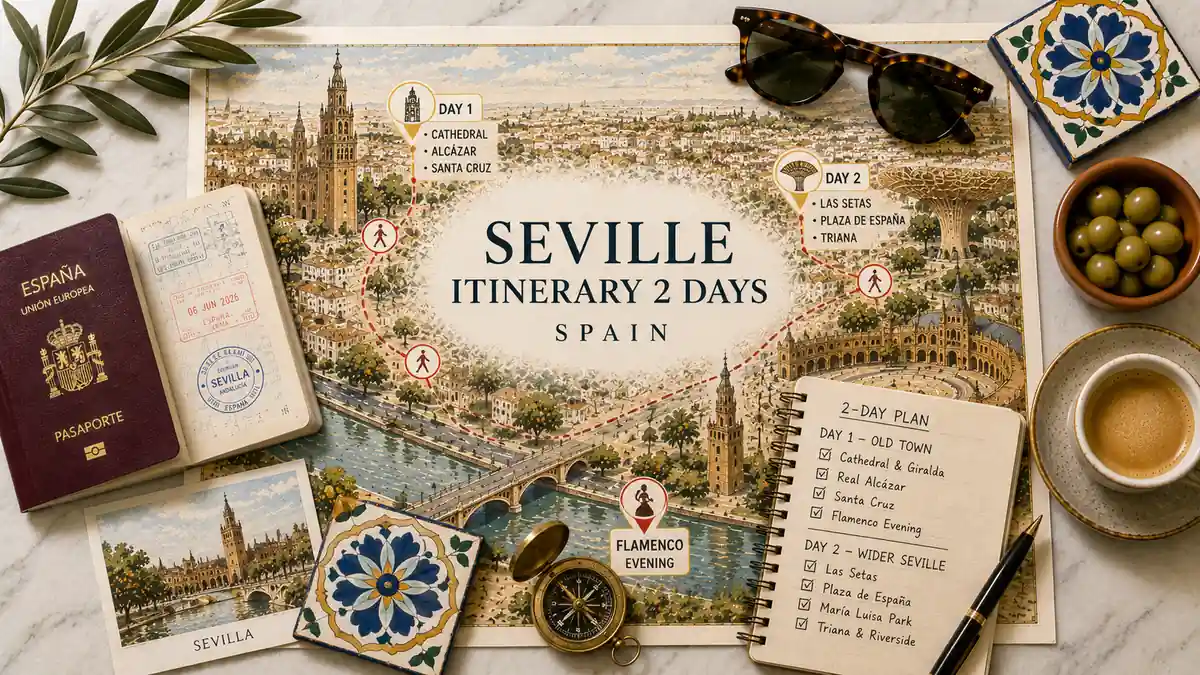
- Day 1 stays in the old center: Seville Cathedral and La Giralda, the Real Alcázar, Santa Cruz, then evening flamenco.
- Day 2 spreads out to the Setas, Plaza de España with María Luisa Park, and Triana across the river.
- Cluster stops by area so each day loops in one direction and you never backtrack across the city.
- Book the Cathedral and Real Alcázar timed entries ahead, as both can sell out their slots.
- Plan open-air sights for morning and evening, and use shaded or indoor stops during Seville’s intense midday heat.
Table of Contents
Is Two Days Enough Time in Seville?
Yes, two days is enough to see Seville’s essentials without rushing. The historic core is compact and almost entirely walkable, so you can reach the Cathedral, the Real Alcázar, Plaza de España, and Triana on foot. Two full days let you cover the major anchors at a comfortable pace rather than a sprint.
The reason two days works is geography. Seville concentrates its headline sights in a tight historic center, and the few stops outside it sit a short walk apart. You are not losing hours to transit between attractions, which is what makes a short trip feel unhurried here. The tradeoff is depth: two days covers the city’s monuments and neighborhoods, but it leaves no room for day trips to Córdoba or Granada, and little time to linger in any one museum.
This plan suits first-time visitors who want the highlights and a real feel for the city without overpacking the schedule. If you want broader context on the city beyond this route, the Seville guide covers the wider picture. For a tighter or a more relaxed pace, the day-by-day structure below shows exactly how the two days fit together.
The Best Way to Plan Your Two-Day Seville Route
Plan by area, not by attraction list. The strongest two-day route splits Seville into two geographic clusters: one day on the Cathedral–Alcázar–Santa Cruz core, and one day on the Setas–Plaza de España–Triana axis. Grouping stops this way means you walk each day in a loop and never backtrack across the city.
The logic is simple. Day 1 keeps you inside the dense old center, where the Cathedral, the Alcázar, and the Santa Cruz lanes sit within a few minutes of each other. Day 2 deliberately spreads out: the Setas to the north, the plaza and park to the south, and Triana across the river. Each day flows in one direction, so your feet do the work efficiently and you spend your energy on sights, not on retracing routes.
Where you base yourself shapes how smoothly this works. Staying in or near the historic center puts both day-loops within walking distance of your door; see where to stay in Seville to choose an area that anchors the route. Seville’s center is best covered on foot, but for the river crossing or a tired evening, getting around Seville explains the local options. The one tradeoff of an area-based plan is rigidity: if a monument is fully booked at your preferred slot, you may need to flip the order of the two days.
Hotels and places to stay
Compare hotels, apartments and stays for your dates in one search.
Search hotels and stays on hotels.com →
Tripstou may earn a commission if you book through this link, at no extra cost to you.
Day 1: Cathedral, Real Alcázar, and Santa Cruz
Start Day 1 at the Cathedral cluster and work outward on foot. The day covers Seville’s monumental heart in walking order: the Seville Cathedral and La Giralda first, then the Real Alcázar next door, then the lanes of Barrio Santa Cruz. Everything sits within a few minutes’ walk, so you move from one anchor to the next without transit.
This sequence works because the three big stops are clustered around the same square, and Santa Cruz wraps directly around them. Booking the Cathedral and Alcázar ahead is strongly recommended, since both can sell out their timed entries; keep ticket and cost detail out of your morning by sorting it in advance. For what those tickets and the wider trip add up to, see the Seville trip cost guide.
Morning: Seville Cathedral and La Giralda
Begin at the Seville Cathedral and climb La Giralda for the city’s defining view. Going first thing means cooler air and shorter lines before the day’s crowds build. The Cathedral and its bell tower are the natural starting anchor, and they set up the rest of the cluster perfectly.
Midday: Real Alcázar
Move next door to the Real Alcázar, ideally on a pre-booked timed entry. The palace and gardens are largely shaded and partly indoors, which makes them an ideal midday stop when the sun is at its strongest. Allow a generous block of time here, as the gardens reward a slow wander.
Afternoon: Barrio Santa Cruz
Spend the afternoon wandering Barrio Santa Cruz, the old Jewish quarter that hugs the Alcázar walls. Its narrow, shaded lanes and small plazas are made for unstructured exploring, and they keep you close to your evening base. This is a low-effort, high-reward stretch after a monument-heavy morning.
Evening: Flamenco in Seville
Close Day 1 with a flamenco show near Santa Cruz. You are already in the old center, the day’s walking is done, and the neighborhood is dense with intimate venues. Booking ahead secures a seat at a well-regarded performance and ends the day on a high note.
Day 2: Setas, Plaza de España, and Triana
Begin Day 2 at the Setas and end the day in Triana. The plan swings to the wider city: Metropol Parasol (the Setas de Sevilla) first, then Plaza de España and María Luisa Park, closing across the river in Triana. The stops form a broad arc that flows from north to south to west, so the day moves in one continuous direction.
This order spreads you out deliberately after Day 1’s tight cluster. The Setas sit north of the center, the plaza and park lie to the south, and Triana waits across the Guadalquivir. Walking it as an arc keeps the route efficient and saves the river crossing for the end of the day. The center and Triana are easily linked on foot, but if your legs are done, the options in getting around Seville cover the short hop across the river.
Morning: Metropol Parasol (Setas de Sevilla)
Start at the Metropol Parasol, the giant wooden structure locals call the Setas. Its rooftop walkway gives a sweeping panorama of the city, best caught in the cooler morning light. As the most modern anchor on the route, it makes a sharp contrast with Day 1’s historic monuments.
Midday: Plaza de España and María Luisa Park
Head south to Plaza de España and the adjoining María Luisa Park. The plaza’s grand semicircle and tiled alcoves are Seville’s most photographed open-air spot, and the shaded park beside it offers a cool break in the heat of midday. Together they make an easy, scenic stretch.
Afternoon: Triana and Calle Betis
Cross the river to Triana for the afternoon, finishing along Calle Betis. This historic ceramics-and-flamenco neighborhood gives a different, more local feel than the center, and the riverfront makes a fitting place to end two days. Time the river views for late afternoon, when the light over the Guadalquivir is at its best.
When to Fit the Flamenco Evening Into Your Itinerary
Book flamenco for the first evening, near Santa Cruz. After Day 1 ends in the old center, you are already steps from the city’s most concentrated cluster of venues, and the day’s walking is behind you. Slotting the show here means no extra travel and a strong, atmospheric close to your first day.
The timing logic holds up against the alternatives. Putting flamenco on Day 2 would force a trip back into the center after you have crossed to Triana, undoing the clean north-to-west arc of the second day. A first-evening show also gives you a fallback: if anything on Day 1 runs long or a venue is full, you still have the second evening in reserve. Reserve your seats ahead, as the better-regarded performances fill quickly; for how show and ticket costs fit your overall budget, see the Seville trip cost guide. The main tradeoff is energy, so choose a show time that leaves room for dinner without a punishing late night.
Tours and activities
Book skip-the-line tickets, day trips and local tours with free cancellation on most activities.
You can also browse everything on getyourguide.com.
Tripstou may earn a commission if you book through this link, at no extra cost to you.
How to Pace Two Days Around Seville’s Heat
Keep outdoor stops to morning and evening, and slot indoor or shaded stops at midday. Seville’s midday sun is intense, especially in the warmer months, so the smart move is to plan around it rather than fight it. Front-load and back-load your open-air sights, and use the hottest hours for cover.
This pacing maps cleanly onto the two-day plan. On Day 1, the shaded, partly-indoor Alcázar is the ideal midday stop, while La Giralda and the Santa Cruz lanes work in the cooler edges of the day. On Day 2, save the open expanse of Plaza de España for late morning or the cooler afternoon, and lean on María Luisa Park’s shade when the sun peaks. A simple rhythm to follow:
- Morning: open-air sights and viewpoints while the air is cool.
- Midday: indoor or heavily shaded stops, plus a relaxed lunch.
- Late afternoon and evening: return to open-air spots and the riverfront.
The tradeoff is that a heat-aware schedule is less flexible, so build in a long midday break and carry water. For more practical advice on handling the climate and other on-the-ground details, see our Seville travel tips.
Should You Add a Third Day or Day Trip?
Add a third day only for a day trip or a slower pace. Two full days already cover Seville itself, so a third day does not add more city essentials. It earns its place only if you want to venture beyond Seville or move through the same sights more gently.
A third day opens up day trips to places like Córdoba, or simply more breathing room between stops. If that is your plan, build it from a dedicated structure rather than stretching this two-day route; the 3 days in Seville itinerary is the better starting point and shows how a day trip or extra pacing fits in. The tradeoff is commitment: if you only have two days, this plan covers the city in full, and a rushed half-day trip is rarely worth it. Decide based on whether you want more Seville or more of Andalusia.
Frequently Asked Questions
What is the best order to see Seville in two days?
See Seville by geographic cluster, not by attraction list. Spend Day 1 in the old center on the Cathedral, Real Alcázar, and Santa Cruz, then close with flamenco. Spend Day 2 on the Setas, Plaza de España with María Luisa Park, and Triana, so each day loops without backtracking.
How many hours a day of walking should I expect in Seville?
Expect several hours of walking each day, spread across short hops between clustered stops. Seville’s compact core means you rarely walk far between anchors, but cumulative time on your feet adds up. Build in a long midday break, comfortable shoes, and a relaxed lunch to keep the pace sustainable.
Can you see the Alcázar and Cathedral in one day?
Yes, the Real Alcázar and Seville Cathedral fit comfortably into one day. They sit next to each other on the same square, so you lose no time between them. Visit the Cathedral and La Giralda first thing, then move to the Alcázar around midday, when its shade and indoor rooms suit the heat.
Is one flamenco show enough for a short Seville trip?
Yes, one well-chosen flamenco show is enough for a two-day Seville trip. A single evening performance near Santa Cruz captures the experience without crowding your schedule. Booking the first evening keeps the second night free, gives you a fallback if Day 1 runs long, and avoids backtracking into the center.
What should you skip if you only have two days in Seville?
Skip day trips and deep museum visits if you only have two days. Two days covers Seville’s monuments and neighborhoods, but it leaves no room for excursions to Córdoba or Granada and little time to linger inside any single museum. Save those for a longer trip built around a dedicated plan.
Is two days in Seville better than one?
Yes, two days in Seville is clearly better than one. A single day forces a rushed sprint through the headline monuments with no room for Triana, the plaza, or an evening of flamenco. Two full days let you cover the old center and the wider city at a comfortable, unhurried walking pace.
Related Guides
- Seville guide — full city context and how this route fits the wider picture.
- 3 days in Seville itinerary — add a day trip or a slower pace beyond the two-day core.
- Where to stay in Seville — choose a base that anchors both day-loops on foot.
- Getting around Seville — walking the center and the short hop across the river.
- Seville travel tips — practical advice for the heat and first-time visits.
- Seville safety — staying aware in the busy tourist center.
Did this guide save you time or money? Tripstou is independent and reader-funded — if you'd like to give something back, you can support the site with a crypto contribution of any size.