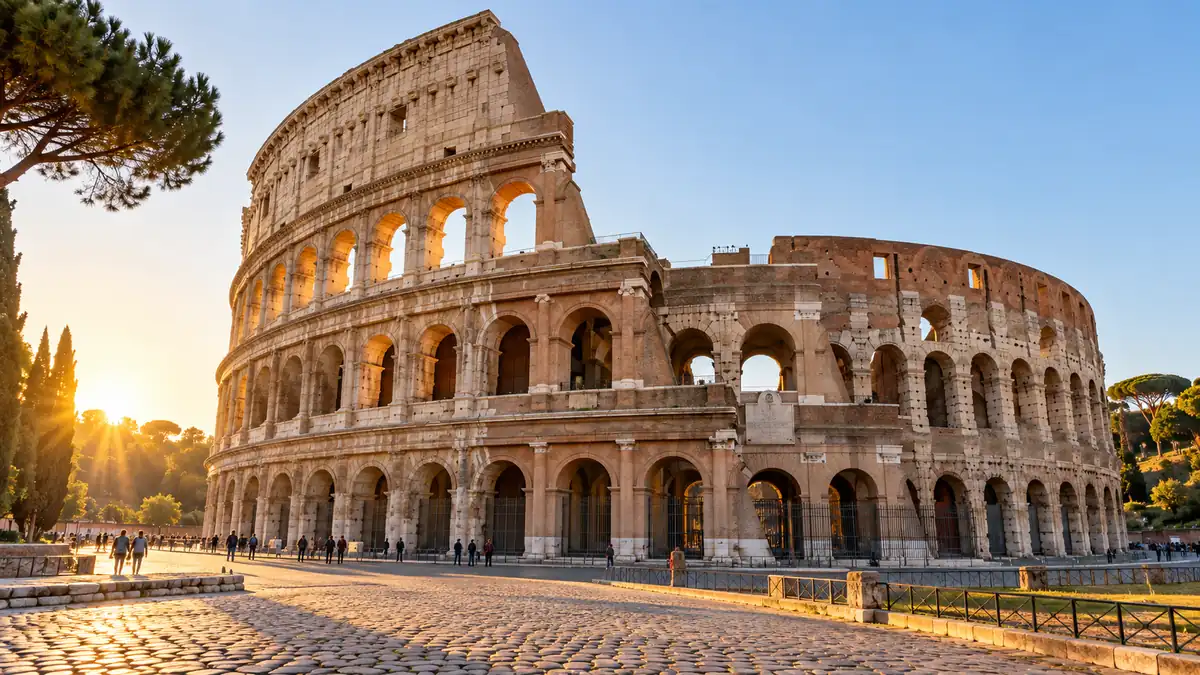
Rome hits you all at once: a 2,000-year-old amphitheatre on one corner, a working espresso bar on the next, and a piazza fountain that outdraws most countries’ national monuments. It is loud, layered, and unapologetically itself. The good news for a first visit is that almost everything you came to see sits inside one walkable historic core. This guide is the planning overview for that trip. It answers the decisions you actually have to make — how many days, when to go, where to base yourself, what to book ahead, roughly what a day costs, and how to move around — then points you to the deeper Tripstou page for each one. Read it top to bottom and you will have the whole shape of the trip before you open a booking tab.
Quick Answer
Rome is worth visiting, especially for first-time travelers who want history, food, and walkable landmarks packed into one compact center. Most first visits work best in two to three focused days, pacing roughly one major sight per day. Base yourself centrally and reserve the Colosseum and Vatican well ahead.
Trust Layer
Tripstou city guide for travelers planning a city trip. Covers trip length, stay style, season, cost, and mobility tradeoffs.
Produced with AI assistance and reviewed by Alex Perrut, working in tourism since 2015, for the Tripstou editorial team. See our editorial process for details.
Last factual review: July 12, 2026.
Official sources consulted: italia.it, enit.it.
Key Takeaways
- Rome suits first-time travelers best, packing ancient ruins, world-class art, and walkable food-focused neighborhoods into one compact, easy-to-navigate historic center.
- Plan two to three focused days for a first visit, pacing roughly one major sight per day to avoid burnout.
- Reserve the Colosseum and Vatican online before you travel, since both use timed entry and sell their best slots out early.
- Base yourself centrally so sightseeing time turns into strolling time; where you sleep shapes the trip more than which sights you pick.
- Visit in spring or autumn for mild weather and thinner crowds than the hot, congested midsummer peak.
- Learn the coffee clock and Monday museum closures to sidestep the two mistakes first-timers make most.
Table of Contents
Is Rome Worth Visiting, and Who It’s Best For
Rome is worth visiting, and it suits first-timers better than almost any city in Europe. Few places pack this much history, food, and walkable icon-spotting into one compact core. If you want ancient ruins, Renaissance art, and long dinners within a short stroll of each other, Rome delivers on the first afternoon.
The city rewards a particular kind of traveler. It is ideal for anyone drawn to history and architecture, food-led travelers who plan around meals, and first-time visitors who want the headline sights within walking distance instead of scattered across a metro map. It rewards slow wandering as much as ticking off monuments. The tradeoff is real, though: Rome is busy, hot in high summer, and its center runs on tourism, so quiet and bargains are not what it does best. Travelers chasing beaches, nightlife-first trips, or off-grid calm will find better fits elsewhere in the country.
Where Rome sits in a wider trip matters too. Many people build it into a longer loop, and it pairs naturally with the towns and day trips covered in the Rome region guide. If you are still weighing it against other destinations, our roundup of the best places to visit in Italy and the broader Italy travel guide put the choice in context. For most first trips, Rome earns its spot without much debate.
How Many Days You Need in Rome
Two to three days is the sweet spot for a first visit to Rome. That gives you time for the Colosseum and Forum, the Vatican, and the centro storico’s fountains and piazzas at a sane pace — about one major sight per day. Two days is tight but workable; three lets the city breathe.
The pacing rule matters more than the raw day count. Each headline sight — the Colosseum and Roman Forum together, the Vatican Museums and St. Peter’s, a slow loop through the historic center — is essentially a half-day once you factor queues, walking, and a proper lunch. Try to stack two of them into one day and the day stops being a holiday.
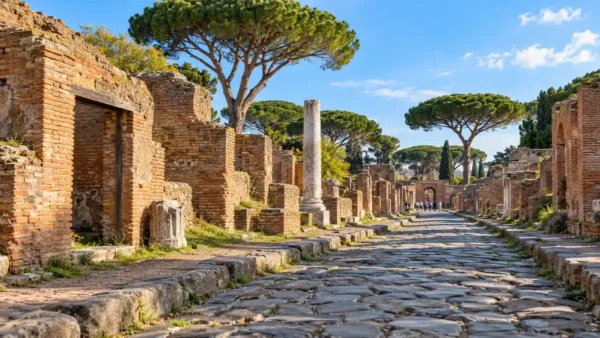
Here is the lever most people miss: in Rome, a fourth day rarely adds a bigger monument — it buys a slower morning and a day trip. Ostia Antica, the Appian Way, or a hill town become realistic. So the real question is not “is two days enough” but “do I want the highlights fast or the city at walking pace.” Add a day for the second.
For the actual hour-by-hour route, that belongs to a dedicated itinerary, not this hub. See the 2-day Rome itinerary or the 3-day Rome itinerary for the exact plan, and the Italy itinerary guide if Rome is one stop in a longer trip.
When to Visit Rome
Spring and autumn are the best times to visit Rome. The shoulder months bring mild days, thinner crowds than midsummer, and comfortable weather for a city you explore mostly on foot. It is the window where sightseeing and long outdoor dinners both work without a fight against heat or queues.
The main tradeoff is summer. July and August are hot, and the biggest sights draw their heaviest crowds exactly when the sun is fiercest — a tough combination for a walking city. Winter is quieter and cooler, with the occasional grey stretch, but it rewards travelers who prioritize space over warmth. Rome does not have a bad season so much as a set of tradeoffs. Seasonality detail — month-by-month weather, events, and crowd patterns — is owned by the dedicated page, so for the full picture see our guide to the best time to visit Italy.
The Headline Sights to Build Rome Around
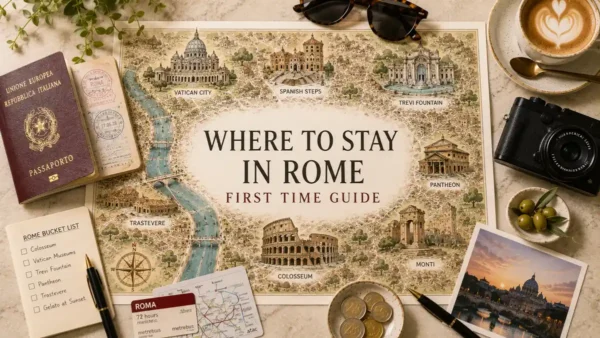
Rome’s first visit is built around five landmarks: the Colosseum, Roman Forum, Vatican, Trevi Fountain, and Pantheon. These are the anchors most itineraries plan around, and they cluster into two or three walkable zones. Fix these on your map first, then fill the gaps with whatever you stumble into.
The useful part is how they group. The Colosseum and Roman Forum sit side by side as one ancient-Rome block. The Pantheon, Trevi Fountain, and Piazza Navona knot together in the centro storico, easily linked on foot in a single stroll. The Vatican stands apart across the river as its own half-day. Seeing the sights this way — by cluster, not by checklist — is what keeps a short trip from becoming a series of long crosstown marches.
This is deliberately an orientation shortlist, not the definitive attraction list. Rome has dozens more worth your time, from Trastevere’s lanes to Borghese Gallery to the neighborhood churches hiding major artworks. For the full spread of what to do and how to prioritize it, see our guide to the best things to do in Rome.
Which Rome Neighborhoods to Know
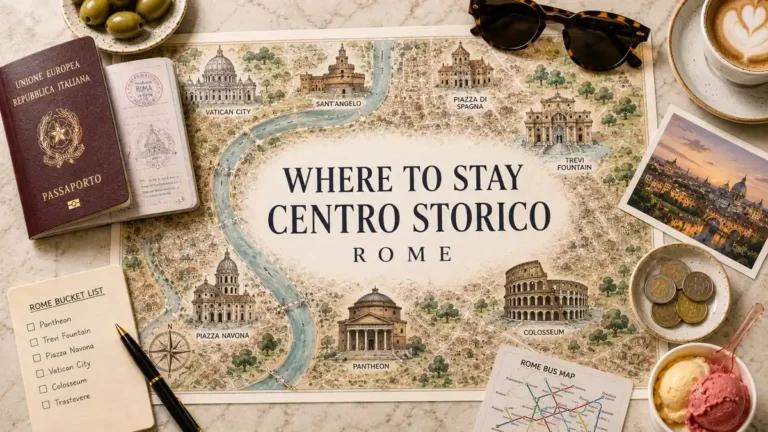
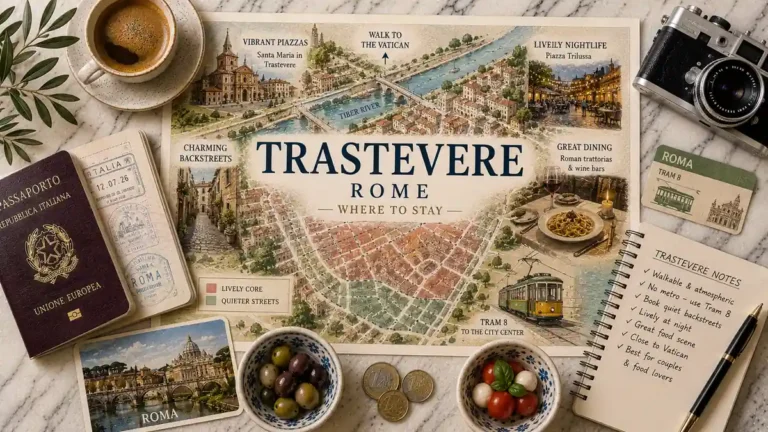
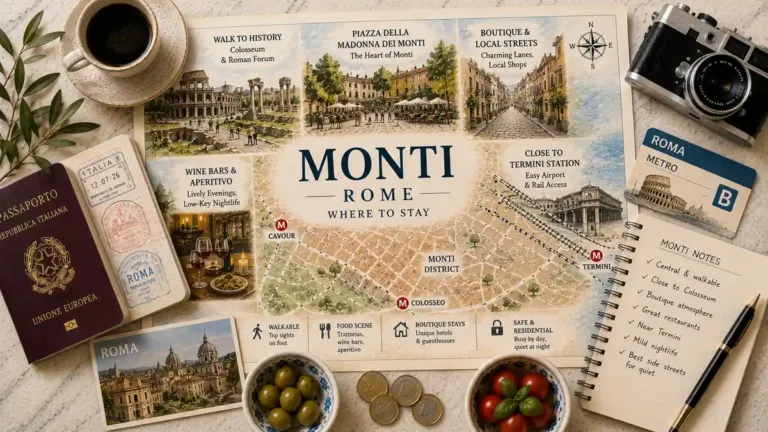
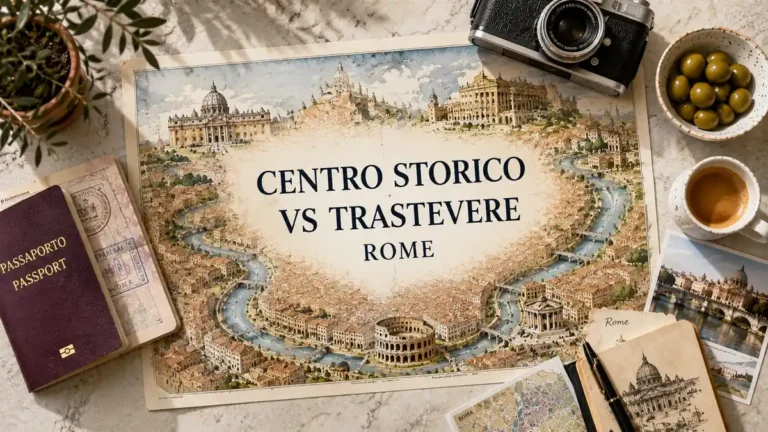
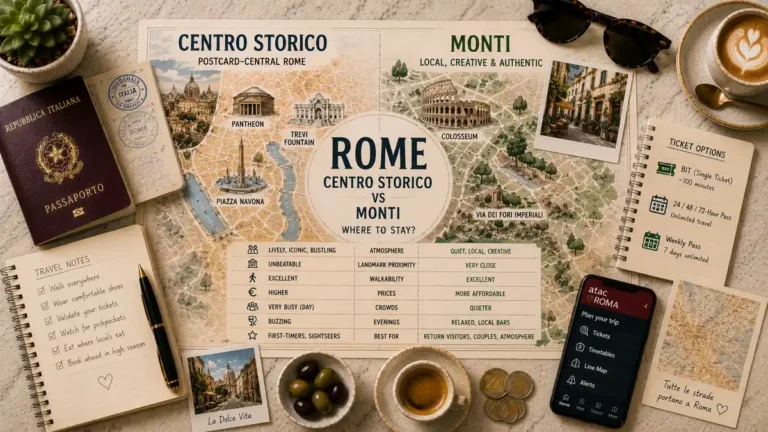
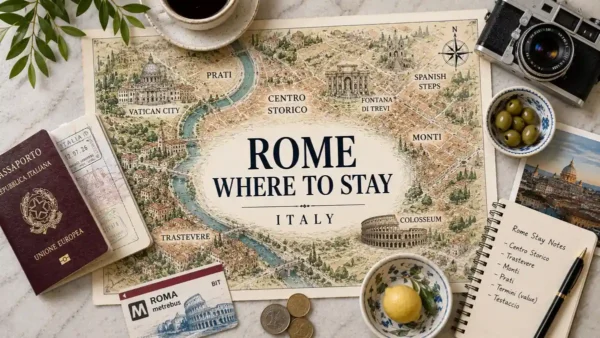
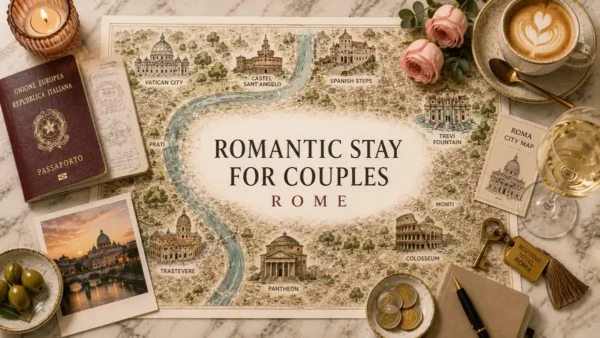
Four neighborhoods cover most of what a first-timer needs to know: centro storico, Vatican and Prati, Trastevere, and Monti. Each has a distinct character and a distinct tradeoff between being in the middle of it all and getting space to breathe. Knowing these four is enough to place yourself on the map.
Here is what each area trades off:
- Centro storico — the historic heart around the Pantheon and Piazza Navona. Everything is walkable and atmospheric; you pay for it in price and evening crowds.
- Vatican and Prati — calmer, more residential, an easy walk to St. Peter’s. Great for early Vatican access, a little removed from the ancient-Rome sights.
- Trastevere — cobbled lanes, trattorias, and nightlife across the river. Lively and characterful, and loud after dark near the busy squares.
- Monti — a compact, stylish pocket beside the Colosseum. Central and walkable to ancient Rome, with a neighborhood feel and fewer tour groups.
Where you base yourself shifts the whole trip more than which sights you pick — the right area turns transit time into strolling time. This is broad orientation, though, not booking picks. The dedicated pages resolve the actual choice: start with where to stay in Rome for the full breakdown, then match it to your trip with the guides for first-time visitors, couples, families, nightlife, and budget travelers. At the top end, see our picks for luxury stays and the best luxury hotels in Rome.
Hotels and places to stay
Compare hotels, apartments and stays for your dates in one search.
Search hotels and stays on hotels.com →
Tripstou may earn a commission if you book through this link, at no extra cost to you.
Booking the Colosseum and Vatican Ahead
Book the Colosseum and Vatican before you leave home. Both use timed-entry systems, and both routinely sell out their best slots days ahead in busy periods. Turning up hoping to walk in is how first-timers lose a morning to a queue or a sold-out sign at the two sights they most wanted to see.
The logic holds even though the exact rules change. Timed entry means you pick a slot in advance and arrive in that window, which caps same-day availability. The Colosseum ticket typically bundles the Forum and Palatine, so one reservation covers the ancient-Rome cluster. The Vatican rewards the earliest slots, before tour groups thicken the halls. Booking ahead does double duty here: it locks your entry and it lets you build the day around fixed times instead of guessing.
One caveat on specifics. Prices, official booking windows, and any Jubilee-year crowd measures shift, so treat every figure and rule as something to verify on the official ticketing site close to your trip, not a locked-in number. The habit that never expires is simple. Reserve the two big ones early; leave the rest flexible.
Tours and activities
Book skip-the-line tickets, day trips and local tours with free cancellation on most activities.
You can also browse everything on getyourguide.com.
Tripstou may earn a commission if you book through this link, at no extra cost to you.
What a Day in Rome Costs
Rome is a mid-priced European capital, and your daily spend is driven mostly by how you sleep and eat. A rough planning range runs from roughly €80–€120 a day for careful budget travel to €400 and up for high-end trips, with comfortable mid-range trips landing somewhere in between. Treat these as ranges to verify, not fixed quotes.
What each spend style actually buys in Rome:
- Budget — a dorm or simple room slightly out from the center, market food, pizza al taglio and standing espresso, and walking almost everywhere. Very doable in Rome because the sights cluster on foot.
- Mid-range — a central three-star or solid apartment, sit-down trattoria dinners, the odd taxi, and paid entry to the headline sights. The style most first trips settle into.
- High-end — a boutique or luxury hotel in a prime area, guided skip-the-line tours, fine dining, and taxis over transit. Rome has plenty to spend on at this tier.
Where Rome punishes a budget is location: a central bed and a sit-down dinner in a tourist piazza are the two line items that move fastest. It rewards the opposite habit — walk instead of ride, eat where the menu is only in Italian. For a full breakdown with worked numbers, see the Rome trip cost guide, or the Italy trip cost guide if you are budgeting a longer trip.
How to Get Around Rome
Rome’s historic core is highly walkable, and walking is how most first-timers should get around. The headline sights sit close enough that you will cover the centro storico on foot without planning to. Save the metro and buses for longer hops, and use a fixed-price connection to reach the center from the airport.
The broad reality is this. A compact metro network plus buses and trams handles the longer distances — out to the Vatican, across the river, or to the edges of the center — while the cobbled heart is faster and far nicer on foot. From Fiumicino airport, the Leonardo Express train runs a direct link to Roma Termini, the simplest arrival for most visitors. Ciampino, the second airport, is served mainly by bus links. Fares, schedules, and ticket types change, so confirm the mechanics close to your trip.
For the line-by-line detail — tickets, passes, and how each mode actually works — see the dedicated Rome transport guide. For arrivals specifically, the Rome airport transport guide compares every route from both airports into the city.
Train and bus tickets
Compare routes, schedules and prices across rail and bus operators in one search, with mobile tickets on your phone.
New to Omio? Code NEW10 takes 10% off your first booking — or APPNEW10 if you book inside the Omio app. Both apply to bookings up to €80.
Search routes and compare prices on Omio →
Tripstou may earn a commission if you book through this link, at no extra cost to you.
What First-Timers Should Know Before Visiting Rome
A few local habits save first-timers from small stumbles in Rome. The highest-value ones are about coffee, churches, museum days, and a little language. None are complicated, but knowing them ahead means you blend in instead of marking yourself as the visitor who ordered a cappuccino after a big lunch.
The rules worth carrying with you:
- Coffee has a clock. Milky coffees like cappuccino are a morning thing; after lunch, locals take an espresso. Standing at the bar is normal and cheaper than sitting.
- Dress for churches. St. Peter’s and major churches enforce covered shoulders and knees. Carry a light layer so a dress code never turns you away.
- Mind Monday. Many state museums and sites close on Mondays, so build your route around it and avoid losing a morning at a locked door.
- A little Italian goes far. You do not need to be fluent, but buongiorno, grazie, and per favore change how you are treated.
These are the essentials; the full etiquette and practical rundown lives in our Rome travel tips. Learn the coffee clock and the Monday closures and you have avoided the two mistakes first-timers make most.
Frequently Asked Questions
Are Rome’s museums closed on Mondays?
Many of Rome’s state-run museums and archaeological sites close on Mondays, though not all. The Vatican Museums, for example, open Monday and close Sunday instead. Because closures vary by site, check each attraction’s current schedule before you build a day around it, and keep Monday flexible.
Can you drink cappuccino after noon in Rome?
You can order a cappuccino any time in Rome, but locals rarely drink milky coffee after a meal. The custom is cappuccino in the morning and a plain espresso later, especially after lunch or dinner. No one will refuse you, yet ordering an espresso post-meal helps you blend in.
Do you need to speak Italian in Rome?
You do not need to speak Italian to visit Rome. English is widely understood in hotels, restaurants, and major sights across the tourist center. Still, learning a few phrases like buongiorno, grazie, and per favore is appreciated and often changes how warmly locals respond to you.
Is Rome walkable?
Rome’s historic center is very walkable, and most headline sights sit within an easy stroll of one another. The catch is the terrain: cobblestone streets and long sightseeing days wear on your feet, so comfortable, broken-in shoes matter more here than in almost any European capital.
Is Rome safe for tourists?
Rome is generally safe for tourists, including solo travelers, with violent crime rare in the areas visitors frequent. The main nuisance is pickpocketing around crowded sights, transport hubs, and busy piazzas, so keep valuables secured. For a full rundown of the common scams and how to avoid them, see our Rome safety guide.
Related Guides
Keep planning with the highest-leverage guides around this one. Each routes you to the next decision in the trip:
- Italy travel guide — the country-level overview if Rome is one stop in a bigger trip.
- Rome region guide — day trips and towns beyond the city itself.
- Best places to visit in Italy — where Rome fits among the country’s headline destinations.
- Where to stay in Rome — the full neighborhood-by-neighborhood stay breakdown.
- Best things to do in Rome — the complete sightseeing shortlist beyond the headline five.
- Best time to visit Italy — month-by-month weather, crowds, and events.
- Italy itinerary guide — how to slot Rome into a multi-city route.
- Best Day Trips from Rome
Did this guide save you time or money? Tripstou is independent and reader-funded — if you'd like to give something back, you can support the site with a crypto contribution of any size.