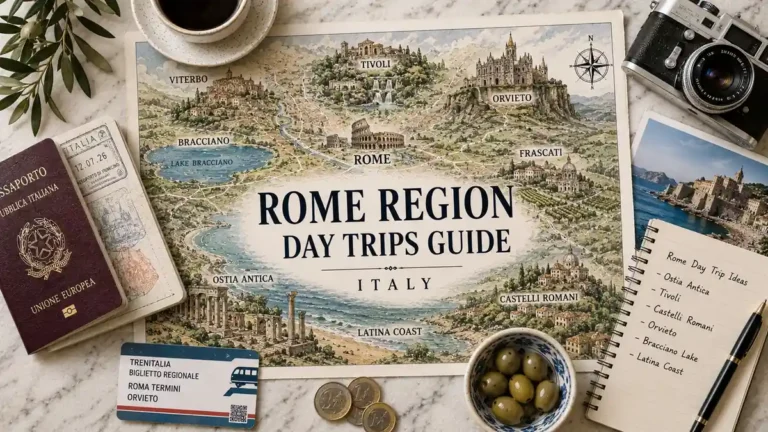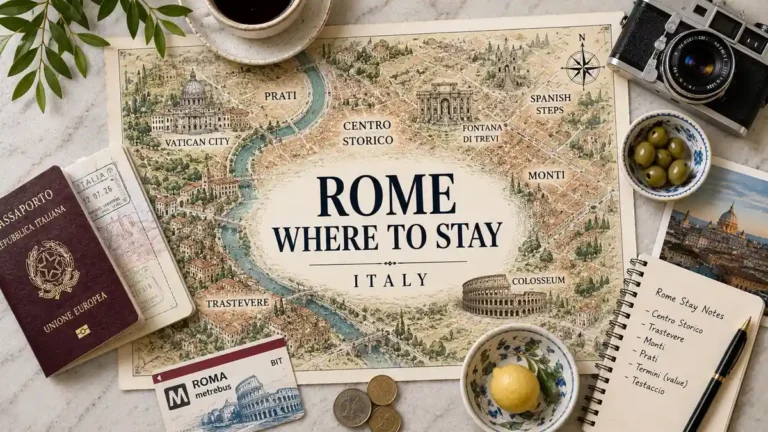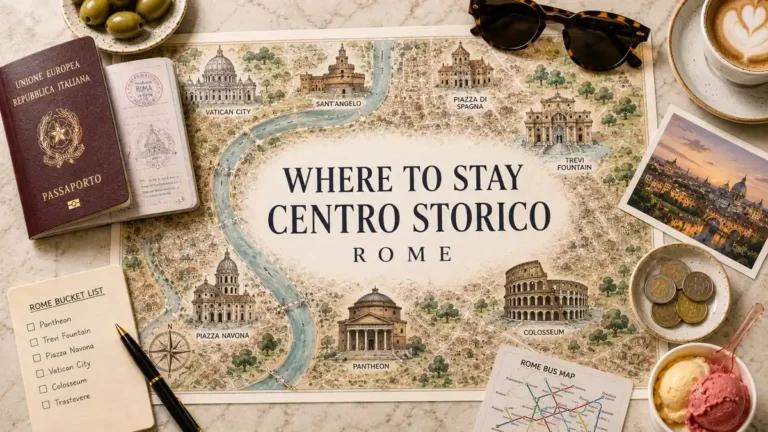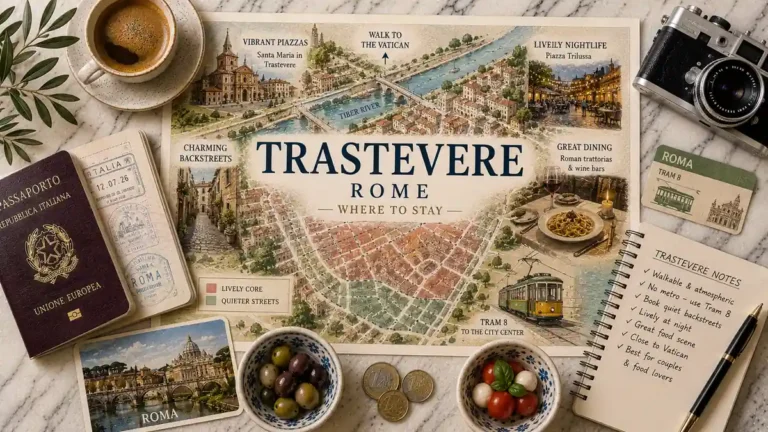
Rome holds more must-do experiences than any short trip can absorb, so the real task is choosing by payoff rather than chasing a checklist. This guide ranks the experiences actually worth your time, from the ancient core to the city’s great food rituals, and groups them so you can plan around impact instead of opening hours. You will find the headline attractions sorted by what they give back, the picks that suit first-time visitors, the food experiences and unusual swaps worth booking, and the light planning answers—what to pre-book and when to go—that protect the trip. Sequencing, lodging, and which other Italian cities to add live on dedicated pages; here the focus stays on what to do once you are in Rome.
Quick Answer
Quick answer: Rome’s unmissable experiences are the Colosseum and Roman Forum, the Vatican Museums and St Peter’s, and the Pantheon. Group your picks by area and pre-book the big-ticket sites to protect the trip. Add one food experience and an evening neighbourhood walk; first-timers and repeat visitors need different shortlists.
Trust Layer
Tripstou selection guide for travelers choosing between multiple places. Covers selection criteria, traveler fit, and trip value.
Produced with AI assistance and reviewed by Alex Perrut, working in tourism since 2015, for the Tripstou editorial team. See our editorial process for details.
Last factual review: June 28, 2026.
Official sources consulted: Italia.it, ENIT.
Key Takeaways
- Rome’s highest-payoff experiences are the Colosseum and Forum, the Vatican Museums and St Peter’s, and the Pantheon.
- First-time visitors should anchor the trip on those few essentials grouped by area, not a long sightseeing checklist.
- A guided food tour through Testaccio or Trastevere is the single food experience most worth booking first.
- Pre-book the Colosseum, Vatican Museums, and Borghese Gallery—timed-entry sites that sell out—while most churches and piazzas stay walk-up.
- Visit in spring or autumn for the best balance of mild weather and thinner crowds than peak summer.
- On a repeat visit, swap in San Clemente’s underground layers or the Appian Way for the crowd-free standouts.
Table of Contents
The best things to do in Rome, ranked by payoff
Rome’s highest-payoff experiences are the Colosseum, the Vatican Museums, and the Pantheon. The Colosseum and Roman Forum win on ancient spectacle; the Vatican Museums and St Peter’s on Renaissance art; the Pantheon on architectural genius. The Trevi Fountain rounds out the must-see core.
Ranked by what each gives back for the time it takes, the order is clear. The Colosseum and adjacent Roman Forum are a single ancient block: half a day buys you the arena, the ruins where the empire ran, and the view from the Palatine Hill. The Vatican Museums and St Peter’s Basilica are the art-and-faith centrepiece, ending in the Sistine Chapel—dense, crowded, and worth every minute. The Pantheon delivers the single most perfect interior in the city in fifteen minutes. The Trevi Fountain is a quick, high-impact crowd magnet best caught early or late.
Reality check: chasing every landmark dilutes the trip. Three or four sights done deeply beat ten seen in passing, and the city’s payoff comes as much from the squares and streets between them as from the ticketed interiors. If you are still deciding whether Rome leads your trip or shares it with other stops, our guide to the best places to visit in Italy helps you frame the wider choice.
Which Rome experiences are actually worth your time?
The Colosseum, Vatican Museums, and Borghese Gallery justify their tickets and queues. They reward the time and money with depth, scale, and art you cannot experience anywhere else. The Trevi Fountain, Spanish Steps, and Pantheon are better treated as quick, high-impact stops than long visits.
The distinction worth making is between experiences that reward dwelling and ones that reward a glance. The Colosseum, the Vatican complex, and the Borghese Gallery are immersive: you go in, spend real time, and come out having seen something singular. They earn their cost. The free or near-free landmarks—the Pantheon, Trevi Fountain, Spanish Steps, Piazza Navona—deliver their full impact fast, so build them into walks between the big sites rather than treating them as destinations in themselves.
Insight: the experiences travellers most often regret are the ones they queued an hour for on a whim. Decide before you go which two or three interiors you genuinely want, book those, and let everything else be a happy walk-up.
Best things to do in Rome for first-time visitors
First-time visitors should prioritise the Colosseum and Roman Forum, the Vatican Museums and St Peter’s, and the Pantheon. These four anchor the city’s history and art in two or three focused outings. Build the rest of the trip around them rather than chasing a long checklist.
The logic for a first trip is coverage of the essentials without overload. Pair sights by area so each outing flows: the Colosseum and Forum sit together on the ancient side; the Vatican Museums and St Peter’s share St Peter’s Square; the Pantheon, Trevi Fountain, and Piazza Navona cluster in the historic centre for an easy half-day on foot. Add one evening in Trastevere for dinner and atmosphere, and you have a complete first encounter with the city.
Prioritisation beats pacing for choosing what matters, but the moment you need a day-by-day plan, route it out. For sequencing and timings, see our 2-day Rome itinerary for a tight first visit or the 3-day Rome itinerary when you have an extra day to slow down.
Food experiences and food tours in Rome
The food experience worth booking first in Rome is a guided food tour through Testaccio or Trastevere. It pairs classic dishes—cacio e pepe, supplì, Roman pizza—with the context that makes them stick. A market visit and a casual neighbourhood crawl suit travellers who prefer to graze independently.
Rome’s food experiences sort neatly by how much guidance you want. A booked food tour is the strongest single choice for first-timers: it front-loads the classics, explains why Roman cooking leans on a handful of pasta dishes and offal traditions, and walks you past spots you would not find alone. Testaccio is the deeper, less touristy option; Trastevere is the livelier, more atmospheric one.
- Guided food tour — best for first-timers who want the classics decoded in one go.
- Market visit — a morning at a working market suits independent grazers and self-caterers.
- Trastevere or Testaccio dinner crawl — best for an unhurried evening built around eating, not sightseeing.
Rule: eat where the menu is short and seasonal, not where there is a tout at the door. The neighbourhoods away from the headline squares consistently serve the better, fairer-priced plates.
Unusual and off-the-beaten-path things to do in Rome
The strongest off-the-beaten-path experience in Rome is the Basilica of San Clemente, where three layers of history stack underground. Add the Aventine Keyhole, the Capuchin Crypt, or the Appian Way for travellers who have already seen the headline sights. Swap these in on a repeat visit.
These picks reward curiosity over fame, and they suit repeat visitors or anyone who tires of crowds quickly. San Clemente lets you descend from a medieval basilica through an early church to a Roman alley—Rome’s whole timeline in one stairwell. The Aventine Keyhole frames St Peter’s dome through a garden door; the Capuchin Crypt is sombre and unforgettable; the Appian Way trades the centre for ancient road, catacombs, and open sky on foot or by bike.
Swap one of these in for a second-tier headline sight rather than adding it on top of a full day. For the broader picture beyond the capital, our roundup of things to do in Italy sets Rome’s offbeat experiences against the rest of the country.
Which Rome attractions should you pre-book?
Pre-book the Colosseum, the Vatican Museums, and the Borghese Gallery—all use timed entry that sells out. The Borghese Gallery in particular requires reserved slots and routinely fills days ahead. The Pantheon, Trevi Fountain, and most churches stay walk-up, so save your planning for the big three.
As a general rule, anything with timed entry or a capacity cap should be booked before you travel, while open-air landmarks and most churches do not need reservations. Ticket prices, hours, and free-entry days shift over time, so confirm the current detail on the official site or operator close to your visit.
- Pre-book ahead: Colosseum and Roman Forum, Vatican Museums and Sistine Chapel, Borghese Gallery.
- Usually walk-up: Pantheon, Trevi Fountain, Spanish Steps, most churches and piazzas.
Rule: reserve the Borghese Gallery first—it sells out further ahead than the Colosseum or Vatican because slots and numbers are strictly limited. For transport, where to stay, and the rest of the practical logistics this page deliberately leaves out, see our Rome travel guide.
Tours and activities
Book skip-the-line tickets, day trips and local tours with free cancellation on most activities.
You can also browse everything on getyourguide.com.
Tripstou may earn a commission if you book through this link, at no extra cost to you.
When is the best time of year to visit Rome’s attractions?
The best time to visit Rome’s attractions is spring and autumn—roughly April to May and September to October. Shoulder months balance comfortable weather with thinner queues than peak summer. Visiting in midsummer means fierce heat and the heaviest crowds; winter trades cold for the quietest sites.
The trade-off is simple: the more pleasant the weather, the more company you will have. Shoulder seasons hit the sweet spot, with mild days for walking between sights and shorter lines than the summer peak. Midsummer brings strong heat and dense crowds at every major attraction, so plan early starts and book everything. Winter is the quietest and cheapest window if you can handle cooler, shorter days.
- Spring and autumn: best overall balance of weather and crowds.
- Summer: hottest and busiest—go early, pre-book, and pace yourself.
- Winter: quietest sites and lowest prices, with cooler weather as the trade.
Frequently Asked Questions
How much do Rome attractions and tickets cost?
Major paid attractions in Rome sit in a moderate price band, with the Colosseum, Vatican Museums, and Borghese Gallery costing more than smaller sites. Many churches and piazzas are free. Prices and any booking fees change, so confirm current rates on each official site before you travel.
Do you need to book the Colosseum and Vatican in advance?
Yes—both the Colosseum and the Vatican Museums use timed entry and routinely sell out, so booking ahead is strongly advised. Reserving a slot avoids long queues and the risk of missing entry on busy days. The Borghese Gallery needs advance reservation even more, often filling days before.
Are there free things to do in Rome?
Plenty. The Pantheon’s exterior, the Trevi Fountain, the Spanish Steps, Piazza Navona, and most of Rome’s churches—including St Peter’s Basilica—cost nothing to admire. Wandering Trastevere and the historic centre is free too. Some museums offer free-entry days, though these dates vary, so check official sites.
What is there to do in Rome at night?
Rome rewards evenings with floodlit landmarks, lively dinners, and neighbourhood strolls. The Trevi Fountain, Pantheon, and Piazza Navona look their best after dark and draw thinner crowds. Trastevere and Testaccio fill with diners and bars, making them the natural choice for an unhurried evening out.
Is a Rome city pass worth it for sightseeing?
A city pass pays off only if you visit several paid attractions and value skip-the-line access over flexibility. For travellers focused on a few headline sites, individual timed tickets are usually simpler and cheaper. Compare the pass’s included sites against your shortlist before buying, since coverage and pricing change.
Do you need a guide for the Colosseum and Vatican?
A guide is optional but adds the most value at the Vatican Museums and Colosseum, where context transforms vast, crowded spaces into a clear story. Independent visits with an audio guide work well for budget-conscious travellers. Choose a guided tour when history and skip-the-line entry matter most to you.
Related Guides
- 2-day Rome itinerary — sequence the essentials into a tight first visit.
- 3-day Rome itinerary — add depth and pacing with an extra day.
- Rome travel guide — logistics, transport, and where to stay.
- Things to do in Italy — experiences across the whole country.
- Best places to visit in Italy — choose which destinations make the trip.
- Best Day Trips from Rome
Did this guide save you time or money? Tripstou is independent and reader-funded — if you'd like to give something back, you can support the site with a crypto contribution of any size.