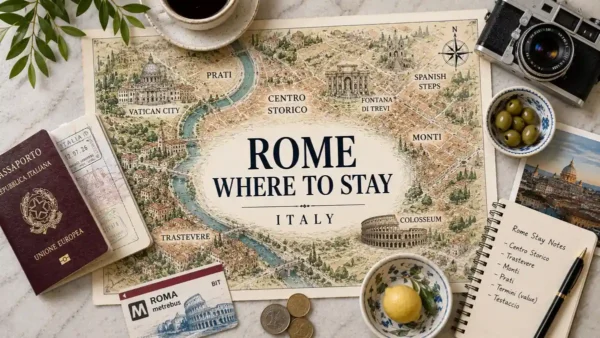
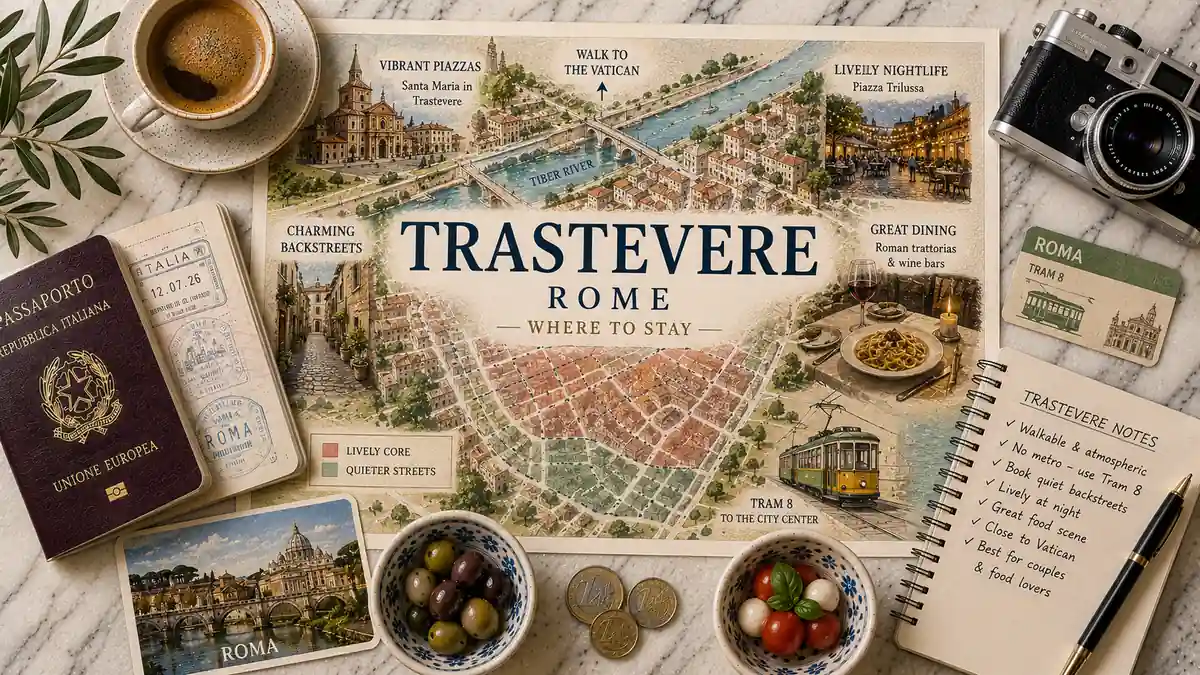
Choosing where to sleep in Rome shapes your whole trip, and Trastevere is one of the most tempting — and most debated — places to book. This guide answers one question: is Trastevere the right base for your Rome stay, and if so, which part should you book? The appeal is immediate. Medieval alleys, piazza life, and one of the city’s best food scenes sit within walking distance of the historic center. The tension is just as immediate. The same streets that charm you by day turn loud after dark, when diners and bar crowds fill the piazzas. Below you’ll find a straight verdict, who the neighborhood suits and who it frustrates, and a clear pick between the lively core and the quiet backstreets. No hotel lists, no attraction rundown — just the base decision.
Quick Answer
Yes — Trastevere is a strong Rome base for travelers who want atmosphere and walkability over quiet convenience. The trade-off is late-night noise near the piazza core versus calm on the quiet backstreets. Book a quiet side street away from the bar strip; light sleepers or families wanting calm may prefer a more central base.
Trust Layer
Tripstou stay guide for travelers choosing where to base. Covers area atmosphere, budget, convenience, noise, and traveler fit.
Produced with AI assistance and reviewed by Alex Perrut, working in tourism since 2015, for the Tripstou editorial team. See our editorial process for details.
Last factual review: July 12, 2026.
Official sources consulted: italia.it, enit.it.
Key Takeaways
- Trastevere works best for travelers who prize atmosphere, walkability, and a dense dinner scene over silence and doorstep metro access.
- The defining trade-off is charm and walkability against late-night noise near the piazzas, which you control at booking.
- Book a quiet backstreet away from the bar strip and simply walk to the piazzas for dinner.
- Trastevere has no metro, so it rewards travelers happy to explore on foot and by Tram 8.
- Expect mid-range to high-end pricing, not budget; you pay for the location and the character.
- The common mistake is booking directly on a dining piazza expecting calm — the noise runs late there.
Table of Contents
Is Trastevere a good area to stay in Rome?
Yes, Trastevere is one of Rome’s best areas to base your stay. It pairs medieval atmosphere with walkable access to the historic center, and its food scene runs late. The catch is night noise near the busy piazzas — a real cost if you value quiet evenings over lively ones.
What makes Trastevere work as a base is balance. You get a genuinely characterful neighborhood — not a sanitized hotel district — while staying close enough to walk to the centro storico instead of commuting into it each morning. For most first-timers and returning visitors alike, that combination of charm and proximity is exactly what a Rome base should deliver. If you’re still weighing it against other districts, our overview of where to stay in Rome maps the full set of neighborhood options, and the wider Rome travel guide puts the stay decision in trip context.
The honest limit is noise, not safety or convenience. Book on the wrong lane — right on a dining piazza or the main bar strip — and the evening buzz becomes your soundtrack until late. That single variable decides whether most travelers love or regret basing here, and it is entirely within your control at booking. Pick the right street and Trastevere is hard to beat.
What staying in Trastevere actually feels like
Staying in Trastevere feels like living inside a medieval village that happens to sit in central Rome. Cobbled alleys twist between ochre buildings, laundry hangs overhead, and trattorias spill onto small piazzas. From a base here, daily life is walkable, social, and food-forward rather than monumental.
The texture is the point. Mornings start slow at a corner bar with an espresso taken standing up; evenings drift between wine spots and family-run kitchens without a plan. Ivy climbs the walls, the streets are too narrow for much traffic, and you rarely need a map to enjoy an hour. This is a lived-in neighborhood, not a museum quarter — locals still shop, argue, and eat here alongside the visitors.
That everyday density is why food defines a Trastevere stay more than sightseeing does. You are basing yourself inside one of Rome’s richest concentrations of trattorias, bakeries, and gelato, so the neighborhood rewards travelers who treat dinner as the main event. If your ideal trip is monument-first with an early bedtime, the atmosphere here will feel like more than you need.
Trastevere by day vs by night: charm against noise
Trastevere changes character sharply between day and night. Mornings and afternoons are calm and photogenic — quiet lanes, neighborhood cafés, slow foot traffic. After dark the piazzas and main strips fill with diners, bar crowds, and street musicians. That evening energy is the draw and, for light sleepers, the drawback.
The daytime version of Trastevere is almost sleepy. It is the version that sells the neighborhood in photographs — empty cobbles, warm light on faded facades, a handful of people at outdoor tables. Come sunset, the crowd arrives and the volume climbs, peaking on Friday and Saturday nights around the main squares. Weeknights are gentler, but the pattern holds: this is a place that wakes up when you might want to wind down.
The noise map is narrow, and that changes everything. It clusters along the main dining piazzas and a few connecting streets, so a room booked two or three lanes back can stay quiet even on a busy Saturday. If nightlife is the reason you’re choosing Rome, and not just a factor to manage, the best areas for Rome nightlife guide compares bases built around it. And if the late-night buzz tips you toward calm, weigh it against the historic center: you gain livelier evenings here but add a slightly longer walk to the sights, a trade our centro storico vs Trastevere comparison lays out.
Who should base in Trastevere — and who shouldn’t
Trastevere suits travelers who want atmosphere, walkability, and a strong dinner scene over silence and metro convenience. It rewards returning visitors, couples, foodies, and sociable night-out travelers. It works less well for very light sleepers, families needing early quiet, and anyone whose priority is doorstep metro access to the major sights.
Trastevere suits you if you are:
- A couple after atmosphere — romantic alleys and a dense dinner scene make it a natural fit; the full Rome for couples base guide goes deeper.
- A returning visitor or first-timer who wants character — you get local texture without sacrificing walkable access; see where to stay for first-timers for the alternatives.
- A food-led traveler — few Rome bases put you inside a stronger concentration of trattorias and wine spots.
- A sociable night-out traveler — the bars and piazza life are on your doorstep.
Look elsewhere if you are:
- A very light sleeper — even a good street can carry weekend noise; a calmer central base may serve you better.
- A family wanting early quiet — the evening buzz and cobbled, stroller-unfriendly lanes are real friction; the Rome for families guide points to steadier options.
- Metro-dependent — with no station in the neighborhood, this is a walk-and-tram base, not a metro one.
On price, Trastevere sits mid-range to high-end for Rome, not budget — you pay for the location and the charm. That positioning holds across seasons instead of at any fixed rate, so treat it as a spend-style signal and verify current prices before booking. For a base chosen around cost, see where to stay in Rome on a budget; for the top of the market, luxury stays in Rome and specific luxury hotels in Rome cover the named picks this page deliberately leaves out.
Best part of Trastevere to stay: lively core vs quiet backstreets
Pick the quiet backstreets away from the bar strip for sleep, or the lively piazza core for atmosphere. The two micro-areas sit only minutes apart, so the real choice is nighttime calm versus instant access to Trastevere’s bars and restaurants. Light sleepers should lean toward the western and southern lanes.
The two options are genuinely different bases despite being neighbors:
- The lively core — the streets around Piazza di Santa Maria in Trastevere and the main dining piazzas. You step out into the action, with restaurants and bars at your door and the neighborhood’s energy on tap. The cost is noise that runs late, especially on weekends. Best for: night-out travelers and short-stay visitors who want to be in the thick of it.
- The quiet backstreets — the calmer lanes west and south of the piazzas, away from the bar strip but still a few minutes’ walk from everything. You keep the charm and the food access while trading down the volume. Best for: couples, light sleepers, and anyone staying several nights who wants the atmosphere without the soundtrack.
The lively core only wins if you genuinely plan to be out past midnight — otherwise you are paying in lost sleep for energy you’re not awake to enjoy. Because the two zones are so close, most travelers get the best of Trastevere by booking a quiet lane and simply walking to the piazzas for dinner.
Hotels and places to stay
Compare hotels, apartments and stays for your dates in one search.
Search hotels and stays on hotels.com →
Tripstou may earn a commission if you book through this link, at no extra cost to you.
Getting to Rome’s sights from Trastevere without a metro
Trastevere has no metro station, but it stays well connected to Rome’s main sights on foot and by tram. The historic center and Vatican are within walking distance, and Tram 8 plus several bus lines link the neighborhood to the wider city. Directionally, you walk more here and ride the metro less.
For most visitors, the lack of a metro matters less than it sounds. Trastevere sits on the west bank of the Tiber, and crossing the river puts you into the centro storico on foot; the Vatican and the Janiculum hill (Gianicolo) are also walkable from here. Tram 8 connects the neighborhood toward the city center, and buses fill the gaps, so longer hops across Rome remain straightforward without a station on your street.
Treat all of this as directional, not a schedule — exact walking times, tram frequencies, and route details shift, so verify them when you plan your days. The practical takeaway is simple: base here and Rome becomes a walking trip punctuated by the occasional tram, which suits travelers who like exploring on foot more than those who want fast, seated transit to every sight. If a metro-connected, more central district fits your pace better, our centro storico vs Monti comparison weighs a well-linked alternative.
Frequently Asked Questions
Is Trastevere noisy at night?
Yes, near the central piazzas and bar strip Trastevere is noisy after dark, peaking on Friday and Saturday when diners and drinkers fill the squares. Weeknights are calmer, and the noise stays tightly localized. Choosing a room set back from the main squares keeps most nights genuinely quiet.
Is Trastevere safe?
Trastevere is generally considered a safe area to stay in Rome, including in the evenings when its streets stay busy and social. The main concern is petty theft like pickpocketing in crowded piazzas and nightlife spots, as anywhere central in Rome. Standard precautions with bags and phones are enough.
Is Trastevere walkable to the Vatican and Colosseum?
The Vatican is an easy walk from Trastevere, sitting just north along the same west bank of the Tiber. The Colosseum is farther, on the opposite side of the historic center, so most visitors reach it by tram or bus instead of on foot. Treat walking times as directional.
Is Trastevere expensive to stay in?
Expect to pay a premium in Trastevere; its popularity, central position, and dense dining scene push nightly rates above Rome’s cheaper districts. Prices climb further in peak season and around the main piazzas. If cost leads your decision, quieter or outer neighborhoods deliver better value for a Rome stay.
Should you book a hotel or an apartment in Trastevere?
Both work well in Trastevere; the choice comes down to your travel style. Apartments suit longer stays, families, and travelers who want a kitchen and residential feel among the backstreets. Small hotels and B&Bs suit shorter trips and anyone wanting daily service and a staffed front desk.
Does Trastevere get too crowded with tourists?
Trastevere is popular and busy, especially in the evenings and on weekends, but it still functions as a lived-in neighborhood, not a pure tourist zone. Daytime and the quieter backstreets stay relatively calm. Visiting outside peak dining hours lets you enjoy the atmosphere without the thickest crowds.
Related Guides
- Where to Stay in Rome — the full neighborhood overview and overall stay decision.
- Centro Storico vs Trastevere — the direct base comparison against the historic center.
- Centro Storico vs Monti — an adjacent comparison for a more metro-connected base.
- Best Areas in Rome for Nightlife — where to base if a night-out is the priority.
- Luxury Hotels in Rome — named high-end picks this guide leaves out.
- Rome Travel Guide — city context for the rest of your trip.
Did this guide save you time or money? Tripstou is independent and reader-funded — if you'd like to give something back, you can support the site with a crypto contribution of any size.