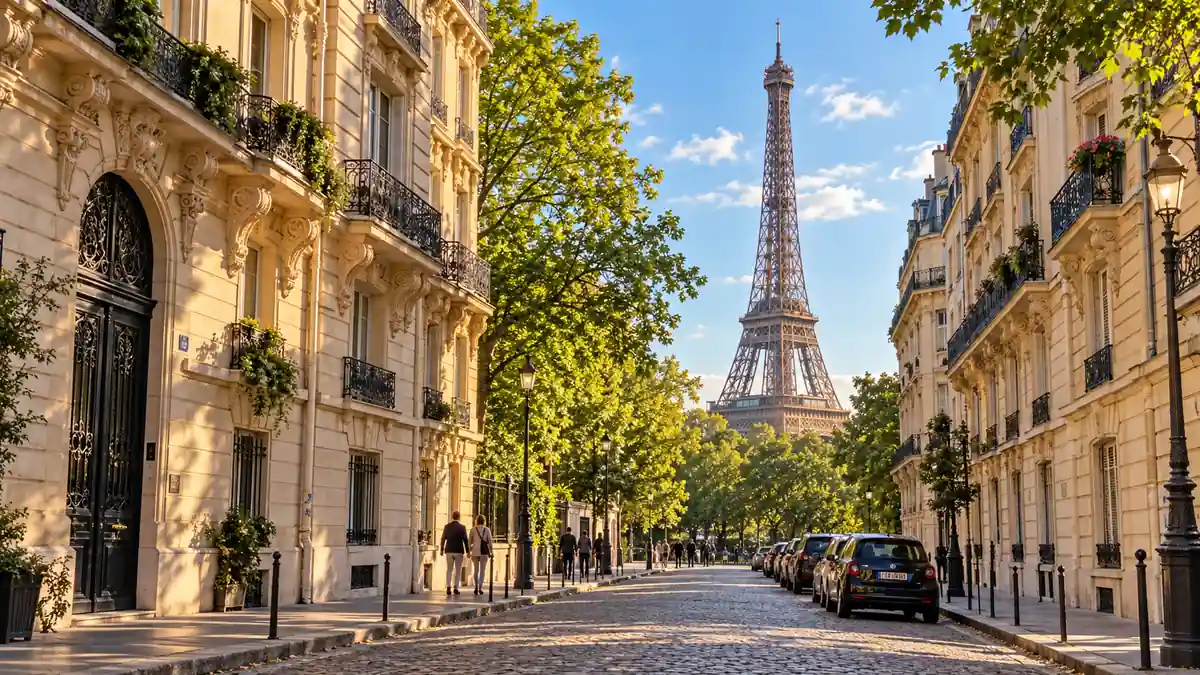
A first trip to Paris comes down to a handful of decisions: how many days to give it, which season to go in, which side of the river to sleep on, how to get in from the airport, what a day costs and which two visits to book ahead. This guide settles each one in plain terms and sends you to the dedicated Paris guide when a decision needs more detail.
It is written for a traveler stepping off a long-haul flight with no map of the city in their head yet. Words like arrondissement, RER or Left Bank are explained the first time they matter, so nothing here assumes a previous visit.
Quick Answer
Paris is worth a first trip for its walkable density of world-famous landmarks, deep museums, food and neighbourhood life. Trip length is the main decision: three days is the floor, and four to five days is comfortable and leaves room for Versailles. It suits first-timers basing centrally, couples, culture-led travelers and families happy with a slower pace.
Who Checked This Guide
This is the broad first-trip planner for Paris, covering trip length, season, where to base, arrival, daily cost, the bookings that matter and genuine day trips; the sight list, the neighbourhood-by-neighbourhood resolver, the day-by-day itineraries and the fares page each have a guide of their own.
Alex Perrut, working in tourism since 2015, went over this planner for the Tripstou editorial team after it was written with AI assistance, checking the Louvre rule and the Orly Metro line against the sources below; see our editorial process.
Official sources consulted: Musée du Louvre, Région Île-de-France.
In This Guide
Is Paris Worth It for a First Trip?
Paris is worth it for a first trip, and few European cities pay back a short stay as well. Its defining landmarks sit close together inside a walkable centre, and behind them lies real depth in museums, food and everyday neighbourhood life. The price of that is crowds and higher costs in the peak summer months.
No other first European city packs so many places you already recognise into an area you can cross on foot. A morning at a world-class museum, lunch at a café terrace and an evening walk along the Seine fit into one day without a single long transfer. That density is why a first visit feels full even when it is short.
Some travelers should think twice. If your ideal trip is beaches, quiet countryside or a road trip by car, Paris works better as one stop on a wider French route, which the last section of this guide covers.
Plan your arrival day lightly. After a long-haul flight, the first afternoon is best spent checking in, walking the streets around your base and staying awake until a normal bedtime. Save the big museums and timed bookings for day two, when your body has caught up with the clock.
What Paris Is Known For, Beyond the Eiffel Tower
A first visit to Paris is defined by a compact set of places: the Eiffel Tower on the Left Bank; the Louvre facing it from the Right Bank; the Seine and Île de la Cité in between, home to Notre-Dame and Sainte-Chapelle; the Musée d’Orsay across the river from the Louvre; the Arc de Triomphe at the top of the Champs-Élysées; Montmartre and Sacré-Cœur on the hill to the north; and Le Marais, the old quarter east of the centre. Almost all of them line up along or near the river, which is what makes the city so easy to read on foot.
The landmarks are only the first layer. What most travelers remember is the rhythm of the city between them: café tables turned to face the street, neighbourhood markets, bakeries on every block and museums small enough to see in an hour. On the Left Bank, Saint-Germain-des-Prés and the Latin Quarter carry the literary, student side of Paris, while the gilded dome of Les Invalides anchors the stretch towards the Eiffel Tower.
This guide names these places to orient you, not to rank them. For the full selection, how to book each sight and how to order your visits, use our guide to the best things to do in Paris.
How Many Days Do You Need in Paris?
Three days is the floor for a first trip to Paris, and four to five days is the comfortable answer. Two days covers the headline landmarks only; seven turns the visit into a slow stay with room for day trips. The reason is simple arithmetic: the landmarks are close together, but the museums each want a half day and jet lag takes the edge off your first day.
| Trip length | What fits | Who it suits |
|---|---|---|
| 2 days | The headline landmarks and one museum, at a brisk pace | Stopovers and travelers adding Paris to a longer European route |
| 3 days | The main landmarks, one major museum and a neighbourhood walk | First-timers on a tight schedule |
| 4–5 days | Landmarks, two or three museums, Versailles and slow mornings | Most first-timers, couples and families |
| 7 days | All of the above plus quieter quarters and day trips beyond Versailles | Slow travelers and anyone recovering from a long-haul flight |
Is three days enough for Paris? Yes for the landmarks, no for the landmarks plus the big museums plus Versailles. Three days lets you see the city’s famous faces and walk one quarter properly. Add Versailles or a second major museum and you need a fourth day, or the trip turns into a queue-to-queue sprint.
Long-haul arrivals should count their first day as half a day at most. A traveler landing from Australia, Canada or the United States who books three days often gets two and a half usable ones, which is why the fourth day buys more here than it would on a short-hop trip. Our 2-day Paris itinerary shows what a short stay can hold, and the 3-day Paris itinerary lays out the classic first visit day by day.
Spring and Autumn Beat Summer, but Winter Has Its Case
Spring and autumn give Paris its best balance of pleasant weather and manageable crowds. July and August bring the peak crowds and the longest queues, while winter brings shorter days, thinner crowds and the Christmas lights season. That last point matters for travelers from Australia and New Zealand, whose summer holidays land in the Paris winter.
Spring suits first-timers who want the city at its freshest, with parks turning green and terraces filling up. Autumn suits couples and anyone who likes walking: the light is soft, the summer rush has gone and the city’s cultural calendar is back in full swing.
Summer suits families tied to school holidays, as long as they book the must-see visits early and plan museum time for mornings. Expect the busiest landmarks to feel crowded from opening onwards, and build in slow afternoons in a park.
Winter suits travelers who care more about museums, cafés and lights than about long evenings outdoors. Short days push you indoors, which happens to be where much of Paris’s best is. For a southern-hemisphere traveler, a Paris winter trip in December is the obvious way to swap a hot Christmas for a cold one.
Winter is the season where Paris’s museum depth stops being a bonus and becomes the plan: a cold, dark afternoon in the Louvre or Orsay is a better use of the day than a cold walk. The season also changes what you pack, from layers and a waterproof in the shoulder months to a proper coat in winter; our France packing list covers it season by season. For month-by-month detail across the country, see the best time to visit France, and for markets and lights, our guide to Christmas in Paris.
How the Arrondissements Fit Together: Right Bank, Left Bank, Centre
Paris is divided into 20 numbered districts, the arrondissements, which spiral clockwise outward from the 1st at the centre. The Seine splits the city into the Right Bank to the north and the Left Bank to the south. A low number tells you an address is central, and the bank tells you its mood.
For a visitor, the numbering works as a quick distance gauge. The single-digit arrondissements hold most of the landmarks and put you within walking distance of the river. The outer teens are mostly residential: often good value and well connected, but a Metro ride from the sights you came for.
The Right Bank is the grander, busier side. The Louvre, the shopping streets and the lanes of Le Marais sit here, with Montmartre further out on its hill to the north. The Left Bank feels calmer and more bookish, with the cafés of Saint-Germain-des-Prés, the Latin Quarter around the Sorbonne and, further west, the Eiffel Tower.
Île de la Cité is the hinge between the two. This island in the Seine, home to Notre-Dame, sits at the historic heart of the city, and crossing it on foot is the easiest way to feel how the two banks connect.
Where to Base Yourself in Paris for a First Visit
Base yourself in a low-numbered, central arrondissement on either bank, and let your travel style pick the side. The Right Bank, from the Louvre to Le Marais, wins on convenience for landmarks and nightlife. The Left Bank, around Saint-Germain and the Latin Quarter, wins on café-quarter calm.
The central choice matters more than the bank. A central base turns most landmarks into a walk and makes the early-morning or late-evening visit easy, which is when the city is least crowded. Each traveler type has its own guide:
- First-timers who want to walk to the landmarks from day one: where to stay in Paris for the first time.
- Budget travelers willing to trade a few Metro stops for a lower nightly rate: where to stay in Paris on a budget.
- Couples after romantic, walkable streets with evening atmosphere: where to stay in Paris for couples.
- Families who need parks, space and easy Metro access: where to stay in Paris with kids.
- Luxury travelers choosing an area for elegance and service: luxury areas to stay in Paris, with hotel-level picks in our luxury hotels in Paris guide.
- Night owls who want bars and late dinners on the doorstep: where to stay in Paris for nightlife.
A Right Bank base close to Châtelet also shortens both airport runs, because the main rail links from Charles de Gaulle and Orly both stop there. For the full neighbourhood-by-neighbourhood comparison, use our guide to where to stay in Paris.
Hotels and places to stay
Compare hotels, apartments and stays for your dates in one search.
Search hotels and stays on hotels.com →
Tripstou may earn a commission if you book through this link, at no extra cost to you.
Arriving at CDG or Orly, Then Getting Around
Most long-haul flights land at Charles de Gaulle (CDG), the main gateway, where the RER B suburban train runs into central Paris. Orly, the city’s second airport, is reached by Metro line 14. Once you are in the city, you move by Metro, by RER and above all on foot.
From Charles de Gaulle or Orly into the centre
From Charles de Gaulle, take the RER B from the airport’s CDG 1 or CDG 2 station into the city. It stops at Gare du Nord and at Châtelet–Les Halles, the central interchange where most Metro lines meet.
From Orly, Metro line 14 runs straight into the city and reaches Châtelet. Both airports therefore feed the same hub, which makes a base within a short hop of Châtelet the easiest place to land after a long flight. Buses, taxis, ride-hailing and the fares for each option are compared in our Paris airport transport guide.
Metro, RER and walking: what each is for
The Metro is for getting around inside the city: dense lines with stations close together, so one is rarely far away. The RER is the faster, longer-range network, with fewer stops in the centre; it is the line you use for the airports and for Versailles.
Walking is the third network, and in central Paris it is often the best one. Most landmarks sit within walking distance of each other along the river, and a walk between two sights shows you more of the city than the tunnel does. Tickets, passes and the Navigo card are explained in our guide to getting around Paris.
How Much Does a Trip to Paris Cost per Day?
A trip to Paris costs about €95–€115 per person per day on a budget, €250–€310 per person per day mid-range, and €450 and upward per person daily for luxury travel, with flights excluded in every case. What separates the styles is mostly where you sleep, how you eat and how you get around.
| Spend style | Per person per day | What it buys in Paris |
|---|---|---|
| Budget | €95–€115 | Hostel bed or simple room further out, bakery and market meals, Metro and walking |
| Mid-range | €250–€310 | Comfortable central hotel, sit-down bistro meals, Metro plus the odd taxi |
| Luxury | €450 and upward | Upscale hotel in a prime arrondissement, fine dining, taxis or private transfers |
Paris is kind to every budget in the same places. Walking costs nothing and covers most of the centre, bakeries and markets feed you well for little, and a museum day fills hours for one admission. It punishes everyone in the same places too: central hotels in peak season and taxi habits drain any style of budget faster than meals do.
The cheapest win in Paris is the season, not the menu. A central room in the shoulder months can cost what an outer-arrondissement room costs in July, so moving your dates usually buys a better base than downgrading your hotel.
The full breakdown of stay, food, transport and sights sits in our Paris trip cost guide. For how to eat well at each level, see the France food guide, and if Paris is one stop of several, the France trip cost guide covers the wider budget.
The Eiffel Tower and the Louvre Are the Only Must-Books
Two bookings decide a first trip to Paris: Eiffel Tower timed tickets and a Louvre time slot. Eiffel Tower timed tickets go on sale on the official site weeks ahead and sell out at weekends and in summer — book as soon as your dates are fixed. At the Louvre, a time slot is recommended for everyone, including visitors entitled to free admission, and the museum is closed on Tuesdays.
The Eiffel Tower booking is the one to make first, because it is the visit most first-timers build a day around and the one that fills soonest. Pick your tower day before you lock anything else in; the rest of the week can bend around it. The Tuesday closure shapes the Louvre plan: put it on any other day and keep Tuesday for walking a quarter like Le Marais or for another museum. If you would rather see the galleries with a guide, you can reserve a guided visit with access included.
Almost everything else can be booked closer to the date. Opening logistics and ticket options for the other sights are covered in our guide to things to do in Paris.
Tours and activities
Book skip-the-line tickets, day trips and local tours with free cancellation on most activities.
You can also browse everything on getyourguide.com.
Tripstou may earn a commission if you book through this link, at no extra cost to you.
Which Day Trips From Paris Are Genuine Day Trips?
Versailles is the one default day trip from Paris: a suburban RER C ride takes you to Versailles Château Rive Gauche station, near the palace. Mont-Saint-Michel, by contrast, is not a day trip at all and is better taken as an overnight.
Versailles earns its place on a four-to-five-day trip because it needs no planning beyond a train ride and a free day. Give it a full day for the palace and the gardens, and book a guided palace tour if you prefer someone to walk you through the state rooms. Beyond Versailles, the honest way to sort day trips is by the kind of train they need:
- Suburban rail: Versailles, plus Fontainebleau and Chantilly for châteaux with fewer crowds.
- Regional rail: Giverny, for Monet’s garden, via Vernon; and Rouen, for its cathedral and old town.
- Fast TGV: Reims, the Champagne capital, whose houses and vineyards are covered in our guide to the wine regions of France.
- Overnight, not a day trip: Mont-Saint-Michel, which rewards an evening and early morning on the bay.
The train type is a better guide than the map: a suburban line costs you a morning, a regional line most of a day, and anything further turns a day trip into a day of travel. Families can also give one day to Disneyland Paris. For what each trip holds and how to plan it, see our guide to day trips from Paris, and for the wider Île-de-France region around the city, the Paris region guide.
Who Paris Suits, and When to Pair It With the Rest of France
Paris on its own suits first-timers with three to five days, couples and culture-led travelers. Readers with a week or more, or who want coast, wine country or open countryside, should pair Paris with the rest of France.
Families who want space to run, travelers dreaming of beaches or vineyards and anyone with seven to fourteen days get more from a combined trip. Paris gives them the museums and landmarks; the regions give them pace and landscape. Our France travel guide and the shortlist of the best places to visit in France help choose where to go next.
Pairing is usually done one of two ways. Fast trains leave Paris’s main stations for the rest of the country, which suits a route linking cities; the France train itinerary shows how. A France road trip after the city suits countryside and small villages, with the car picked up on your way out of Paris, not on arrival. For a full plan, start from our France itinerary guide, then choose between the 7-day France itinerary, the 10-day France itinerary and the 14-day France itinerary.
Check the entry rules that apply to your passport before booking.
Your Paris Decisions at a Glance
- Give a first trip to Paris four to five days: three is enough for the landmarks, and the fourth day is what makes room for Versailles or a second big museum.
- Spring and autumn balance weather and crowds best, July and August bring the longest queues, and winter trades short days for thinner crowds and the Christmas lights.
- Choose a low-numbered central arrondissement first and the bank second — the Right Bank for landmark and nightlife convenience, the Left Bank for café-quarter calm.
- From Charles de Gaulle the RER B and from Orly Metro line 14 both bring you to Châtelet, which makes a base near that hub the easiest landing after a long flight.
- Book Eiffel Tower timed tickets as soon as your dates are fixed, and put the Louvre on any day except Tuesday, when the museum is closed.
- Versailles is the easy default day trip by RER C, while Mont-Saint-Michel deserves an overnight.
- Daily spend runs from about €95–€115 per person on a budget, through €250–€310 mid-range, to €450 and upward for luxury, flights excluded.
Quick Questions Before You Book
Do you need cash in Paris?
You need very little: cards are widely accepted in Paris, and a small amount of cash covers the odd bakery stop or market stall that prefers it. Our practical Paris tips cover paying, tipping habits and the other everyday details worth knowing before you land.
Is Paris safe for tourists?
Yes, Paris is generally safe for tourists, and the realistic risk is pickpocketing on the Metro and around the busiest landmarks. Keep your phone and wallet zipped away in crowds and on platforms. Our Paris safety guide explains where to stay alert, the common tricks aimed at visitors are in our guide to scams in France, and women travelling alone will find specific advice in the solo female safety guide for France.
Keep Planning Paris and France
- Paris region guide: the Île-de-France beyond the city limits.
- Best beaches in France: where to add coast to a Paris trip.
- Where to stay in Paris: resolve your neighbourhood once you have picked a bank.
- 3-day Paris itinerary: turn this plan into a day-by-day route.
- Things to do in Paris: choose which sights fill your days.
Did this guide save you time or money? Tripstou is independent and reader-funded — if you'd like to give something back, you can support the site with a crypto contribution of any size.