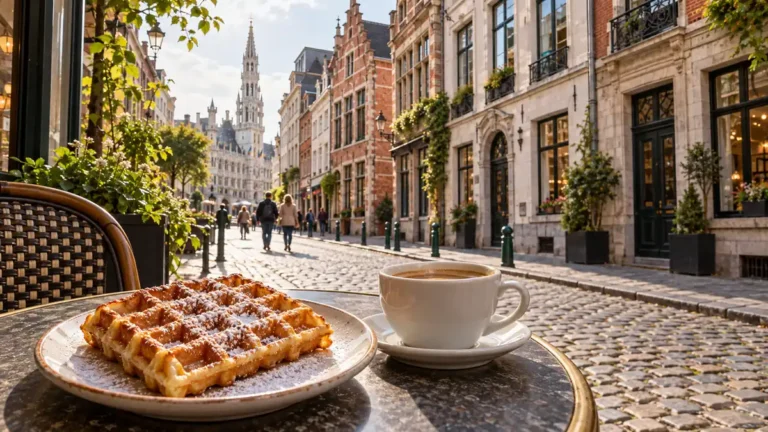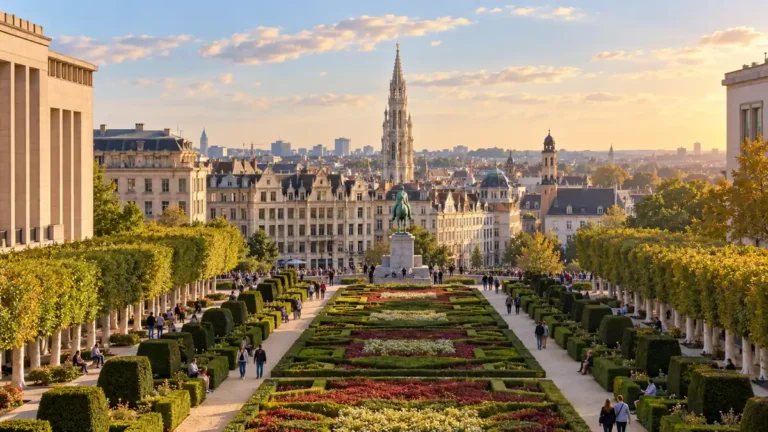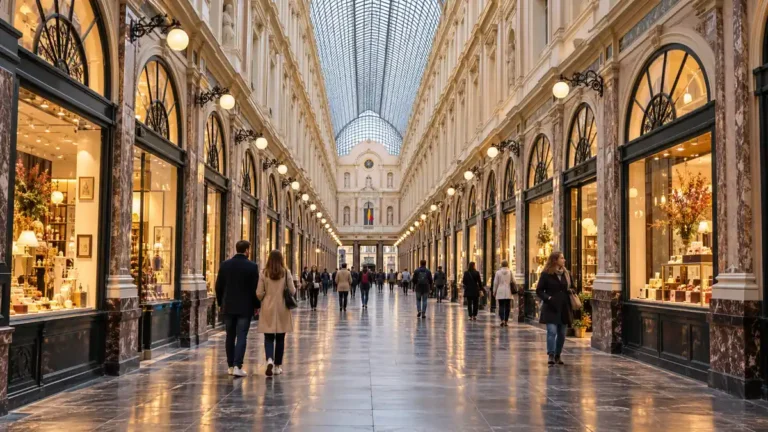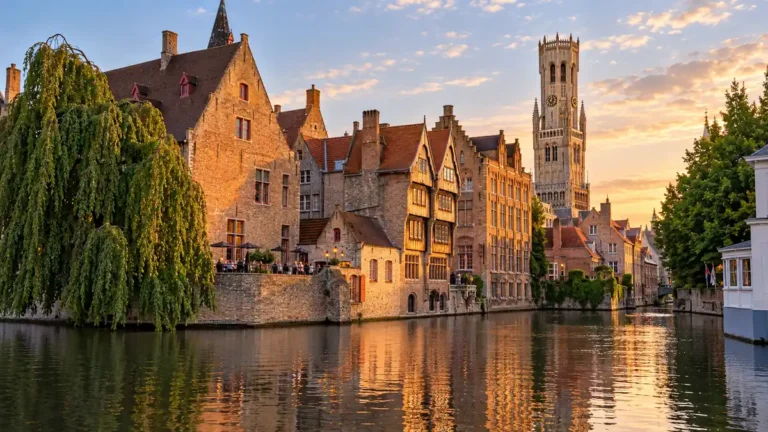
The best places to visit in Belgium on a first trip are Bruges, Ghent and Brussels, with Antwerp the strongest fourth. Flanders holds the medieval cities, Wallonia the river valleys and castles, and Brussels works as the hub; Bruges and Ghent each deserve a night. Travelers after nature and castles should trade one Flemish city for Dinant and the Ardennes.
Most of the places on this list sit within easy reach of Brussels by train. That changes the question. Reach is easy; selection is the hard part, because a short trip cannot absorb nine places, and the gap between a rushed afternoon and an evening in the same town is bigger in Belgium than in most countries. This guide sorts the best places to visit in Belgium into three groups a traveler actually feels on the ground: Brussels, the capital and rail hub; Flanders, the Dutch-speaking north with its medieval cities; and Wallonia, the French-speaking south of river valleys, citadels and forest. Each place gets the one reason it made the list, what sets it apart from the others, and who it suits. The verdict on which places deserve a night and which work as a day trip comes first; the case for each place follows.
Which places deserve a night, and which are a day trip?
Bruges and Ghent each deserve a night; Leuven and Dinant work as day trips; the rest depend on your interests. Bruges is worth staying overnight because the town turns quiet once the day-trippers leave. Brussels earns a night as the hub, and Antwerp, Ypres and Namur justify one when they match what you came for.
| Verdict | Places | Why the verdict | Best fit |
|---|---|---|---|
| Overnight on most trips | Bruges, Ghent and Brussels | Quiet Bruges evenings, lively Ghent nights, Brussels as the hub | First trips built on the medieval cities and capital |
| One night if it fits | Antwerp, Ypres and Namur | Each rewards a night only for its specific draw | Art lovers, First World War travelers, Meuse valley explorers |
| Overnight, easier by car | Durbuy and the Ardennes | Forest, river and outdoor time outlast a single day | Drivers who want walking, kayaking and quiet villages |
| Day trip | Leuven, closest to Brussels, and Dinant | A half day or one day covers each town | Travelers adding an easy stop around a fixed base |
The shorter the trip, the harder the cut. A short break works best with Brussels plus one Flemish base, and every extra stop has to earn its place by matching a specific interest. A longer trip can add a Walloon night or Ypres without rushing anything. Bruges shows why the night matters: the same streets that feel overrun at midday are close to empty after dark, and that evening is the version of the town most travelers remember. For the order of stops and how many days each part needs, the Belgium itinerary sets out the route.
Tours and activities
Book skip-the-line tickets, day trips and local tours with free cancellation on most activities.
You can also browse everything on getyourguide.com.
Tripstou may earn a commission if you book through this link, at no extra cost to you.
Which Belgian places belong on a first trip?
A first trip to Belgium is built on Bruges, Ghent and Brussels, with Antwerp as the fourth. Those four cover the medieval townscape, the capital and the art scene, and they sit close together on the rail network. Wallonia changes the list only when nature and castles matter more to you than city squares.
Brussels is the capital and the country’s rail hub. It is bigger, more international and less tidy than anywhere else on the list. Nearly every trip passes through it. From there, Ghent, Antwerp and Leuven sit under an hour away by direct train, Bruges about an hour, and Dinant roughly an hour and a half.
Flanders, the Dutch-speaking north, holds the cities most travelers picture: canals, guild houses, belfries and market squares. Bruges, Ghent, Antwerp, Leuven and Ypres all sit here. Distances are short.
Wallonia, the French-speaking south, swaps city squares for the Meuse and Ourthe valleys, hilltop citadels and the Ardennes forest. It is slower to reach and rewards a different kind of traveler, one who plans around landscape instead of monuments.
- Brussels (Brussels-Capital): grand square, big museums
- Bruges (Flanders): the complete medieval townscape
- Ghent (Flanders): medieval core, student energy
- Antwerp (Flanders): art, fashion and design
- Leuven (Flanders): easiest hop from Brussels
- Ypres (Flanders): First World War history
- Dinant (Wallonia): citadel above the Meuse
- Namur (Wallonia): Wallonia’s capital, citadel city
- Durbuy and the Ardennes (Wallonia): forest, rivers, outdoor time
Because every Flemish city looks reachable in an hour, first trips to Belgium tend to pack in too many of them and see each one at its busiest moment. Four well-chosen places beat seven hurried ones. Entry rules, money, seasons and getting around are covered in the Belgium travel guide; this page stays on where to go.
Brussels earns a night, not just a train change
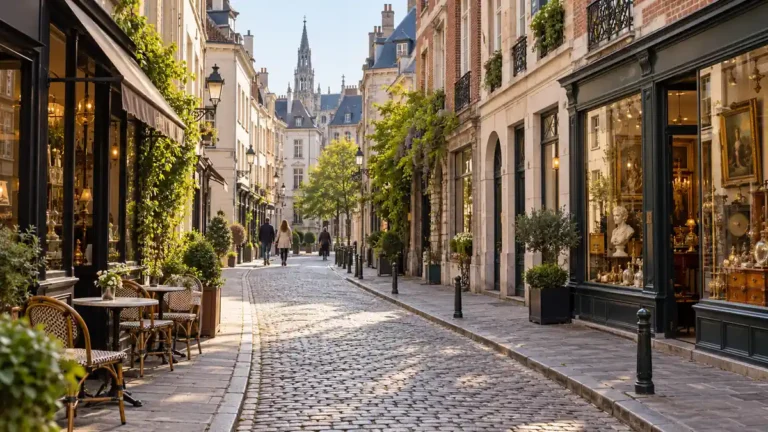
Brussels is worth at least one night for the Grand-Place, its museums and its art-nouveau streets. It is less pretty than Bruges, and many travelers judge it after a single afternoon near the station. Give it an evening, and the capital’s scale, food scene and architecture start to make sense.
The Grand-Place is UNESCO-listed and remains the most theatrical square in the country. What sets Brussels apart is scale. It has the best rail connections of any pick here and the deepest museum layer, which makes it the only place on this list where a rainy day still works. Charm per street is where it loses. Between its landmarks, Brussels is a working capital with far less polish than Bruges or Ghent. It is the stop for a capital with museums, art nouveau and a plan for rainy days. The Brussels guide covers what to see and how to spend the time.
Flanders holds Belgium’s medieval postcard cities
Choose Bruges for beauty, Ghent for atmosphere with fewer crowds, and Antwerp for art, fashion and design. All three sit in Flanders, the Dutch-speaking north, and each is roughly an hour or less from Brussels by train. Most first trips fit two of the three comfortably; adding the third turns a short trip into a rushed one.
The three share canals, belfries and guild houses, so the choice comes down to character. Bruges is a finished museum piece. Ghent is the same medieval material with a university city living inside it. Antwerp is a port city that turned its trading wealth into art and, later, fashion. Swapping Bruges for Ghent is the smartest trade on a Flemish trip: you give up a slightly less perfect skyline and gain evenings that still feel like a real city.
Bruges
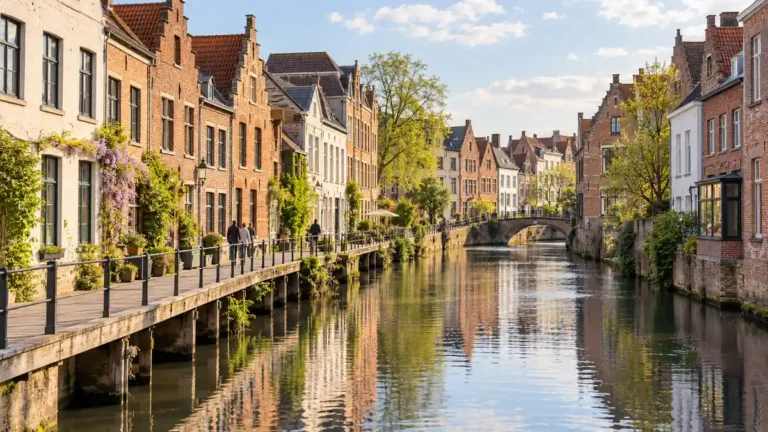
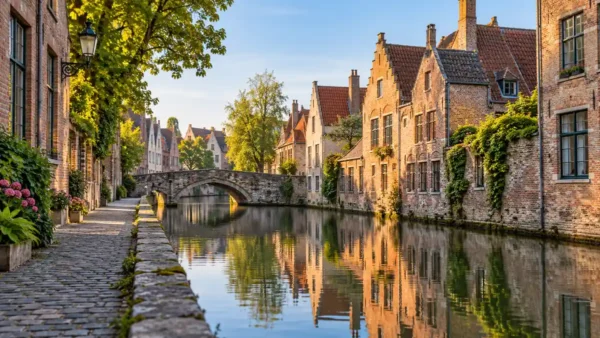
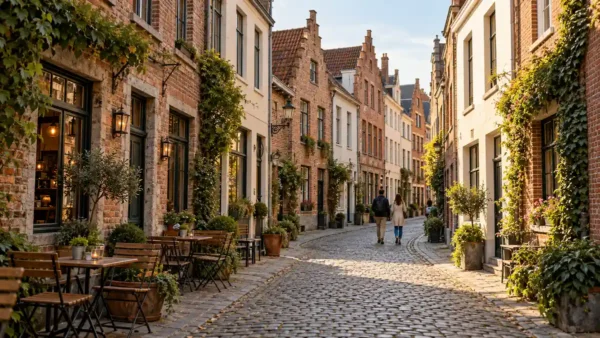
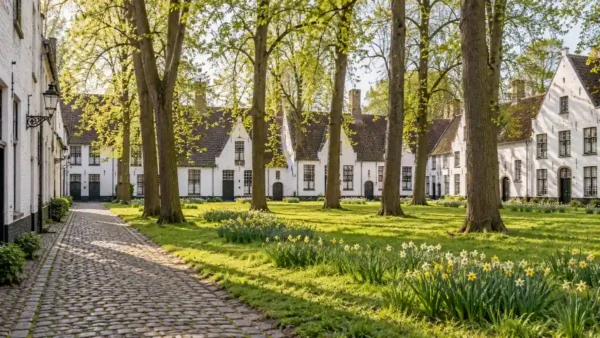
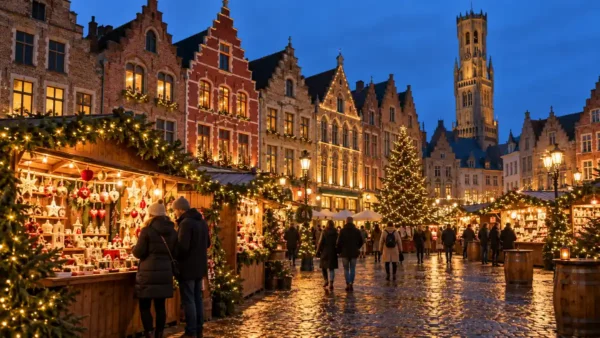
Bruges is the most complete medieval townscape in Belgium, and its historic centre is UNESCO-listed. Canals, brick gables and cobbled squares run almost unbroken across the old town, about an hour from Brussels by train. No other pick on this page holds its look so consistently from street to street. Choose it for the postcard version of medieval Belgium, and stay long enough to see it empty. The tradeoff is crowds. The centre fills with day-trippers at the summer peak and turns quiet once they leave, which is why the overnight verdict above favours staying. The Bruges guide covers what to see inside the old town.
Ghent
Ghent is a working student city built around a medieval core, with the Gravensteen castle and the Graslei quay as its signatures. It is under an hour from Brussels by direct train. What separates it from Bruges is life after dark: students and locals keep the centre busy in the evening, and it is noticeably less crowded by day. Every July, the Gentse Feesten festival takes over the streets. Medieval streets inside a lived-in city that stays lively at night: that is the case for Ghent. What Ghent gives up is polish. It is less picture-perfect, and too many travelers give it only a few hours. For a full plan, see one day in Ghent.
Antwerp
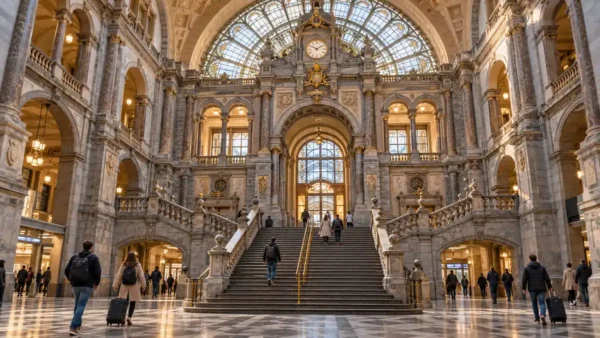
Antwerp is Belgium’s art, fashion and design city, anchored by its grand Central Station and the Rubens House. It is under an hour from Brussels by direct train. The port is its edge. Antwerp feels commercial, creative and a little rough, with boutiques and design studios where Bruges has souvenir shops. The catch is that it is the least postcard-like of the three Flemish cities, and it rarely clicks on a quick visit. It belongs on the trip of anyone who cares more about art, fashion and design than about canals and gables. It needs about two days to reveal itself, and two days in Antwerp shows how to use them.
Can you see Bruges and Ghent in one day?
You can see Bruges and Ghent in one day, but it shortchanges both cities. The train link between them makes the logistics possible. The cost is timing: you meet Bruges at its busiest and leave Ghent before its evenings, which are much of the reason to go. Give each city its own night when the trip allows.
Leuven and Ypres: the Flanders picks most first trips skip
Leuven is the easiest add-on from Brussels; Ypres is the pick for anyone travelling for First World War history. Leuven is a compact university city suited to a relaxed half day. Ypres, further west, holds the Menin Gate and the Flanders Fields battlefields, and it asks for more time and attention than any other place here.
Leuven
Leuven is a university city with a compact old centre and a steady student energy. It is the shortest hop from Brussels on this page, under an hour by train. That is its use: it is the one pick that fits around other plans without costing a full day. The historic centre is small and easy to walk, and the atmosphere comes from the students more than from any single monument. Scale works against it, though. A half day satisfies most travelers, and Leuven rarely justifies a night of its own on a first trip to Belgium. Keep it for a spare half day around Brussels, when an easy, low-effort town is the point.
Ypres (Flanders Fields)
Ypres is the gateway to Flanders Fields, the First World War battlefields of western Belgium, and home to the Menin Gate memorial. It sits further west than Bruges. It is the only pick on this page chosen for history over townscape, and the cemeteries and memorials around it turn the visit into a pilgrimage for many travelers. Weight and distance are the cost. The sites are emotionally heavy and spread across open countryside, so a rushed day undersells them. An overnight gives the Menin Gate and the surrounding fields the time they deserve.
Wallonia trades cities for river valleys and castles
Wallonia is the pick for nature, river towns and castles instead of medieval city squares. The French-speaking south follows the Meuse and Ourthe valleys, with citadels above the water and Ardennes forest beyond. Travelers who want walking, kayaking and big views should give it at least one night; city-focused trips can leave it out.
Dinant and Durbuy are Belgium’s most beautiful small towns in the classic sense; in Flanders, Bruges plays that role at city scale. Waterloo, the battlefield south of Brussels, is the other Walloon name most travelers know, and it suits history fans as a short detour. Wallonia is where the car question decides the shortlist. Without one, Dinant stays easy and Durbuy becomes a chore.
Dinant
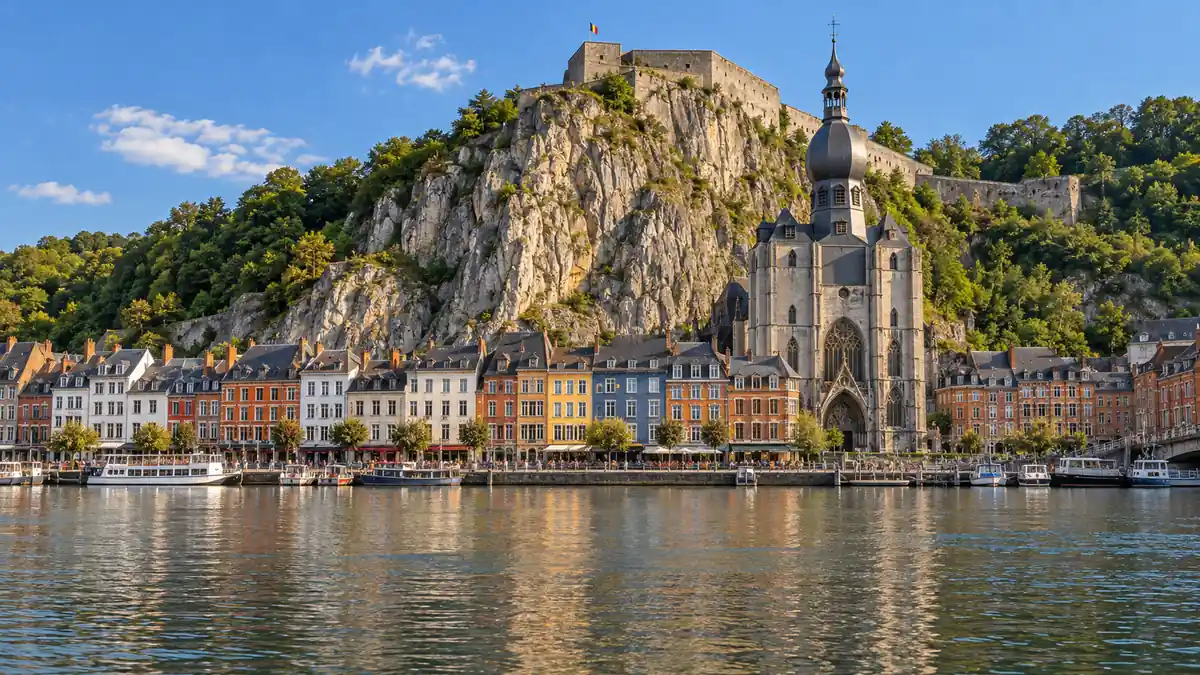
Dinant is a small town squeezed between the Meuse and a cliff, crowned by a citadel, and it is the birthplace of Adolphe Sax, inventor of the saxophone. It is the easiest Walloon town to reach by train, roughly an hour and a half from Brussels. Dinant is about the view. The citadel above the river and the church at its foot make the most dramatic scene in Belgium. Size is the limit. A day covers the town, so Dinant works best as a day trip or as one stop on a wider journey through the Meuse valley. For Belgium’s most dramatic river view without needing a car, this is the stop.
Namur
Namur is the capital of Wallonia, built where the Sambre meets the Meuse, with a citadel on the high ground above the confluence. It is a real regional city with an old centre that locals use every day. That makes it the natural southern base for a traveler exploring the valleys at an unhurried pace, with more restaurants and evening life than the small river towns. Its appeal is quieter, though. Namur has no single sight on the level of the Bruges canals or the Dinant cliff, and on a short trip it is the easiest Walloon pick to leave out.
Durbuy and the Ardennes
Durbuy is a small stone town on the Ourthe and a classic base for the Ardennes, Belgium’s forested upland. This is the outdoors pick. Forest walks, kayaking on the river and quiet villages take priority over monuments, and the town itself is compact and pretty. The landscape around it, not the town, is the reason to come. It rewards drivers who put forest, rivers and time outdoors ahead of sightseeing. Access is the catch. Public transport thins out in the Ardennes, and the region suits travelers with a car far better than those relying on trains and buses.
Where These Belgian Picks Come From
This page chooses between places across Brussels, Flanders and Wallonia, judged on who each one suits and whether it earns a night or only a day trip. It does not plan a route through Belgium, list what to see inside each city or cover entry rules, money and seasons.
For the Tripstou editorial team, Alex Perrut, working in tourism since 2015, weighed each of these night-or-day-trip calls; the draft behind them was produced with AI assistance, and the editorial process sets out the steps in between.
Official sources consulted: Belgium.be federal portal, FPS Foreign Affairs of Belgium.
Did this guide save you time or money? Tripstou is independent and reader-funded — if you'd like to give something back, you can support the site with a crypto contribution of any size.