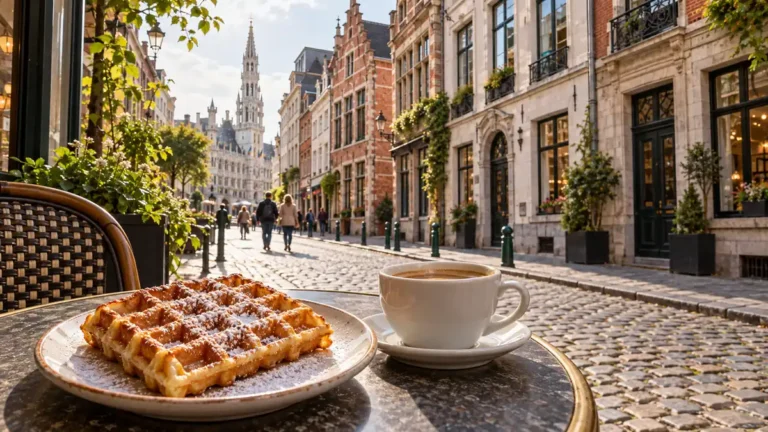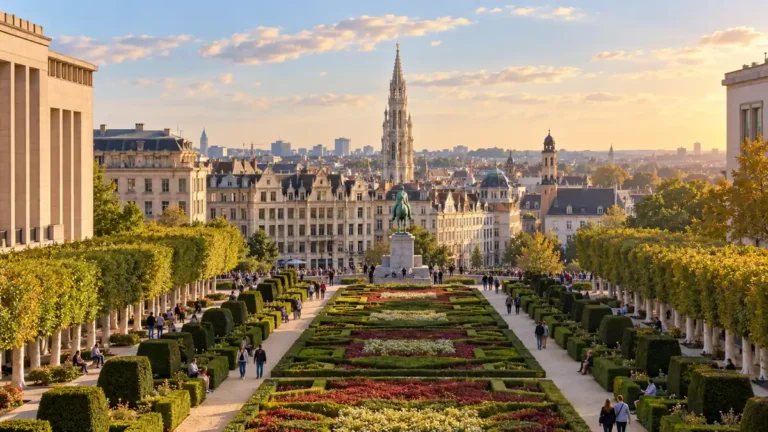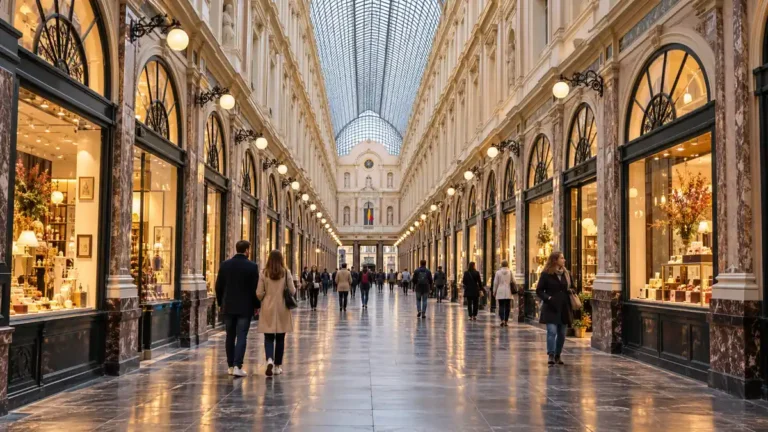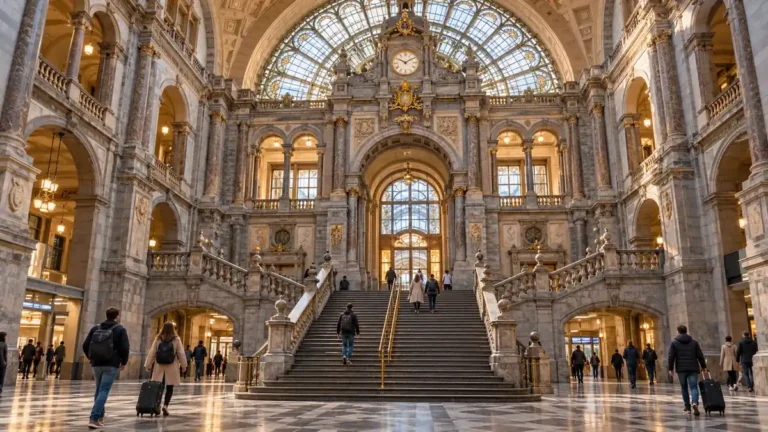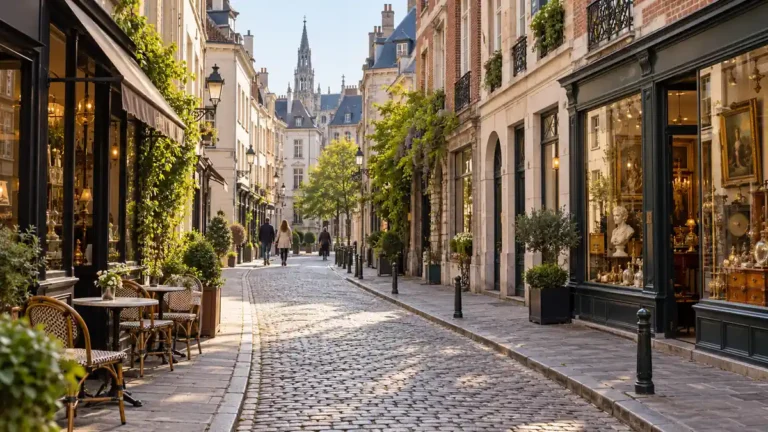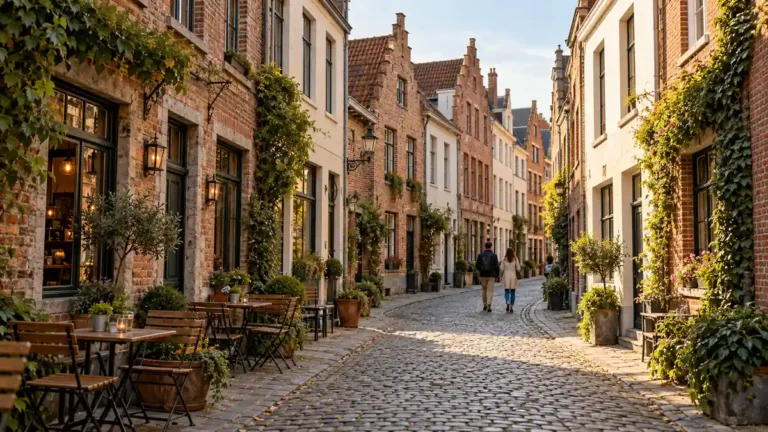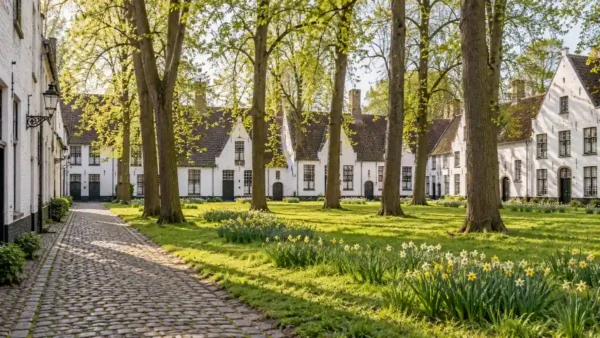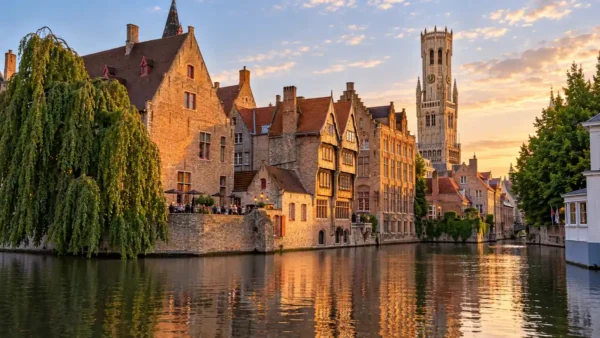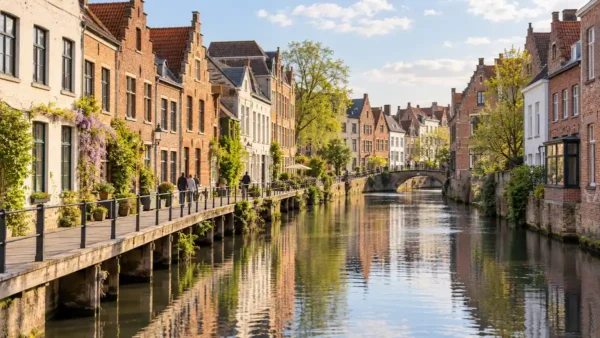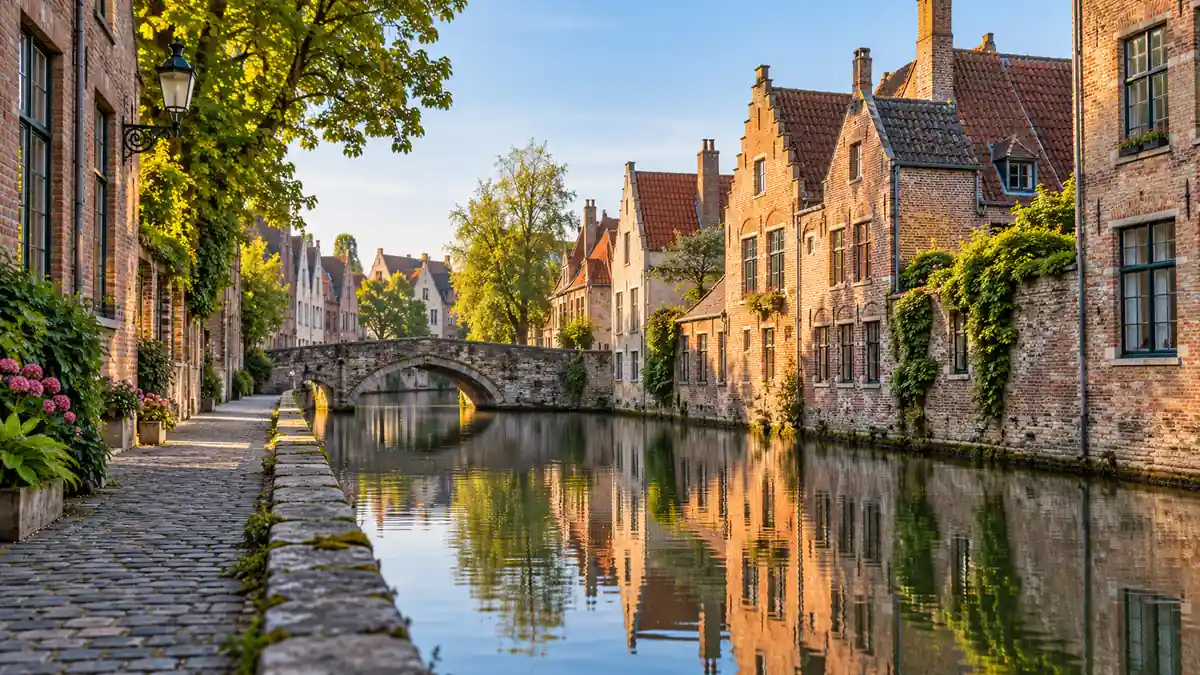
Stay the night in Bruges if you can: the compact canal city sits about an hour from Brussels by train, most visitors see it as a day trip, and the ones who stay the night see a different town. By late morning the Markt and the canal lanes fill with tour groups; by evening they empty again, and the city goes quiet under its bell tower.
This guide settles the questions that shape a first visit: day trip or overnight, how many days to give it, when to go, how to arrive from Brussels, the airport or London, where to sleep and how the centre works on foot. It also frames what the city is known for, what a trip costs by spend style and which towns make easy day trips by train. The sights in detail and the hour-by-hour plan for a single day live in their own guides, linked where they matter.
Quick Answer
Bruges is worth visiting, and it is at its best early and late, so stay a night instead of day-tripping. One full day covers the centre; two days make it relaxed and leave room for Ghent. Sleep inside the canal ring, arrive by train about an hour from Brussels, and walk everything.
On This Page
Is Bruges Worth a Day Trip, or Should You Stay Overnight?
Stay overnight if you can: Bruges is at its best before the day-trippers arrive and after they leave. Between late morning and late afternoon, tour groups fill the Markt and the canal lanes. At dawn and after dinner the same streets are close to empty. A day trip still works if time is short and you arrive early.
The crowd pattern is predictable. Coaches and day-trip trains land most visitors in the centre from late morning, and the flow thins once the afternoon trains head back to Brussels and the coast. That leaves two calm windows each day. Only an overnight guest gets both.
A day trip suits some trips well:
- Day trip: short Belgium itineraries based in Brussels, travelers who have seen Bruges before, and anyone willing to be on an early train so the first hours are still quiet.
- Overnight: first-timers, photographers, couples, and anyone who came for the canals without the crowds or wants the Markt lit up after dark.
Each option has a cost. An overnight adds a hotel night and the per-night city tax added to hotel bills. A day trip costs the calm hours, which are the reason most people fall for the city. If you are weighing Bruges against other towns from a Brussels base, our guide to day trips from Brussels sets out that choice.
The hours a day-tripper cannot buy — the canals before breakfast, the Markt after the last train back — are the ones that make Bruges look like its photographs.
What Bruges Is Known For
Bruges is known for its canals, the Markt and Belfry, the Burg, the Beguinage and Flemish Primitive painting. The medieval centre sits inside a ring of canals, and the townscape itself is the main attraction. Chocolate, beer, waffles and fries set the food expectations.
Treat those names as orientation points. The Markt is the main square under the Belfry, the Burg sits a short walk away, and the Beguinage lies towards the southern edge of the centre. The Flemish Primitives are the city’s great painting collection. Our guide to things to do in Bruges covers the full selection and how to choose among them.
One sight needs planning. The Belfry is a busy location, so Musea Brugge recommends booking online in advance with a chosen time slot; last entry is one hour before closing. Book it first and build the rest of the day around the slot.
Food is part of the identity, not an afterthought. Expect chocolate shops on every central street, Belgian beer in bars and cafés, and waffles and fries sold from counters near the squares. Bruges sits in Belgium’s Dutch-speaking region, and English is widely spoken wherever visitors go.
Tours and activities
Book skip-the-line tickets, day trips and local tours with free cancellation on most activities.
You can also browse everything on getyourguide.com.
Tripstou may earn a commission if you book through this link, at no extra cost to you.
How Many Days You Need in Bruges
One full day covers the centre of Bruges; two days, with one or two nights, make it relaxed. A single day means the main squares, a canal loop and one museum at a steady pace. Two days add the quiet evening and morning hours plus time to wander. Longer stays pair best with Ghent.
The right length depends on how much of the calm you want:
- A day trip: the Markt, the Burg, a canal ride and a walk to the Beguinage, enough for travelers based in Brussels who arrive early.
- One full day plus a night: the same ground at an easier pace, with the evening and next morning on top. Most first-timers belong here.
- Two days: room for a second museum, the outer canals by bike and a slow lunch, the length couples and anyone travelling at a gentle pace settle into.
- Three days or more: Bruges plus a day in Ghent or on the coast, for travelers who want a base, not a stopover.
Arrival time changes the maths. Reaching Bruges by lunchtime from Brussels shortens day one to an afternoon, so count it as half a day. For the sequence of a single day hour by hour, use our one day in Bruges itinerary.
A third day adds little inside the ring. Spend it in Ghent instead, about 30 minutes away, and come back to Bruges for the evening.
When to Visit Bruges and How to Beat the Crowds
Spring and early autumn balance weather and crowds; winter is quietest, summer busiest. Weekends bring the heaviest day-tripper flow, and winter weekdays are the calmest and usually the cheapest for hotels. Whatever the season, the crowd fix stays the same: see the centre early in the morning and in the evening.
Summer brings long light and full canal boats. It also brings the densest midday crowds of the year. Spring and early autumn keep most of the daylight with fewer groups, which is why they suit a first visit. Winter trades short days and grey skies for quiet streets and easier hotel booking.
The day matters as much as the season. Weekdays are calmer than weekends in every month. Midday is the peak everywhere, so save the Markt and the most photographed canal corners for the first and last hours and spend the middle of the day in a museum.
December changes the mood. The Christmas season brings a market to the centre and extra visitors on weekends; our guide to Belgium’s Christmas markets covers how Bruges fits that trip.
In Bruges the clock beats the calendar: a summer evening on the canals is calmer than a spring Saturday at noon.
Where to Stay in Bruges: Inside the Canal Ring
Stay inside the canal ring: the point of an overnight is the empty streets at dawn and after dinner. Everything worth walking to sits within the ring, so a central bed turns the early and late hours into doorstep time. The station side is the practical compromise for a late arrival or early train.
The ring suits first-timers and anyone who came for the atmosphere. Book ahead in peak season and for weekends, when central rooms go first. A per-night city tax is added to hotel bills, so check the final total when comparing options.
Location inside the ring still matters. Rooms right on the Markt put you at the heart of things, along with the noise of evening crowds. The quieter lanes towards the edges of the ring stay within a short walk and sleep better. Pick the edge.
Hotels and places to stay
Compare hotels, apartments and stays for your dates in one search.
Search hotels and stays on hotels.com →
Tripstou may earn a commission if you book through this link, at no extra cost to you.
How to Get Around Bruges
You walk Bruges; the centre is compact, cobbled and mostly a cycling zone. Most visitors never need a bus once they reach the centre, and a car inside the ring is a liability. A bike is the only real upgrade, useful for the outer canals and the ride out to Damme along the water.
Each way of moving has one job:
- On foot: the default for everything inside the ring. Wear good shoes, because cobbles tire feet faster than distance does.
- By bike: best for the outer canals and Damme. The historic centre is a cycling zone with a 30 km/h limit, so bikes and cars share the streets at low speed.
- By bus: frequent De Lijn buses link Brugge station and the centre. They are worth it with luggage or in rain.
- By canal boat: a seasonal orientation ride that shows how the city fits together. Take it early in the visit.
- By car: driving into the centre is discouraged. Park at the edge of the city or use a park-and-ride, then walk or take the bus in.
Travelers arriving by car on a wider Belgium trip should plan to leave it for the whole stay. Country-level transport and money are covered in our Belgium travel guide.
How to Get to Bruges from Brussels, the Airport and London
Bruges is about an hour by train from Brussels, with three trains an hour from Brussels-South. Brussels Airport has a direct hourly train, and London connects by Eurostar to Brussels-South and then the Bruges train. Brugge station sits about a 20-minute walk from the Markt, with frequent buses covering the gap.
The train is the right way in from every direction:
- From Brussels: about an hour, with the scheduled run from the capital at 1h04 and three departures an hour from Brussels-South. It is easy enough to do on a whim.
- From Brussels Airport: a direct train runs hourly, and more options open up by changing at a Brussels station.
- From London: take the Eurostar to Brussels-South, then change to the Bruges train in the same station.
Domestic Belgian trains no longer sell tickets on board, so buy through the SNCB app, website, a station machine or a ticket office before boarding.
The station is signed “Brugge”, the Dutch name. From there the Markt is about 20 minutes on foot, and frequent De Lijn buses run to the centre when bags are heavy. Check the entry rules that apply to your passport before booking; our guide to planning a trip to Belgium covers them.
What a Bruges Trip Costs by Spend Style
Bruges is a mid-priced city where the hotel night, not transport or food, sets your spend. Arriving by train and walking the centre keep other costs low, so the budget swings on where and when you sleep. Weekends and peak season push rooms up; winter weekdays pull them down.
The spend style decides which Bruges you get:
- Budget: a day trip by train from a cheaper Brussels base, with fries, a picnic and free walking along the canals. The city rewards this style by day and punishes it by night, when the calm hours need a bed in town.
- Mid-range: one or two nights in a guesthouse or small hotel inside the ring, a paid museum or the Belfry, and dinner away from the main square. This is where Bruges gives the best return.
- High-end: a canal-side hotel, restaurant evenings and a private boat or guided walk. The premium buys views and quiet, and it rises sharply on summer weekends.
Two habits drive costs up in any style. Last-minute weekend bookings leave only the priciest rooms. Eating on the Markt adds a location premium to ordinary food. The per-night city tax added to hotel bills is small but worth counting on longer stays.
The cheapest way to buy the quiet Bruges is a weeknight: the same room and the same empty dawn cost less on a Tuesday than on a Saturday.
Day Trips from Bruges by Train Time
Ghent, about 30 minutes by train from Brugge station, is the day trip that fits any Bruges stay. Ostend and the coast are a short train hop, and Brussels is about an hour away. Antwerp and Ypres make long days at an hour and a half or more, while Damme is reached by bike or seasonal boat.
This is the view from Bruges, sorted by time on the train:
| Destination | Time from Brugge | Verdict |
|---|---|---|
| Ghent | About 30 minutes by train | Genuine day trip that fits any stay |
| Ostend and the coast | A short train hop | Easy coastal day, best in fine weather |
| Brussels | About 1 hour by train | Full day in the capital’s centre |
| Antwerp | About 1 hour 30 by train | Long day, start early to justify it |
| Ypres | Just over 1 hour 30 by train | Long day, the furthest rail trip listed |
| Damme | Not by train — bike or seasonal boat | Half-day outing, 5 km along the canal |
Ghent, Ostend and Brussels leave time to return for a Bruges evening. Antwerp and Ypres take most of the day. Damme is the gentlest of all: 5 km along the canal by bike, or on the seasonal boat.
Readers based in Brussels and choosing between Bruges and other towns should start from the other end, with our guide to day trips from Brussels.
Editorial Note
Bruges as a whole trip is the subject here: day trip or overnight, how long, when, where to sleep, how to arrive and get around, what each spend style buys and which day trips work. The sight-by-sight list, a neighbourhood-level stay guide, the timed one-day plan and transport in depth are left to other pages.
Produced with AI assistance, this Bruges guide was then read against the sources below, train times and the Belfry booking rule first, by Alex Perrut, working in tourism since 2015, for the Tripstou editorial team; the editorial process page says how.
Official sources consulted: Belgian Federal Portal, FPS Foreign Affairs of Belgium, Visit Bruges, Musea Brugge.
Did this guide save you time or money? Tripstou is independent and reader-funded — if you'd like to give something back, you can support the site with a crypto contribution of any size.