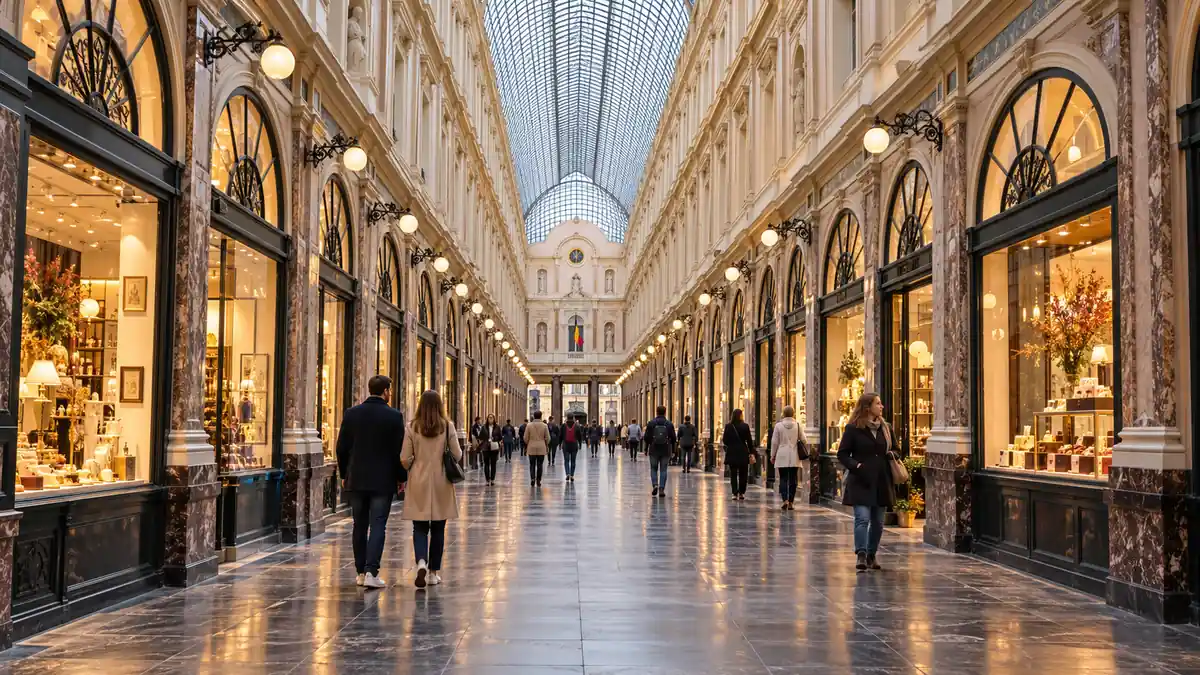
The best of Brussels is its historic core, from the Grand-Place through the Galeries to the Mont des Arts, plus one or two museums. Art lovers add Magritte, comics fans walk the mural route, and Manneken Pis deserves two minutes, not a detour. The Atomium and the European Quarter each take half a day, so they suit stays of two days or more.
Brussels keeps its famous sights in a compact centre, most of them a few minutes’ walk from the Grand-Place and many of them free. A handful of others sit well outside that core. The Atomium is the obvious one, and once the journey is counted it takes half a day. That split shapes every choice on a short visit: which sights deserve your hours, and which can wait.
This guide groups the picks by the job they do for a traveler: the historic core, the museums worth a ticket, the neighbourhoods worth a wander, and the sights beyond the centre. Each pick carries a verdict, including the ones to shrink to a quick stop, and the traveler it suits. Free sights, closed days and what to book ahead are flagged along the way.
What to see first in Brussels, and who each pick suits
With a single day, the historic core plus one museum is the right call; everything else waits for a longer stay. Past that first day, the choice turns on the traveler: art, comics, families, the EU and the skyline each point to a different pick, and the table sets them side by side.
| Pick | Best for | Free or paid | Time needed |
|---|---|---|---|
| Grand-Place and Hôtel de Ville | First-timers with only a few hours | Square free; City Hall interior by ticket | An hour, plus an evening return |
| Magritte and Old Masters | Art lovers and surrealism fans | Paid; free on first-Wednesday afternoons | Half a day for both museums |
| Comic Strip Route and Center | Comics fans and Tintin readers | Murals free; Comic Strip Center paid | Half a day with the mural walk |
| Musical Instruments Museum | Families and rainy-day visitors | Paid museum with a rooftop café | A couple of hours inside |
| European Quarter visitor centres | Travelers curious about how the EU works | Free entry at both centres | A morning for both centres |
| Atomium and Mini-Europe | Stays of two days or more | Paid; book the Atomium online | Half a day with the journey |
To fit these picks into a weekend, the two-day Brussels itinerary sets out an order that works.
Tours and activities
Book skip-the-line tickets, day trips and local tours with free cancellation on most activities.
You can also browse everything on getyourguide.com.
Tripstou may earn a commission if you book through this link, at no extra cost to you.
The historic core is where a first visit starts
The Grand-Place and the streets around it hold the sights most travelers come to Brussels for, all free and walkable. The square, the covered Galeries, Manneken Pis and the cathedral sit within a short walk of each other. Start here: the density is unmatched, entry costs nothing, and every other group on this page steps out from it.
Walk the core twice if you can. By day it is a route through the Galeries, past the cathedral and up to the Mont des Arts; after dark it shrinks to the Grand-Place alone, lit and far calmer. The square gains more from an evening return than any sight in Brussels gains from a ticket.
Grand-Place and the Hôtel de Ville
The Grand-Place is the one sight in Brussels no first visit should skip. Gilded guild houses frame the square on every side, and the Gothic spire of the Hôtel de Ville rises over one edge of it. The square is free and open at all hours.
The City Hall interior is the optional layer. It is worth it for anyone who wants the ceremonial rooms, and tickets are sold online or at the reception on the spot. Every other August, a carpet of flowers covers the square. Anyone with only a few hours in Brussels should spend them here, on the view that defines the city.
Galeries Royales Saint-Hubert
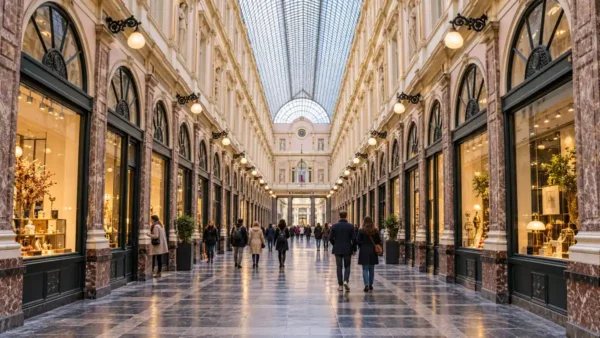
The Galeries Royales Saint-Hubert are a glass-roofed arcade a two-minute walk from the Grand-Place, and walking through costs nothing. Chocolatiers, a theatre and café terraces line the passage under the vaulted glass roof.
What sets the Galeries apart in this group is shelter. When rain sweeps the square, the arcade keeps the historic core walkable and gives the old town’s atmosphere without an umbrella. It is also the natural covered shortcut through the centre. Few detours give more for less.
Manneken Pis
Manneken Pis deserves two minutes on the way past, and no more. The bronze fountain is small, usually hidden behind a crowd of raised phones, and most first-time visitors find it smaller than they pictured. It sits a few minutes’ walk from the Grand-Place, so the stop costs almost nothing. Take it if you are walking past anyway and want the photo for the record.
The angle for anyone who wants more is the wardrobe. The statue is regularly dressed in costumes, and its collection of outfits is displayed in a small museum a short walk away. That is the story; the statue is only the punchline.
Cathedral of St Michael and St Gudula
The Cathedral of St Michael and St Gudula is the quietest stop in the core, and entry to the nave is free. The Gothic church stands on the slope between the lower town and the upper town, a short walk uphill from the Grand-Place.
Tall stained glass and a pale, spacious interior do the work here. The treasury, crypt and Romanesque remains carry small fees and suit anyone curious about the foundations underneath. Crowds are a fraction of the square’s. It is the calmest stop between the busy lower town and the museum district.
Art, comics and the museums that earn a ticket
Three museums earn a ticket: the Magritte and Old Masters pair, the Comic Strip Center and the Musical Instruments Museum. Each suits a different traveler: surrealism for art lovers, Brussels’ own art form for comics fans, and an Art Nouveau landmark for families. Most short visits need only one of them.
Pair each museum with the free walk it sits on. The Magritte ticket comes with the Mont des Arts terrace outside the door, and the Comic Strip Center sits in the same centre the mural route crosses. Neither choice costs you extra walking. That is why these three beat the rest of the city’s long museum list on a short stay.
Magritte Museum and the Old Masters at Mont des Arts
The Magritte Museum is the art pick in Brussels, built around the work of Belgium’s best-known surrealist. It shares the Royal Museums of Fine Arts complex with the Old Masters Museum, where Bruegel and Rubens supply the Flemish counterpoint. Tickets run about €13 each or €20 combined.
The museum is closed on Mondays. On the first Wednesday of the month the permanent collections open free in the afternoon, covered in the free list below. The Mont des Arts terrace outside is free and gives the best view down over the lower town. Buy the ticket if surrealism or Flemish painting is part of the reason you came to Brussels.
Comic Strip Route and the Belgian Comic Strip Center
The Comic Strip Route is a free, self-guided trail of dozens of comic murals painted on building walls across central Brussels. The tourist office hands out a free map, and following a good stretch of it makes a half-day walk that doubles as a tour of the centre.
The Belgian Comic Strip Center adds the paid layer, in a Victor Horta building with Tintin and the Smurfs among its stars. Comics are Brussels’ own art form. No other museum on this page covers them, and no other pick mixes a museum with a street trail this easily. This is the pick for anyone who grew up on Tintin and wants the city’s home-grown art form.
Musical Instruments Museum (MIM)
The Musical Instruments Museum, known as MIM, is the family pick of the group. It occupies Old England, an Art Nouveau former department store near the Mont des Arts, and the building is half the reason to go.
The collection spans instruments from around the world, and an audio system lets you hear many of them as you walk. That keeps children engaged far longer than a silent gallery would. The top-floor café adds one of the best views over the city’s rooftops. It is also a strong indoor choice when rain settles in.
Neighbourhoods that reward a wander
Four areas reward a wander: elegant Sablon, bohemian Marolles, Art Nouveau Saint-Gilles and Ixelles, and the European Quarter. Each shows a side of Brussels the Grand-Place does not: antiques and chocolate, a daily flea market, sculpted façades, and the working heart of the EU. Sablon and Marolles sit side by side, a short walk from the centre.
Sablon and Marolles join into one morning walk. The antique dealers of the Sablon give way to the secondhand stalls of the Marolles within a few streets, so a single stroll covers both moods. Saint-Gilles, Ixelles and the European Quarter each need their own outing.
These are places to walk, not a guide to sleeping areas. Choosing a base is a separate decision, covered in the guide to where to stay in Brussels.
Sablon and Petit Sablon
The Sablon is Brussels at its most polished: a sloping square of antique dealers and chocolate shop windows below the Gothic church of Notre-Dame du Sablon. The antiques market fills the square at weekends.
Across the street, the Petit Sablon garden is ringed by small bronze statues of the old guild trades, a quiet stop most walkers miss. Chocolate here is displayed like jewellery. Browsing the windows becomes a pastime in itself, and the square works at any hour of the day. It suits anyone who likes antiques, window-shopping and a polished neighbourhood feel.
Marolles and the Place du Jeu de Balle flea market
The Marolles is where bargain hunters go: a working-class quarter below the Palace of Justice with a flea market on the Place du Jeu de Balle every morning. Secondhand stalls, vintage shops and simple cafés give it the rough edges the Sablon polishes away.
The market is at its busiest at weekends. Go early. The best finds leave with the first buyers, and by midday the square turns back into a place for coffee and people-watching. It is the least polished part of central Brussels, which is exactly its appeal. Come here if you enjoy rummaging through flea-market stalls more than browsing boutiques.
Saint-Gilles and Ixelles for Art Nouveau
Saint-Gilles and Ixelles are where Brussels Art Nouveau survives in whole streets of sculpted façades, which makes them the districts to walk for architecture. Both sit south of the centre, a short tram or metro ride away.
Victor Horta’s own house, now the Horta Museum, stands here alongside several of his townhouses. A walk past curving ironwork, stained glass and painted sgraffito panels needs no ticket at all. The museum is the paid interior for anyone who wants to see how the style was lived in. Give these streets the time when architecture matters more to you than museum collections.
The European Quarter
The European Quarter is the pick for anyone curious how the EU works, and its visitor centres are free. The Parlamentarium explains the European Parliament through interactive displays, and the House of European History tells the continent’s recent story across several floors.
Both suit a rainy morning. The quarter itself is office-heavy and quiet at weekends, but Parc Léopold sits inside it and the Parc du Cinquantenaire lies at its eastern edge, covered in the next section. Few capitals let you see their institutions from the inside this freely.
Is the Atomium worth the trip out of the centre?
Yes, if you have two days or more: the Atomium is Brussels’ one modern icon. On a single day, skip it. It sits on the northern edge of the city, outside the centre, and the journey plus the visit takes half a day. The Parc du Cinquantenaire is the closer alternative for an out-of-core afternoon.
Judge the Atomium by what else you do out there. On its own it is a striking structure and a view; paired with Mini-Europe at its foot, it becomes a family afternoon that justifies the journey. Couples on a tight schedule get more from the Cinquantenaire, which sits next to the European Quarter.
Atomium and Mini-Europe
The Atomium is a giant steel model of an iron crystal, built for a World’s Fair, and its spheres hold exhibitions and a panoramic viewpoint. Book tickets online before the trip out. It earns the journey for anyone with two days or more who wants the one modern icon on the skyline.
Mini-Europe, at its foot, sets out miniature models of European landmarks. It is the add-on that makes the trip out pay for families, since children who tire of one sphere after another rarely tire of a model Big Ben. Together the two fill the half day the journey already costs.
Parc du Cinquantenaire: Autoworld and the Art & History Museum
The Parc du Cinquantenaire is the half-day that stays within reach of the European Quarter, laid out around a triumphal arch. Two museums fill its wings.
Autoworld holds a large collection of historic cars, and the Art & History Museum covers antiquities and decorative arts. Both are indoors, which makes the park the stronger choice on a wet afternoon. The park itself is free, and the arch frames the best photograph in this part of the city. Choose it over the Atomium when vintage cars or ancient collections interest you more than a skyline view.
Anything beyond the Brussels-Capital Region, from Bruges and Ghent to Antwerp, Leuven and Waterloo, is a day trip; our guide to day trips from Brussels covers how to choose.
Beer, chocolate and waffles need one stop, not a tour
Give eating and drinking one planned stop, and let the rest fold into the walks. A historic beer café near the Grand-Place or a brewery visit covers beer culture, and the chocolate windows of the Sablon sit on the neighbourhood route above. Waffles and fries take care of themselves along the way.
Beer styles, which chocolatiers justify their prices, the waffle-and-fries logic and where to eat all belong to the Belgium food guide, which covers them in full.
Free things to do in Brussels that are actually worth it
Much of the best of Brussels is free, starting with the Grand-Place and the Galeries. Mont des Arts, the mural route and the EU visitor centres cost nothing either. Wiertz and Meunier museums are always free, and the Royal Museums of Fine Arts open free on first-Wednesday afternoons.
- Grand-Place: free at any hour; return after dark for the lit façades.
- Galeries Royales Saint-Hubert: free to walk through, and dry when it rains.
- Mont des Arts: free terrace and gardens with the best view over the lower town.
- Comic Strip Route: dozens of free murals, with a free map from the tourist office.
- Cathedral of St Michael and St Gudula: free nave; small fees apply to the treasury, crypt and Romanesque remains.
- Parlamentarium and House of European History: free entry, both indoors.
- Wiertz Museum and Meunier Museum: free for everyone.
- Royal Museums of Fine Arts (Old Masters and Magritte): free on the first Wednesday of the month from 13:00, permanent collections only; several other Brussels museums join the scheme.
- Marolles flea market: free to browse, every morning.
If your dates include a first Wednesday, move the Magritte visit to that afternoon. It is the one headline paid sight on this page you can see free with a little timing.
What to book ahead, what closes on Mondays and what works in the rain
The Magritte Museum closes on Mondays, so plan any art day for another weekday. Book the Atomium online, and note that the Royal Palace opens to visitors in summer only. Rain is the other variable, and the covered Galeries plus the city’s museums give Brussels an indoor answer to it.
Check the calendar before the list. A Monday removes the art pick, a first Wednesday makes it free, and a summer date adds the Royal Palace. The same shortlist plays out differently depending on the day you land.
- Magritte Museum: closed on Mondays, so move art plans to another weekday.
- Atomium: book online before the trip out.
- Hôtel de Ville: buy a ticket online or at the reception to see the interior.
- Royal Palace: opens to visitors in summer only, so it cannot anchor a visit at other times of year.
- Markets: the Marolles flea market runs every morning; the Sablon antiques market runs at weekends.
Outside that summer window you can only see the Royal Palace’s façade from the Place des Palais, facing the Parc de Bruxelles.
The Brussels Card bundles museum entry with public transport, and it pays off mainly on a museum-heavy stay. Its price and validity, plus how to reach the out-of-centre sights, sit in the Brussels city guide.
What can you do in Brussels when it rains?
Brussels has a strong indoor list, starting with the covered Galeries Royales Saint-Hubert. For a museum, choose Magritte and the Old Masters, the Comic Strip Center or the Musical Instruments Museum. The Parlamentarium and House of European History are free and indoors, and Autoworld suits car fans. Avoid Mondays for Magritte, which closes that day.
How the Brussels Verdicts Were Checked
This page sorts the sights and neighbourhoods inside the Brussels-Capital Region by who each suits and what it costs in time and money; it is not a city guide to arrival and costs, a day-by-day itinerary or a list of day trips.
Alex Perrut, working in tourism since 2015, went over these verdicts and the closed-day and free-entry rules against the sources below for the Tripstou editorial team. The text was produced with AI assistance, and what that review looks for is on the editorial process page.
Official sources consulted: Belgian Federal Portal, Belgian Foreign Affairs, Royal Museums of Fine Arts of Belgium, Magritte Museum.
Did this guide save you time or money? Tripstou is independent and reader-funded — if you'd like to give something back, you can support the site with a crypto contribution of any size.