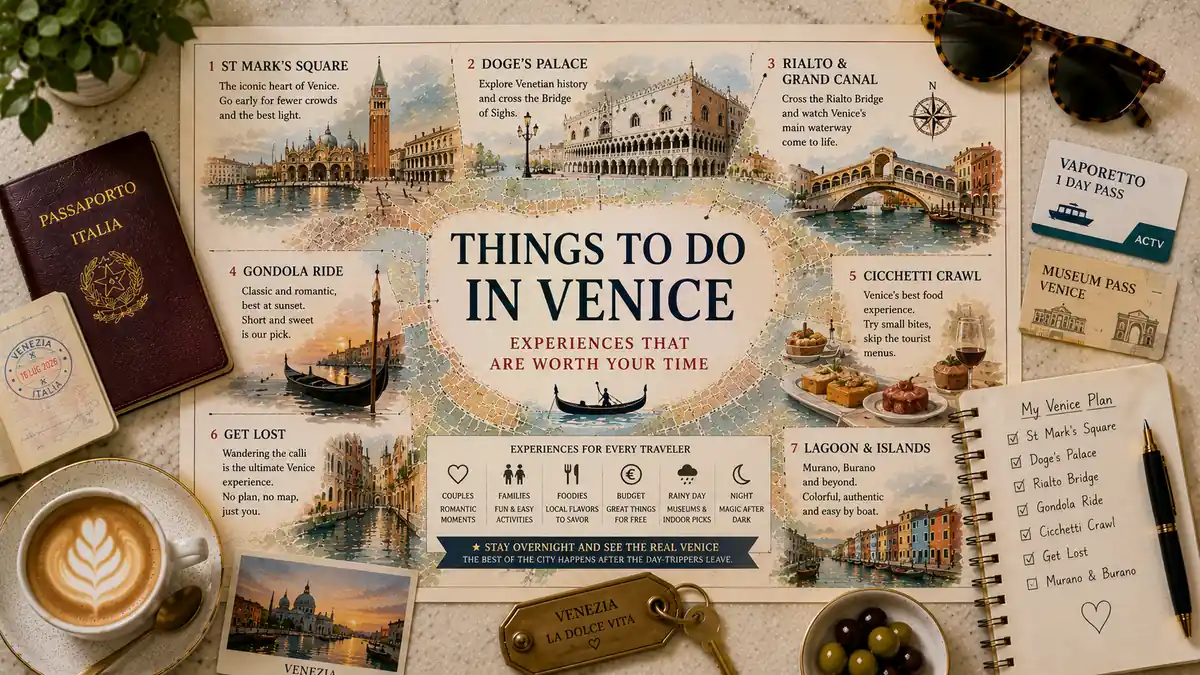
Venice offers far more than any first-timer can fit into a trip, and the real skill is not seeing everything — it is choosing experiences by payoff. A ranked, opinionated shortlist beats a checklist of places every time. This guide ranks what is genuinely worth your time: the must-see landmarks around St Mark’s, the honest verdict on the gondola, the food experience most visitors miss, and the free-form wandering that turns out to be the best of the lot. Alongside each pick you get a worth-it judgment and who it suits, plus tuned variants for tours, free days, nights, and rain. Read it as a curator’s shortlist, not a to-do list — the goal is to spend your limited hours on the experiences that reward them most.
Quick Answer
Venice’s essential experiences are St Mark’s Square, the Doge’s Palace, the Rialto and Grand Canal, and getting lost on foot. First-timers prioritize the marquee landmarks and the gondola question; food crawls and slow wandering reward unhurried travelers. Book the marquee landmarks ahead, leave open time to wander, and treat a cicchetti crawl as the gondola’s strongest alternative.
Trust Layer
Tripstou selection guide for travelers choosing between multiple places. Covers selection criteria, traveler fit, and trip value.
Produced with AI assistance and reviewed by Alex Perrut, working in tourism since 2015, for the Tripstou editorial team. See our editorial process for details.
Last factual review: July 16, 2026.
Official sources consulted: italia.it, enit.it.
Key Takeaways
- The must-see trio — St Mark’s Square, the Doge’s Palace, and the Rialto — anchors any first-timer’s Venice and justifies its crowds.
- Pre-book timed entry to St Mark’s Basilica and the Doge’s Palace to skip queues that cost an hour in peak season.
- A gondola ride is worth it for couples chasing romance, but a cicchetti crawl is the smarter-value alternative for most.
- Getting deliberately lost beyond San Marco is Venice’s highest-payoff, lowest-cost experience — no ticket, queue, or plan required.
- Staying overnight unlocks Venice’s best free experience: the floodlit, near-empty city after day-trippers leave by early evening.
Table of Contents
Venice’s Must-See Landmarks: St Mark’s, Doge’s Palace, and Rialto
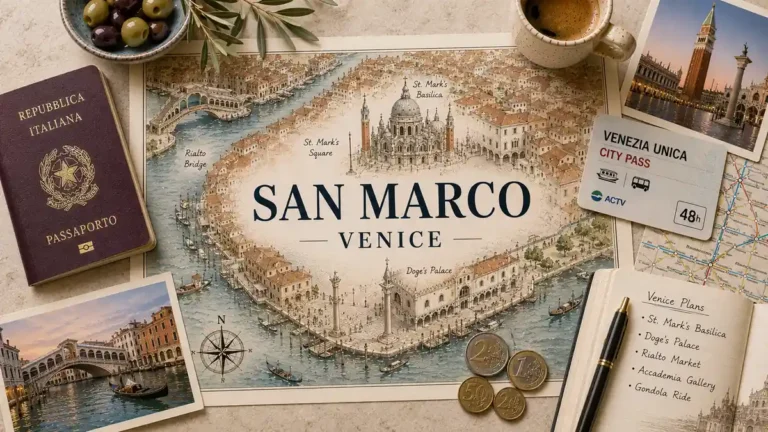
St Mark’s Square, the Doge’s Palace, and the Rialto with the Grand Canal are Venice’s non-negotiable trio. They pack the city’s grandest architecture, deepest history, and best-known views into a compact core, so first-timers should anchor their visit here before branching out to anything else.
These are the experiences that justify their crowds. A first-timer who does nothing else has still seen the essential Venice, and each one rewards a slow, unhurried visit far more than a rushed photo stop. Advance booking helps at the busiest sites, and hours and entry rules shift by season — treat any published times as guidance and confirm before you go. For how to reach each landmark and how they fit a wider trip, our Venice guide handles the planning and logistics this page leaves out.
The Basilica is timed-entry and the walk-up queue is brutal at midday — the lever most people miss is booking an early morning slot, which also catches the golden mosaics before the square fills.
St Mark’s Square & Basilica
St Mark’s Square is Venice’s grand set-piece, and the Basilica di San Marco is its dazzling centerpiece. The gold-ground mosaics, domed ceilings, and Byzantine facade make this the one stop no first-timer should skip. Go early or late to dodge both the crowds and the harshest light, and dress modestly — it remains an active church with an enforced code.
Pick this if: you want the iconic heart of Venice and its most breathtaking interior in one stop.
Doge’s Palace
The Doge’s Palace was the seat of Venetian power for centuries, and it delivers the city’s richest history lesson. Grand council chambers, painted ceilings, and the covered Bridge of Sighs linking the palace to its old prison make it a standout for anyone drawn to intrigue and statecraft. Booking ahead is smart in peak months.
Pick this if: you’re fascinated by power, politics, and the story behind the beautiful facade.
Campanile di San Marco
The Campanile is St Mark’s bell tower and Venice’s best-value viewpoint. An elevator carries you up for a sweeping panorama over the red rooftops, the lagoon, and the domes below — the clearest way to grasp how the island city actually fits together. It is a short visit with an outsized payoff on a clear day.
Pick this if: you want the best citywide panorama with the least physical effort.
Rialto Bridge & the Grand Canal
The Rialto Bridge is the Grand Canal’s most famous crossing, and the canal itself is Venice’s living main street. The view from the bridge, the market bustle on the San Polo side, and a vaporetto glide down the full length of the canal together deliver the postcard Venice everyone pictures. Early morning is quietest and most photogenic.
Pick this if: you want the definitive Grand Canal view plus the buzz of the historic market.
A quick read on which core landmark rewards which traveler.
| Landmark | Why it tops the list | Book ahead? | Best for |
|---|---|---|---|
| St Mark’s Basilica | Venice’s most dazzling interior and facade | Recommended in peak months | First-timers wanting the iconic heart |
| Doge’s Palace | The city’s richest history and power story | Recommended in peak months | History and intrigue lovers |
| Campanile di San Marco | Best citywide panorama, minimal effort | Usually walk-up friendly | Viewpoint seekers short on time |
| Rialto & Grand Canal | The definitive postcard Venice view | Free to see anytime | Anyone wanting the classic scene |
Is a Gondola Ride in Venice Worth It?
Yes — a gondola ride is worth it for the experience and romance, with real caveats on price and sharing. It is a slow, iconic float down canals you cannot see any other way, and a genuine bucket-list moment for many. Book it for the moment, and manage the cost by choosing your timing and route deliberately.
The gondola is expensive for its length, and rates are fixed by set bands that climb in the evening, so treat any quoted figure as a range and confirm before you step in. Value comes down to how you frame it: a couple after a signature memory will feel it was worth every euro, while a budget solo traveler ticking a box may not. The options are simple once you see them laid out.
- Shared daytime ride: splits the flat fare across up to several passengers — best for travelers who want the experience at the lowest per-person cost and don’t mind company.
- Private daytime ride: the whole boat to yourselves in daylight — best for couples or families wanting photos and space, at a higher fixed price.
- Private evening ride: the premium band, quiet canals, and lantern light — best for a romantic splurge, with the steepest rate as the tradeoff.
Where you launch matters more than the boat itself: ask to start away from the Grand Canal so your fixed time is spent gliding down silent back canals instead of idling in vaporetto wake near San Marco.
Pick this if: you want a one-off romantic or bucket-list moment and value the memory over the money.
Cicchetti and Bacari Are Venice’s Best Food Experience
Cicchetti are Venice’s small plates, and bacari the wine bars serving them — together the city’s best food experience. A bacaro crawl beats a formal restaurant meal for atmosphere, value, and a genuine sense of how Venetians actually eat and drink. It is social, cheap by Venice standards, and endlessly repeatable across neighborhoods.
Cicchetti are bite-sized dishes — crostini, fried seafood, polpette, baccalà mantecato — eaten standing at the counter with an ombra, a small glass of wine. Bacari are the humble bars that serve them, and the best cluster around the Rialto market and in Cannaregio. The move is to keep walking. Hit three or four bars, order a couple of cicchetti and a drink at each, and you eat better for less than one sit-down tourist menu near the main square.
Steer clear of any place with a laminated multi-language menu and a host waving you in from the street; the good bacari are unfussy, locals-heavy, and often busiest around aperitivo hour. Follow the crowd of Venetians, not the tourist signage.
Pick this if: you want the most authentic, best-value food experience and prefer grazing over a formal dinner.
Wandering, Hidden Corners, and Unique Venice Experiences
Getting deliberately lost beyond San Marco is Venice’s signature experience — and its highest-payoff, lowest-cost one. The crowds thin within a few bridges of the main routes, and the quiet canals, workshops, and neighborhood squares are where the city feels real. No ticket, no queue, no plan required — just time and curiosity.
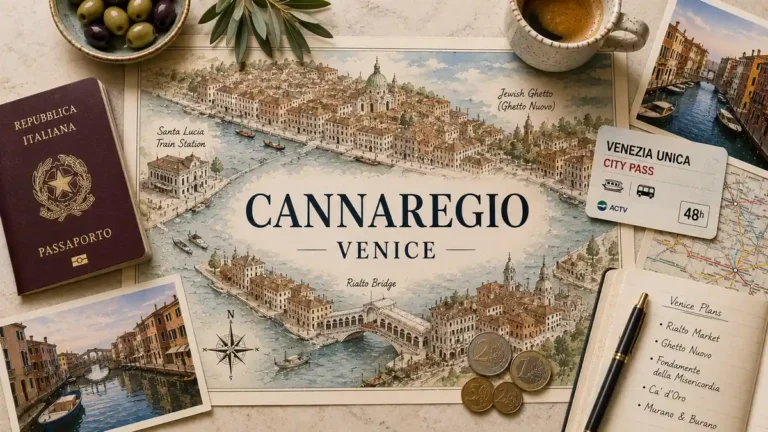
Point yourself into Cannaregio, Dorsoduro, or Castello and let the alleys decide. Venice’s quiet is never far; it sits one canal off the signposted route between the station and San Marco. Along the way you will stumble on artisan studios, tiny bridges, and campi where kids play football — the scenes no landmark ticket includes. For the offbeat, a handful of quirky sights are worth aiming for, and if this kind of exploring is your priority, our roundup of things to do in Italy extends the idea across the country.
The lagoon islands of Murano and Burano — famous for glass and painted houses — make a popular half-day escape, but they sit in the wider region’s scope and get only a brief mention here.
Libreria Acqua Alta and Other Offbeat Sights
Libreria Acqua Alta is Venice’s beloved “high-water bookshop,” where stock is stored in gondolas and bathtubs against flooding, and a staircase of old books leads to a canal view. It is charming, quirky, and free to browse. Pair it with hidden spiral staircases, quiet churches, and neighborhood markets for a day of low-cost, high-character discovery.
Pick this if: you love offbeat, photogenic corners and want a Venice most day-trippers never notice.
Best Guided Tours and Skip-the-Line Experiences in Venice
Skip-the-line tickets and a good walking or food tour pay off; most of Venice is better self-guided. A guide earns its price where queues or context matter — the Basilica, the Doge’s Palace, a bacaro crawl — but the city’s magic is free-form wandering. Book tours for access and expertise, and keep your own exploring open.
The value of a Venice tour is access, not narration: pay for skip-the-line entry at the Basilica and Doge’s Palace, where lines can cost you an hour in peak season, and explore the rest on your own. Prices vary widely by operator and season, so compare a few and read them as ranges. Here is how the main options stack up.
- Skip-the-line tickets: timed entry to the marquee sites — best for anyone visiting in peak months who wants to reclaim queue time, with no guide to keep pace with.
- Guided walking tour: a local’s context on history and hidden corners — best for first-timers who want orientation early, at the cost of a fixed route.
- Food / bacaro tour: a curated crawl with tastings — best for travelers who want authentic bites without the trial-and-error of finding good bars themselves.
- Self-guided wandering: free and flexible — best for confident, unhurried travelers who value spontaneity over expertise.
Book the ticketed access and one or two experiences that genuinely need a guide; leave the rest of your time open for the aimless exploring that no tour can package.
Tours and activities
Book skip-the-line tickets, day trips and local tours with free cancellation on most activities.
You can also browse everything on getyourguide.com.
Tripstou may earn a commission if you book through this link, at no extra cost to you.
Free Things to Do in Venice
Venice’s best free experiences are wandering, church and palazzo exteriors, the Rialto market, and the waterfront promenades. The city itself is the attraction, so much of its payoff costs nothing beyond the effort to walk it. Sunrise over the lagoon and an evening stroll along the Zattere rival any paid ticket.
A surprising share of the best Venice moments carry no admission at all. Some standouts to build a free day around:
- St Mark’s Square at dawn: the grand piazza near-empty before the crowds and cruise groups arrive.
- The Rialto market: a working produce and fish market with genuine local energy, liveliest in the morning.
- Waterfront walks: the Zattere and Fondamente Nove promenades for open lagoon views and sunset.
- Church and palazzo facades: Venice’s exteriors are a free open-air museum, even when interiors charge entry.
- Bridge-hopping through the sestieri: aimless walking that costs nothing and delivers the city’s best surprises.
Some church interiors and gardens are free while others charge, and this shifts over time — so check on arrival instead of assuming. The walking, the views, and the market are reliably free and reliably among the best of Venice.
What to Do in Venice at Night
After dark Venice empties out — the best evening experiences are bacari, quiet illuminated squares, and a night gondola. Day-trippers leave by early evening, handing the city back to those staying over. The floodlit facades, near-empty alleys, and reflections on the water make night one of Venice’s most atmospheric windows.
Evening is when a bacaro crawl comes into its own, with locals filling the bars for aperitivo and cicchetti. Afterward, walk a floodlit St Mark’s Square with a fraction of the daytime crowd, or cross quiet bridges where your footsteps are the only sound. A gondola after dusk trades daylight photos for lantern-lit romance. Venice has no loud, late nightlife scene, and that is the appeal — the after-dark payoff is atmosphere, not clubs.
Staying overnight is what unlocks this. The quiet, illuminated city is the strongest reason to sleep in Venice instead of visiting on a day pass.
What to Do in Venice When It Rains
When it rains, Venice’s museums, the Basilica interior, bacari, and covered markets keep a wet day full. Bad weather barely dents the experience here, because so much of the payoff is indoors or under cover. A rainy day is often the quietest, most photogenic time to see the marquee interiors.
Point a wet day toward the covered experiences: the Doge’s Palace and Basilica interiors, art collections like the Accademia or Peggy Guggenheim, and a long, unhurried bacaro crawl where the whole point is being inside with a glass and a plate. The covered Rialto market and arcaded walkways keep you dry between stops. Rain also thins the crowds, so queues and squares are calmer than usual.
Heavy rain and high tides can bring acqua alta, occasional seasonal flooding that raises walkways in low-lying spots like St Mark’s Square; it varies year to year, so check local conditions and simply pack waterproof shoes.
Frequently Asked Questions
How many days do you need in Venice?
Two to three days is ideal for Venice’s core experiences. One day rushes the marquee landmarks; two days adds food, wandering, and the gondola unhurried; three adds slow neighborhoods and the lagoon. Our 2-day Venice itinerary sequences the essentials over a weekend.
Do you need to book Doge’s Palace and St Mark’s Basilica in advance?
Advance booking is strongly recommended for both in peak season, when walk-up queues can swallow an hour or more. St Mark’s Basilica uses timed entry, and the Doge’s Palace sells skip-the-line tickets that save real time. Rules and hours shift seasonally, so confirm the current system before you go.
What are the best things to do in Venice with kids?
Venice is naturally kid-friendly, with boat rides, bridges, and open squares to explore. Climb the Campanile for the elevator and rooftop view, ride the vaporetto down the Grand Canal, visit the quirky Libreria Acqua Alta, and chase pigeons in St Mark’s Square. Gelato stops and hidden alleys keep younger travelers engaged.
Can you visit Venice in one day?
Yes, but one day only skims the surface. You can see St Mark’s Square, the Basilica exterior, the Rialto, and a first glimpse of the canals, but food, wandering, and the lagoon get squeezed out. Staying overnight unlocks the quiet evening city — see our 3-day Venice itinerary for the fuller experience.
When is the best time of day to visit St Mark’s Square?
Early morning is the best time to visit St Mark’s Square, before the cruise groups and day-trippers arrive. The piazza sits near-empty, the light is soft for photos, and Basilica queues are at their shortest. Evening is the atmospheric alternative, when the square empties again and the facades are floodlit.
What are the best things to do in Venice for couples?
Venice rewards couples with romance built into the everyday. A gondola ride at dusk, a candlelit cicchetti crawl through Cannaregio, and a quiet walk across floodlit bridges after the day-trippers leave top the list. Skip the crowded midday hotspots and lean into the slow, atmospheric evenings the city does best.
Related Guides
Keep planning your trip with these companion guides — for timing and logistics, day-by-day sequencing, and wider Italy discovery.
- Venice guide — the parent hub for planning, timing, and how to reach the city and its experiences.
- 2-day Venice itinerary — a day-by-day plan that sequences these experiences over a weekend.
- 3-day Venice itinerary — the slower-paced upgrade with room for food, wandering, and the lagoon.
- Things to do in Italy — the wider set of Italian experiences beyond Venice.
- Best places to visit in Italy — where Venice fits among the country’s top destinations.
Did this guide save you time or money? Tripstou is independent and reader-funded — if you'd like to give something back, you can support the site with a crypto contribution of any size.