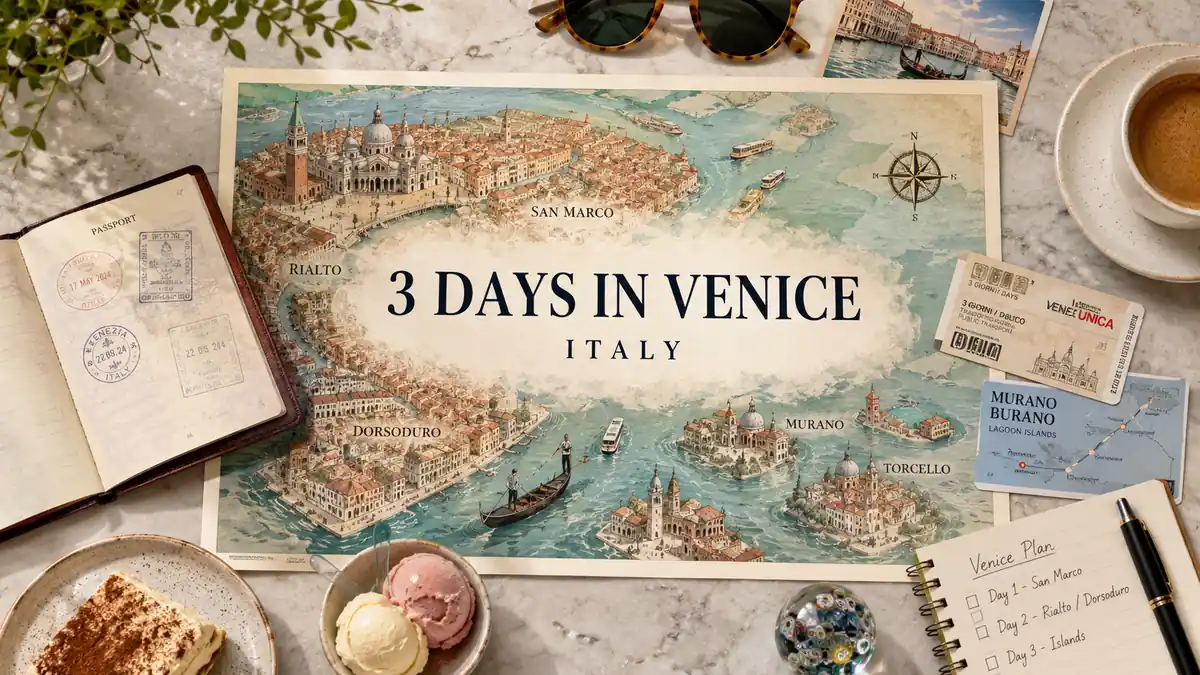
You have three days in Venice and one real problem: the city is a maze of islands and canals where the shortest line between two sights is rarely a straight one. A first-timer does not need an exhaustive catalogue of everything Venice holds — you need a walkable, geographically logical order that turns limited time into a complete visit. This guide gives you exactly that: a follow-verbatim Day 1, Day 2, and Day 3 plan built around the city’s natural clusters. Day 1 anchors the San Marco core, Day 2 crosses to Rialto and Dorsoduro, and Day 3 takes to the water for the lagoon islands. Along the way you get the crowd-timing that keeps San Marco bearable and clear rules for stretching or shrinking the route. No history detours, no filler — just the route.
Quick Answer
Three days is the sweet spot for Venice — long enough for the historic core, a second sestiere, and the islands. Day 1 covers San Marco, Day 2 Rialto and Dorsoduro, Day 3 the lagoon. The extra day unlocks Murano and Burano and a slower pace, ideal for first-timers wanting a complete but unhurried visit.
Trust Layer
Tripstou itinerary guide for travelers planning a route. Covers pacing, stop count, stop order, base logic, and trip length.
Produced with AI assistance and reviewed by Alex Perrut, working in tourism since 2015, for the Tripstou editorial team. See our editorial process for details.
Last factual review: July 16, 2026.
Official sources consulted: italia.it, enit.it.
Key Takeaways
- Three days is Venice’s sweet spot: enough for the San Marco core, a second sestiere, and a full lagoon-islands day.
- Cluster each day inside one zone — San Marco, then Rialto and Dorsoduro, then the lagoon — to avoid constant backtracking.
- The third day is what unlocks Murano and Burano — protect it, since a compressed two-day trip is exactly what has to skip the lagoon.
- Hit San Marco in the first hour after opening or after dinner, when day-trippers and cruise crowds thin out.
- Book the Basilica and Doge’s Palace timed-entry slots before you arrive, since both use timed entry and reward reserving ahead.
- Stay central near San Marco, Rialto, or Dorsoduro so Days 1 and 2 sit on your doorstep and the island vaporetto stays close.
Table of Contents
Is 3 Days Enough for Venice?
Yes — three days is enough for Venice, and it is the sweet spot for a first visit. It fits the San Marco core, a second sestiere like Dorsoduro, and a full lagoon-islands day without rushing. Two days forces cuts; four invites slow days most first-timers do not need.
The reason three days works is that Venice is small on foot but slow on the water. The historic center is compact, and you can cross most of it in an afternoon of walking. What eats time is not distance — it is the vaporetto hop out to the lagoon, the queues at the marquee sights, and the crowds that clog the main routes between San Marco and Rialto. Three days gives you room to absorb all three without a forced march.
The limiting factor in Venice is the lagoon crossing, not the size of the old city. You can walk from San Marco to the Accademia in under half an hour, but Burano sits a slow vaporetto ride away — and that ride is exactly what a two-day trip has no room to include.
Three days suits the first-timer who wants the icons plus one genuinely different day on the water. The tradeoff is depth: you will see Venice’s greatest hits and one island cluster, not the dozen minor churches, hidden squares, and back-canal walks that reward a longer stay. For most people making a first visit, that is the right trade.
The Best 3-Day Venice Route at a Glance
The best order to see Venice in three days runs outward from the center. San Marco comes first, then Rialto and Dorsoduro, then the lagoon islands on Day 3. Each day clusters one walkable zone, so you cross the Grand Canal deliberately instead of backtracking across the city.
- Day 1: San Marco — the unmissable historic core
- Day 2: Rialto and Dorsoduro — market bustle and art district
- Day 3: Murano and Burano — the lagoon islands day
This shape works because Venice punishes backtracking. Every wrong turn means another bridge, another dead-end canal, another crowd to push through. Clustering each day inside one sestiere means you cross the Grand Canal only when the plan calls for it, and you spend your energy on sights instead of navigation. The route also builds emotionally, moving from the busiest, most monumental core toward the calmest, most colorful water.
| Day | Base zone | Focus | Pace |
|---|---|---|---|
| Day 1 | San Marco and the historic core | Basilica, Doge’s Palace, Piazza, walk to Rialto | Busy and monumental |
| Day 2 | San Polo and Dorsoduro | Rialto market, Accademia, quieter art quarter | Slower and local |
| Day 3 | The northern lagoon islands | Murano glass, Burano color, open water | Relaxed day trip |
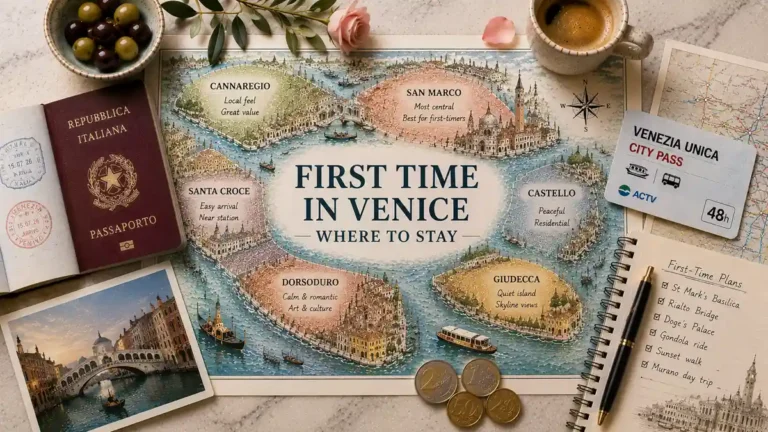
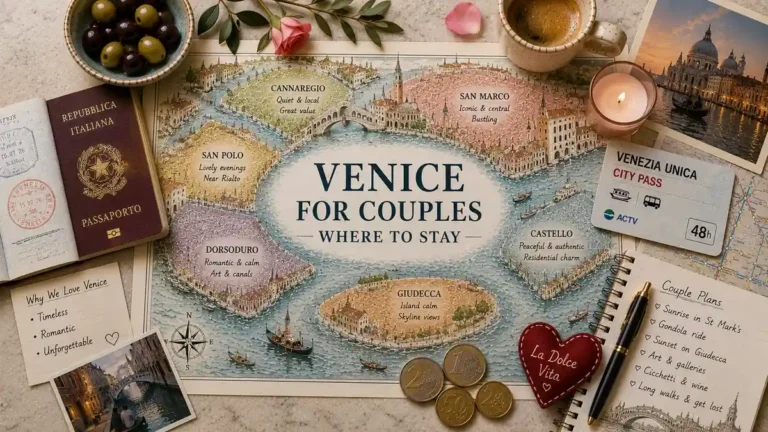
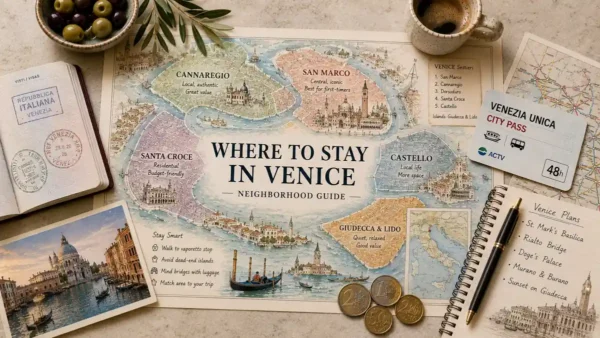
One planning decision sits behind the whole route: stay central. A base near San Marco, Rialto, or Dorsoduro puts Day 1 and Day 2 on your doorstep and keeps the island vaporetto within easy reach for Day 3 — see where to stay in Venice for the area breakdown. A single, well-placed base is what lets this route flow without daily transit friction.
Hotels and places to stay
Compare hotels, apartments and stays for your dates in one search.
Search hotels and stays on hotels.com →
Tripstou may earn a commission if you book through this link, at no extra cost to you.
Day 1: San Marco and the City’s Historic Core
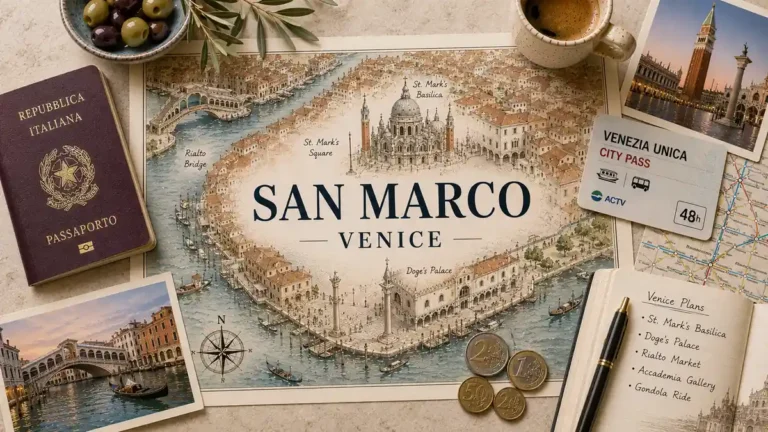
Day 1 covers the San Marco core, the sights no first-timer skips. Piazza San Marco, the Basilica, the Doge’s Palace, and the Campanile all cluster here and anchor the whole city. Starting here front-loads the icons and ends with an easy walk toward Rialto, setting up Day 2.
Spend the morning on Piazza San Marco while it is still walkable, then work through the monuments clustered around it before the midday crush. A rough shape for the day:
- Early morning: St Mark’s Basilica and the Piazza before the tour groups arrive.
- Late morning: the Doge’s Palace and the Bridge of Sighs next door.
- Midday: the Campanile for the view, then lunch off the square where prices ease.
- Afternoon: a slow walk north through the lanes to the Rialto Bridge.
Keep the logistics light but plan one thing: the Basilica and the Doge’s Palace use timed entry and reward booking ahead, so reserve your slots before you arrive. This route touches only the anchor sights — for the fuller list of galleries, churches, and museums packed into this quarter, see the complete rundown of things to do in Venice. End the day at Rialto so Day 2 begins exactly where Day 1 leaves off.
Tours and activities
Book skip-the-line tickets, day trips and local tours with free cancellation on most activities.
You can also browse everything on getyourguide.com.
Tripstou may earn a commission if you book through this link, at no extra cost to you.
Day 2: Rialto, Dorsoduro, and the Quieter Sestieri
Day 2 adds the working, artistic side of Venice. The Rialto market, a gondola moment on the smaller canals, and the Accademia in Dorsoduro fill the day. It follows Day 1 naturally: you ended yesterday at Rialto, so the morning starts without a commute and drifts into calmer sestieri.
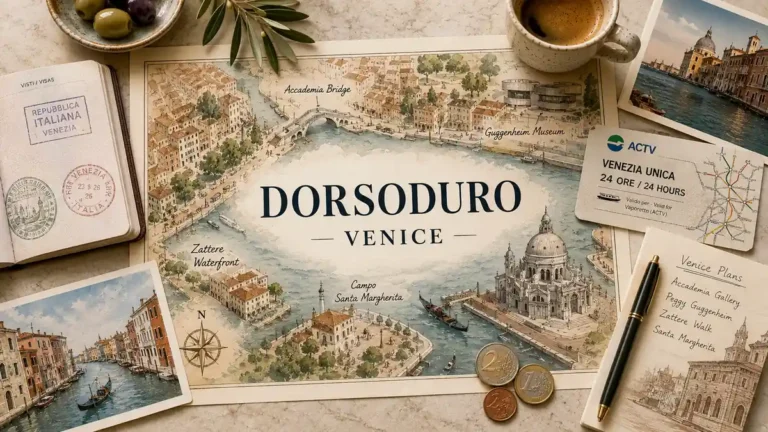
Begin at the Rialto market early, when the produce and fish stalls are still trading and the bridge is quiet. From there, cross into San Polo and down toward Dorsoduro, Venice’s gallery quarter, where the crowds thin and the pace slows. A workable order:
- Morning: Rialto market and the surrounding San Polo lanes.
- Midday: cross to Dorsoduro; lunch along a quiet canal.
- Afternoon: the Gallerie dell’Accademia, then the Zattere waterfront walk.
A gondola ride is the classic Day 2 splurge; fares are fixed by the city but high, so treat it as a single set-piece experience rather than daily transport. Dorsoduro is where the second-sestiere logic pays off — it delivers world-class art and canal-side calm within a short walk, so you get contrast without another Grand Canal crossing. Keep the afternoon loose; this is the day to let Venice slow down.
Day 3: A Lagoon Islands Day — Murano and Burano
Spend Day 3 on the northern lagoon islands. Take a half- or full-day trip to Murano for glassmaking and Burano for its painted houses, with slow city wandering as the alternative. The islands are the natural third day: they offer the one thing the center cannot, open water and a change of scene.
This is the day a three-day trip buys you. A compressed two-day visit has to stay on the main islands and skip the lagoon entirely, so Day 3 is not an add-on — it is the reason to give Venice a third day at all. Take the vaporetto out mid-morning, do Murano first and Burano second, and let the boat rides be part of the experience.
- Mid-morning: vaporetto to Murano; a glass furnace demonstration.
- Midday: continue to Burano for the colored houses and lunch.
- Afternoon: optional stop at Torcello, then the ride back to the center.
The islands reward the morning, not the afternoon: Burano’s color and Murano’s furnaces both show best in early light, and the return vaporetto fills fast once the day-trip tide turns homeward. Island vaporetto line numbers and the multi-day pass shift over time, so check current routes and fares before you go and factor them into your Venice trip cost. If a full island day feels like too much boat time, swap it for an unhurried morning in a quiet sestiere and a shorter afternoon hop to Murano alone.
How to Avoid the Crowds at San Marco
Visit San Marco early or late, and cluster each day’s sights inside one sestiere. Piazza San Marco is calmest in the first hour after the Basilica opens and again after dinner; the middle of the day belongs to tour groups and cruise arrivals.
The pattern is predictable, which makes it easy to beat. Day-trippers and cruise passengers pour into San Marco late morning and drain out by early evening, so the shoulders of the day are yours. Two habits do most of the work:
- Hit the marquee sights at opening or in the last hour before closing.
- Walk one sestiere at a time so you are never crossing the busy core twice.
The tour groups own the middle of the day and the direct line between San Marco and Rialto — step one canal off that corridor and the crowds thin immediately. Seasonally, the shoulders and cooler months are quieter than midsummer, and high water (acqua alta) can briefly reshape routes around the Piazza; treat both as qualitative planning notes, not fixed rules, and keep your plans flexible on the day.
How to Adapt This Route with More or Fewer Days
Adapt this route by one clear rule: the lagoon islands day is the flex day. With only two days, cut Day 3 and compress the center; with a fourth day, add depth on the water or in one sestiere instead of cramming more icons into each day. Keep one route, adjusted at the edges.
What to change, in order:
- Only two days: drop the islands and merge into a tight San Marco day plus a Rialto–Dorsoduro day. You lose Murano and Burano but keep the core intact — the full compressed plan is laid out in the 2-day Venice itinerary.
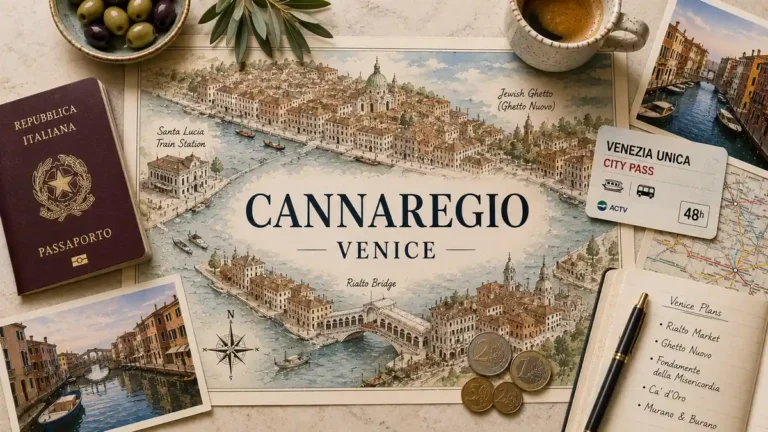
- A fourth day: add Torcello or the Lido to the island day, or give one sestiere — Cannaregio or Castello — a slow half-day of its own.
- Five or more: layer in a day trip or deeper neighborhood time, but resist re-doing the core.
The islands day is the first thing to cut and the last thing to regret cutting — it is the one feature that separates a memorable Venice trip from a rushed one, so protect it whenever your schedule allows. When you have to trim, trim time on the water before you trim the San Marco core; the icons are non-negotiable for a first visit, and the lagoon, however special, is the part a return trip can always reclaim.
Frequently Asked Questions
Is Venice worth visiting with kids for 3 days?
Yes, three days suits families well. Kids love the vaporetto rides, the Murano glass furnaces, and Burano’s painted houses, which turn Day 3 into the highlight. Keep the San Marco day short and early, build in gelato and canal-watching breaks, and let the boat trips carry the pace.
Can you do a day trip from Venice in 3 days?
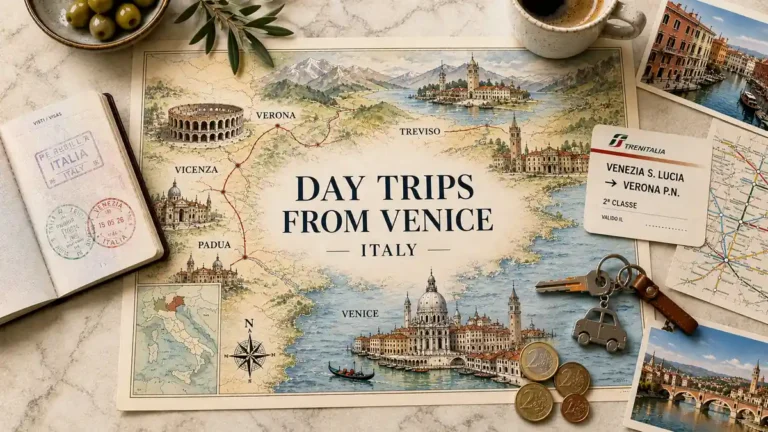
Yes — and the best day trip is inside the lagoon itself. Day 3 to Murano and Burano is the natural in-scope excursion, giving you open water and a change of scene without leaving the Venice cluster. Mainland trips like Verona or Padua are better saved for a longer stay.
How much does a 3-day Venice transport pass cost?
A multi-day vaporetto pass costs noticeably more than single tickets but pays off fast once you factor in the island runs on Day 3. Prices and pass durations change periodically, so check the current tariff before buying and fold it into your Venice trip cost planning.
Do you need to book Venice attractions in advance?
For a tight three-day plan, yes — reserve the marquee sights ahead. St Mark’s Basilica and the Doge’s Palace use timed entry, and booking a slot spares you the longest queues on your busy San Marco day. Most smaller churches and the island sights need no reservation.
How much walking does a 3-day Venice itinerary involve?
Expect a lot — Venice is a walking city with no cars, so each day means hours on foot over stepped bridges and narrow lanes. The zone-by-zone route keeps distances short and backtracking low, but wear broken-in shoes and pace yourself, especially on the monument-heavy San Marco day.
Can you see Murano, Burano, and Torcello in one day?
Yes, but it makes for a full, boat-heavy day. Murano and Burano fit comfortably; adding Torcello works only if you start early and keep each stop brief. If you would prefer not to rush, skip Torcello and save it for a return trip — the two headline islands are enough.
Related Guides
- Venice travel guide — orientation, best time to go, and how the whole cluster fits together.
- 2 days in Venice — the compressed plan when you only have a weekend.
- Where to stay in Venice — the best central areas for a walkable base.
- Things to do in Venice — the full attraction list beyond this route.
- Venice trip cost — budgets, transport passes, and what to expect.
- Italy itinerary — fit Venice into a wider route through the country.
Did this guide save you time or money? Tripstou is independent and reader-funded — if you'd like to give something back, you can support the site with a crypto contribution of any size.