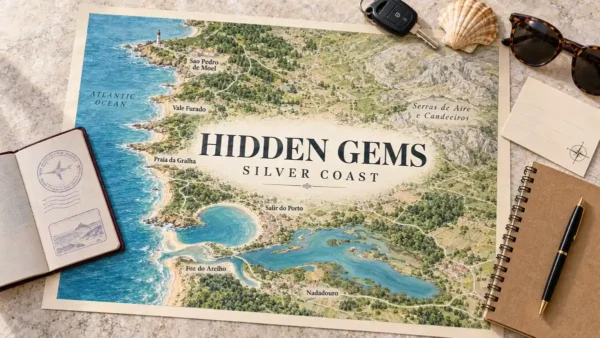
Lagos, in Portugal’s Algarve, concentrates its best experiences in a short list, and most of them happen on or above the water. This page resolves each one as a decision: worth it for whom, and which version to choose. It is not a ranked list of places, and it is not a day plan.
The centre of gravity is Ponta da Piedade, the cliff headland and sea-cave complex at the edge of town. Three versions compete for the same morning: the free clifftop walk, a boat tour, or a guided kayak into the caves. Choosing between them shapes a Lagos visit more than anything else here.
The page also states the current access truth, because it changes beach plans: the clifftop network is free and open, while one of the famous beach descents is not. Everything else — the old town, the low-tide tunnel walk, dolphins, surf and SUP — is an add-on, ranked honestly.
Quick Answer
The experiences worth your time in Lagos, Algarve, centre on Ponta da Piedade’s cliffs and sea caves. Pick one version: the free clifftop walk, a boat tour for the caves without paddling, or a kayak inside them. Do the water on a calm morning; the old town and the low-tide walk fill the rest.
Trust Layer
Tripstou attraction guide for travelers deciding whether an experience is worth doing and how to do it well. Covers value, booking versions, timing, access, and traveler fit.
Produced with AI assistance and reviewed by Alex Perrut, working in tourism since 2015, for the Tripstou editorial team. See our editorial process for details.
Last factual review: September 12, 2026.
Official sources consulted: Visit Portugal, Turismo de Portugal, Câmara Municipal de Lagos.
Key Takeaways
- Ponta da Piedade carries Lagos: its cliffs, arches and sea caves are the one experience here worth protecting time for.
- Choose by proximity, not scenery: the clifftop walk gives views, the boat reaches the caves, the kayak goes inside them.
- Most first-timers should book the boat tour; it delivers the caves without paddling and survives conditions that cancel kayaks.
- Schedule any water outing for the first calm morning of your stay, because rough seas take the kayak away first.
- The descent to Praia do Camilo is prohibited after storm damage; the clifftop viewpoint stays open, so check on-site signage.
- Carrying boards, kayaks or dive gear down the Dona Ana and Camilo staircases is prohibited during bathing-season daytime hours.
Table of Contents
The Lagos experiences that repay your time, ranked by payoff
Ponta da Piedade is the one Lagos experience you should not skip; everything else is a supporting act. The cliffs, arches and sea caves are what this stretch of the Algarve uniquely has, and no other activity in town competes with them. Rank the rest by how much each pays back.
In descending order of payoff:
- Ponta da Piedade, in any version — the formation that justifies the trip. Clifftop walk, boat or kayak, you are looking at the same arches and stacks.
- The kayak into the caves — the only version that puts you inside the rock, and the one people talk about afterwards.
- The low-tide tunnel walk — a free hour of cove-hopping through natural passages, available only when the tide allows it.
- The old town on foot — a compact set of genuine sights and the dependable fallback when the sea is too rough for boats.
- Dolphin watching — a good second outing offshore, never a guaranteed one.
- A surf or SUP lesson — the most active option, and the one that pays back effort instead of scenery.
Lagos sits inside a much larger national picture, and comparing it against other things to do in Portugal helps if you are still deciding how much of the Algarve to give it. Everything beyond the municipality — Benagil, Sagres, the Seven Hanging Valleys, Silves, Carvoeiro, Burgau — is a day trip, and those belong to the Lagos city guide.
The picking rule is short. If you have one calm morning, spend it on the water at Ponta da Piedade. If the sea is rough, walk the cliffs and the old town, and hold the water for the next calm day.
Boat tour, kayak or the free clifftop walk at Ponta da Piedade?
The walk is free and gives the views; the boat reaches the caves; the kayak goes inside them. All three show the same rock formations. They differ in how close you get, how hard you work, and how badly a windy morning interferes. Scenery is not the variable.
There are four versions of the same headland, and the choice is really about proximity and exposure:
- Clifftop boardwalk on foot — suits anyone who wants the headline views without spending money or trusting the forecast. Tradeoff: you see the arches from above and never enter a cave.
- Small motorised boat from the grotto area below the cliffs — suits travelers already at the headland who want a short, close look without committing to a marina outing. Tradeoff: it goes out only when the sea allows it.
- Boat tour from Lagos marina — suits first-timers who want the caves with no paddling and a proper outing on the water. Tradeoff: the marina start makes it a longer commitment, though it keeps running in conditions that stop kayaks.
- Guided kayak tour — suits confident swimmers who want to be inside the grottoes. Tradeoff: the most physical version, and the first to be called off when the sea gets up.
| Version | Best for | What you get | What it costs you in effort |
|---|---|---|---|
| Clifftop walk | Windy days and tight budgets | The view down onto the arches and stacks | A walk from town and some steps, nothing technical |
| Boat tour | Families, non-swimmers, first visits | The caves seen from the water, no paddling | Sitting still and accepting the day’s sea state |
| Kayak tour | Confident swimmers who want the interiors | Paddling into the grottoes and under the arches | Real arm work and the highest cancellation risk |
The free walk gives one thing the paid versions cannot: the view down onto the arches from above. The boat and the kayak give you the one thing the walk cannot, which is the water-level perspective the photographs are taken from.
Worth it for: every first visit to Lagos — the only question is which version.
Can you walk to Ponta da Piedade from Lagos?
Yes. You can reach Ponta da Piedade on foot from town, and the headland itself costs nothing: no ticket, no gate, no booking. The clifftop boardwalk network and its viewpoints are open access.
What the walk gives you is a series of viewpoints over the arches, stacks and grottoes, linked by boardwalks across the top of the cliffs. It is also the one version of this experience that a swell cannot touch, which makes it the safe choice on an unsettled day. Cliff erosion does close individual boardwalk sections and staircases from time to time, so follow the signage you find on site and take any barrier seriously.
Tours and activities
Book skip-the-line tickets, day trips and local tours with free cancellation on most activities.
You can also browse everything on getyourguide.com.
Tripstou may earn a commission if you book through this link, at no extra cost to you.
What is the Lagos kayak tour through the caves like?
A Lagos kayak tour is a guided paddle along the Ponta da Piedade cliffs and into the grottoes and arches. It is the closest look at the rock anyone gets, and the most exposed to sea state. Calm water makes it the best hour of a Lagos trip; a lumpy sea cancels it.
It suits confident swimmers and travelers who want to be inside the rock instead of alongside it. Guides lead small groups along the cliff base, stopping where the swell lets them slip into a grotto, and the scale of the arches only registers from that position.
Take the boat instead if you are a non-swimmer, if you want zero exertion, or if the morning arrives with a visible swell. The honest tradeoff is weather: rough seas cancel kayak trips while the larger boats often still run. That asymmetry has a practical consequence — schedule the kayak for the first calm morning of the trip, because every day you leave it is another day the sea can take it away from you.
What to bring:
- Water, and more of it than you think a paddle needs.
- Sun cover that survives spray — a hat that straps on, and sunscreen.
- Footwear that can get wet and still grip a rock ledge.
Worth it for: travelers who want to be inside the caves, not looking at them from a deck.
The low-tide walk between Lagos beaches through the rock tunnels
At low tide you can walk between Lagos coves through tunnels and arches cut into the sandstone. The tide, not the season, decides whether the walk is possible. Check the day’s tide table before counting on it, because the passages open and close with the water, and the window is short.
The classic version of the walk runs between Praia da Batata and Praia dos Estudantes, at the town end of the coast, where the rock is pierced by short natural tunnels. You walk through them on sand at low water. It suits anyone already having a beach afternoon and anyone who wants the trip’s best photographs for nothing.
Walk into the tunnels while the tide is still falling, so the water is leaving as you go, and turn back before it starts returning. The tradeoffs are real but mild: wet feet, a short window, and company, because everyone else has read the same tide table.
What the walk requires:
- A low-tide window, confirmed against the tide table for that day.
- Footwear that grips wet rock, or bare feet you are willing to risk.
- An eye on the incoming water, and a decision to turn round early.
Worth it for: a free hour that turns a beach afternoon into the trip’s best photos — if the tide agrees.
Dolphin watching, surf and SUP: the water experiences beyond the caves
These are the add-ons, worth a second calm day once the caves are done. Dolphin trips run offshore from the Lagos marina on fast boats. Surf and SUP lessons work from the calmer beaches, and the wind decides which of the two goes ahead.
Dolphin watching is a fast ride out beyond the headland in search of pods, and it is the one Lagos outing whose payoff is genuinely out of your hands. It suits families and anyone who has already done the grottoes and wants a different kind of morning on the water. Sightings are never guaranteed, and any operator who implies otherwise is selling you something they do not control.
Surf and SUP lessons suit beginners and active travelers on a second or third day in town. Both depend on wind and swell more than on the calendar, and a rough day ends SUP before it ends surfing — flat water is the whole point of a paddleboard, while a surf school can work with a bit of sea. One restriction catches people out: carrying a board, kayak or SUP down the Dona Ana or Camilo staircases is prohibited during the bathing season between 09:00 and 19:00, which is why organised sessions launch from elsewhere. The full rule sits in the access section below.
Worth it for: a second calm day after the caves are done — not instead of them.
What is there to see in Lagos old town?
Lagos old town holds a short set of real sights inside a compact, walkable grid. A relaxed few hours covers it. The Mercado de Escravos, the Igreja de Santo António with the Museu de Lagos, the Forte da Ponta da Bandeira and the marina are the substance.
The Mercado de Escravos is the historic slave-market building, now a museum space, and it is the one stop in town that carries real weight: it marks the role this port played in the Atlantic slave trade, and it does not let you look away from that. The Igreja de Santo António and the adjoining Museu de Lagos work as a pair, and the gilded church interior is the draw. The Forte da Ponta da Bandeira guards the harbour mouth and earns the short detour mostly for its position over the sea front. The marina is where the boat trips leave from, and it makes a pleasant walk in its own right at either end of the day.
This is the filler between water outings, and it is the fallback when the sea is too rough to go out. Treat it that way and it will not disappoint you; treat it as the reason to come to Lagos and it will. If you are still weighing Lagos against other stops, our guide to the best places to visit in Portugal puts it in national context.
Worth it for: the rough-sea day, and any evening — it is the filler, not the reason to come.
Best time of day for Ponta da Piedade and the beaches
Mornings for anything on the water, late afternoon for the clifftop walk. Calm seas and softer light favour early boat and kayak slots; the low sun and thinner crowds favour the end of the day on the boardwalks. Put the water first in your trip, not last.
The ordering matters more than the hour, because it is your insurance against a cancelled outing:
- Water first — take the earliest calm slot of your stay for the kayak or the boat, and keep the later days as spares.
- Cliffs on any day — swell does not reach the boardwalks, so the clifftop walk survives the weather that kills everything else.
- Old town and tunnel walk as the fallback — both work when the sea does not, and the tunnels answer to the tide table instead of the forecast.
The cliffs reward the part of the day the tour boats have already finished with. Late light hits the rock faces from the west and the viewpoints empty out as the last departures come back in. Tide, meanwhile, governs the tunnel walk independently of all of this, so read the two schedules separately.
Sequencing across a longer stay is a different job from timing a single day, and it lives on the itinerary pages: see the two-day Lagos itinerary or the three-day Lagos itinerary for day-by-day order.
Access rules at Dona Ana and Camilo before you go down
Two access facts change beach plans in Lagos. Pedestrian access down to Praia do Camilo is prohibited after storm damage to the slope and stairway, though the clifftop viewpoint above stays open. A municipal rule also bars carrying watersports equipment down the Dona Ana and Camilo staircases during the bathing season.
Praia do Camilo: the descent is closed, the viewpoint is open
You cannot walk down to the sand at Praia do Camilo. Storm damage destabilised the slope and the stairway, pedestrian access to the beach is prohibited, and barriers and signage are in place at the top. The Agência Portuguesa do Ambiente and the Câmara Municipal de Lagos are studying a solution, and no reopening date has been announced.
The clifftop viewpoint above the beach remains open, and it is the angle most photographs of Camilo are taken from anyway. Access status can change, so check the signage on site before you plan a swim there and treat the barriers as final while they stand.
The equipment rule on the Dona Ana and Camilo stairs
A municipal regulation governs what you may carry down the Dona Ana and Camilo staircases. During the bathing season, between 09:00 and 19:00, descending those staircases with surfboards, SUP boards, kayaks or canoes, windsurf or kitesurf gear, or scuba equipment is prohibited, and fines apply. The regulation exists because those narrow stairways cannot absorb bulky equipment alongside beach traffic.
Board and SUP sessions therefore start from beaches without that restriction, or from the water itself, which is why guided kayak tours launch away from these two coves. Bathing-season dates and hours are posted on site, so read the notice at the top of the stairs before carrying anything down.
Individual boardwalk sections and staircases around Ponta da Piedade can also close for erosion at short notice. Follow the signage.
Frequently Asked Questions
Is Ponta da Piedade worth it?
Yes — it is the one Lagos experience that justifies the trip. The cliffs, arches and sea caves have no equal elsewhere in town, and the clifftop boardwalks cost nothing, so even a windy day with every boat cancelled still repays the walk out to the viewpoints.
Is Praia do Camilo open, and can you walk down to the beach?
No — pedestrian access down the slope and stairway is prohibited after storm damage, so the sand is off limits. The clifftop viewpoint above remains open, and the water-based tours are unaffected by the closure. Access status can change, so read the signage posted at the top before planning a swim.
Do you need to book Lagos boat tours in advance?
Yes, in practice — booking ahead is what secures a calm-morning slot in the busy months, and calm mornings are the scarce resource here, not boats. The free clifftop walk needs no booking at any time of year. Leave the water outing for the first settled morning you get.
Is the boat or the kayak better for kids in Lagos?
The boat, for most families. It reaches the caves with no paddling, suits non-swimmers and younger children, and keeps running in conditions that stop kayaks. Keep the kayak for confident swimmers strong enough to paddle a full session. At low tide, the tunnel walk entertains any age with supervision.
What happens if rough seas cancel your Lagos kayak tour?
Rough seas do cancel kayak tours, and the usual fallback is the larger boat, which often still runs when paddling is called off. Otherwise the clifftop walk and the old town absorb the morning. That asymmetry is why the kayak belongs on the first calm day of your stay.
Can you visit Ponta da Piedade for free?
Yes. The clifftop boardwalks and viewpoints carry no ticket and no gate, and they give the view down onto the arches. Only the water versions cost money: the boat tour, the small boat from the grotto area, and the guided kayak. The low-tide tunnel walk is also free.
Related Guides
- Lagos travel guide — the parent guide: arrival, cost framing and the day trips beyond the municipality.
- Two days in Lagos — how to sequence the water, the cliffs and the old town over a short stay.
- Three days in Lagos — the same decisions with room for a second calm morning.
- Things to do in Portugal — the country-level experience picture, for deciding how much Algarve you want.
- Best places to visit in Portugal — where Lagos sits among the country’s destinations.
Did this guide save you time or money? Tripstou is independent and reader-funded — if you'd like to give something back, you can support the site with a crypto contribution of any size.