Plan Milos around the wind: on north-wind days, swim on the south coast and keep the boat trip flexible. The meltemi decides which coast you can swim on each day and whether the boat to Kleftiko leaves the harbour at all, so check the forecast every morning and give the Kleftiko trip a spare day. Bring food, water and proper shoes to beaches, carry cash for small places, and drink bottled water.
Your Milos trip is booked, or close to it, and the rest goes well or badly on a handful of smaller practical calls that still cost a day when missed: packing for beaches that sell nothing, carrying cash for places that take no card, drinking bottled water, booking the pieces that sell out in summer, and arriving ready for dirt tracks and rock scrambles. This page resolves those calls for a first visit. It is not the island guide, not a beach ranking and not the car-versus-quad comparison; those questions have their own pages.
Milos Tips, Checked and Sourced
This page settles the practical calls of a first Milos trip, with the wind as the deciding factor; it is not a guide to the whole island, a beach ranking, a day-by-day itinerary or a catch-all for every Greek travel question.
Every call on this page went past Alex Perrut, working in tourism since 2015, for the Tripstou editorial team before publication. Written with AI assistance, the text followed the route our editorial process describes.
Official sources consulted: Visit Greece, Greek Ministry of Tourism.
How does the wind shape a Milos trip?
On Milos the wind, not the calendar, decides which beach you swim on today. The meltemi is a summer north wind: on north-wind days the south coast is sheltered and the north coast is exposed. Check the forecast each morning and pick the coast from it before you pick a beach.
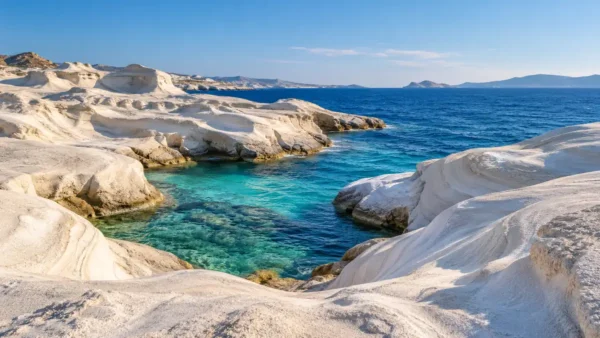
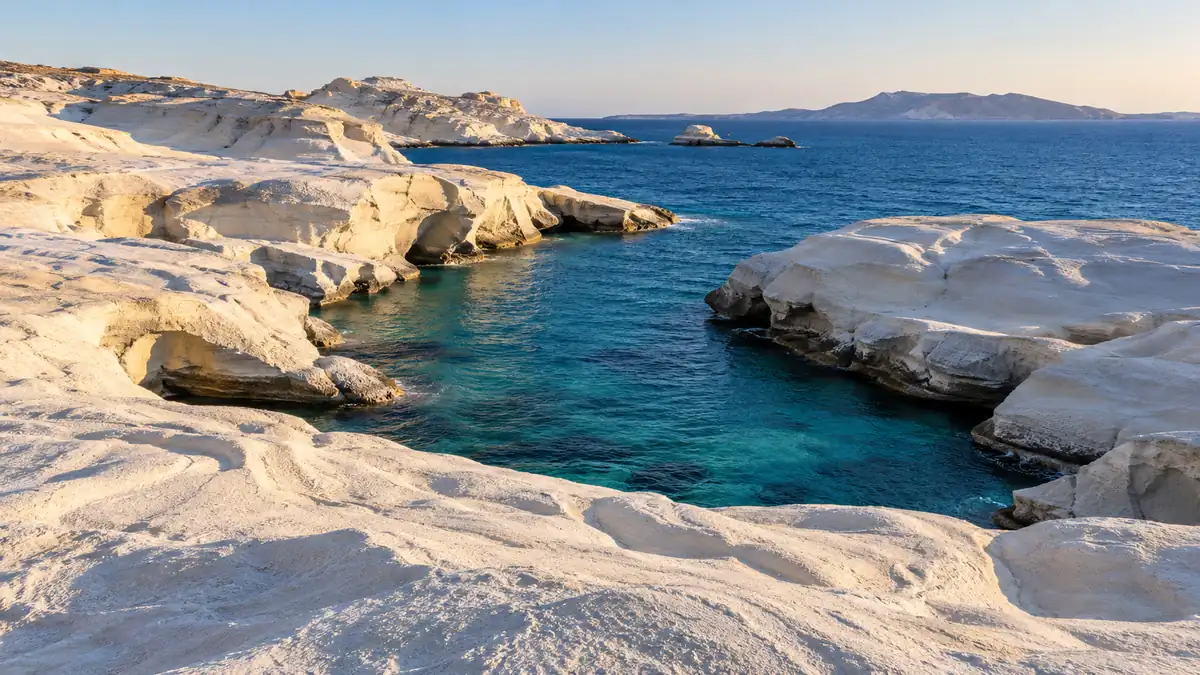
The south coast is where a north-wind day still works. Beaches such as Paleochori, Firiplaka and Agia Kyriaki sit in the lee of the island when the meltemi blows, so the water there stays calmer. Sarakiniko, on the north coast, is the classic exposed example. It takes the full force of a north wind.
A south wind flips the rule. On those days the north coast becomes the calmer side and the south-coast beaches can turn choppy. The meltemi dominates summer, so the south coast is the sheltered default for most July and August days.
| Wind on the day | Calmer coast | Example beaches | What to do |
|---|---|---|---|
| North wind (meltemi) | South coast sheltered, north coast exposed | Paleochori, Firiplaka and Agia Kyriaki on the south | Swim south and save Sarakiniko for later |
| South wind | North coast calmer, south coast choppy | Sarakiniko and the north-coast rock inlets | Swim north and leave the south for another day |
| Light wind | Both coasts usually calm enough to swim | Any beach on your list | Use the day for exposed north-coast spots |
Group sightseeing by area to keep driving short. Pair the day’s beach with villages or viewpoints on the same side of the island. Most beaches need your own wheels; our guide to getting around Milos compares the options.
A blue sky tells you nothing about the sea on Milos. The meltemi is a clear-weather wind, so read wind direction and strength on the forecast before judging the beach by the sunshine.
When should you book the Kleftiko boat trip?
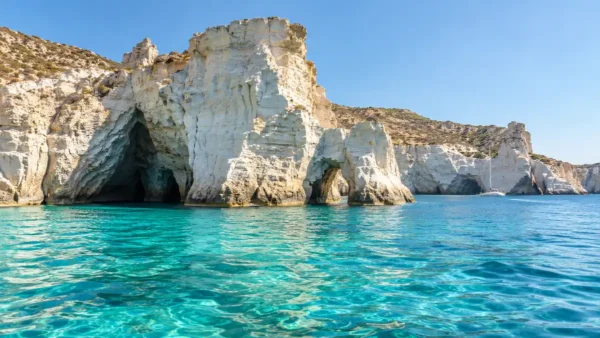
Book the Kleftiko boat trip for the first days of your stay and keep one day free to rebook. Kleftiko is reachable only by boat, and trips are weather-dependent: they cancel on windy days. An early slot with a spare day behind it means one bad forecast costs you a day, not the trip.
In July and August, book before you arrive. Demand is high. A trip booked on the day leaves no room to reschedule if the wind turns. Whatever the booking, check for any message from your boat operator on the morning of the trip, since a windy forecast can cancel it.
Ask how a wind cancellation is handled before you pay: another date, a refund, or both. Knowing the answer in advance makes the spare day easy to use. If the trip runs on the first try, the spare day is still useful. Spend it on a sheltered beach chosen from that morning’s forecast. Pack lotion sunscreen for the boat, since many boats ask passengers to avoid spray. Lotion also works on beach days, so one bottle covers the whole trip.
To see where a boat day fits in a short plan, compare the 2-day Milos itinerary with the 3-day Milos itinerary. For the trip’s place in the overall budget, see what a Milos trip costs.
On a short stay, the spare day is the whole strategy: book the boat for your first full day, because a cancellation on your last day cannot be rescued.
Tours and activities
Book skip-the-line tickets, day trips and local tours with free cancellation on most activities.
You can also browse everything on getyourguide.com.
Tripstou may earn a commission if you book through this link, at no extra cost to you.
What do Milos beaches lack, and what should you bring?
Expect nothing on a Milos beach and pack for a full day out. Many beaches have few or no facilities, which means no food, no fresh water and often no shade. The bag you carry does the work a beach bar does on other islands, so water, food and sun protection travel with you.
A Milos beach bag carries the whole day:
- Water and food: more water than you expect to drink, plus lunch and snacks bought before you leave the tarmac.
- Water shoes: for rock shelves, pebbly entries and shores where sea urchins cling to the stones.
- Closed-toe shoes: for scramble paths such as the ones to Tsigrado and the Sulphur Mines. Sandals slip on loose rock.
- Small backpack: keeps both hands free on rope descents and rocky paths.
- Torch: for sea caves and rock passages, where a phone light drains the battery you need for maps.
- Sun protection and shade: hat, high-factor sunscreen and a light umbrella or sun shelter.
Heat is the other reason to carry this much. Much of Milos is pale, bare rock that throws the sun back at you, and many of the best-known spots have no shade at all. Plan the exposed ones for the morning or late afternoon. Midday is for the beach with your umbrella.
On Milos the shopping stop is part of the beach route. Fill the bag in Adamas, Pollonia or a village minimarket before the drive, because the dirt track ends at the beach and nowhere near a shop.
Do you need cash in Milos?
Yes, keep some cash on you in Milos even though the towns take cards. Cards are common in Adamas and Plaka, but small tavernas, kiosks and beach canteens may be cash-only or have a terminal that fails. A little cash turns those moments into a shrug instead of a problem.
ATMs concentrate in Adamas and the main villages. Withdraw before a remote-beach day. Out on the dirt tracks there is nowhere to top up, and a canteen above a quiet cove may not take cards at all.
For how paying and tipping work across the country, see money and tipping norms in Greece. For the budget itself, see what a Milos trip costs.
The cash you need is for the edges of the day — the canteen above a remote beach, the kiosk on the drive back — so the time to withdraw is the morning in Adamas.
Can you drink the tap water in Milos?
No: drink bottled water on Milos and use the tap for everything else. The island’s supply is partly desalinated and can taste salty, so most visitors buy bottled water for drinking. Tap water is fine for showering and brushing your teeth, so nothing else in your routine needs to change.
Buy water in bulk. Large containers from a supermarket refill your day bottles and cut down on plastic. Restaurants and tavernas serve bottled water at the table. On a beach day, carry more than you think you will drink.
Set up mobile data before you land, too. The wind forecast, maps and any boat-trip updates all live on your phone. Our guide to the best eSIM for Greece compares the options.
What to Book Ahead for Milos in Summer, and What to Leave Flexible
In July and August, book the bed, wheels, boat trip and ferry early; leave the beach choice open. Those four sell out first in peak season, and late bookers get what is left. The beach is the one decision the wind should make for you each morning, so it stays unbooked.
Book ahead:
- Your bed: the base shapes every drive, so settle it first with our guide to where to stay in Milos.
- Your wheels: summer supply is finite, and how to get around Milos sets out which option fits your plan.
- The boat trip: early in the stay, with a spare day behind it.
- The ferry: both directions, fixed before the rest of the plan.
- A sunset table: the best sunset spots in Plaka fill up in peak season, so book where a restaurant takes reservations and arrive an hour or more before sunset where it does not.
Keep flexible:
- Which beach on which day: decided each morning from the wind.
- The spare day: a rebooked boat trip or a sheltered beach, whichever the forecast allows.
- Other evenings: village dinners away from the sunset rush rarely need a booking.
Outside late April to the end of September, much of the island winds down. Shoulder-season trips need less booking, but fewer places are open. The Milos travel guide covers when to visit and how many days to plan.
Wheels are the booking that decides the rest. Without them, a wind change strands you on the wrong coast for the day.
Which first-timer mistakes cost the most on Milos?
The mistakes that ruin a Milos day come from treating it like a resort island. The costly ones are fighting the wind, arriving at rough-access spots unprepared, misreading Sarakiniko’s rocks and underestimating the sun. Each is avoidable with a morning forecast check, proper shoes, a careful entry point and an early start.
Fighting the wind means driving to a beach you chose the night before. If the forecast says north wind, the exposed north coast will be rough. That drive is wasted.
Rough access is part of the island. Several famous spots sit at the end of dirt tracks or below short scrambles:
- Tsigrado: a steep descent by rope and ladder that may be closed without warning. Ask locally on the day before you drive there, and keep a sheltered south-coast beach such as Firiplaka in reserve if access is shut.
- Sulphur Mines and Papafragas: rough or unsurfaced approaches that reward slow driving and closed-toe shoes.
- Sea caves and rock step-downs: dark and uneven underfoot, which is where the torch earns its place.
At Sarakiniko, enter the water from sandy or clear spots. Stinging anemones grow on the darker rocks, and the rock caves have sudden step-downs. Look before you jump.
The sun is the quiet mistake. Pale rock, no shade and a breeze that masks the heat add up by midday. Start early.
Treat the landscape as fragile. Pack out every piece of litter, do not climb or slide on the soft rock formations, and dress modestly in churches. For wider etiquette, see our Greece travel tips, and for the bigger plan around these calls, start with the Milos travel guide.
Did this guide save you time or money? Tripstou is independent and reader-funded — if you'd like to give something back, you can support the site with a crypto contribution of any size.