Three days in Dublin run best in this order: Trinity College and the south-side core on day one, the medieval quarter and then west to Kilmainham Gaol and the Guinness Storehouse on day two, and Howth by DART (or a full day trip) on day three, all from one central base. Days one and two are walked, and no day carries more than two timed sights.
The route is built around three stops that need a booked slot: the Book of Kells Experience, Kilmainham Gaol and the Guinness Storehouse. Each sits on a fixed day, so a missed ticket never pushes the whole plan back. It suits first-timers who want the headline sights with the booking under control and a day left for the sea.
On This Route
Is 3 Days in Dublin Enough? The Route at a Glance
Yes: three days covers Dublin’s headline sights without rushing, because the three book-ahead stops fall on separate days and one day is left for the coast. What it leaves out is a second full day trip and the deeper museum list; those need a fourth day.
| Day | Area | Anchor stops | Book ahead | Time to allow |
|---|---|---|---|---|
| Day 1 | Trinity College and the south side | Book of Kells Experience, Grafton Street, St Stephen’s Green, Temple Bar | Book of Kells Experience (timed entry) | About 90 minutes at the Book of Kells Experience |
| Day 2 | Medieval quarter, Kilmainham and the Liberties | Christ Church or St Patrick’s Cathedral, Kilmainham Gaol, Guinness Storehouse | Kilmainham Gaol (released 28 days ahead); Guinness Storehouse time slot | About 90 minutes at Kilmainham Gaol; at least 90 minutes at the Guinness Storehouse |
| Day 3 | Howth, then the north side | Howth Cliff Path Loop and harbour, a north-side afternoon | Nothing for Howth | About 2 hours on the Cliff Path Loop, plus about 25 minutes each way on the DART |
The order works because the timed stops are pinned to days and the walking does the rest. Day one stays inside the compact south-side core. Day two holds the only stretch of the city that needs a tram or bus, and it groups Kilmainham Gaol with the Guinness Storehouse, the two sights on the western side. Day three leaves the centre entirely.
Two timed sights a day is the ceiling. Everything else on the route (parks, cathedrals, the free national museums) slots into the gaps around them and can be dropped without losing a ticket.
First-timers get the most from this plan. The cost is on day three, which trades another round of city museums for the cliffs at Howth; anyone who prefers to stay in town has a north-side swap ready.
Day 1: Trinity College, the Book of Kells and the South Side on Foot
Day one stays in the compact south-side core and is walked end to end: a timed morning slot at the Book of Kells Experience, then Grafton Street and St Stephen’s Green, one free museum or gallery, and a finish in Temple Bar by the Ha’penny Bridge. It comes first because it is the easiest day to keep after arrival and it has only one timed stop.
Start at Trinity College. The Book of Kells Experience opens early and stays open into the evening, which is why it anchors the first morning: an early slot clears the one booked stop of the day before anything else. The visit begins in the Old Library, with the Book of Kells and the Long Room, and continues in the Red Pavilion digital exhibition, under a minute’s walk away. Allow about 90 minutes in total. Photography is not allowed in the Treasury.
From Trinity, walk down Grafton Street, passing the Molly Malone statue on the way, to St Stephen’s Green. Bewley’s on Grafton Street is the lunch anchor for this stretch. When day one falls on a Saturday, the Temple Bar Food Market in Meeting House Square is the alternative, and it sits right where the day ends.
The afternoon holds one museum, not four. Pick the National Gallery of Ireland, the National Museum of Ireland on Kildare Street, the Museum of Literature Ireland (MoLI) or the Little Museum of Dublin, and fill the rest with Merrion Square or the Iveagh Gardens. Our guide to what to see in Dublin covers each of these in depth, so the choice can be made on the day.
End in Temple Bar and cross the Ha’penny Bridge as the light goes. The first evening begins a few steps away.
Is a walking tour worth it on the first day in Dublin?
Yes, for most first-timers: a walking tour fits the first morning or the slot after the Book of Kells Experience, because it covers the same south-side ground and gives the orientation days two and three rely on. Put it before or after the Trinity slot, never in place of the afternoon museum, and reserve a walking tour once the Book of Kells time is fixed. Returning visitors and anyone who prefers to read the city at their own pace can skip it without losing anything the route depends on.
Tours and activities
Book skip-the-line tickets, day trips and local tours with free cancellation on most activities.
You can also browse everything on getyourguide.com.
Tripstou may earn a commission if you book through this link, at no extra cost to you.
Day 2: The Cathedrals, Then West to Kilmainham Gaol and Guinness
Kilmainham Gaol and the Guinness Storehouse share day two because both sit on the western side of the city, and the cathedrals of the medieval quarter fill the other half. The Kilmainham tour time you manage to book decides which half comes first.
An afternoon tour at the gaol keeps the default sequence below. A morning tour flips it: go west first, take the Storehouse next, and save the cathedrals for the afternoon walk back towards the centre.
- Morning, on foot: the medieval quarter. Christ Church Cathedral with Dublinia beside it, St Patrick’s Cathedral and Marsh’s Library are close together; pick one or two, not all four.
- Midday, move west: Kilmainham Gaol is about 3.5 km from the city centre. Take the Luas Red Line to Suir Road, the nearest stop, or Dublin Bus routes 60 or G1/G2. Brother Hubbard and Joy of Chá are two lunch names worth looking up before you leave the centre.
- Afternoon, the gaol: visits are by guided tour only. Allow about 90 minutes (a one-hour tour plus the museum) and arrive 15 minutes before your tour.
- Late afternoon to evening, the Guinness Storehouse: the day’s natural end, in the Liberties.
On the default order the Guinness Storehouse closes day two, because the building stays open into the evening and the visit itself ends at the Gravity Bar, with its 360° view over the city. It stands at St James’s Gate, Dublin 8, and entry starts mid-morning. The visit is self-guided; allow at least 90 minutes. Slots are 15 minutes wide, and a visitor who misses one is moved to the next. The Guinness Open Gate Brewery is about a four-minute walk away and is for over-18s only.
Kilmainham’s tour time is the fixed point of the day; the Storehouse slot is the one that bends. Book the gaol first, then pick a Guinness slot that leaves room for the move from Kilmainham.
Families and winter visitors need one adjustment. Kilmainham Gaol is not recommended for children under 6, buggies are not allowed on the tour, and the building is very cold in winter, so dress for the inside as well as the street.
Dublin Castle and the Chester Beatty sit beside Christ Church and make an add-on only on a morning with spare time. Check each official site for opening before you plan around them.
Day 3: Howth by DART, or a Full Day Trip?
The recommended day three is a half day in Howth by DART and an afternoon back in town on the north side. Howth needs no tour and no car, and it leaves the afternoon free. A full day trip replaces it only for readers who want countryside more than another day of the city.
- Howth half day, then the north side (the default): suits anyone who wants sea air and a cliff walk without giving up the city entirely. It costs a morning that could have gone to a third museum.
- A whole day in town on the north side: the swap for bad weather or no interest in the coast, built around a whiskey tour and the north-side museums. It gives up the only stretch of open landscape on the route.
- A full day trip: for travelers who came for the Irish countryside. It costs the whole day and the north side with it.
Howth as a half day from Dublin Connolly
Howth is about 25 minutes from Dublin Connolly on a direct Howth-bound DART. Check the destination on the train before boarding: not every northbound DART goes to Howth, some run to Malahide, and the change point between the two lines is Howth Junction.
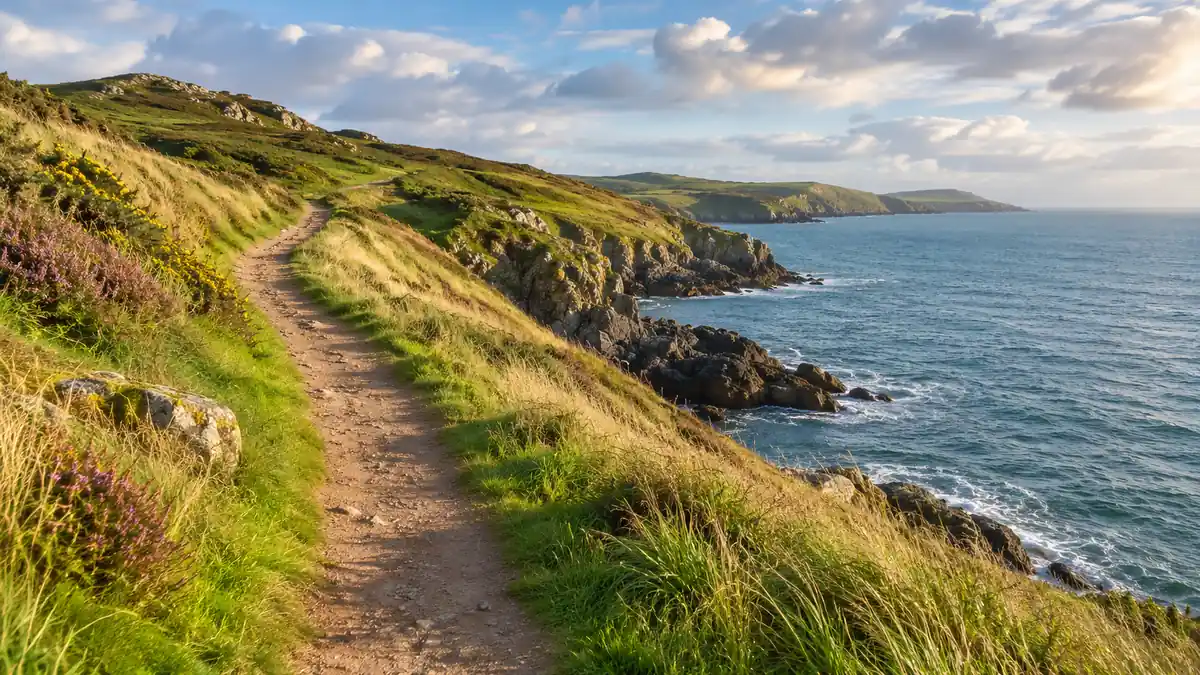
The Howth Cliff Path Loop starts and finishes at Howth railway station, so the walk needs no connection. It runs about 7.8 km, takes about 2 hours and is graded moderate, with 130 m of ascent; follow the green arrows. Back at the bottom, the harbour and Howth Market by the station fill the time before the train, and Baily Lighthouse is the landmark to look for on the headland.
Head back by early afternoon and the north-side half of the day still works. Malahide Castle is the add-on for anyone who would sooner turn the half day into a longer coastal day.
Jameson or Teeling: where a whiskey tour fits
One whiskey stop fits the route, on the day-three afternoon after Howth or as the centre of the in-town swap. Jameson Distillery Bow St. is the first choice, and you can book a distillery tour there before the trip. Teeling Whiskey Distillery is the alternative. Do one, never both, and never stack a distillery onto day two after the Guinness Storehouse.
The rest of that north-side afternoon draws on GPO Witness History, EPIC The Irish Emigration Museum, the Jeanie Johnston and, for open space, Phoenix Park.
When a full day trip is the better day three
A full day trip is the better day three for travelers who will not get another chance to see rural Ireland on this trip. Wicklow and Glendalough, Kilkenny, Newgrange and the Boyne Valley, and the Cliffs of Moher are all whole-day outings from the city. If the Cliffs of Moher is the one you want, you can book this day trip before you travel.
Anyone with a fourth day should keep Howth on day three and move the outing to day four. Our comparison of day trips from Dublin sets the options side by side.
What to Book in Advance for This Route, and in What Order
Three stops need booking, and Kilmainham Gaol goes first: its tickets are the hardest to get and its tour time fixes the shape of day two. The Book of Kells Experience and Guinness Storehouse slots are then chosen around it.
- Kilmainham Gaol, for day two. Tours are released 28 days in advance from midnight Irish time, and tickets are sold only on the official site or heritageireland.ie.
- The Book of Kells Experience, for the morning of day one. Entry is timed and online booking is strongly recommended; take an early slot and allow about 90 minutes.
- The Guinness Storehouse, for day two. Book a time slot on the far side of the gaol tour, leaving at least 90 minutes for the visit.
Howth needs no booking at all.
Do you need to book Kilmainham Gaol in advance?
Yes: there is no walk-up alternative you can rely on. Visits are by guided tour only, tickets are pre-booked online, and third-party tickets are not valid. If the 28-day release has sold out, returns and extra same-day tickets appear on the website from 9.15am on the day. The gaol is open all year except a few days around Christmas, with tours through the day and the last ones in late afternoon.
If no ticket turns up, day two still holds: keep the cathedrals in the morning and give the Guinness Storehouse a longer, unhurried afternoon.
One Central Base, and Three Days Mostly on Foot
Stay in one central base for all three nights, on either side of the Liffey, and walk days one and two. Transport is needed only twice: out to Kilmainham and out to Howth.
Moving hotels on a three-day trip takes time out of a day with no slack in it and buys nothing, because every day of this route starts in the centre. The two transport legs are the Luas Red Line to Suir Road (or the bus) for Kilmainham, and the DART from Connolly for Howth. Short winter days favour doing Howth in the morning.
Arrival from the airport, tickets and cards for public transport, whether the Dublin Pass suits this route and the best time to come are all covered in our Dublin travel guide.
Do you need a car in Dublin?
No: Dublin is walkable for this route, with days one and two done on foot and the two longer legs on the Luas or bus and the DART. A car only becomes a question for onward travel beyond the city.
Hotels and places to stay
Compare hotels, apartments and stays for your dates in one search.
Search hotels and stays on hotels.com →
Tripstou may earn a commission if you book through this link, at no extra cost to you.
Where Do the Evenings Go? Trad Music and Pubs on the Route
Each evening ends where the day does: Temple Bar after day one, the Liberties and the medieval quarter after day two, back in the centre after Howth. One trad-music night is enough to plan; leave the other two open.
Temple Bar is the easiest place to find live music on a first night and also the most crowded, so one evening there is usually plenty. Day two has its end built in, with the Gravity Bar at the top of the Guinness Storehouse, and The Brazen Head is the pub to keep for that night’s dinner and a pint. A guided pub crawl or a music night fits the first or second evening. Never put it the night before an early Kilmainham tour. The things-to-do guide linked under day one carries the wider list of pubs and music venues.
How to Cut the Route to 1 or 2 Days in Dublin
Cut from the end. Two days drops day three; one day keeps Trinity and the Book of Kells, a walk through the medieval quarter and the Guinness Storehouse. Each cut costs something specific: the coast at two days, Kilmainham Gaol at one.
One day in Dublin
One day holds two timed stops and no more. Run it in this order:
- A morning slot at the Book of Kells Experience.
- The south-side walk compressed: Grafton Street to St Stephen’s Green and back towards Temple Bar.
- The medieval quarter on foot, past Christ Church Cathedral and St Patrick’s Cathedral.
- The Guinness Storehouse to finish, ending at the Gravity Bar.
The afternoon museum is the first thing to drop, then Kilmainham Gaol, which needs a tram or bus and a fixed tour time that a single day cannot absorb.
Two days or a weekend in Dublin
Two days means days one and two exactly as written, with day three dropped.
- Keep: the Book of Kells Experience, the south side, the cathedrals, Kilmainham Gaol and the Guinness Storehouse.
- Drop: Howth and the north side.
- On a weekend: put day one on the Saturday for the Temple Bar Food Market, and book the Kilmainham ticket before anything else.
Anyone who wants the coast more than the gaol can swap them: drop Kilmainham, take Howth on the morning of day two, then walk the cathedrals and finish at the Guinness Storehouse.
What to Add with 4 or 5 Days in Dublin
The fourth day goes to a full day trip out of the city, and from the fifth day on the better move is usually to leave Dublin and continue around Ireland. A fourth day lets day three stay as Howth plus the north side, with Wicklow and Glendalough, Kilkenny, Newgrange or the Cliffs of Moher taking a whole day of its own.
A fifth day has two uses. Spend it on the in-town leftovers (the second whiskey stop, Phoenix Park, the museums skipped on day one), or treat Dublin as the first stop of a longer Ireland itinerary and move on.
How This Itinerary Was Put Together
This page plans one three-day route through Dublin: which day each stop falls on, the order within each day and what to book for it. It does not describe the sights themselves, cover arriving and getting around, or compare where to stay.
Built with AI assistance, this itinerary was checked day by day by Alex Perrut, working in tourism since 2015, for the Tripstou editorial team. How that check works is set out in our editorial process.
Official sources consulted: Kilmainham Gaol Museum, Guinness Storehouse, Trinity College Dublin, Discover Ireland, Irish Rail.
Did this guide save you time or money? Tripstou is independent and reader-funded — if you'd like to give something back, you can support the site with a crypto contribution of any size.