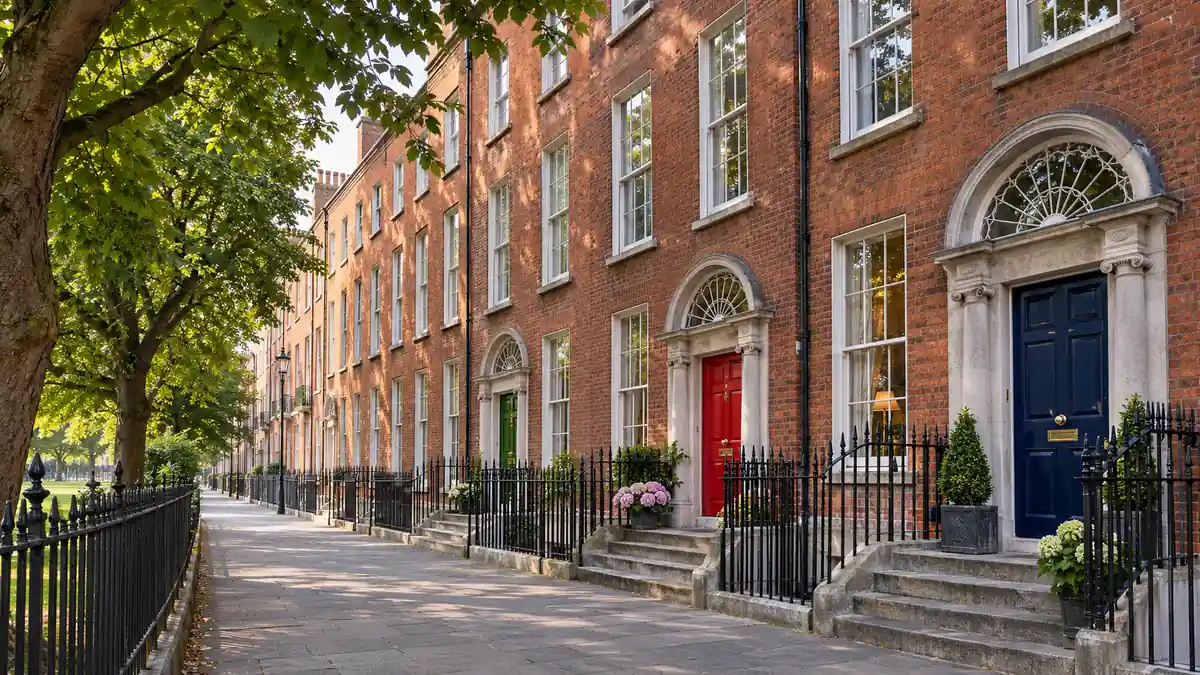
For a first visit to Dublin, Ireland, stay in the south city centre around Grafton Street and St Stephen’s Green, the pocket between Trinity College and the Green. Trinity, Temple Bar, Dublin Castle and the museums are all within walking distance, and the nights are quieter than in Temple Bar. The catch is price: hotel rates here are the highest in the city. If the nightlife is the reason for the trip and noise does not bother you, Temple Bar is the strongest alternative.
The River Liffey splits the city into the Northside and the Southside, and the sight-dense core sits on and just south of the river. Each area below is judged on what decides a booking: the walk to that core, the street noise at night, and the price compared with the centre.
On This Page
Grafton Street and St Stephen’s Green Is the Best Area for a First Visit
Grafton Street and St Stephen’s Green is the best first-visit base in Dublin because the main sights are a walk away in every direction and the Luas Green Line stops on its edge. It is also the most expensive part of the city to sleep in.
By day this is Dublin’s main shopping district. After dark it turns calmer than Temple Bar, which sits closer to the river. Trinity College stands at the top of Grafton Street, Temple Bar and Dublin Castle are a short walk away, and the museums around Merrion Square lie just east of the Green. What to see inside each of those anchors is covered in our guide to things to do in Dublin.
The Luas, Dublin’s tram, stops at St Stephen’s Green, Dawson and Trinity on the Green Line. Most first trips barely need it.
The stay here is mid-range and luxury hotels, from The Shelbourne on the Green to The Westbury just off Grafton Street. Travelers on a tight budget should look elsewhere: the value areas and hostel clusters further down this page stretch the same money over more nights.
Some guides send first-timers to O’Connell Street or the Liberties instead. Both cost less, but O’Connell Street has a rougher late-night feel and sits across the river from most sights, while the Liberties puts a longer walk between you and Trinity. The premium in this pocket pays for itself in transport you never use: a first trip based here runs almost entirely on foot.
Hotels and places to stay
Compare hotels, apartments and stays for your dates in one search.
Search hotels and stays on hotels.com →
Tripstou may earn a commission if you book through this link, at no extra cost to you.
Is Temple Bar a Good Place to Stay in Dublin?
Temple Bar is a good place to stay if the nightlife is the point of the trip, and a poor one if sleep matters. It is as central as Dublin gets, on the south bank of the Liffey, but its streets stay loud late into the night, worst at weekends.
The noise comes from the pubs and the crowds moving between them until well after closing. Drinks in the quarter cost more than in most of the city’s pubs. Temple Bar also holds some of Dublin’s budget hostels, so backpackers share the streets with hotel guests.
A Temple Bar room works when you book it with the noise in mind:
- Ask for an upper floor, where the street sound fades.
- Ask for a room at the back, away from the street.
- Pick weeknights if your dates are flexible, since weekends are the loudest.
Temple Bar Inn and Wren Urban Nest both sit inside the quarter. Anyone who came for the sights more than the pubs sleeps better a short walk south, around Grafton Street, and can still walk into Temple Bar for the evening.
Is It Worth Paying to Stay in Dublin City Centre?
Paying to stay in Dublin city centre is worth it on a short first trip, because central Dublin is compact and walking is the transport. The trade-off is price, and the case weakens on a longer or repeat stay.
Stay central if you have a few days and want every sight on foot. Move out if the trip is long, the budget leads, or you sleep lightly. Several areas a walk or a tram ride away cost less and run quieter. On a longer stay, the extra time getting in each day matters less.
| Area | Suits | Walk to the Trinity–Grafton core | Evenings | What you book there |
|---|---|---|---|---|
| Grafton Street / St Stephen’s Green | First-time visitors | You are in it | Busy by day, quieter at night than Temple Bar | Mid-range and luxury hotels; the city’s highest prices |
| Temple Bar | Nightlife | In the core, on the river | Loud late, worst at weekends | Hotels and budget hostels |
| Merrion Square | Families and light sleepers | Next to it | Quiet | Upmarket hotels; expensive |
| The Liberties | Food, whiskey and history | A walk west | Outside the nightlife core | Newer hotels; better value |
| Portobello | Couples after a quiet neighbourhood | A walk south, or the Luas Green Line | Quiet, residential | Few hotels, mostly on its edges; better value |
| Smithfield / Stoneybatter | A local feel | Across the river to the west; Luas Red Line into the north centre | Local; less polished late at night | A hostel and a few hotels in Smithfield, almost none in Stoneybatter |
A short trip works from one central base with no hotel change. To see how the days fit together from there, follow our 3 days in Dublin itinerary.
Merrion Square: The Quiet Side of the City Centre
The Georgian south-east around Merrion Square is the quiet central choice: next to the core, calm at night, and expensive.
Georgian streets frame the square, and galleries and museums sit on the doorstep. Trinity and Grafton Street are as close as from the verdict area, so nothing is lost on walking. The one gap is the tram: the square is not directly on the Luas, and the nearest Green Line stops are a short walk west.
Among the hotels here are The Merrion and The Mont. This is the family base: of the areas usually suggested for children, it is the only one beside the core, so the museums and the main sights need no transport with kids in tow, and the nights are quiet enough for an early bedtime.
The Liberties and Portobello Trade a Longer Walk for Better Value
The Liberties and Portobello both sit just outside the core, the Liberties to the west and Portobello to the south, and both give better value and a more local food-and-drink scene in exchange for a longer walk to the sights. They suit different travelers: the Liberties those who come for whiskey and history, Portobello couples who want quiet evenings.
The Liberties
The Liberties is Dublin’s oldest quarter and the base for food, whiskey and history. Christ Church Cathedral and St Patrick’s Cathedral are its landmarks, and the Teeling and Roe & Co distilleries both sit inside it.
The Guinness Storehouse at St James’s Gate is in the same Dublin 8 district. A Liberties room puts it within walking distance, so the stout visit becomes a stroll from the hotel door instead of a trip across the city.
Hotel stock here is newer, with the Hyatt Centric The Liberties and the Aloft among the options. The cost is distance: Grafton Street and Trinity are a longer walk east, and the evenings are spent outside the nightlife core.
Portobello
Portobello is quiet, residential and canal-side, with a food scene of its own and few hotels inside it. Most rooms sit on its edges, around Charlemont, Harcourt Street and Kevin Street, where the Maldron Hotel Kevin Street and the NYX Hotel Portobello stand. The Luas Green Line stops at Charlemont and Harcourt, so the core is a short ride or a walk north. Couples who want dinner a few streets from the room and a quiet street afterwards will find it here.
Tours and activities
Book skip-the-line tickets, day trips and local tours with free cancellation on most activities.
You can also browse everything on getyourguide.com.
Tripstou may earn a commission if you book through this link, at no extra cost to you.
Should You Stay in Smithfield or Stoneybatter?
Stay in Smithfield if a local feel matters more to you than being beside the sights. Stoneybatter, next door, is the neighbourhood to eat and drink in, but it has almost no hotels of its own, so Smithfield is where you actually book.
Both sit on the Northside, west of the centre and across the river from it. The Jameson Distillery stands on Smithfield’s main square, so a whiskey visit is a few steps from the hotel; you can book the distillery tour before you arrive. The Luas Red Line stops at Smithfield and runs east into the north city centre.
The square can feel less polished late at night. That matters for a base, because the walk back from dinner is one you make every evening. Beds here run from Generator, a hostel, to The Hendrick, and they suit travelers who want a local quarter and accept a walk or a tram ride to the main sights.
Should You Stay North or South of the Liffey?
Stay south of the Liffey for a first visit, because the sight-dense core sits on and just south of the river. Stay north when budget or transport links matter more; either way, the river is a short walk across.
The Northside is the city north of the Liffey and the Southside the city below it. Most first-trip sights, the main shopping streets and the quieter central hotels are on the Southside.
The north city centre around O’Connell Street is the most central point on the Northside and Dublin’s transport hub, with the Luas, the Busáras bus station and Connolly Station all close by. Gardiner Street holds budget B&Bs. The streets are busy and noisy, and the late-night feel is rougher than in the south centre, which is why this area is not the first-visit pick here. Riu Plaza The Gresham and Wynn’s Hotel both stand near O’Connell Street.
Choose the south if this is your first trip and you want the sights on foot. Choose the north if price decides it, or an early bus or train from Busáras or Connolly.
The two Luas lines map onto the split. The Red Line runs east–west through the Northside, from Heuston past Smithfield and O’Connell – GPO out to The Point in the Docklands. The Green Line runs north–south, from Broombridge and Phibsborough across the river to St Stephen’s Green and on to Ranelagh. Tickets, the Leap card, airport arrival and trip cost are covered in our Dublin travel guide.
Is It Worth Staying Outside Dublin on the DART Coast?
Staying outside Dublin on the DART coast is worth it only for a slower, seaside trip or a longer stay. The coastal towns are quiet and scenic, but hotel stock is limited and every evening in the city ends with the train back.
The DART is the coastal commuter train along Dublin Bay, running from Malahide or Howth in the north to Greystones, Co Wicklow, in the south, with frequent trains.
| Town | Train from the city centre | Staying there |
|---|---|---|
| Sandymount | Seven minutes from Pearse Station | The nearest beach to the city centre |
| Dún Laoghaire | About 25 minutes | Slower pace, little nightlife; Royal Marine Hotel, Mulgrave Lodge (hostel) |
| Howth | Just under half an hour | Seaside, at the northern end of the line |
| Malahide | About half an hour | Seaside, at the northern end of the line |
| Dalkey | About half an hour | Quiet seaside village; few places to stay |
Sandymount and Clontarf are the closest-in options: Sandymount has the nearest beach to the city centre, and Clontarf looks out on Bull Island and Dollymount Strand from the northern shore of the bay. Dún Laoghaire is the pick of the group for a slower pace with little nightlife. A base beyond Dublin altogether is a different decision, covered in our Ireland travel guide.
Other Dublin Areas Worth Knowing Before You Book
These areas come up in most searches for a Dublin base. Each suits one kind of trip, and none beats the south city centre for a first visit.
- Docklands / Grand Canal Dock: modern waterside hotels, such as The Spencer Hotel, built around business travel. It is busy midweek and quiet at weekends, and the Luas Red Line serves its north bank east of the centre, from George’s Dock to The Point.
- Ballsbridge and Donnybrook: the leafy embassy district, upmarket and quiet. The core is a long walk or a bus or DART ride away.
- Ranelagh and Rathmines: a village feel with cafés and pubs, and Ranelagh sits on the Luas Green Line. The Devlin is one hotel there; the area suits a stay built around neighbourhood evenings more than a sightseeing first trip.
- Phibsborough and Drumcondra: Northside residential streets, calmer and better value, with Drumcondra’s traditional B&Bs and Phibsborough on the Luas Green Line. Maldron Hotel Parnell Square and Dublin One are on this side of the city.
Where Dublin’s Hostels and Cheapest Rooms Cluster
Dublin’s cheapest beds cluster in two places: around Temple Bar, and on Gardiner Street near Connolly Station on the Northside. Hostels are almost all central, so a tight budget does not push you out to the suburbs.
- Temple Bar: Abigail’s and Oliver St John Gogarty’s.
- Near Grafton Street: Kinlay House and Ashfield.
- Smithfield: Generator.
- Near St Patrick’s Cathedral: Garden Lane Backpackers.
- Gardiner Street: budget B&Bs, a short walk from Connolly Station and Busáras.
- Dún Laoghaire, by the DART: Mulgrave Lodge.
Each cheap cluster has its cost. Temple Bar beds come with the same late-night noise as its hotels, and Gardiner Street’s surroundings are busier and rougher late at night, though the transport hub is on the doorstep. For calmer value further out, Drumcondra’s B&Bs and Phibsborough trade a longer trip in for quieter streets. A hostel bed near Grafton Street is the cheapest way to sleep in Dublin’s priciest pocket and keep its walk to everything.
Which Dublin Area Fits Which Traveler
The south city centre around Grafton Street and St Stephen’s Green is the default for a first visit; every other kind of trip has an area of its own.
- First-time visitors: Grafton Street / St Stephen’s Green, because everything worth seeing is on foot.
- Nightlife: Temple Bar, where the bars are downstairs.
- Families: Merrion Square, for quiet nights beside the core and the museums.
- Couples after a quiet neighbourhood: Portobello, for canal-side streets and dinner close by.
- Food, whiskey and history: the Liberties, with distilleries and both cathedrals on the doorstep.
- Budget and backpackers: the north city centre around Gardiner Street, for the cheapest B&Bs and the transport hub.
- A local feel: Smithfield / Stoneybatter, a Northside quarter where the city eats and drinks.
- Upmarket and quiet: Ballsbridge, the leafy embassy district.
- Seaside and a slower pace: Dún Laoghaire on the DART, by the sea and away from the late nights.
- Modern hotels and business trips: Docklands / Grand Canal Dock, with new waterside hotels on the Luas Red Line.
Dublin Stay Questions, Answered
Are there areas to avoid staying in Dublin?
No central area of Dublin is off the list, but two come with a trade-off to book around. Temple Bar stays loud late into the night, worst at weekends, so light sleepers rest better a short walk south around Grafton Street. The streets around O’Connell Street and Gardiner Street on the Northside are busy and have a rougher late-night feel than the south centre: they make sense for a tight budget or an early train from Connolly, less so for a first visit.
Is Dublin walkable from a city-centre hotel?
Yes. Central Dublin is compact, so from a hotel between Temple Bar, Grafton Street and Merrion Square the main sights are on foot, and you do not need a car to get around the city. Base yourself further out, in Ballsbridge or on the DART coast, and each day starts with a bus, Luas or DART ride into the centre.
When should you book a hotel in Dublin?
Book as early as you can for St Patrick’s festival week and for weekends with a big concert or match, when prices rise and rooms run short across the city, Ballsbridge included. Outside those weeks, ordinary booking lead times are enough.
How This Area Guide Was Put Together
This guide helps you decide which part of Dublin to book a room in, weighing the walk to the central sights, the noise at night and the relative price; it does not rank hotels, and it is not a full Dublin guide, a pub guide or a day-by-day plan.
Alex Perrut, working in tourism since 2015, went over these area picks for the Tripstou editorial team after they were drafted with AI assistance; how that review works is set out in our editorial process.
Official sources consulted: Visit Dublin first-time guide, Visit Dublin neighbourhoods, Luas, Iarnród Éireann, Tourism Ireland.
Did this guide save you time or money? Tripstou is independent and reader-funded — if you'd like to give something back, you can support the site with a crypto contribution of any size.