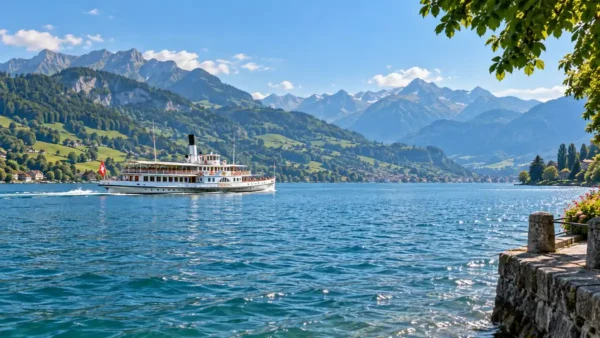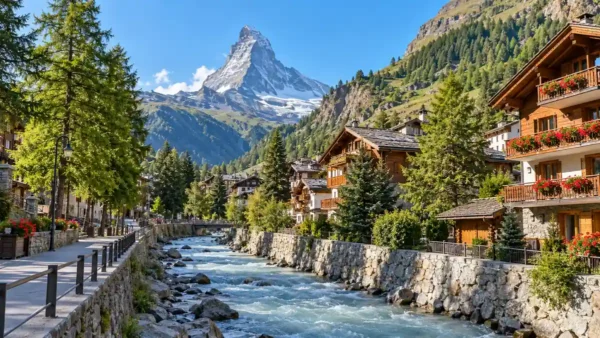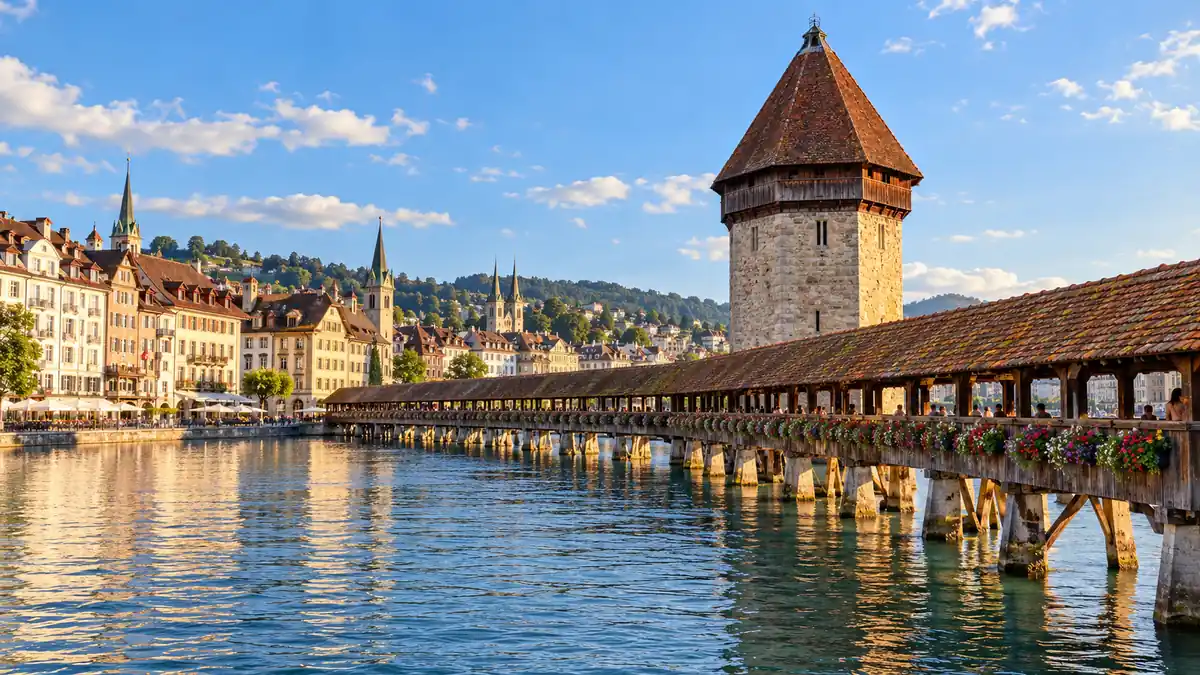
Give Switzerland about one week by train: seven nights across three bases, arriving at Zurich and riding on to Lucerne, then the Jungfrau region, then Zermatt. Sleep two nights in Lucerne, three in the Jungfrau region and two in Zermatt, then fly out of Geneva, or ride back to Zurich when a round-trip ticket works out better. The route suits first-timers without a car; with only five nights, drop Zermatt and keep the other bases.
Start with the map. Zurich and Geneva are the two main air gateways, at opposite ends of the country. Lucerne, the Jungfrau region and Zermatt sit between them, and trains link every one of those stops. Each leg below explains where you sleep, why the stop sits in that position and how you move on. If your dates are shorter or longer, the final section gives the cut-first and add-first rules for five or ten nights. This is a rail route from start to finish; drivers have a separate road-trip plan.
What This Swiss Route Covers, and Who Reviewed It
This page plans one rail route through Switzerland, Lucerne to the Jungfrau region to Zermatt over about a week, and settles its length, stop order and nights per base. It is not a Swiss destination guide, a list of things to do at each stop, a hotel roundup or an all-purpose trip planner.
Alex Perrut, working in tourism since 2015, reviewed this route and its rail facts for the Tripstou editorial team; the sources below confirm the timed scenic-train legs. Produced with AI assistance; the editorial process page says how that review runs.
Official sources consulted: Switzerland Tourism, State Secretariat for Economic Affairs (SECO), Zentralbahn, Glacier Express.
The Recommended One-Week Switzerland Route by Train, Leg by Leg
The route runs Zurich into Lucerne, then the Jungfrau region, then Zermatt, with trains linking every leg. You spend two nights in Lucerne, three in the Jungfrau region and two in Zermatt. Day 8 is the departure: a train via Visp to Geneva Airport for an open-jaw flight, or back to Zurich Airport.
- Days 1–2: Lucerne — soft landing from Zurich Airport
- Days 3–5: Jungfrau region — the long Alpine base
- Days 6–7: Zermatt — Matterhorn finale, then depart
Days 1–2: Lucerne, the soft landing
You land at Zurich Airport and take a train of under an hour to Lucerne, where you spend two nights. Zurich itself is not a base on this route. The airport station puts you on the move soon after you clear arrivals.
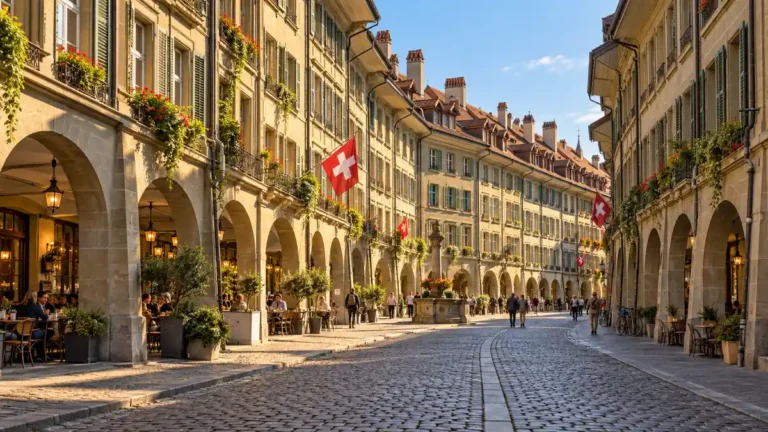
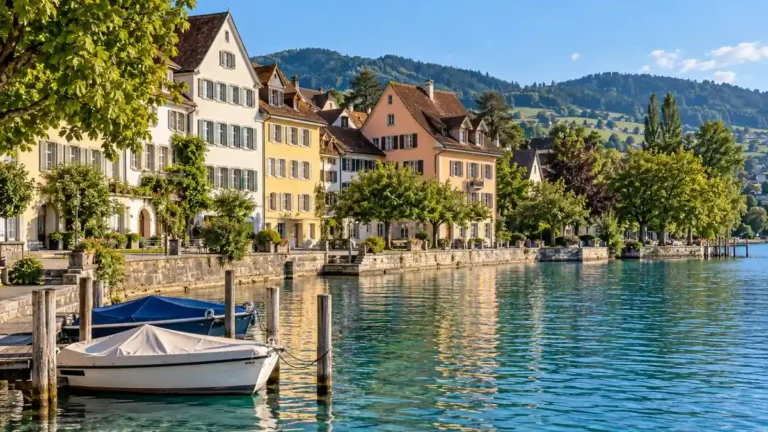
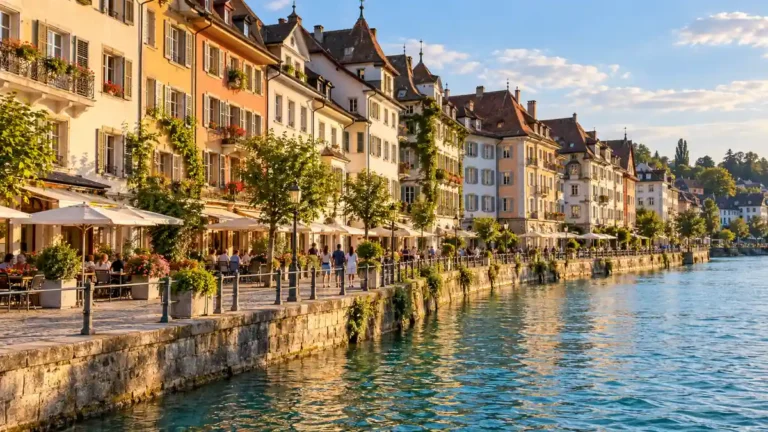
Lucerne sits first because it is the gentlest start after a long-haul flight. It gives you a lake, a compact old town and mountain views without altitude, cable-car planning or a change of valley. Two anchor moments are enough: the covered wooden bridges of the old town and one lake-side mountain excursion on the second day. For an hour-by-hour plan, follow the two days in Lucerne itinerary.
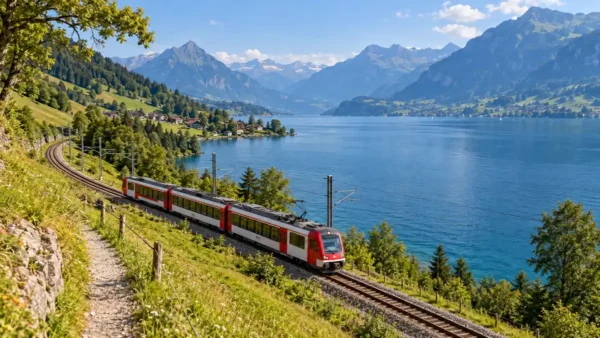
The onward move is the Luzern–Interlaken Express to Interlaken Ost: 1 hour 50 minutes, running hourly. A seat reservation is optional. The Swiss Travel Pass and the GA travelcard both cover it.
Days 3–5: Jungfrau region, the long base
You arrive at Interlaken Ost, the rail gateway to the Jungfrau region, and either stay in Interlaken or ride a short local train up to a valley village. Either way, you sleep three nights in the same bed.
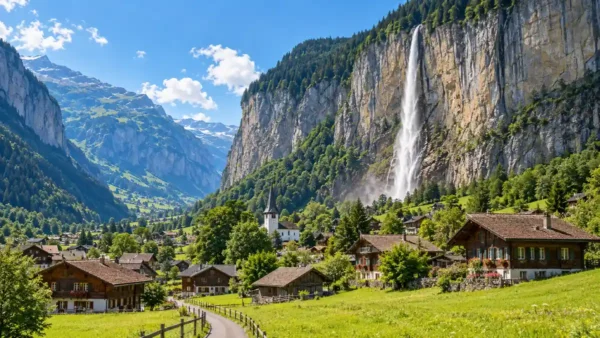
This is the longest stay because every day trip in the region returns to the base you left that morning. Plan one summit day, one valley day and one flexible day held back for weather. The Lauterbrunnen valley, with its waterfalls and cliff walls, is the natural valley day. Which summit excursion to pick is a choice the Jungfrau region guide settles. Three nights mean a cloudy morning costs nothing: you swap days.
The onward move to Zermatt takes a little over two hours by train, with a change at Visp. A mid-morning departure leaves the afternoon free in the car-free resort.
Days 6–7: Zermatt, the Matterhorn finale
You reach Zermatt, a car-free resort at the head of its valley, by train from Visp, and you spend two nights there. Private cars do not run in the village, so the train is the natural way in.
Zermatt closes the route because it is a dead end: you arrive and leave through the same valley. The Matterhorn view is the payoff. Two nights give you one full day and a realistic clear-sky chance. Keep the plan to two or three moments — a Matterhorn viewpoint excursion, a walk through the old village lanes and an evening look at the peak as the light changes. Zermatt nights are among the most expensive on the route, one more reason to stop at two.
Day 8 is a travel day via Visp, either to Geneva Airport for the open-jaw exit or back to Zurich Airport. Book an afternoon or evening flight.
Tours and activities
Book skip-the-line tickets, day trips and local tours with free cancellation on most activities.
You can also browse everything on getyourguide.com.
Tripstou may earn a commission if you book through this link, at no extra cost to you.
Fly Into Zurich and Out of Geneva, or Return to Zurich?
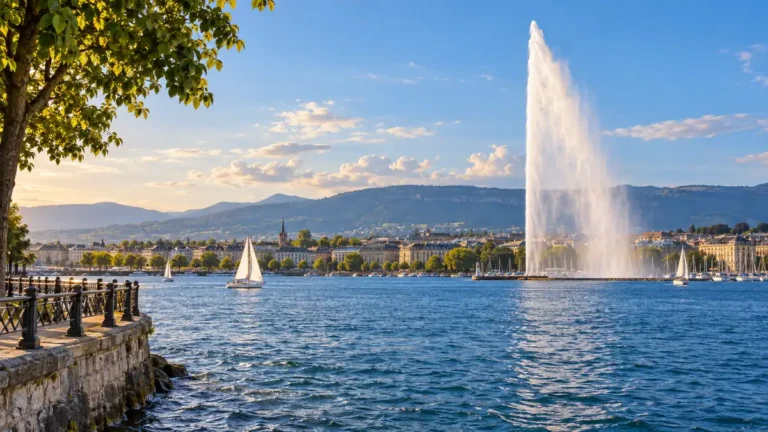
Fly into Zurich and out of Geneva: the route runs west, and open-jaw saves a day of backtracking. Lucerne is under an hour from Zurich Airport, while Zermatt sits at the Geneva end of the country. A Zurich round-trip still works when open-jaw fares are poor, at the cost of a long final travel day.
The geography decides it. Zurich Airport sits close to Lucerne, the first base. Zermatt’s rail exit runs down through Visp, on the line toward Lake Geneva and Geneva Airport. Flying home from Geneva means the last train of the trip keeps moving forward instead of retracing the whole country.
- Open-jaw (into Zurich, out of Geneva): suits most long-haul travelers; the tradeoff is that two one-way legs can price above a simple return.
- Round-trip Zurich: suits travelers whose return fare is clearly cheaper; it costs a long day 8 crossing back from Zermatt.
Compare both ticket types before you fix the order. One cheap fare can flip it. If Geneva is your only practical arrival, run the same route in reverse (Zermatt first, Lucerne last, Zurich out). Every leg stays on the rail network and the nights per base do not change, but you face the longest transfer on arrival day, tired from the flight, and Lucerne becomes the gentle finish. If you want city time before the mountains, add a night or two in Zurich at the start; two days in Zurich covers that plan.
Where to Base in the Alps: Interlaken or a Valley Village?
Base for all three Alpine nights in one place: Interlaken for connections, a valley village for the mountains themselves. Interlaken is the rail-hub choice for first-timers who want easy trains in every direction. Grindelwald, Lauterbrunnen, Wengen or Mürren suit travelers who want mountain mornings at the door.
One base beats moving around the region. Day trips return to the same bed, luggage stays put for three nights, and the weather-buffer day only works when you can swap plans without packing. Wengen and Mürren are car-free, which suits rail travelers who never need parking. Interlaken’s limit is plain: it is a town on the valley floor, not a mountain village.
- Interlaken: pick it for the quickest trains in and out and the widest choice of beds; you ride up to the mountains each day.
- A valley village: pick it for peaks outside the window and quiet evenings; every onward connection starts with a short local train down.
Which village fits you, and how the summit options compare, is what the guide to choosing a base in the Jungfrau region works through in detail.
How the Train Legs Connect, and Why Rail Beats a Car on This Route
Four train legs cover the whole route, and the longest between bases is a little over two hours. Zurich Airport to Lucerne takes under an hour, and the hourly Luzern–Interlaken Express needs 1 hour 50 minutes. Interlaken Ost to Zermatt changes at Visp. The finale is car-free, so rail is the mode.
| Leg | Journey time | What to know |
|---|---|---|
| Zurich Airport to Lucerne | Under an hour by train | Board at the airport station on arrival day |
| Lucerne to Interlaken Ost | 1 hour 50 minutes, hourly departures | Luzern–Interlaken Express; seat reservation is optional |
| Interlaken Ost to Zermatt | A little over two hours | One change of train at Visp |
| Zermatt to Geneva or Zurich Airport | A full travel day via Visp | Book an afternoon or evening flight home |
None of the regular legs needs a reservation, and the Luzern–Interlaken Express is a scenic train you can board without one. Pack light. You carry your own bags on and off every train, and the Visp change is the only mid-leg transfer.
Rail wins because the Alpine half of the route is car-free. Zermatt, Wengen and Mürren keep private cars out, so a rental would sit parked on a valley floor for most of the week. The route is also pass-friendly: its regional trains are covered by the Swiss Travel Pass, and the Swiss Travel Pass guide works out whether one pays off against single tickets. If you plan to drive anyway, the Switzerland road trip itinerary follows a different route built for the road.
Who This Switzerland Route Suits, and the Zermatt Tradeoff
This route suits first-time visitors with about a week who want Switzerland’s classic lakes and peaks by train. Its one real tradeoff is Zermatt: a dead end that adds a travel leg and some of the most expensive nights on the route, in exchange for the one mountain everyone recognises.
Zermatt costs you twice. You enter and leave through the same valley, so the departure day runs back through Visp before it goes anywhere new. Its nights are among the most expensive on the route; for how that fits a full budget, see what a week in Switzerland costs. The return is the Matterhorn, and nothing else on the route replaces it.
Weather makes or breaks that payoff. Summit excursions reward the clear-sky months, yet no month guarantees a view. The flexible day in the Jungfrau base is the route’s insurance, and two Zermatt nights give one full clear-sky chance.
- First-timers with a week: run the route exactly as written.
- Returners and slow travelers: drop to two bases and stay longer in each.
- Families and travelers with heavy bags: start from the two-base, five-night version below and add nights to it.
Anyone who has already seen the Matterhorn gains more from a fourth Jungfrau night than from a second trip up the Zermatt valley. For everything outside the route — when to go, money, food — use the Switzerland travel guide.
One Week Is the Right Length for a First Switzerland Itinerary
About one week — seven nights — is the right length for a first Switzerland itinerary by train. It fits three bases without a single one-night stop and leaves one flexible mountain day for weather. Five nights is the floor, with one base cut; ten nights adds a buffer night and a Lake Geneva exit, not a fourth region.
Each length buys something different, and the step from one tier to the next is measured in nights at a base, never in extra stops:
- 5 nights: Lucerne and the Jungfrau region as a Zurich round-trip, with Zermatt dropped. It buys two unhurried bases and one summit attempt. It fits a short first visit, often added to a wider trip through Europe.
- 7 nights: all three bases, flying into Zurich and out of Geneva. It buys the lakes, the Jungfrau valleys and the Matterhorn with a weather day in hand. It fits most first-timers.
- 10 nights: the same three bases plus an extra Alpine night and two nights on Lake Geneva before the Geneva flight. It buys a second clear-sky chance and a slower finish. It fits slower travelers and anyone chasing summit views.
Length buys weather insurance, not more stops. Summit days only pay off under clear skies, and an Alpine forecast can turn overnight. That is why extra nights go into existing bases first. A fourth region would add a travel day without adding a better view of the peaks you came for.
How to Adapt This Route with Fewer or More Days
With fewer days cut Zermatt first; with more days add an Alpine buffer night, then two nights on Lake Geneva. The Lucerne, Jungfrau region, Zermatt order never changes. Zermatt is the first cut because it is the dead end and the costliest base, while extra nights go where they buy weather.
- 5 nights: Lucerne for two nights and the Jungfrau region for three, as a Zurich round-trip. Losing Zermatt removes the dead-end leg and the route’s priciest beds in one move. Cutting the Jungfrau region instead is the wrong cut: it is the route’s reason to exist.
- 6 nights: keep the five-night plan, or bring Zermatt back and cut the Jungfrau base to two nights. That version loses the weather-buffer day.
- 10 nights: first add one night in the Jungfrau region as weather insurance, then two nights on Lake Geneva, in Montreux or Lausanne, on the way to the Geneva exit. On a round-trip ticket, Zurich city nights are the alternative add.
- Two weeks (12–14 nights): the Glacier Express from Zermatt to St. Moritz, about 8 hours, opens the east of the country. Its seat reservation is mandatory and carries a surcharge, so book the seat reservation well ahead in summer. Lugano and Ticino come next. Keep the extra Jungfrau night; leaving Zermatt eastward swaps the Geneva exit for a flight home from Zurich, so book a round-trip ticket. To weigh these add-ons against each other, see the best places to visit in Switzerland.
| Trip length | Bases and nights | Airports | What is cut or added |
|---|---|---|---|
| 5 nights | Lucerne two nights, Jungfrau region three nights | Round-trip Zurich, no Geneva leg | Zermatt cut as the dead-end, costliest base |
| 7 nights | Lucerne two, Jungfrau region three, Zermatt two | Into Zurich, out of Geneva | The full recommended route, nothing changed |
| 10 nights | Lucerne two, Jungfrau four, Zermatt two, Lake Geneva two | Into Zurich, out of Geneva | Alpine buffer night plus a Lake Geneva finish |
Did this guide save you time or money? Tripstou is independent and reader-funded — if you'd like to give something back, you can support the site with a crypto contribution of any size.