The Jungfrau region, Lucerne and Zermatt are the best places to visit in Switzerland on a first trip. The Alps earn most of the nights; Zurich or Geneva cover arrival, and Bern, Montreux and Lugano are contrast picks. Swap a second mountain base for Lugano or the Lake Geneva Riviera when warm lakeside days matter.
Switzerland looks compact on a map, and that is why most first trips try to cover too much of it. The useful question is narrower: which two to four places belong on this trip, and which of them earn a night? This guide answers both. It sorts eight picks into three groups (Alpine bases, cities, and the lakes and Italian-speaking south) and gives each one the reason it made the list, the traveler it suits and a plain verdict: stay the night or visit as a day trip. The Alpine bases carry most of the overnight verdicts, because the mountains are at their best at the start and end of the day. The cities and lakeside towns earn their place as arrival stops and contrast picks. Route order and day counts live in their own guides. This page is about choosing.
The Jungfrau Region, Lucerne and Zermatt Are the First-Trip Core
Build a first trip to Switzerland around the Jungfrau region, Lucerne and Zermatt. Each gives a different Alpine experience: valley villages under the Eiger, Mönch and Jungfrau; a lakeside town with mountain day trips on its doorstep; and the Matterhorn above a car-free village. Together they cover what most first-time visitors come to Switzerland to see.
The rest of this page groups eight picks by trip style. Alpine bases are where you sleep for the scenery. Cities are where you land and leave. The lakes and the Italian-speaking south are the contrast stops that change the feel of a trip once the mountains are covered. Each pick gets one reason, one condition and one verdict on whether it deserves a night.
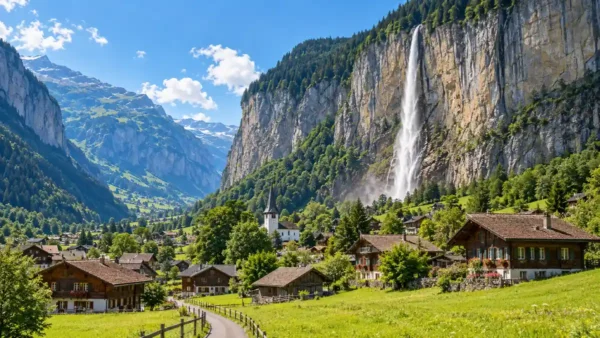
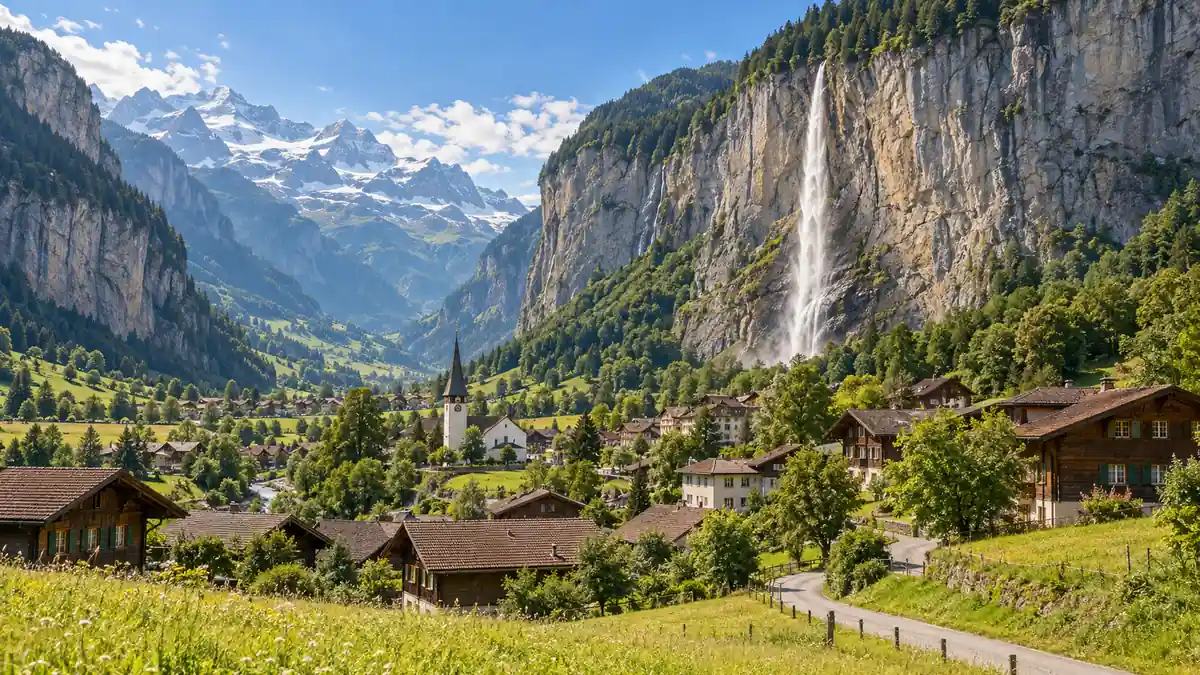
The Lauterbrunnen valley and the wider Bernese Oberland are the most beautiful part of Switzerland for most travelers. The valley holds dozens of waterfalls, and the Eiger, Mönch and Jungfrau rise straight above it, so the view starts at the hotel door. The catch is that the country’s most recognisable mountain sits elsewhere. The Matterhorn belongs to Zermatt. If one peak matters more to you than a whole valley, Zermatt is your answer.
Two kinds of traveler should bend the core. City-first travelers can trade Zermatt for Bern and keep Lucerne as their mountain fix. Warm-weather travelers can swap one Alpine base for Lugano or the Lake Geneva Riviera. Neither swap breaks the trip.
Three Alpine bases is a ceiling, not a target. On a week-long trip, Lucerne plus one valley base already shows you the Alps, and Zermatt only earns its place when the Matterhorn itself is on your list.
Best Alpine Bases: Jungfrau Region, Zermatt and Lucerne
The Jungfrau region, Zermatt and Lucerne are Switzerland’s best Alpine bases, and all three deserve a night. They differ in what surrounds you: the Jungfrau region puts you in valley villages under three famous peaks, Zermatt puts one iconic mountain above town, and Lucerne gives you a real lakeside town with peaks as day trips.
Jungfrau Region (Lauterbrunnen, Grindelwald, Wengen, Mürren)
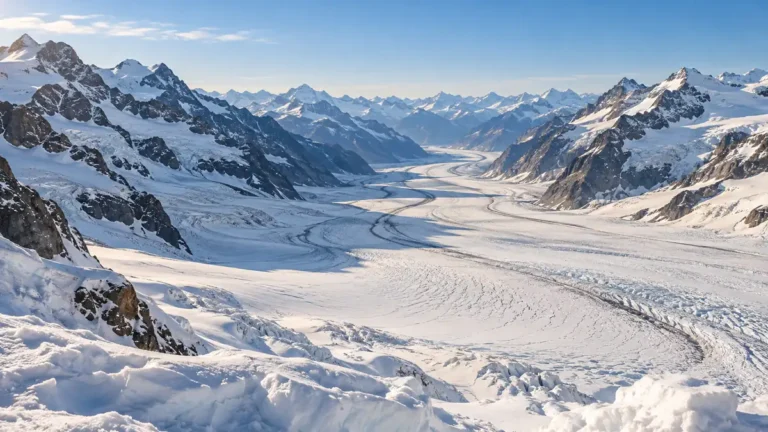
The Jungfrau region is the mountain heartland of the Bernese Oberland and the strongest first-trip base in Switzerland. Its centre is the Lauterbrunnen valley, with dozens of waterfalls below the Eiger, Mönch and Jungfrau, and the car-free villages of Wengen and Mürren on the slopes above.
Here the village itself is the view. Lauterbrunnen or Wengen suit most first-timers. Grindelwald faces the Eiger side, and Mürren, at the foot of the Schilthorn, is the quiet car-free height. Interlaken, between Lake Thun and Lake Brienz, is the transit gateway and not the place to spend your nights. Our Jungfrau region guide covers which valley village to base in.
This is the pick for waking up inside the Alpine scenery instead of travelling to it each morning, and it deserves two to three nights in the valley.
Zermatt
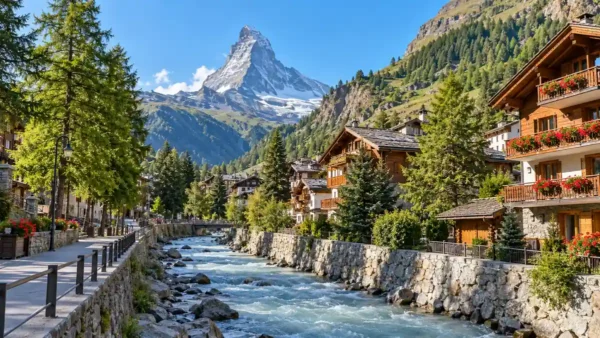
Zermatt is a car-free village below the Matterhorn, and that one mountain is why it made the list. Few places are so completely organised around a single peak, and the whole village faces it.
Is Zermatt worth visiting? Yes, if you give it two nights and the Matterhorn is a goal in itself. No, if you have under a week and the Jungfrau region is already in your plan, because the two overlap more than they differ. High viewpoints depend on clear weather, so check the best time to visit Switzerland before fixing dates. For the village and its viewpoints, see what to do in Zermatt.
Choose it when seeing the Matterhorn up close is the image you came to Switzerland for, and give it those two nights: a day trip shortchanges it.
Lucerne
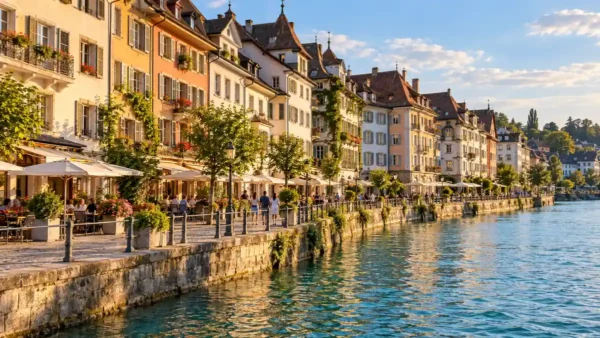
Lucerne is a lakeside old town with mountain day trips close at hand, and its case rests on being a real town first. An evening there works whatever the weather does on the peaks.
It is the only Alpine base on this page that also works as a city, with an old town, a lakefront and evening life after the mountain excursions end. That makes it the softest landing for travelers who want the Alps without committing to a village. The tradeoff is distance. The big peaks are excursions here, not the view from your window. The guide to things to do in Lucerne covers the town and its day trips. Base here for mountain days and town evenings from the same hotel; Lucerne deserves a night, often two.
Tours and activities
Book skip-the-line tickets, day trips and local tours with free cancellation on most activities.
You can also browse everything on getyourguide.com.
Tripstou may earn a commission if you book through this link, at no extra cost to you.
Lucerne or Interlaken: Which Is the Better First Alpine Stop?
Lucerne is the better first Alpine stop for most travelers, because it is a town worth enjoying in itself. Interlaken wins only as the gateway to the Lauterbrunnen valley, where you should sleep anyway. Pick Lucerne for evenings and short mountain trips; pass through Interlaken on your way into the Jungfrau region.
The split is town versus transit base. Lucerne has an old town and a lakefront that hold an evening on their own. Interlaken is organised around onward connections, so its evenings feel more functional.
Interlaken does win in two cases. Its position between Lake Thun and Lake Brienz suits travelers who want both lakes and the mountains from one flat base. Families with small children or travelers with limited mobility often prefer its level streets to a steep valley village.
Neither case is a reason to skip the valley. If the Jungfrau region is on your list, sleep in Lauterbrunnen or Wengen and treat Interlaken as the place you change trains; the guide to the Jungfrau region explains the village choice.
Choosing Interlaken over Lucerne usually means choosing a train hub over a town, and few first trips need to sleep in a hub. Interlaken still earns one night when you arrive late or leave early, because its connections make onward travel easy.
Best Cities in Switzerland: Zurich, Geneva and Bern
Zurich, Geneva and Bern are Switzerland’s best cities, though they work as gateways more than trip anchors. Zurich and Geneva are where most visitors arrive and leave, so each earns a night at a trip’s edges. Bern is the exception: its arcaded Old Town makes it the one city that rewards a night for its own sake.
Basel is the strongest city not profiled here, an art-and-architecture alternative for travelers who put museums first. For money, language and the transport overview, the Switzerland travel guide covers the country basics.
A city earns a night on a Swiss trip only when you would choose it over another evening in the mountains. Bern is the one that usually passes.
Zurich
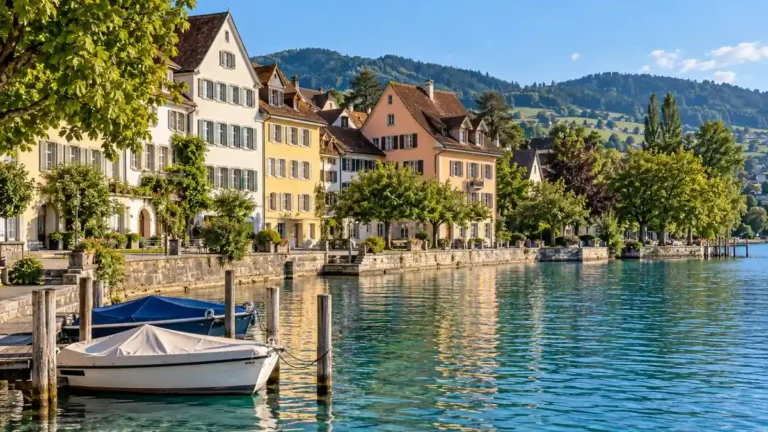
Zurich is Switzerland’s largest city and its main arrival point, with a lakefront and an old town that fill a first or last evening well. Its case is simple: it is the easiest place to begin and end a trip.
Its strength is convenience. Zurich is where flights land and train connections fan out, so a night here removes friction from the first and last days of a trip. It is pleasant without being a destination in its own right for most first-timers. That is fine. The Zurich guide covers how to fill an arrival evening or a spare half-day.
If you land in Zurich, give it one night at each end of the trip, an easy first or last night before the mountains; no separate day trip from Lucerne is needed.
Geneva
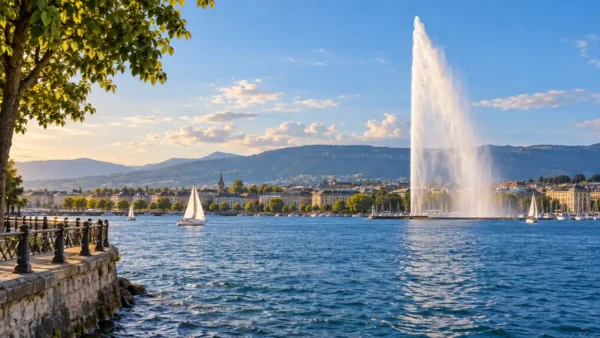
Geneva is a French-speaking city on Lake Geneva and the western gateway to Switzerland. It earns its place as the natural arrival point for trips that start on the French-speaking side of the country.
Position is the point. Geneva opens the Lake Geneva Riviera and the French-flavoured side of the country, which no other city on this list does. It suits short stays. A lakefront walk and an evening are enough for most first-timers before moving on. The guide to things to do in Geneva covers what fits into a day. When your trip starts in the French-speaking west or centres on the Lake Geneva shore, Geneva gets one night, or a day on arrival before moving east.
Bern
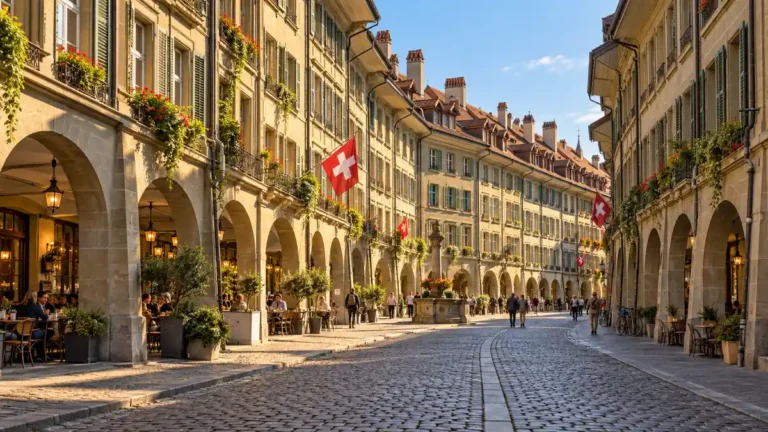
Bern is Switzerland’s capital, the federal city, and its arcaded Old Town is a UNESCO World Heritage Site. It is the only city in this group that feels like a destination in itself.
The draw is pace. Bern is compact and unhurried, and the covered arcades keep the Old Town easy to walk in any weather. A rushed day trip sees the streets but misses the evening, when the city is at its calmest. It suits travelers who prefer a lived-in capital to a postcard stop. It also sits well with Lucerne or the Jungfrau region.
For the one city that earns a night on its own merits, Bern is the choice: a night beats a rushed day trip.
Best Lakes and the Italian South: Montreux and Lugano
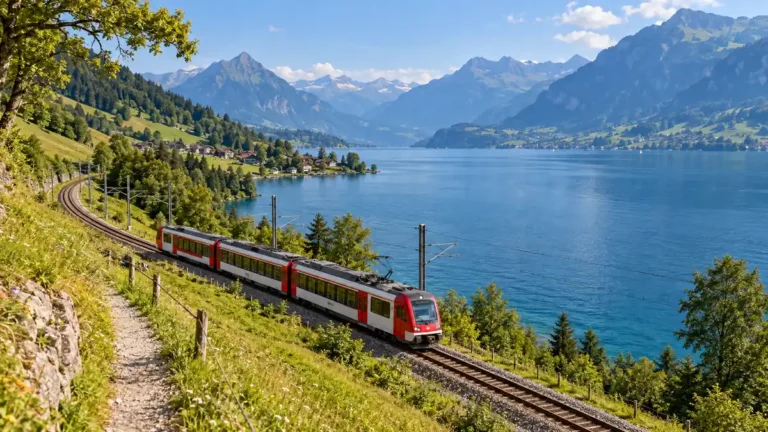
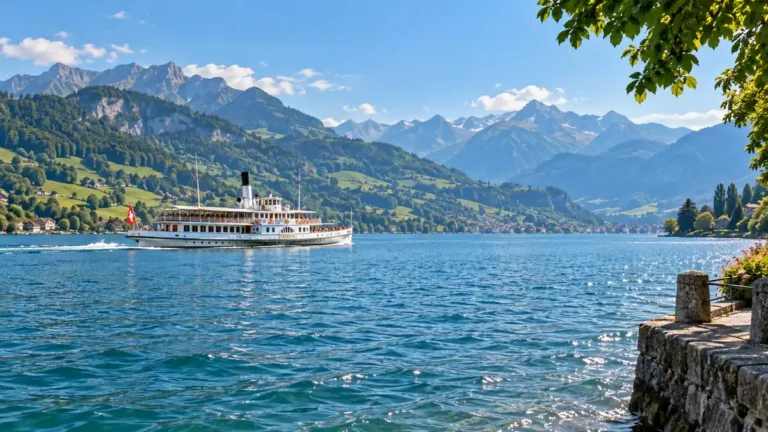
Montreux and Lugano are the contrast picks: warm lakeside stops instead of a second mountain base. Montreux brings the French-speaking Lake Geneva shore, with a castle and vineyard terraces; Lugano brings Italian-speaking Ticino and a Mediterranean feel. Either one shifts the mood of a trip that has already covered the Alps.
Both work best late in a longer trip. On a one-week first visit built on the Alps, they compete for nights the mountains need. On ten days or more, one of them is a strong way to end.
Choose by side of the country. Montreux fits a trip that enters through Geneva, and Lugano fits one that ends in the south or continues into Italy.
Montreux and the Lake Geneva Riviera
Montreux is a resort town on the Lake Geneva Riviera, and Château de Chillon on the shore is its signature sight. It is the gentlest lake stop in the country, with a promenade along the water and the mountains across the lake.
Montreux lies close to the Lavaux vineyard terraces above Lake Geneva, a UNESCO World Heritage Site, so castle, promenade and vineyards fit one unhurried day. This is the slow lakeside pause on the French-speaking side. It sits within easy reach of Geneva, where most visits to this shore begin. The pace is the attraction, and a loose day suits it better than a schedule.
For a slow lakeside day with a castle and vineyards on the French-speaking side, treat it as a day trip from the Geneva end of the lake, and give it a night only on a slower trip.
Lugano
Lugano is a lakeside city in Italian-speaking Ticino, and it is here for its Mediterranean mood. Italian on the street and a lakefront promenade make it the warm counterpoint to the Alpine bases.
What sets it apart is that it feels like another country. No other pick changes the language, the food and the pace this completely. Is Lugano worth it? Yes, as the last stop of a longer trip or for travelers who want warmth more than altitude. No, on a one-week first trip built on the Alps, where it takes a night the mountains need. It suits Italy-bound trips too.
When the trip should end somewhere warm, Italian-speaking and slower, give Lugano a night or two at the end of a longer trip, and skip it on a short one.
Which Places Deserve a Night and Which Work as a Day Trip?
Sleep where the scenery is: the three Alpine bases deserve your nights. Zurich and Geneva earn one night as arrival or departure cities, and Montreux works as a day trip from the Geneva end of the lake. Bern is the exception among cities, because its Old Town rewards an evening. Lugano earns nights only on longer trips.
| Pick | Best for | Night or day trip | Pairs well with |
|---|---|---|---|
| Jungfrau region | Travelers who want to sleep inside the scenery | Two to three nights in a valley village | Lucerne, Zurich, Bern or Lugano |
| Zermatt | Travelers set on seeing the Matterhorn up close | Two nights; a day trip shortchanges it | Geneva, Montreux or Lucerne |
| Lucerne | Mountain days with town evenings from one base | One night, often two | Zurich, Bern or the Jungfrau region |
| Zurich and Geneva | Easy arrival and departure nights at either end | One night at the start or end | Zurich with Lucerne; Geneva with Montreux or Zermatt |
| Bern | A capital worth an evening on its own | A night beats a rushed day trip | Lucerne or the Jungfrau region |
| Montreux and Lugano | Warm lakeside contrast once the mountains are covered | Montreux a day trip; Lugano nights on longer trips | Montreux with Geneva; Lugano with the Jungfrau region |
Trip length moves these verdicts. On a short trip, keep the nights in one or two Alpine bases and treat every city as a transit stop. Past ten days, Bern and Lugano start earning their nights. The Switzerland itinerary sets the order and the day counts.
Count nights backwards from the mountains: give the Alpine bases what they need first, and only then ask whether a city or a lake still deserves one. A single night in a valley village is usually what changes the trip.
How to Pick Two to Four Places for One Trip
One Alpine base is the minimum for a first trip, and two is the sweet spot. Add a city only as the arrival night, and add a lake or southern stop only when the trip runs past ten days. This keeps the nights where the scenery is and stops a short trip from turning into constant packing.
By trip length, about five days fits two places, an arrival city and one Alpine base; a week to ten days fits three, adding Lucerne, Zermatt or Bern; and two weeks fits four, with room for a warm finish in Lugano or Montreux.
These combinations work well together:
- Zurich, Lucerne and the Jungfrau region: the classic first trip, with one arrival city, one town base and one valley base.
- Geneva, Montreux and Zermatt: the western version, pairing the French-speaking lake shore with the Matterhorn.
- The Jungfrau region and Lugano: mountain-and-warm contrast for travelers who want altitude and Italian-speaking lakes on one trip.
- Lucerne, Bern and the Jungfrau region: a city-leaning trip that still sleeps in the mountains.
Some pairings fight each other. Zermatt and the Jungfrau region on a trip under a week spend scarce nights on two versions of the same high-Alpine experience. Montreux and Lugano together stretch a short trip across opposite sides of the country.
Season changes the mountain picks more than the others, since high viewpoints depend on weather; the guide to the best time to visit Switzerland covers season fit. Order and days are a separate decision. The Switzerland itinerary covers route order and how many days each place gets.
A third mountain base is the quickest way to spoil a Swiss first trip: Zermatt and the Jungfrau region each need two nights to pay off, and splitting a week between them plus Lucerne leaves every stop half-seen.
Who Put This Shortlist Together
This page is a curated choice among eight places in Switzerland, judged on traveler fit and on whether each one earns a night; it is not a full Switzerland travel guide, a day-by-day itinerary or a list of things to do.
Alex Perrut, working in tourism since 2015, read through these picks and their night-or-day verdicts for the Tripstou editorial team, after a first draft written with AI assistance; the editorial process page describes each step.
Official sources consulted: Switzerland Tourism (MySwitzerland), State Secretariat for Economic Affairs (SECO) tourism policy.
Before You Lock In Your Picks
What are the most underrated places in Switzerland?
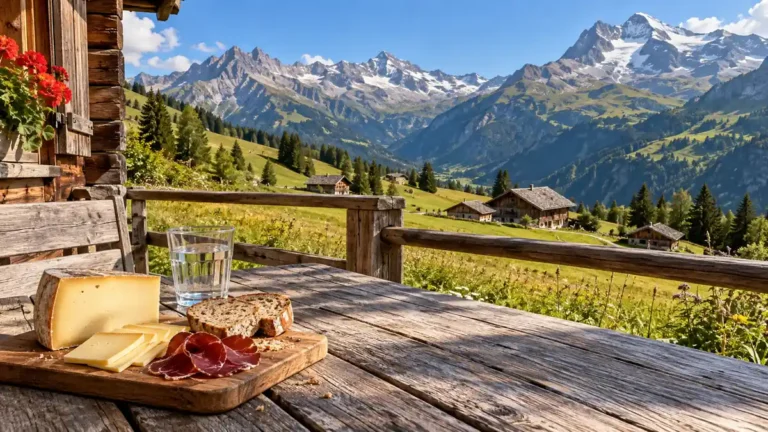
Appenzell, Thun, Gruyères and Mürren rank among the most underrated places in Switzerland for first-time visitors. Appenzell has painted house fronts set among green eastern hills. Thun is a castle town on its own lake near Interlaken. Gruyères is a small hilltop town famous for its cheese. Mürren is a quiet car-free village high above the Lauterbrunnen valley.
Which places in Switzerland work without a car?
Every place on this shortlist works without a car. Trains reach all of them, with mountain railways and cable cars covering the final climb to the high villages. Zermatt, Wengen and Mürren are car-free, so drivers leave the car below anyway. A car only earns its keep for remote valleys and small villages off the main lines.
Did this guide save you time or money? Tripstou is independent and reader-funded — if you'd like to give something back, you can support the site with a crypto contribution of any size.