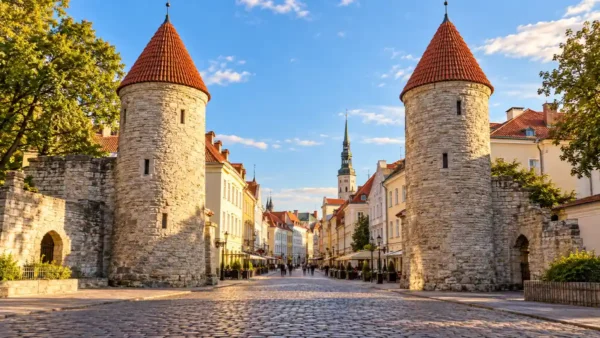
Start with the walk from Town Hall Square up Toome Hill to the cathedral ruins: that half-day is the part of Tartu nobody should skip, and the Estonian National Museum (ERM) comes next. Time decides the rest: a day covers the Old Town core, and a night adds the museum, Karlova, Supilinn and the evening. Families, or anyone caught by rain, should head to the AHHAA Science Centre instead.
Tartu is Estonia’s university city, and most travelers weigh it as an add-on to a trip built around Tallinn. A compact Old Town core can be walked in half a day, while a handful of sights need their own block of time, and the most important of them sits outside the centre.
That leaves the real question: does Tartu deserve a night, or does a long day trip from Tallinn do the job? This page answers it first, then sorts the city’s sights into themed groups: the Old Town and Toome Hill core, the museums worth extra time, the neighbourhoods where Tartu feels local, and the rainy-day and family picks. It closes by matching each group to a type of traveler.
Is Tartu Worth an Overnight Stay or Just a Day Trip?
A long day trip covers the Old Town core and one museum; a night makes ERM comfortable. Staying over buys what a day from Tallinn cannot: the neighbourhoods at an easy pace, the evening of a student city, and no clock-watching before the return. Day-trippers lose the most when they arrive on a Monday.
The choice comes down to how much of the city you want beyond the core:
- Half a day: the walk from Town Hall Square to Toome Hill and the river. Enough for travelers passing through on a wider route.
- A full day: the core plus one museum, either the KGB Cells or ERM. This is the long day trip from Tallinn, with an early start.
- One night: the core, ERM without rushing, Supilinn or Karlova, and the evening. Slow travelers and history travelers who want both museums belong here.
Two days lets you see both museums, the neighbourhoods and AHHAA, which suits slow travelers and families.
Monday is the trap. ERM is closed on Mondays and the KGB Cells open Tuesday to Saturday only, so a Monday visit becomes an Old Town and neighbourhoods day. Plan museum days Tuesday to Saturday.
A Tartu night earns its keep only if it includes ERM. Travelers who would skip the museum anyway lose little by heading back to Tallinn the same evening. Travelers short on time who only want medieval streets may find Tallinn’s Old Town covers that already.
Tartu works well as a long day trip, and the logistics of getting there, along with how it compares with other excursions, sit in the guide to day trips from Tallinn. For where a Tartu night belongs in a longer trip, see the Estonia itinerary.
Tartu’s Old Town and Toome Hill Are the Half-Day Core
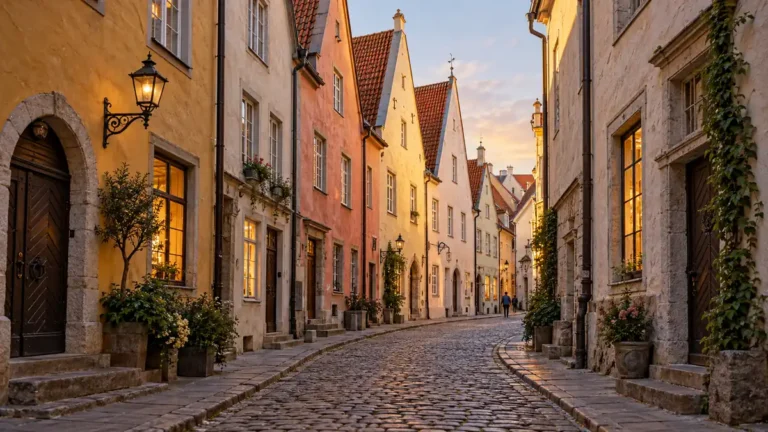
The walk from Town Hall Square up Toome Hill is Tartu’s essential half-day. Everything a first visit needs sits inside it: the square and its fountain, the university quarter, the cathedral ruins and the river. The route is compact, flat at the bottom and short on the climb, so it works on foot with no planning.
On a day trip, the University Museum inside the cathedral choir competes with ERM for the same afternoon. Most visitors can give real time to only one of them, so decide which before you start walking.
Town Hall Square and the Kissing Students
Town Hall Square is Tartu’s front room and the natural first stop. The Town Hall closes its upper end, and the Kissing Students fountain stands in front of it. That fountain is the city’s best-known image and its default meeting point.
The detail that sets the square apart sits on its edge. One of the houses facing the square leans visibly, tilted enough to look like a trick of the camera. Look for it. The square is also where the student city shows itself first, with café terraces, bikes and a younger crowd than Tallinn’s Old Town draws. Give it your first hour in Tartu, while you are still getting your bearings.
Toome Hill and the Cathedral Ruins
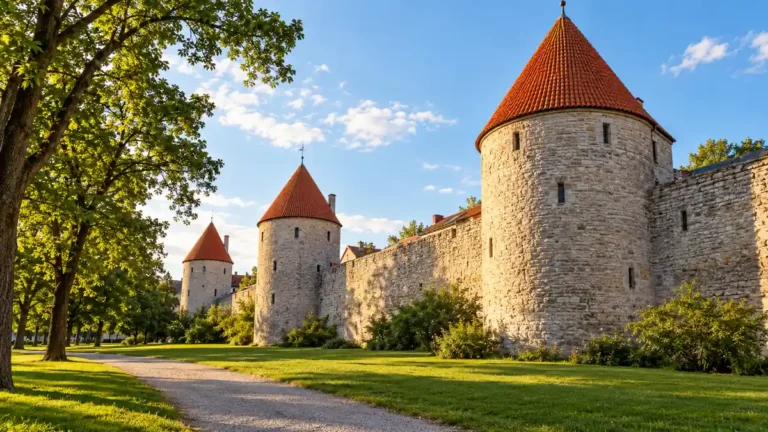
Toome Hill is the wooded rise behind the Old Town, and its cathedral ruins are Tartu’s most striking sight. The medieval cathedral has stood in ruins since the 16th century and was never rebuilt. Its shell now sits inside a park of paths, bridges and monuments.
Here the ruin is half a museum. The University of Tartu Museum occupies the cathedral’s restored choir, so the ruin and the university’s story come in one visit. The Old Observatory, a branch of the same museum, stands on the same hill. Nothing else on this page combines both. Come with time to go inside, since history and a hilltop park arrive here in a single stop.
St John’s Church and the Emajõgi Riverfront
St John’s Church is the Old Town’s most unusual building, and the Emajõgi riverfront is the easiest way to end the loop. The brick church is known for its terracotta figures, small sculpted heads set into the brickwork that reward a slow look.
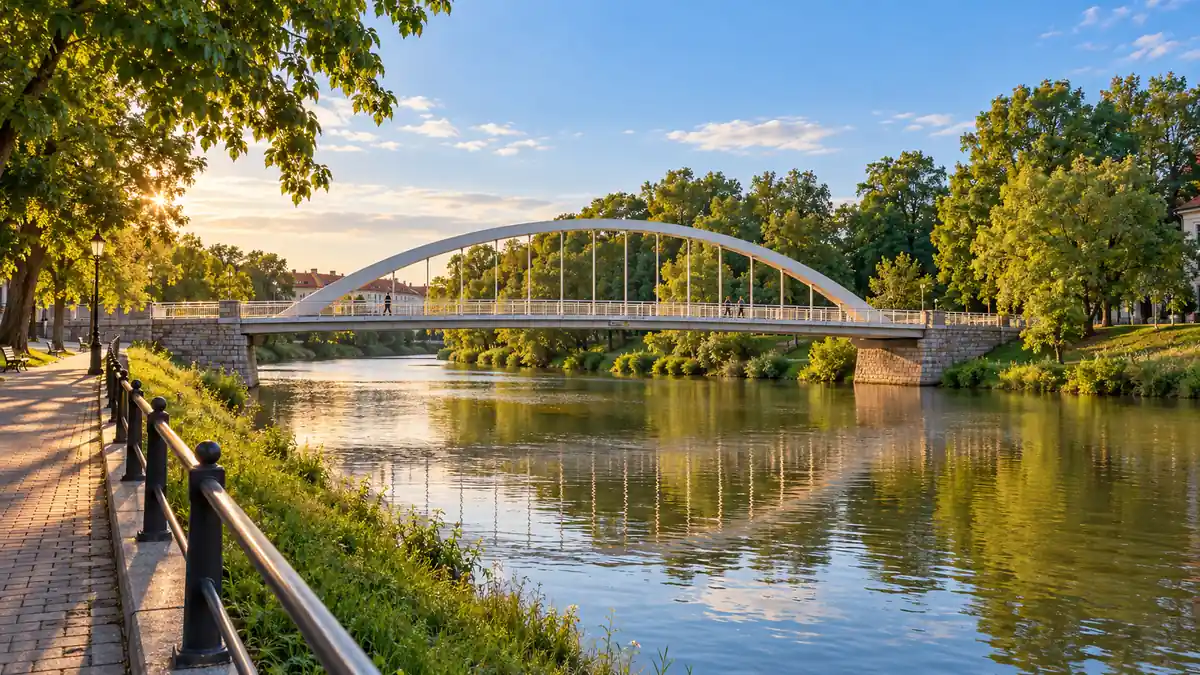
These two stops are about pace. Neither has an exhibition to work through. The church takes a few minutes to read, and the river turns the Old Town’s edge into open space, with paths along the water and the city’s bridges in view. Together they close the core without adding another ticketed hour. Keep them for the end, when the Old Town walk should finish slowly, by the water.
Two Museums Justify the Extra Time: ERM and the KGB Cells
The Estonian National Museum covers Estonia at national scale; the KGB Cells show the Soviet decades at street level. These two museums are the ones worth building time around in Tartu. Neither fits inside the half-day Old Town loop, so each needs its own slot in the plan.
Plan museum days Tuesday to Saturday:
- Estonian National Museum (ERM): closed on Mondays.
- KGB Cells Museum: open Tuesday to Saturday, closed on Sundays and Mondays.
Sunday splits the two: ERM is open, the KGB Cells are not. A day-tripper who cares about Soviet history gets more from the KGB Cells than from a hurried ERM visit. ERM only pays off with unhurried hours.
Estonian National Museum (ERM)
The Estonian National Museum is Estonia’s largest museum and the strongest reason to give Tartu more than a few hours. Its permanent exhibition, Encounters, carries the country’s story through the everyday lives of the people who lived here.
What sets ERM apart is breadth, and the price of that breadth is location. The museum sits outside the centre, so a visit takes about half a day once the trip out and back is counted. That cost decides who should go. It belongs to travelers with a full day or a night, not to a rushed walk between trains.
KGB Cells Museum
The KGB Cells Museum occupies former cells in a basement at Riia 15b and is run by Tartu City Museum. It made the list for its directness: the Soviet decades are told in the rooms where prisoners were held, which no exhibition hall can reproduce.
The contrast with ERM is scale and tone. This is a compact, sober visit within walking distance of the centre. It fits a day-trip timetable where ERM would not, and it pairs naturally with the Old Town core. The catch is the calendar, since it opens Tuesday to Saturday only.
Tours and activities
Book skip-the-line tickets, day trips and local tours with free cancellation on most activities.
You can also browse everything on getyourguide.com.
Tripstou may earn a commission if you book through this link, at no extra cost to you.
Supilinn, Karlova and Street Art: Where Tartu Feels Local
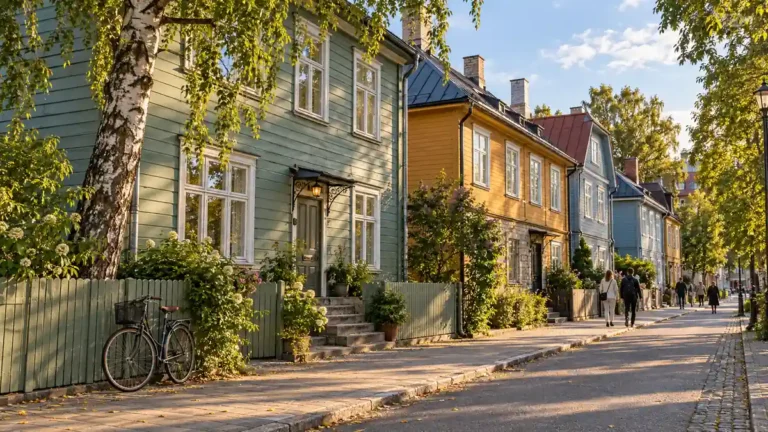
Supilinn and Karlova are the quiet wooden neighbourhoods that show Tartu as a student city. They are where the town stops performing for visitors: residential streets of old wooden houses, small cafés and murals on side walls. Neither has a single headline sight, so they reward a slow walk and an open schedule.
Karlova is where the wooden houses and the street art overlap. A visitor with one free hour gets both Tartu textures by staying in that district instead of crossing town.
Supilinn and Karlova Wooden Districts
Supilinn and Karlova are Tartu’s best-known wooden districts and the clearest contrast with Tallinn’s stone Old Town. They earn their place because they show daily life, not monuments.
The two feel different. Supilinn, whose name translates as Soup Town, sits by the river north of the Old Town, with low wooden houses and a village calm. Karlova lies south of the centre and feels busier and more lived-in, its wooden houses mixed with corner cafés. One district is enough on a short visit. Both suit a slower stay, when there is time to wander without a target.
Tartu Street Art and Aparaaditehas
Tartu’s street art turns an ordinary walk into an open-air gallery, with murals spread across the centre and Karlova. Many of the large wall paintings sit on residential buildings, away from the obvious tourist streets.
Aparaaditehas anchors the scene. This former factory complex is now Tartu’s creative quarter, with studios, small shops and TYPA, a museum of printing and paper. Beyond it, the art lives outdoors and mixes with the city’s working streets. Nothing needs booking. The walk can be as short or as long as the light allows, which makes it the pick for anyone who would trade a museum ticket for a camera walk.
AHHAA Is the Rainy-Day and Family Pick
AHHAA Science Centre is where to go in Tartu with children or in rain. It is the largest science centre in the Baltics, with hands-on exhibits and a planetarium, large enough to fill an afternoon. For adults without children, the University of Tartu Botanical Garden and its greenhouses make the calmer wet-weather option.
Both picks sit close to the river and the centre. A day that turns wet can switch from the Old Town loop to either one without losing travel time.
AHHAA Science Centre
AHHAA Science Centre is Tartu’s most reliable plan B and its strongest family pick. Exhibits are built to be touched, tested and played with, and the planetarium adds a seated show when legs get tired.
It works in any weather and at almost any age, because everything is indoors. The building stands near the river at the edge of the centre, so it slots into a day without a long detour. Allow a full afternoon, because children rarely want to leave sooner. Adults travelling alone may find an hour or two enough.
University of Tartu Botanical Garden
The University of Tartu Botanical Garden is the gentle counterpoint to AHHAA: a central garden whose greenhouses keep the visit going when it rains. It sits close to the Old Town and the river, an easy add to the walking loop.
Quiet is the draw. Where AHHAA is loud and busy, the garden offers paths, plant collections and warm glasshouses, and a short stop works as well as a long one. It suits adults without children who need an hour indoors. It also gives the core loop a green pause between museums.
Which Tartu Picks Suit Which Traveler?
First-timers should take the Old Town core; history travelers add ERM and the KGB Cells; families go to AHHAA. Slow travelers belong in Supilinn and Karlova. Tartu splits cleanly by interest, so nobody needs to see everything, and the right group of picks depends on who is travelling more than on how long they stay.
Time still sets the limit. The table below shows which combinations fit a long day trip and which only work with a night.
| Traveler type | Picks to prioritise | Fits a day trip? | Main tradeoff |
|---|---|---|---|
| First-time visitor | Town Hall Square, Toome Hill, St John’s, the riverfront | Yes, comfortably on foot | ERM usually drops out of the day |
| History and Soviet era | KGB Cells Museum first, then ERM | One museum fits; both need a night | The trip out to ERM costs half a day |
| Families or a rainy day | AHHAA, then the Botanical Garden | Yes, with the Old Town trimmed | An indoor afternoon replaces the walking loop |
| Slow traveler | Supilinn, Karlova, street art and the river | Rushed in a day; best overnight | Fewer headline sights, more everyday atmosphere |
Mixed groups rarely need a compromise. The Old Town core suits everyone, and the afternoon can split between AHHAA and the KGB Cells, which sit on opposite sides of the same small centre. Tartu is one stop in a larger country, and the Estonia guide covers planning Estonia as a whole, from Tallinn outward.
Behind This Tartu Shortlist
This is a curated pick of Tartu’s sights, from Toome Hill to AHHAA, chosen by the time each one needs and the traveler it suits. It is not a full Tartu city guide or an itinerary, so getting there, where to stay and where to eat are left out.
Produced with AI assistance, this shortlist then went to Alex Perrut, working in tourism since 2015, who checked its museum opening days against the sources below for the Tripstou editorial team. The editorial process page sets out each step.
Official sources consulted: Visit Estonia, Estonian Ministry of Economic Affairs and Communications, Estonian National Museum, Tartu City Museum.
Did this guide save you time or money? Tripstou is independent and reader-funded — if you'd like to give something back, you can support the site with a crypto contribution of any size.