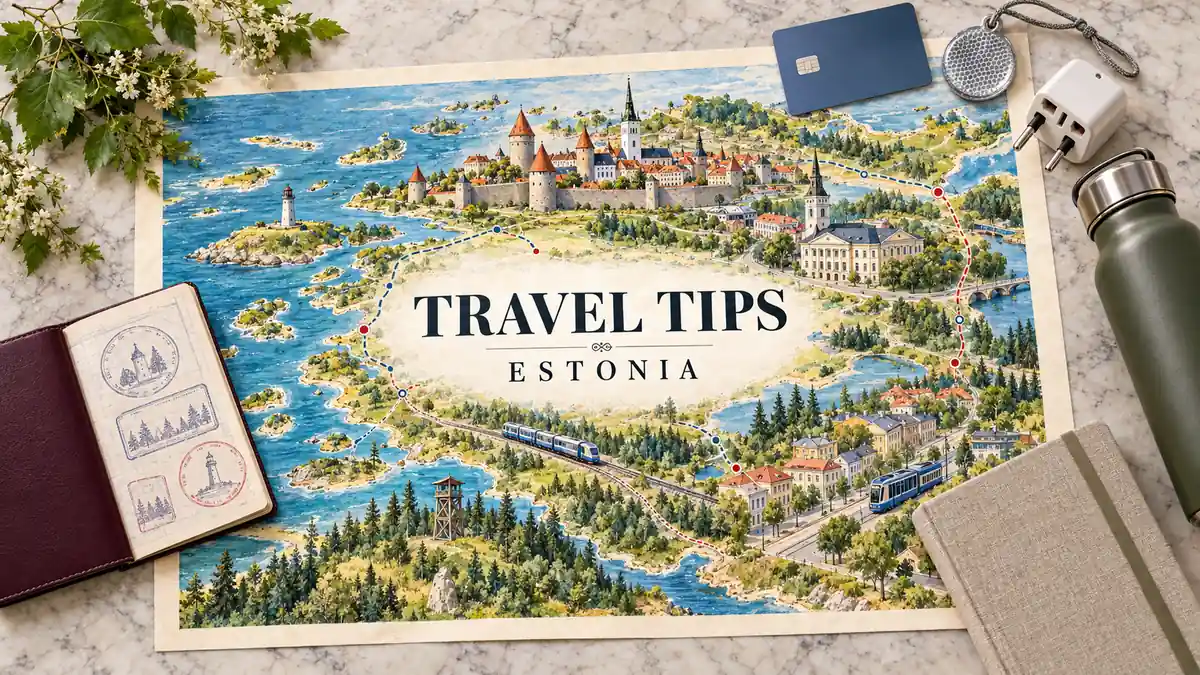
Estonia is one of the easiest countries in Europe to operate in as a visitor. Cards work almost everywhere, English is widely spoken, and train tickets book online in minutes. The adjustments that matter are few and specific: wearing a reflector when you walk on dark roads, tapping a bank card on Tallinn transport instead of hunting for cash, buying Elron tickets before you board, and leaving Tallinn for at least part of the trip.
This page resolves how to pay, how to move between cities, which local rules catch visitors out, how to handle language and etiquette, and the day-one basics such as water, plugs and the emergency number. It closes with the first-timer mistakes worth avoiding. It does not cover seasons, route planning, food or the detail of Tallinn’s fares. Each of those has its own guide, linked where it fits.
Quick Answer
Estonia runs on contactless cards and English, so visitors mainly need to learn a few local rules. Travelling beyond Tallinn means Elron tickets bought before boarding, buses to Pärnu and a reflector for dark walks. Carry a small cash float, tap a bank card on Tallinn transport, and plan one stop beyond the capital.
Trust Layer
Tripstou planning guide for travelers resolving one travel decision. Covers the main variable, traveler context, and practical tradeoffs.
Produced with AI assistance and reviewed by Alex Perrut, working in tourism since 2015, for the Tripstou editorial team. See our editorial process for details.
Last factual review: October 1, 2026.
Official sources consulted: Visit Estonia, Estonian Ministry of Economic Affairs and Communications.
Key Takeaways
- Estonia runs on contactless cards and widely spoken English, so a visitor’s real adjustments are a handful of local rules and habits.
- Pedestrians must wear a reflector when walking in the dark on unlit roads, and a cheap clip-on from a shop covers it.
- Buy Elron tickets online, in the app or at a station machine before boarding; reach Pärnu from Tallinn by bus, not train.
- On Tallinn trams and buses, tap a contactless bank card on the validator each time you board, since drivers take no cash.
- Tipping in Estonia is optional: around 10% rewards good table service, rounding up suits taxis, and a small cash float handles both.
- Treating Estonia as a Tallinn city break is the classic first-timer mistake; Tartu, the islands and the national parks complete the trip.
Table of Contents
How should you pay in Estonia: cards, cash or tips?
A contactless card covers nearly every payment in Estonia; carry only a small cash float. Shops, cafés, museums, taxis and Tallinn’s transport validators all take cards. Cash still helps for tipping and the odd market stall, and tipping itself is optional, so most visitors go days without touching a note.
Estonia uses the euro. Visitors from the eurozone need no exchange at all, and everyone else can withdraw a modest amount from a bank ATM or simply pay by card from the first coffee. Keep it small.
- Cards: Visa and Mastercard contactless work in shops, cafés, restaurants, museums and most taxis.
- Cash float: useful for tipping, hotel housekeeping, and some market stalls or rural cafés.
- Tipping: optional; around 10% for good table service; round up for taxis.
- Price level: cheaper than the Nordics, with Tallinn Old Town priced for visitors.
The price gap with Finland narrows inside Tallinn’s medieval walls. The savings visitors expect from Estonia show up once they eat and sleep outside the Old Town, or in Tartu and Pärnu.
How to Get Around Estonia: Trains, Buses and Tallinn Transport
Elron trains serve Tartu, Narva and Viljandi from Tallinn; intercity buses cover the rest, including Pärnu. Tickets for both are easiest bought online or in an app before travel. Inside Tallinn, trams and buses take a contactless bank card tapped on the validator, and drivers take no cash.
The network is small and simple. Three questions cover almost every visitor’s movement around the country.
How do you buy Elron train tickets?
Buy Elron tickets online, in the Elron app or at a station ticket machine before you board. Tickets bought on the train cost more, so buying ahead is the cheaper habit. On the busiest routes, booking ahead at weekends and in summer also secures a seat. Do it before you reach the platform.
Trains or buses between Estonian cities?
Take the train where Elron runs and the bus everywhere else. A car only earns its place for the islands and the national parks.
- Elron train: best for Tallinn to Tartu, Narva or Viljandi; the tradeoff is a network that skips Pärnu and most of the coast.
- Intercity bus (Lux Express and others): best for Pärnu and towns off the rail lines; the tradeoff is thinner timetables to smaller places.
- Car: best for Saaremaa, Hiiumaa and the national parks; the tradeoff is winter driving rules, covered in the next section.
Pärnu is the route that surprises people. Estonia’s summer capital has no direct train from Tallinn, so a rail-only plan quietly drops the country’s main beach town.
How do you pay on Tallinn trams and buses?
Tap a contactless bank card on the validator each time you board a Tallinn tram or bus. There is no cash fare on board. Fares, the airport tram, the ferry terminals and the Tallinn Card are all covered in our Tallinn transport and arrival guide.
Which local rules catch visitors out in Estonia?
Pedestrians must wear a reflector when walking in the dark on unlit roads; reflectors are cheap and sold in shops. Two driving rules also catch visitors: do not drink at all if driving, and winter tyres are compulsory in the cold months. None of them affects a daytime city break, but all three matter once you leave town.
- Reflector: pedestrians walking in the dark on unlit roads must wear one. Shops sell them cheaply, and a clip-on reflector weighs nothing.
- Alcohol and driving: do not drink at all if driving. Not one glass with dinner.
- Winter tyres: compulsory in the cold months for drivers, so check when you collect the car.
Winter darkness comes early in the afternoon, so the reflector rule covers an ordinary walk back from a rural guesthouse dinner, not just a night hike.
Check the entry rules that apply to your passport before booking. Short stays are capped at 90 days in any rolling 180-day period across the Schengen area as a whole, not per country.
Do they speak English in Estonia?
English is widely spoken in Estonia, so visitors manage without Estonian in cities and tourist areas. Younger people and anyone working in hospitality usually speak it well. Estonian itself is a Finno-Ugric language, close to Finnish and unrelated to Latvian or Russian, and a few words of it earn a warm reaction.
Three words cover most daily exchanges:
- Tere: hello, used at any time of day.
- Aitäh: thank you.
- Palun: please, and also you’re welcome.
English thins out in small rural shops. Pointing and a smile work there. Estonia also has a sizeable Russian-speaking minority, concentrated in Tallinn and the north-east around Narva. Treat it as part of Estonian life, and never describe Estonia as Russian or as interchangeable with Latvia and Lithuania.
Estonian Etiquette: Reserve, Sauna and Table Habits
Estonians value quiet and personal space; reserve is normal, not rudeness. Small talk with strangers is rare, people speak directly, and punctuality counts. Give space, keep your voice down on public transport, and say what you mean. Warmth follows once a conversation has a purpose, and it tends to be genuine when it arrives.
Directness is politeness here. A short answer is not a cold one, and a plain “no” saves everyone time. Arrive on time for tours, tables and meetings.
The sauna is where Estonian reserve relaxes. An invitation to a host’s sauna is a sign of trust, and following their lead on heat, silence and the cold plunge is the polite answer.
- Shower first: wash before entering the sauna, every time.
- Follow the host: let them set the heat, the water on the stones and the length of each round.
- Keep it quiet: the sauna is for rest, so conversation stays low.
Table habits are relaxed. Staff rarely hover, so catch their eye or ask when you want the bill. Tipping follows the optional norm described in the payment section. For dishes and where the local food culture shows best, see the Estonia food guide.
Is Estonia safe for tourists?
Estonia is a safe country for tourists; everyday risks are winter ice and dark rural roads, not crime. Cities are orderly and well lit, and violent crime against visitors is uncommon. Most precautions are seasonal: grippy shoes in icy months and a reflector after dark, plus the usual watch on bags in busy Old Town streets.
Dial 112 for police, ambulance or fire. One number covers every emergency.
- In Tallinn: keep an eye on phones and bags in crowded Old Town lanes and on cruise-ship days.
- At night: use licensed taxis or a ride-hailing app.
- In winter: pavements can be icy; footwear with grip matters more than any city warning.
- On country roads: the reflector rule applies whenever you walk in the dark.
Practical Basics at a Glance: Water, Plugs, Time Zone and Wi-Fi
Estonia’s tap water is safe to drink and plugs are Type F at 230V. Type C plugs fit the same sockets. Clocks run on GMT+2 in winter and GMT+3 in summer. The euro is the currency and 112 reaches every emergency service. Free Wi-Fi is common in cafés, hotels and public spaces nationwide.
| Basic | What applies in Estonia | What it means for you |
|---|---|---|
| Currency | Euro, with cards accepted almost everywhere | Carry a small cash float for tipping |
| Emergency number | 112 for police, ambulance and fire | One number to remember for every emergency |
| Plugs and voltage | Type F sockets at 230V, 50Hz | Type C plugs fit; others need an adapter |
| Tap water | Safe to drink across the whole country | Refill a bottle instead of buying water |
| Time zone | GMT+2 in winter, GMT+3 in summer | Same time as Helsinki and Riga |
| Language | Estonian official, English widely spoken | Learn Tere, Aitäh and Palun for goodwill |
Estonia is an app-first country. Train tickets, taxis and many everyday payments run through a phone. Mobile data is easy to arrange before or after arrival. Keep your phone charged.
Which first-timer mistakes should you avoid in Estonia?
Tallinn is not enough; Tartu, the islands and the national parks are what make Estonia a country trip. The most common first-timer mistake is treating Estonia as a Tallinn city break, and the second is eating only in Old Town tourist restaurants. Both cost visitors the version of the country that locals actually live in.
- Staying only in Tallinn: Tartu, Saaremaa, Hiiumaa and the national parks show a different Estonia, and our Estonia itinerary sets out the route order and the days each stop needs.
- Eating only inside the Old Town: menus within the walls are priced and pitched for visitors, while a short walk outside them reaches the places locals use.
- Lumping Estonia with Latvia or Russia: Estonia has its own language, history and identity, and Estonians notice when visitors blur them.
- Under-packing for the season: white nights barely darken in early summer and winter days are short and cold, so pack layers either way and check the best time to visit Estonia before you choose dates.
- Skipping the whole-country picture: regions, towns and what each offers sit in our Estonia travel guide, which is worth reading before you book.
Tartu is the simplest fix for a Tallinn-only trip. The Elron line makes it the easiest second base without a car. Go.
Frequently Asked Questions
Can you drink tap water in Estonia?
Yes. Tap water is safe to drink everywhere in Estonia, from Tallinn hotels to rural guesthouses, so buying bottled water is an unnecessary expense. Carry a reusable bottle and refill it at your accommodation before heading out. It is the easiest small saving on a trip where Old Town café prices run higher than elsewhere in the country.
Do you need a plug adapter for Estonia?
Most visitors from mainland Europe need no adapter, because Estonia uses Type F sockets and Type C plugs also fit. Travelers from the UK, Ireland and North America need one. Estonia runs on 230V, so North American visitors should also check that chargers are dual-voltage, which most phone and laptop chargers are.
Is there a train from Tallinn to Pärnu?
No. There is no direct train between Tallinn and Pärnu, so the intercity bus is the standard way to reach Estonia’s summer capital. Lux Express and other operators run the route, and tickets are easiest bought online before travel. On summer weekends, booking ahead secures a seat on popular departures.
What should visitors know before driving in Estonia in winter?
Winter tyres are compulsory in the cold months, so confirm your rental car has them at collection. Expect early darkness and icy rural roads, so plan longer drives for daylight hours. Do not drink at all if driving, and wear a reflector whenever you step out onto an unlit road after dark.
Is Estonia expensive to visit?
Estonia is cheaper than the Nordic countries, but Tallinn’s Old Town is priced for visitors. Meals and rooms inside the medieval walls cost noticeably more than the rest of the country. Eating outside the walls, basing yourself in Tartu or Pärnu for part of the trip, and drinking tap water keep everyday spending down.
Do people in Estonia speak Russian?
Many do, especially in Tallinn and the north-east around Narva, where a sizeable Russian-speaking minority lives. Estonian is the only official language, though, and English is the safer opener with strangers almost everywhere. Start in English or with a simple Tere, and let the other person choose the language from there.
Related Guides
- Estonia travel guide: the whole-country overview of regions, towns and what each offers.
- Estonia itinerary: how to plan the route beyond Tallinn, with stop order and days.
- Best time to visit Estonia: seasons, daylight and what to pack for each.
- Estonia food guide: what to eat in Estonia and where the local food culture shows best.
- Tallinn guide: Tallinn transport and arrival, fares and the Tallinn Card.
Did this guide save you time or money? Tripstou is independent and reader-funded — if you'd like to give something back, you can support the site with a crypto contribution of any size.