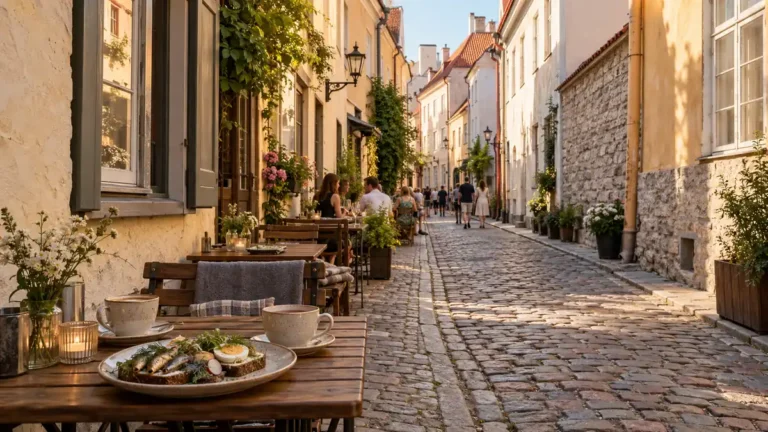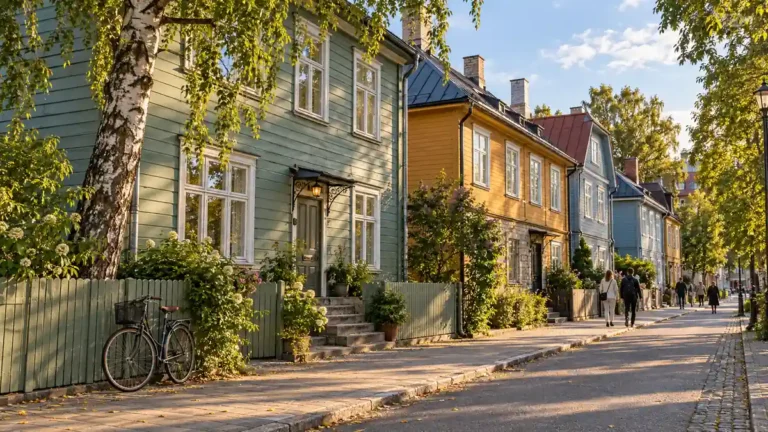
The best things to do in Tallinn are the Old Town’s lower town and Toompea viewpoints, then Kalamaja–Telliskivi and Kadriorg beyond the walls. Time is the variable that changes the list: grouped by area, one day covers the walls and a second adds the outer districts and waterfront. In rain, Lennusadam (Seaplane Harbour) and Kumu are the indoor picks; a public sauna is the local ritual.
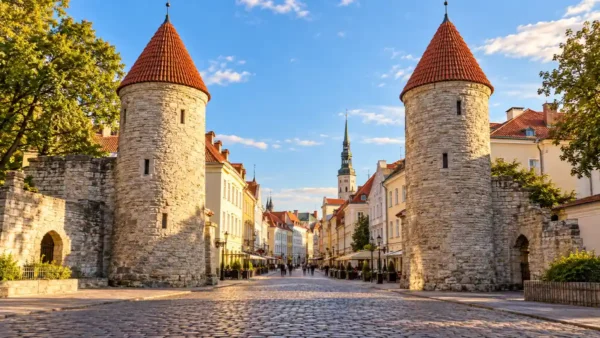
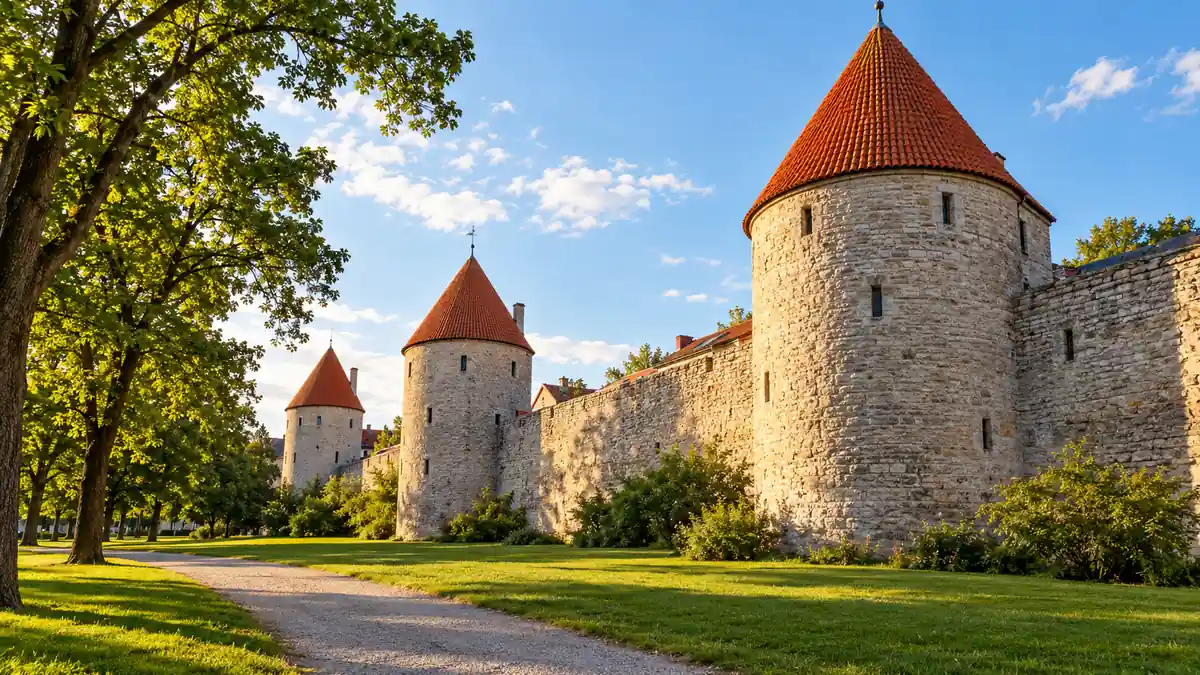
Tallinn’s Old Town is compact enough to see in a day, which is exactly why most visitors never leave it. That is the mistake to avoid. The medieval centre, a UNESCO World Heritage Site split between the lower town and Toompea hill, holds the postcard sights: Town Hall Square (Raekoja plats), the bastion tunnels and the viewing platforms over the red roofs. Beyond the walls sit the districts that make Tallinn feel like a living city — wooden-house Kalamaja, the Telliskivi factory complex, the Noblessner seafront and the palace park at Kadriorg. This page sorts what is worth your time by area, so sights chain on foot and nothing costs you a detour. One day off the Helsinki ferry fits the walls and little else; two or more days earn the districts, the waterfront and an evening in a public sauna.
On This Page
Tallinn splits into four walkable areas, and that is how to choose
With one day, stay inside the walls; with two or more, the districts beyond them are the reason to stay. Tallinn divides into four walkable areas: the Old Town (lower town plus Toompea), Kalamaja–Telliskivi–Noblessner, Kadriorg and the waterfront. Picking by area keeps every sight on foot and cuts dead time between stops.
Trip length decides how many of those areas you can give real attention to:
- One day (a ferry day trip or a stopover): the lower town and one Toompea platform. It fits first-time visitors who want the medieval core done properly, with no outer districts.
- Two days: the Old Town plus one outer district, usually the Kalamaja–Telliskivi–Noblessner walk. Choose it for the city’s present as well as its past.
- Three days or more: add Kadriorg, Lennusadam and the Soviet-era waterfront, plus a sauna evening. This is the length that rewards slow travelers, art lovers and anyone visiting in rain or cold.
Start from what you care about; the area follows.
| Interest | Where to go | Anchor sight | Tradeoff |
|---|---|---|---|
| Medieval streets and towers | The lower town inside the Old Town walls | Town Hall Square and the Kiek in de Kök bastions | Busiest part of the city in the middle of the day |
| Views and photos | Toompea, the upper town on the hill | The Kohtuotsa and Patkuli viewing platforms | Platforms crowd quickly at sunset in fine weather |
| Local life and design | Kalamaja, Telliskivi and the Noblessner seafront | Telliskivi Creative City and Balti Jaam market | Needs a half-day walk outside the walls |
| Art and gardens | Kadriorg, on the east side of the centre | Kadriorg Palace and the Kumu Art Museum | Hard to fit into a one-day visit |
| 20th-century history | The waterfront north of the Old Town | Lennusadam, the Patarei exterior and Linnahall | Little medieval character, so best on a second day |
The walls are at their busiest in the middle of the day, when ferry and cruise day-trippers are in town, and calmest early and late. An overnight stay lets you see the Old Town at those quiet hours and spend the crowded middle of the day out in Kalamaja or Kadriorg. That is where the extra day pays.
This page covers what to do once you are there. For orientation, arrival and costs, the Tallinn guide covers the basics, and a weekend laid out stop by stop lives in the two-day Tallinn itinerary.
What to See in Tallinn Old Town: the Lower Town
The lower town’s anchors are Town Hall Square, Kiek in de Kök and Niguliste, minutes apart on foot. They chain into one morning: the square for the medieval core, the bastions for the fortifications and tunnels, Niguliste for the art. Start early, before the midday crowds fill the square.
Town Hall Square and the Town Hall (Raekoja plats)
Town Hall Square (Raekoja plats) is the heart of the Old Town and the natural first stop for almost every visitor. Its 13th-century Town Hall is the oldest town hall in Northern Europe, according to Visit Tallinn. The Gothic hall is open daily in summer; from autumn to spring, a visit needs a reservation.
The square still works as a living space, not a museum piece. On its corner, the Town Hall Pharmacy is considered the oldest continuously operating pharmacy in Europe. In winter the square hosts the city’s seasonal market, covered in the Tallinn Christmas market guide. If this is your first visit and time is short, the square is where to start.
Kiek in de Kök and the Bastion Passages
Kiek in de Kök is the artillery tower on the Old Town’s southern edge, and its strongest reason to visit lies underneath it. The Bastion Passages are 17th–18th-century tunnels cut beneath the ramparts, and the visit pairs the tower’s museum of the town’s defences with a walk through the passages below.
The Low German name means “peek into the kitchen”, a nod to how far the gunners could see into neighbouring houses. Most Old Town sights are about merchants and churches. This one is about how the town was defended, from cannon positions to underground corridors, and it plays the same in any weather. Choose it over the churches when fortifications and underground history interest you more.
Niguliste Museum and St Catherine’s Passage
Niguliste Museum is a medieval church turned art museum, and its reason to visit is Bernt Notke’s Danse Macabre, the late-medieval painting of Death leading figures of every rank. A glass lift in the steeple carries visitors up for a view over the rooftops of the lower town.
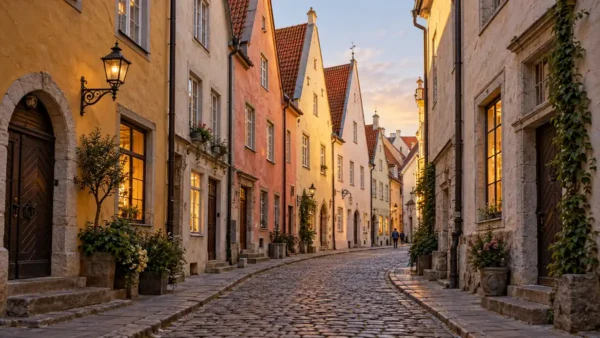
It is the quiet counterpart to the square a few streets away. Pair it with St Catherine’s Passage (Katariina käik), a narrow medieval lane lined with craft workshops and old tombstones set into the wall. Together they make the lower town’s best indoor-and-alley combination when the weather turns. Medieval art lovers get the most from it, and so does anyone caught by rain on a morning inside the walls.
Tours and activities
Book skip-the-line tickets, day trips and local tours with free cancellation on most activities.
You can also browse everything on getyourguide.com.
Tripstou may earn a commission if you book through this link, at no extra cost to you.
Toompea: the Viewpoints, the Castle and the Cathedral
Toompea’s three viewing platforms — Patkuli, Kohtuotsa and Piiskopi — give the best free views of the Old Town roofline. The upper town earns its climb for those views, and Toompea Castle and Alexander Nevsky Cathedral sit steps away as a quick add. One loop of the hill covers all of it.
Which Toompea viewpoint is best?
Kohtuotsa is the best Toompea viewpoint for the classic view of red roofs and church spires running down towards the harbour. Patkuli, on the northern edge of the hill, frames the towers and the bay from a different angle. Piiskopi is the quieter platform when the other two fill up.
Late afternoon and sunset bring the warmest light and the biggest crowds, so arrive before the light turns. For height over the whole Old Town, the St Olaf’s Church tower is the paid alternative. Its climb is seasonal, so check before going. When photos and sunset light are the point of the trip, this is the hill to plan around.
Toompea Castle and Alexander Nevsky Cathedral
Toompea Castle and Alexander Nevsky Cathedral face each other across Castle Square (Lossi plats), and together they show two layers of power on the hill. The castle, with its pink baroque front, houses the Riigikogu, Estonia’s Parliament, so most visitors see it from outside.
The onion-domed Orthodox cathedral is the Russian-imperial counterpoint, built when Estonia was part of the Russian Empire. A short look inside is a free stop; dress modestly and keep voices low during services. No other corner of Tallinn explains the city’s place between empires as quickly. Ten minutes here covers the architecture and the Russian-imperial layer.
Kalamaja, Telliskivi and Noblessner are worth leaving the walls for
Kalamaja, Telliskivi and Noblessner are the half-day that shows Tallinn is more than a medieval centre. The three sit side by side north-west of the Old Town and chain into one walk: wooden houses and a market hall, a converted factory complex, then a former shipyard on the sea. Most one-day visitors miss it entirely.
Direction matters here. Start at Balti Jaam market next to the Old Town, cut through Telliskivi and Kalamaja’s side streets, and finish at Noblessner on the water. Walked that way, the afternoon ends at the sea near the sauna, not back at the walls.
These are places to explore by day and into the evening. Whether to sleep out here or inside the walls is a separate decision, weighed up in where to stay in Tallinn.
Kalamaja’s wooden houses and Balti Jaam market
Kalamaja is the old fishing and railway-workers’ district beside the Old Town, and its streets of painted wooden houses are the best place to see everyday Tallinn. Balti Jaam market (Balti Jaama Turg), next to the main railway station, is a covered market hall with food stalls and local produce.
There is no staging here. People live in these streets, cafés fill with locals, and the houses are homes, not a backdrop. Browse the market, eat at one of its stalls, then wander the side streets with no fixed list. Local life and food halls are the appeal, not monuments.
Telliskivi Creative City
Telliskivi Creative City is a converted factory and railway complex in Kalamaja, now filled with design shops, studios, cafés, bars and restaurants. The draw is the mix of street art and independent shops across the old industrial buildings, and a weekend market adds a reason to come by day.
What sets it apart from the Old Town is the crowd and the hour. It belongs to young locals as much as to visitors, and it is liveliest in the evening, when the restaurants and bars fill up. Put it on the list for design shops, street art and a night out. Come late afternoon and stay for dinner.
Noblessner seafront
Noblessner is a former shipyard turned harbour quarter, and its reason to visit is the sea itself: a waterfront promenade, restaurants around the marina and open views across Tallinn Bay. Its brick industrial halls now hold cafés, galleries and new apartments facing the water.
The change is one of pace. After the walled streets, Noblessner feels open, modern and slow, the place for sea air and a slower evening once the Old Town is done. It is also where the Iglupark sea saunas sit, covered in the sauna section below, which makes it the natural end point of the walk from Kalamaja.
Kadriorg: the Palace, the Park and Kumu
Kadriorg combines Peter the Great’s baroque palace and the Kumu art museum in one park east of the centre. It is the city’s best half-day for art and gardens, reachable by tram or on foot from the Old Town. The catch is time: on a one-day visit, it pulls you away from the walls.
Kadriorg Palace and Park
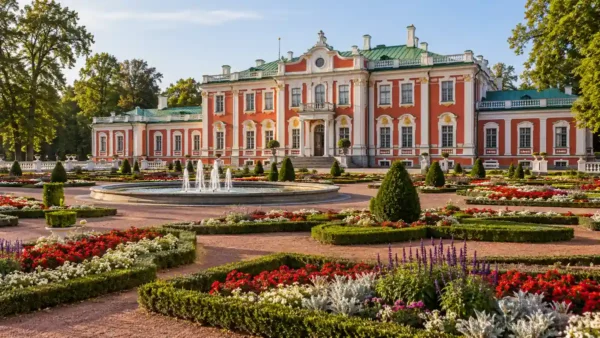
Kadriorg Palace was built for Peter the Great, who named the estate for Catherine I, and today it houses the Kadriorg Art Museum. Its strongest reason to visit is the baroque main hall, the showpiece of the palace, alongside a collection of European and Russian art. It suits an unhurried visitor with a taste for baroque interiors and formal gardens.
The park around it is the draw even for visitors who skip the interiors. A formal flower garden sits behind the palace, the Swan Pond lies near the entrance, and long tree-lined avenues run towards the sea. The grounds are free to wander. It is the most stately half-hour in Tallinn.
Kumu Art Museum
Kumu Art Museum stands at the edge of Kadriorg Park and is the main home of Estonian art, from older painting to contemporary work. The Soviet-era galleries are the reason to go: they show how artists worked under, around and against official doctrine.
The building itself, a modern structure cut into the limestone bank, is part of the visit. Kumu holds enough to fill a full afternoon without repetition. That makes it the best rainy-day plan on the east side of the city, and an easy pairing with the palace on a dry morning.
The Waterfront and Soviet-Era Tallinn: Lennusadam, Patarei and Linnahall
Lennusadam (Seaplane Harbour) is Tallinn’s best museum for most visitors. The sea-facing strip north of the Old Town also holds the city’s Soviet layer: Patarei prison and the concrete Linnahall. Together they make the most unusual walk in Tallinn, with almost no medieval character. Plan it for a second day.
Is Lennusadam (Seaplane Harbour) worth it?
Lennusadam is worth it for families, rainy days and anyone curious about the sea, and skippable on a purely medieval trip. The museum fills historic seaplane hangars with maritime history. Its headline exhibits are the submarine Lembit, which visitors can walk through, and the icebreaker Suur Tõll, moored outside.
Unlike the Old Town’s museums, it is hands-on and built for children as much as adults. Distance is the cost: it sits outside the walls and needs a few unhurried hours. It is closed on Mondays outside summer, with longer hours in summer.
Soviet-era Tallinn: KGB cells, Patarei and Linnahall
Tallinn’s Soviet layer reads best across three stops: the KGB prison cells and Vabamu for the indoor history, Patarei for atmosphere, and Linnahall for concrete scale. Vabamu, the museum of occupations and freedom, tells the story of the occupation years; the KGB prison cells in the Old Town show where it happened.
Patarei, a sea fortress later used as a prison, works as an exterior walk along the shore. Linnahall, the vast concrete hall by the harbour, is a sight to take in from outside, where its sheer bulk against the sea makes the point on its own. Nowhere else does the city confront the twentieth century so directly. Choose this stretch when twentieth-century history interests you more than the medieval past.
A public sauna is the Tallinn ritual worth making time for
A public sauna is Tallinn’s most local experience, at Kalma Saun in Kalamaja or Iglupark at Noblessner. Sauna is ordinary Estonian life, not a spa treat, and an evening session closes a sightseeing day better than another museum. The two places suit very different moods.
- Kalma Saun (Kalamaja): a traditional public bathhouse dating from 1928, still used by locals. This is the real neighbourhood ritual, and it looks the part: a working bathhouse, plain and functional, with no sea view.
- Iglupark (Noblessner): modern igloo-shaped saunas right by the sea, with a dip in the bay between rounds. Groups and anyone after the cold plunge will enjoy it most, though it feels more like an attraction than a neighbourhood habit.
Etiquette is simple. Shower before entering, sit on a towel and keep conversation low. Check whether a session is mixed or single-sex, and whether swimwear is expected, before you go.
Kalma Saun is a short walk from Telliskivi, so it slots onto the end of the Kalamaja half-day with no separate trip. Iglupark does the same for the Noblessner end of the walk.
What to Book Ahead, What to Skip, and When a Day Trip Makes Sense
Only the Town Hall outside summer and the seasonal tower climbs need real planning; most of Tallinn is walk-in. The harder decision on a short visit is what to drop. With limited time, protect the lower town and one Toompea platform, and cut the second museum before the views.
- Town Hall: open daily in summer; from autumn to spring, a visit needs a reservation.
- Tower climbs (St Olaf’s and the Town Hall tower): seasonal, so check before going.
- Lennusadam: closed on Mondays outside summer, with longer hours in summer.
Outside summer, the Town Hall reservation is the one thing a ferry day-tripper should sort before boarding. Everything else fits around the boat.
Skip a second indoor museum inside the walls if it costs you Toompea at sunset. The views are free and the light does not wait. Skip Kadriorg on a one-day visit unless art is the reason you came. Whether the Tallinn Card pays off is answered at the end of this section.
A day trip makes sense once the Old Town and one outer district are done. The usual options are Helsinki across the Gulf of Finland, Lahemaa National Park, the flooded Rummu quarry and the Keila-Joa waterfall, all compared in day trips from Tallinn. If Tallinn opens a longer route, the Estonia itinerary carries the trip on to the rest of the country.
Is the Tallinn Card worth it?
The Tallinn Card is worth it only if you visit three or more paid museums in one day and use public transport between them. On a day spent walking the Old Town, viewpoints and outer districts, most of what you see is free, so paying per entry works out cheaper. Entry fees only start once you go inside the museums, towers and bastion tunnels. Check the card’s price against your planned entries.
About These Tallinn Picks
This is a curated pick of Tallinn’s sights, districts and public saunas, sorted by area and by how much time each one earns; it is not a full Tallinn travel guide, a day-by-day itinerary or a list of every attraction in the city.
This area-by-area selection began as text written with AI assistance and was signed off for the Tripstou editorial team by Alex Perrut, working in tourism since 2015; the checks behind that sign-off sit on the editorial process page.
Official sources consulted: Visit Estonia, Estonian Ministry of Economic Affairs and Communications, Visit Tallinn, Estonian Maritime Museum.
Did this guide save you time or money? Tripstou is independent and reader-funded — if you'd like to give something back, you can support the site with a crypto contribution of any size.