You sit down in Estonia, open a menu, and meet words like verivorst, sült and kama with no idea what they are. This guide fixes that. Estonian food is northern home cooking: rye bread, pork, potatoes, smoked and cured fish, dairy and forest berries, shaped by Nordic and Baltic neighbours and by Baltic German manor cooking. It is plain, filling and strongly seasonal.
Below you will find the dishes worth ordering, each explained in plain English, along with when in the year and where in the country you are most likely to meet them. Drinks get their own section, and so does the regional map that changes the menu once you leave the capital. There are no restaurant names or prices here, only what to eat, how it is eaten and how to recognise it when it arrives.
Quick Answer
Estonian food is rye-bread, pork, potato and smoked-fish cooking with Nordic-Baltic roots: plain, filling and seasonal. Season decides the table: winter brings verivorst, sauerkraut and mulgi puder, while summer brings berries, mushrooms and fresh fish. Start with rye bread and a sprat open sandwich, then kama and Vana Tallinn; regional dishes wait beyond Tallinn.
Trust Layer
Tripstou planning guide for travelers resolving one travel decision. Covers the main variable, traveler context, and practical tradeoffs.
Produced with AI assistance and reviewed by Alex Perrut, working in tourism since 2015, for the Tripstou editorial team. See our editorial process for details.
Last factual review: October 1, 2026.
Official sources consulted: Visit Estonia, Estonian Ministry of Economic Affairs and Communications.
Key Takeaways
- Estonian food is plain, filling northern cooking built on rye bread, pork, potatoes, smoked fish and dairy, seasoned with smoke, salt and sourness.
- Your travel dates set the menu: winter means verivorst, sauerkraut and mulgikapsad, while summer and autumn bring berries, mushrooms and fresh fish.
- Mulgi puder, a potato-and-barley mash from South Estonia, sits on UNESCO’s intangible heritage list and still appears on ordinary menus.
- Leaving Tallinn changes the plate: Setomaa leans on curd dishes, Lake Peipsi on onions and freshwater fish, the islands on smoked fish and farm beer.
- Beer, kali and Vana Tallinn cover the drinks, and kali, a sour fermented bread drink, is the easy choice for anyone skipping alcohol.
- Vegetarians eat best in Setomaa’s dairy-led cooking and on modern Nordic-style city menus, since the traditional table leans heavily on pork and fish.
Table of Contents
What Is Estonian Food Like?
Estonian food is hearty northern cooking built on rye bread, pork, potatoes, smoked fish and dairy. Forest produce adds the colour: berries and mushrooms. The cooking draws on Nordic and Baltic neighbours plus Baltic German traces, and it follows the calendar — heavy and warming in winter, lighter and fresher in summer.
The influences show on the plate. Nordic and Baltic kinship explains the cured fish, the dairy and the dark bread. Baltic German manor cooking left its mark on pork roasts, sauerkraut and baked goods. The result is food built for a long, cold season and a short, generous summer.
Expect plain flavours. Estonian cooking seasons with smoke, salt and sourness, and spice plays a small part. That suits travelers who like comfort food and can feel repetitive to anyone hunting for heat or complexity.
Sourness is the flavour to expect at an Estonian table: rye sourdough, sauerkraut and kefir do the work spices do elsewhere, so a tangy first plate is tasting exactly as intended.
Modern kitchens, especially in Tallinn, rework the same staples with a lighter Nordic touch — rye, berries, smoked fish and foraged mushrooms plated as tasting dishes. Traditional versions stay easy to find alongside them. If you are still shaping the whole trip around where to go, the Estonia travel guide covers the bigger plan.
Rye Bread Is the Heart of Every Estonian Meal
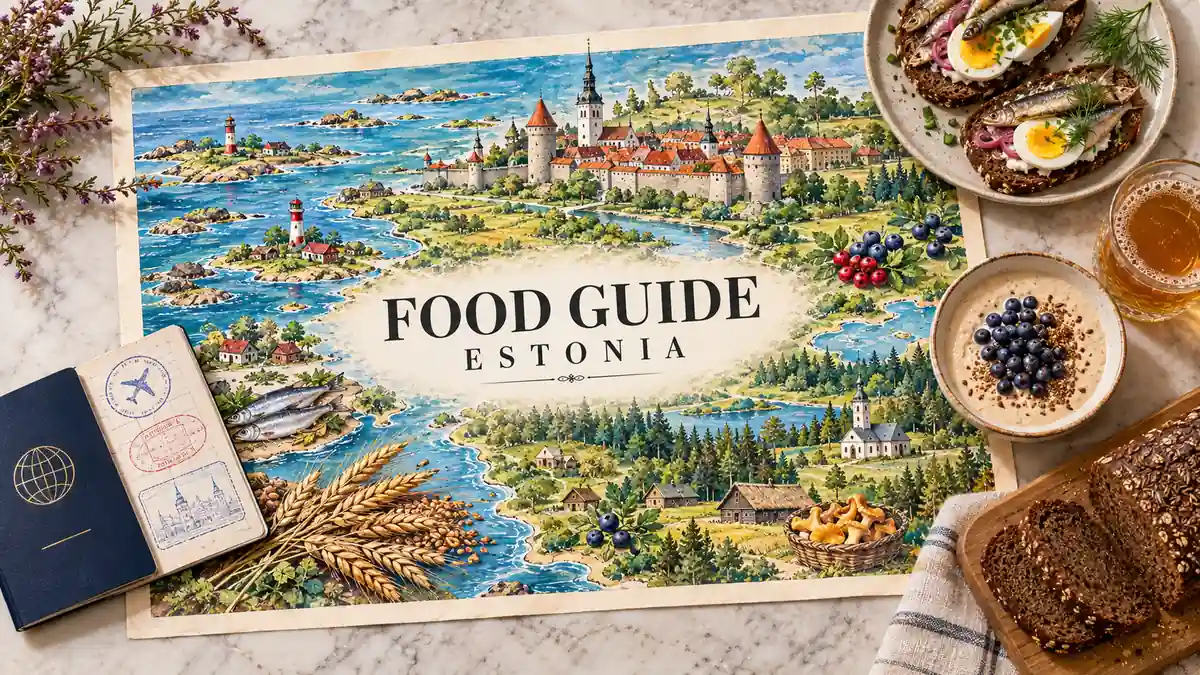
Dark rye bread, called leib, is the one food every Estonian meal starts with. It is dense, dark and slightly sour, and it arrives with soup, salad and almost every main course. Kiluvõileib, an open sandwich of spiced sprats on rye, is the single bite that sums up the whole cuisine.
Bread is not a side here. It is part of the meal, and a basket usually reaches the table without anyone asking. The two forms worth knowing:
- Leib (also rukkileib), black rye bread: eaten with butter, alongside soups, with sült (jellied meat) and as the base for cold toppings at any time of day.
- Kiluvõileib, the sprat open sandwich: a slice of rye spread with butter and topped with small spiced sprats, often with boiled egg, served as a snack, a starter or a party plate.
The sprat sandwich divides first-timers. The fish is salty and strongly spiced. Try it once anyway, because no other bite tells you as much about how Estonians eat.
Rye bread is also the first thing worth taking home. A dense loaf travels well and keeps for days, which is why it tops most edible-souvenir lists.
Traditional Estonian Dishes to Try First
Start with sült, rosolje, smoked fish, pirukas and kohuke: the everyday dishes Estonians themselves order. Sült is jellied meat, rosolje is a pink beetroot, herring and potato salad, pirukas is a filled pastry and kohuke is a chocolate-coated curd bar. Between them they cover cold starters, snacks and something sweet.
Each of these sits on ordinary menus, bakery counters and shop shelves. None needs a special occasion.
- Sült (jellied meat): pieces of pork set in clear aspic, served cold with rye bread and often with mustard or horseradish.
- Rosolje (beetroot salad): beetroot, potato and herring dressed until the whole bowl turns pink, eaten cold as a starter or side.
- Smoked fish and räim: räim, the Baltic herring, is Estonia’s national fish; you meet it smoked, salted, marinated or fried, usually with bread and potatoes.
- Pirukas (filled pastry): a baked bun or pasty filled with meat, cabbage, rice and egg or similar, eaten warm or cold as a snack.
- Kohuke (curd snack bar): sweetened curd pressed into a small bar and coated in chocolate, sold chilled in shops and eaten on the go.
For dessert, look for kama whipped with cream or curd and berries, explained under drinks below. Three dishes also belong on this list but get their own space: kiluvõileib in the rye bread section, mulgi puder in its own section, and verivorst under seasonal food.
| Dish | What it is | When and where you will find it |
|---|---|---|
| Sült | Pork set in cold aspic, served with rye | Traditional taverns all year, served as a cold starter |
| Rosolje | Pink salad of beetroot, potato and herring | Starter in traditional places; festive and Christmas meals |
| Räim and smoked fish | Baltic herring and other fish, smoked or salted | Markets and coastal areas; strongest on the islands |
| Pirukas | Baked pastry with savoury or sweet filling | Bakeries and cafés all year, eaten as a snack |
| Kohuke | Chocolate-coated sweet curd bar, eaten chilled | Supermarket dairy fridges everywhere, all year round |
Sült and rosolje are cold starters, so pair them with a hot main. First-timers who order sült as the whole meal tend to get a surprise: a plate of chilled aspic and a basket of bread.
Mulgi Puder: The UNESCO-Listed Dish From South Estonia
Mulgi puder is a potato-and-barley mash from Mulgimaa that UNESCO lists as intangible cultural heritage. Cooks mash boiled potatoes with barley groats and usually finish the bowl with fried pork fat or bacon and onion. It is South Estonian farm food: thick, rich and filling, served as a main or a side.
The listing sits on UNESCO’s Representative List of the Intangible Cultural Heritage of Humanity. It recognises the dish as a living regional tradition. You will still find it on ordinary menus.
Eat it hot, with the fried pork and onion spooned over the top. It works as a main on its own or as a side next to sausage or roast pork. A sour drink or a glass of buttermilk is the traditional match.
Its sibling is mulgikapsad: sauerkraut stewed slowly with pork and barley until soft and slightly sweet. Both dishes come from the same region and the same idea — stretch a little meat with barley through a long winter. That is why both are winter staples, and mulgikapsad also earns a place on the Christmas table described in the next section.
If a menu offers both, order them together. One is Mulgimaa’s potato answer to winter and the other its sauerkraut answer, and the pair is the quickest way to taste South Estonia without travelling there.
What Estonians Eat by Season: From the Christmas Table to Summer Berries
Estonian food changes with the season: a pork-and-sauerkraut winter table, then berries, mushrooms and fresh fish in summer. Winter cooking is about preserved food — cured meat, fermented cabbage, barley and blood sausage. From early summer into autumn, new potatoes, forest berries, wild mushrooms and freshly caught fish take over the plate.
The split is sharper than in southern Europe. Short summers mean the fresh season is celebrated hard. Long winters mean the preserved dishes carry real weight.
What is on the Estonian Christmas table?
The Estonian Christmas table centres on blood sausage, sauerkraut with pork and roast pork. It is the cuisine at its most traditional, and the same dishes appear in homes and in traditional restaurants through the festive season:
- Verivorst: blood sausage with barley, the centrepiece of the meal.
- Mulgikapsad or sauerkraut with pork: slow-stewed cabbage served next to the meat.
- Roast pork: usually with potatoes and the same sauerkraut.
- Rosolje: the pink beetroot and herring salad, eaten cold.
- Piparkoogid (gingerbread) and glögi (mulled wine): the sweet and warm finish.
How do you eat verivorst?
Verivorst, a blood sausage made with barley, is fried or oven-baked until the skin crisps and eaten hot with lingonberry jam, sour cream and sauerkraut. It is often called a national dish and is mainly a winter food. Some traditional taverns keep it on the menu year-round, but the Christmas season is when it is everywhere.
The jam matters. Its tart sweetness cuts the richness of the sausage, so take a little with every forkful.
Your travel dates decide which half of this cuisine you eat. A December visitor gets verivorst and sauerkraut almost by default; a July visitor has to go looking for them on tavern menus.
Summer and autumn are the fresh half. Bilberries, lingonberries and other forest berries go into desserts, jams and kama. Mushroom season fills sauces and soups. New potatoes come with butter and dill, and fresh or lightly smoked fish shows up at coastal markets.
Estonian Food by Region: Mulgimaa, Setomaa, Lake Peipsi and the Islands
Estonia eats differently by region, and the changes start as soon as you leave Tallinn. Mulgimaa in the south is barley-mash country, Setomaa leans on curd and cottage cheese, Lake Peipsi’s Old Believers cook with onions and freshwater fish, and Saaremaa and Muhu smoke fish and brew farm beer.
Tallinn menus gather dishes from all over the country. The regions keep their own versions closer to home.
- Mulgimaa (South Estonia): the home of mulgi puder and mulgikapsad, both built on barley, potato, sauerkraut and pork.
- Setomaa (far south-east): curd and cottage-cheese dishes dominate, with less meat than elsewhere in the country.
- Lake Peipsi (east): the Old Believer communities on the shore are known for onions, freshwater fish and tea brewed in a samovar.
- Saaremaa and Muhu (western islands): smoked fish, home-brewed farm beer and juniper, which flavours both drinks and smoking.
- Kihnu and Pärnu (south-west coast): fishing communities where the catch, not pork, sets the table.
Setomaa is where vegetarians eat best outside the cities. Its curd-and-dairy cooking leans less on meat than any other region on this map.
What to Drink in Estonia: Beer, Kali, Vana Tallinn and Kama
Estonia’s drinks to try are beer, kali, the liqueur Vana Tallinn and kama, a roasted-grain drink stirred into kefir. Beer is the everyday drink, with a farm-brewing tradition on the islands. Kali is a lightly fermented bread drink similar to kvass, and Vana Tallinn is a rum-based liqueur flavoured with citrus, vanilla and spices.
Beer comes in two worlds. Mainstream lagers fill every bar. On Saaremaa and Muhu, home-brewed farm beer keeps an older tradition alive, often with juniper.
Commercial kali is sold as a soft drink, which makes it the option for anyone skipping alcohol. Its sour, bready taste suits heavy food: it cuts through pork fat the way the rye bread on the table does.
Vana Tallinn is the drink most visitors take home. Locals sip it neat, add it to coffee or mix it into cocktails. It is sweet and strong, so a small glass goes a long way.
What is kama?
Kama is a flour of roasted barley, rye, oats and peas that Estonians stir into kefir or buttermilk. The result is thick, nutty and slightly sour, eaten as a breakfast-style drink or whipped into a dessert, often sweetened with sugar or topped with berries.
Kama sits between drink and food. In a glass it is breakfast. Whipped with cream and berries, it is one of the most Estonian desserts on any menu, and a bag of kama flour is an easy edible souvenir.
How to Eat Like a Local in Estonia
You will find traditional Estonian food in taverns, market halls and bakeries, not only in Tallinn’s Old Town. A kõrts, the old village tavern, is the most reliable place for verivorst, sült and mulgi puder. Markets and bakeries cover bread, smoked fish, pirukas and kohuke, and the dish names in this guide recur on menus nationwide.
The everyday rhythm is simple. Mornings run on bread and dairy. In traditional places the main hot meal often comes at midday.
Market halls are the best place to see the cuisine raw: smoked fish counters, dark loaves, berries in season and jars of preserves. Bakeries and cafés handle the snack layer — pirukas, pastries and coffee.
Menus become readable once a handful of words click: leib (bread), kala (fish), sealiha (pork), kapsad (cabbage) and puder (mash or porridge). With those, plus the dish glosses above, most traditional menus stop being a guessing game.
Cities also have modern Nordic-style kitchens that reinterpret rye, smoked fish and forest produce. They suit travelers who want the flavours in a lighter form. Tipping, cards and table etiquette live in our Estonia travel tips. If you want a Tallinn food tour or an Old Town eating day as an activity, see things to do in Tallinn.
Tours and activities
Book skip-the-line tickets, day trips and local tours with free cancellation on most activities.
You can also browse everything on getyourguide.com.
Tripstou may earn a commission if you book through this link, at no extra cost to you.
Frequently Asked Questions
What is the national dish of Estonia?
No single dish holds the title, because sources disagree. Mulgikapsad, sauerkraut stewed with pork and barley, is often named; verivorst, the barley blood sausage, is often called the national dish; and mulgi puder carries the UNESCO listing. Order all three if you can, ideally in winter, when they are easiest to find.
What do Estonians eat for breakfast?
Estonians usually breakfast on rye bread with butter, cheese or sprats, alongside dairy such as curd or kefir. Porridge is common, and kama stirred into kefir or buttermilk is the most distinctly Estonian option. Coffee is the usual drink, and a chilled kohuke from the supermarket works as a quick breakfast on the go.
Is Estonian food vegetarian-friendly?
Estonian food is only partly vegetarian-friendly. The traditional table leans on pork, blood sausage and fish, so many classic mains are off-limits. Rye bread, potatoes, mushroom dishes, curd, kama and berry desserts all work, and modern Nordic-style menus in the cities make meat-free eating much easier than traditional taverns do.
What food should you bring back from Estonia?
The most reliable edible souvenirs are a dense loaf of rye bread, a bag of kama flour, a bottle of Vana Tallinn, and Estonian chocolate or marzipan. Rye bread keeps for days and kama flour packs easily, so both survive a suitcase better than smoked fish or chilled dairy such as kohuke.
Is Estonian food similar to Finnish or Latvian food?
Yes, broadly. Estonian food sits closest to its Nordic and Baltic neighbours, sharing dark rye bread, smoked and cured fish, dairy, potatoes and forest berries. Baltic German manor cooking adds pork roasts, sauerkraut and baked goods, and regional traditions such as Mulgimaa’s barley dishes and Setomaa’s curd cooking give it a character of its own.
What should you order at a traditional Estonian tavern?
Build the meal in three steps: a cold starter such as sült or rosolje with rye bread, a hot main such as mulgi puder or, in winter, verivorst with lingonberry jam, and kali or a local beer to drink. Finish with a kama dessert if the menu offers one.
Related Guides
- Estonia travel guide — plan the whole trip, from where to go to how long to stay.
- Estonia travel tips — tipping, cards and etiquette before you sit down to eat.
- Things to do in Tallinn — build a Tallinn eating day or food tour into your sightseeing.
Did this guide save you time or money? Tripstou is independent and reader-funded — if you'd like to give something back, you can support the site with a crypto contribution of any size.