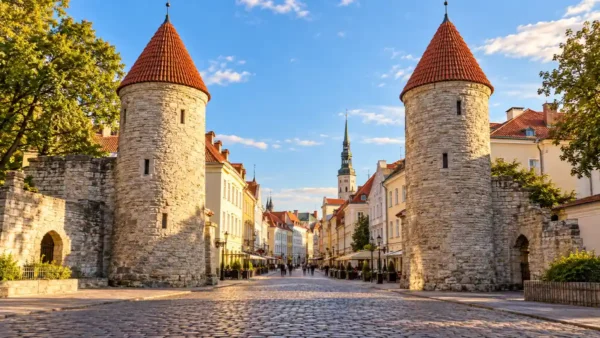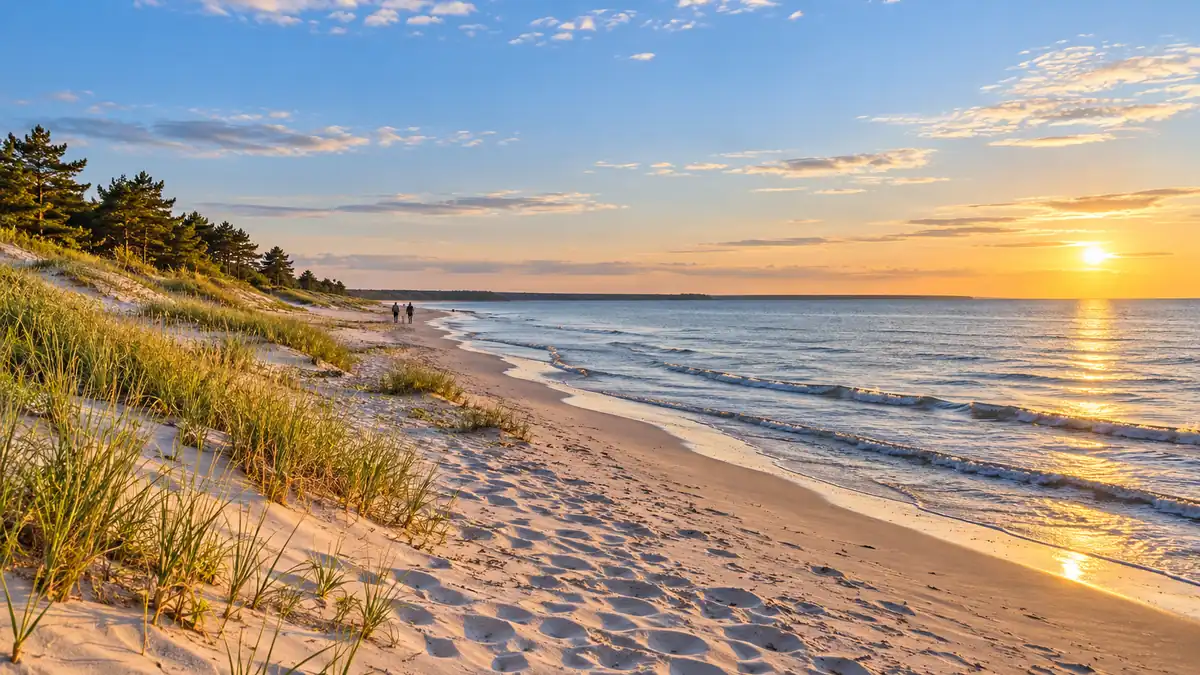
Late May to early September is the best time to visit Estonia for most travelers. Your priority sets the month: June for white nights and Midsummer, July–August for warm beaches and islands with peak crowds, December–February for snow and Christmas atmosphere. For long days with thinner crowds, aim for late May, early June or early September.
Estonia’s year swings harder than most of Europe’s. Around the June solstice, Tallinn gets roughly 18 and a half hours of daylight and never goes fully dark; in December, the sun is up for about six hours. That swing means the month you pick reshapes the trip itself. This guide weighs the four variables that decide when to go: light, warmth and rain, crowds, and snow. Summer wins on light and warmth but brings the most showers and the busiest Old Town streets. Winter trades daylight for Christmas atmosphere and a fair chance of snow. The shoulder months sit in between, and some pay off far better than others. The verdict comes first, then summer, the shoulder months and winter in turn, then the best window for each kind of trip, from a Tallinn city break to the bogs and islands, with the official temperature and daylight figures at the end.
When is the best time to visit Estonia?
Late May to early September is the best time to visit Estonia for most trips. It is the only stretch that combines long daylight with reliably mild weather, so outdoor plans, islands and city walks work. June is the best month for a first visit: the longest days, Midsummer celebrations and crowds still below their July peak.
The window splits into two halves. Late May, early June and early September are the sweet spots, with long days, thinner crowds and calmer accommodation demand. July and August form the busy core: the warmest weather, the best swimming and the fullest Old Town lanes.
Two exceptions make sense for specific trips. December suits travelers who want Christmas atmosphere and are happy with short, dark afternoons. January and February suit those chasing real winter — frozen landscapes, snow when it falls, and the cold that comes with it.
June beats July for most first visits because Midsummer week and the longest days arrive before the busiest summer weeks. If you are still deciding whether Estonia fits your trip at all, the Estonia travel guide covers the country as a whole before the timing question.
Summer in Estonia: White Nights, Midsummer and Showers
Summer in Estonia means white nights in June, the warmest weeks in July and August, and frequent showers throughout. June to August is the official summer season. June brings Midsummer on 23–24 June, while July and August bring the warmest water and the busiest beaches.
White nights are real at this latitude. Estonia sits at about 59°N, and around Midsummer it never gets fully dark in Tallinn: dusk slides into dawn without true night. Evenings stretch long enough to start a coastal walk after dinner.
Midsummer is the national moment. Midsummer’s Eve (Jaanilaupäev) falls on 23 June and St John’s Day (Jaanipäev) on 24 June. Estonians light bonfires, and many leave the cities for the countryside and islands. Expect some city businesses to close or shorten hours that week.
The Baltic swimming season is short, best in July and August. Rain is the trade-off. The midsummer stretch is also the wettest, so expect showers and keep an indoor fallback for each day.
Plan a June trip around 23 June first and the forecast second: Midsummer’s Eve is when the whole country turns out, and St John’s Day is when it rests.
Spring and Autumn: The Shoulder Months That Pay Off, and the Ones to Skip
Late May and September are Estonia’s best shoulder months; March and late October to November are the ones to skip. The good windows combine long or long-ish days with thinner crowds. The bad ones bring thaw and mud in spring, then deepening darkness and wet, grey weather in late autumn.
May warms fast. The official mean jumps from 4.9 °C in April to 10.5 °C in May, and the light lengthens quickly toward June. Late May brings fresh green forests, long evenings and few tour groups.
September holds on longer than many travelers expect. Its 12.2 °C mean sits closer to May than to October, early September still has long days, and early-autumn colour starts in the forests and bogs. By the end of the month it cools fast.
March and early April are the thaw. Snow melts into mud, trails turn soggy, and the landscape looks worn out. In Soomaa National Park the meltwater floods forests and meadows in what Estonians call the “fifth season” — a niche draw for canoeists.
Late October and November are the darkest, wettest-feeling weeks. Days shorten fast, the means drop from 6.7 °C to 2.1 °C, and the Christmas lights have not yet arrived to compensate.
Pick late May for days that get brighter every week, and September if you want the warmer of the two: its mean sits nearly 2 °C above May’s.
Is Estonia worth visiting in winter?
Estonia is worth visiting in winter if you want Christmas atmosphere or snow and accept about six hours of daylight. December delivers the festive mood, while January and February bring the coldest, most wintry weeks. Snow is never guaranteed, and the short days shape every plan you make.
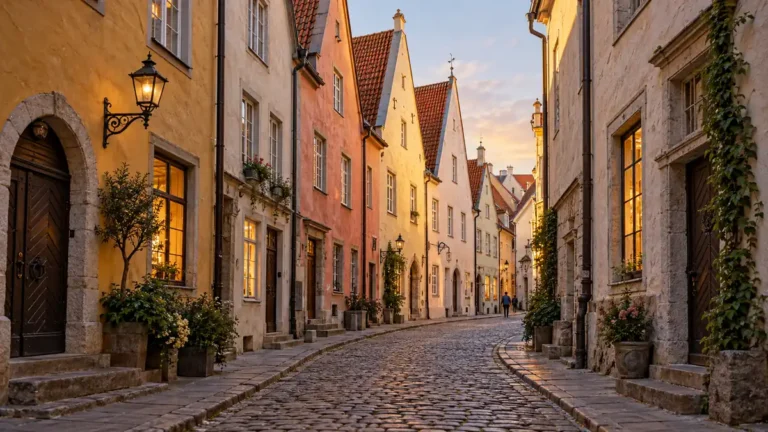
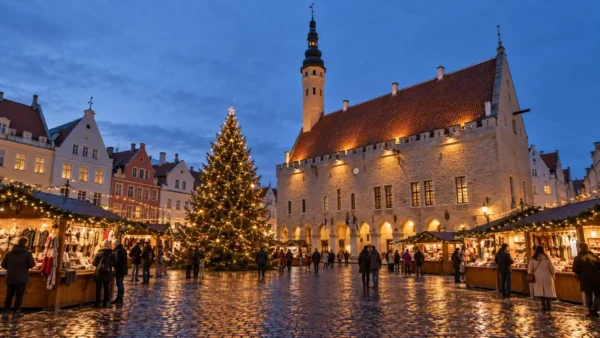
December and January–February suit different trips. December is about atmosphere: lit-up Old Town streets, the Christmas market and long candlelit evenings. Snow is most common from December to January, but a white Christmas is never guaranteed. February is the coldest month on official averages, so any snow that falls tends to stay longer.
The Christmas market in Tallinn’s Old Town is the strongest reason to choose December. Our Tallinn Christmas Market guide covers how to plan around it.
Short days reshape a sightseeing day. Do outdoor walks and viewpoints around midday, then move to museums, cafés and saunas once it goes dark in mid-afternoon. Layers, a warm hat and grippy waterproof boots make icy streets manageable; the Estonia travel tips cover the rest of the prep.
A December city break in Tallinn works on six hours of light because the Old Town is compact; a January trip to the countryside or the bogs struggles, since the light runs out before the trail does.
Best Time to Visit Estonia by Trip Type
The best time depends on the trip: June for Tallinn, July–August for beaches, late spring to autumn for bogs. Islands share the beach window. Snow-seekers should aim for January or February, Christmas fans for December, and travelers curious about Estonian tradition for Midsummer on 23–24 June.
Once you have a window, our Estonia itinerary turns it into a route and a number of days.
When to visit Tallinn for a city break
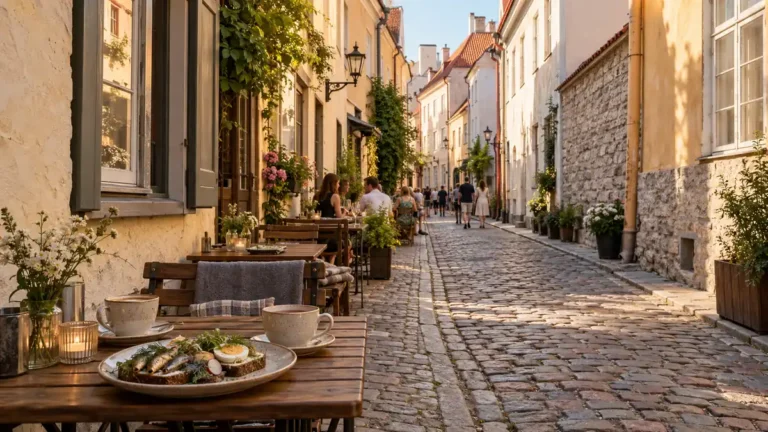
Tallinn works year-round, and June is the best month for a city break. The Old Town stays lively deep into the light evenings, café terraces fill, and early summer brings the Old Town festival season. December is the strong second choice for atmosphere. Avoid November if you can. It is dark, damp and caught between seasons.
When to go for beaches and Pärnu
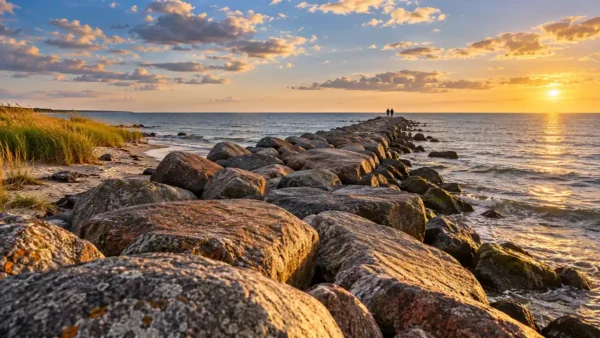
July and August are the beach months. Pärnu, known as Estonia’s summer capital, is at its liveliest then, and the short Baltic swimming season peaks in these weeks. June beach days suit sunbathing and long walks along the shore. For what to do once you arrive, see our guide to things to do in Pärnu.
When to visit Saaremaa and the islands
June to August is the best time to visit Saaremaa and the other islands. Ferries, guesthouses and island cafés run their fullest schedules, the light lasts late, and the weather is mildest. Late May and early September are quieter. On the islands, though, a quieter ferry is little gain once the guesthouse you wanted has closed for the season.
When to hike and walk the bogs
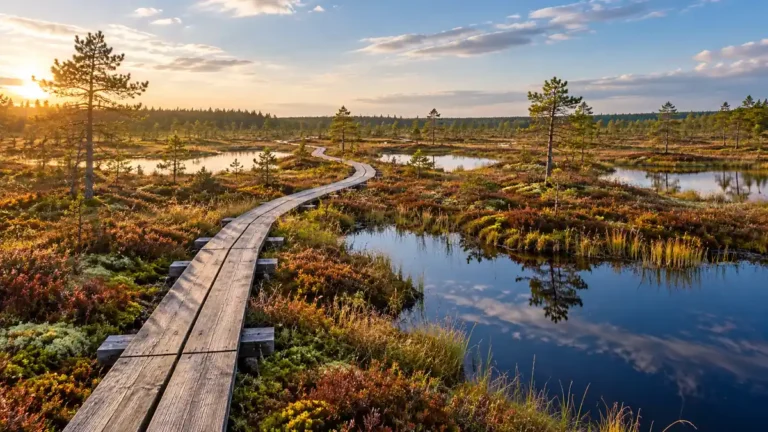
Late May to September is the hiking and bog-walking season. Boardwalks are dry, days are long, and national park trails are easy to reach. Early autumn adds colour to the bogs and usually fewer mosquitoes than midsummer. Skip the March–April thaw. Paths turn to mud then, and low ground floods.
When to come for snow, Christmas or Midsummer
Each of these trips has its own fixed window. Pick by the experience you want:
- Snow: January and February, the coldest weeks, when snow that falls tends to stay; never guaranteed.
- Christmas: December, for Old Town lights, the market and candlelit evenings.
- Midsummer: 23–24 June, for bonfires on Midsummer’s Eve and St John’s Day.
Tours and activities
Book skip-the-line tickets, day trips and local tours with free cancellation on most activities.
You can also browse everything on getyourguide.com.
Tripstou may earn a commission if you book through this link, at no extra cost to you.
When is Estonia most crowded, and when is it quiet?
Estonia is busiest in July and August and quietest from late October to March, outside the Christmas weeks. Summer crowds concentrate in Tallinn’s Old Town, Pärnu and on island ferries. The shoulder months hold the balance, with long days, thinner crowds and generally lower accommodation prices than the summer peak.
Tallinn’s Old Town feels the summer peak most. Cruise-ship days and summer weekends fill the medieval lanes by late morning. Weekdays are noticeably quieter than weekends.
Midsummer week is a special case. Locals head to the countryside and islands, so cities empty out while rural guesthouses fill. Some city businesses close or shorten hours around 23–24 June.
Prices follow the crowds. Accommodation is generally cheaper outside summer, with weekends and the Christmas weeks as exceptions. Late autumn to early spring is the cheapest window, paid for in short, dark days. In calendar terms that is roughly November to March, excluding the Christmas and New Year weeks, and weekends in Tallinn stay pricier year-round.
In summer, Tallinn’s crowd problem is a timing problem: the Old Town is packed from late morning to late afternoon, and in June the light lasts long enough to see it calmly after dinner.
Estonia’s Weather and Daylight by Season
Estonia runs from about −4 °C mean in February to about 18 °C mean in July. Daylight swings from about six hours at the December solstice to around 18 and a half in June. The June–July midsummer stretch is also the wettest, so the warmest, brightest weeks come with regular showers.
Temperatures are 24-hour monthly means from the Estonian Environment Agency’s official 30-year climate averages, not daytime highs.
| Period | Mean temperature (official normals) | Daylight | Best for and crowd level |
|---|---|---|---|
| December–February | −4 to −1 °C mean, February coldest | About six hours at the December solstice | Christmas atmosphere, snow chances, very quiet streets |
| March–April | −1 to 5 °C mean, thaw and mud | Lengthening fast after the spring equinox | Few visitors, patchy conditions, mostly worth skipping |
| May | About 10–11 °C mean, fresh and greening | Long evenings, lengthening fast toward summer | Late May sweet spot with thin crowds |
| June–August | 15 to 18 °C mean, July warmest | Around 18 and a half hours at the June solstice | White nights, Midsummer, beaches; busiest and showery |
| September | About 12 °C mean, cooling by month end | Shortening fast, still long early on | Early-autumn colour, thinner crowds, good hiking |
| October–November | 7 falling to 2 °C mean | Shortening fast toward deep winter darkness | Dark, wet-feeling months and the ones to skip |
Read the temperatures as 24-hour means. Afternoons run warmer: July days often reach the low 20s °C, with occasional hotter spells, while winter days hover around freezing. Daylight shapes a day more than the thermometer does. In December the light fades by mid-afternoon, so sightseeing compresses into a short window around midday.
Where the Season Figures Come From
This page settles one planning question, which months suit an Estonia trip, by weighing daylight, weather, crowds and snow; it is not an overview of the country, a route plan or a packing list.
Produced with AI assistance, these season calls were read through for the Tripstou editorial team by Alex Perrut, working in tourism since 2015, with the temperature normals and Midsummer dates held against the sources below. Our editorial process sets out that step.
Official sources consulted: Visit Estonia, Estonian Ministry of Economic Affairs and Communications, Estonian Environment Agency, Visit Tallinn.
Did this guide save you time or money? Tripstou is independent and reader-funded — if you'd like to give something back, you can support the site with a crypto contribution of any size.