The core things to do in Riga are the Old Town, Alberta iela’s Art Nouveau and the Central Market. Beyond those three, interest decides, not list position: every pick sorts into four walkable layers, and architecture, history or markets tells you which layer gets your spare hours. History readers should swap one Old Town hour for the Corner House and the Academy of Sciences deck.
Riga is compact, so the real question is which layer earns your hours. The city’s things to do fall into four groups that sit within walking distance of each other: the UNESCO-listed Old Town, the Art Nouveau streets of the Quiet Centre, the Central Market with the Spīķeri warehouses and the Daugava riverside, and the Soviet-era buildings that carry the twentieth century. Each group suits a different traveler. This page sorts the picks by layer, gives every pick one clear condition for choosing it, and separates what is free on foot from what needs a ticket or a guided slot. The result is a shortlist you can cut to fit a short first visit, an architecture-led trip or a history-led one.
How to Choose What to Do in Riga
Riga’s things to do sort into four walkable layers, and your interest decides which one gets the most hours. The Old Town, the Art Nouveau Quiet Centre, the market-and-riverside strip and the Soviet-era buildings all sit within walking distance of each other. Pick by what you want to see, not by where an item ranks.
- Old Town — set-piece streets, one showpiece interior and the St Peter’s view. No first visit skips it.
- Art Nouveau Quiet Centre — Alberta iela, Elizabetes iela and the Art Nouveau Museum. The layer architecture lovers come for.
- Central Market and the riverside — working pavilions, Spīķeri warehouses and the Daugava promenade. Suits travelers who want everyday Riga.
- Soviet-era Riga — the Academy of Sciences deck and the Corner House. History readers start here.
Settle the tower question early, because the two towers answer different questions. St Peter’s puts you above the medieval roofs; the Academy of Sciences deck puts those roofs in front of you, with a Stalinist tower under your feet. Pay for one.
Distance never decides the order. The Quiet Centre lies about 10–15 minutes’ walk from the Old Town, and the market and the Academy sit just beyond its southern edge. For orientation and how long to stay, the Riga guide sets the frame. Jūrmala, Sigulda, Ķemeri and Rundāle sit outside the city and belong to day trips from Riga.
The Old Town Is Where Every First Visit Starts
The UNESCO-listed Old Town is the layer a first visit cannot skip, and the picks inside it justify the hours. Two picks cost nothing: the set-piece walk and the green seam along the city canal. The House of the Blackheads and St Peter’s tower are the ticketed pair, each good for one focused visit.
The Old Town is small. Its value comes from density, so the picks below overlap on foot and fit together without planning.
Walk the Old Town’s set pieces: Three Brothers, Cat House, Swedish Gate and Līvu Square
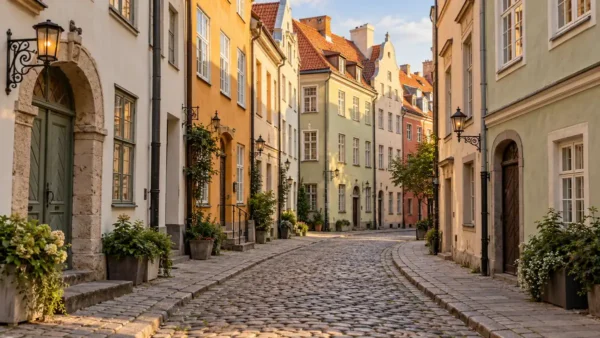
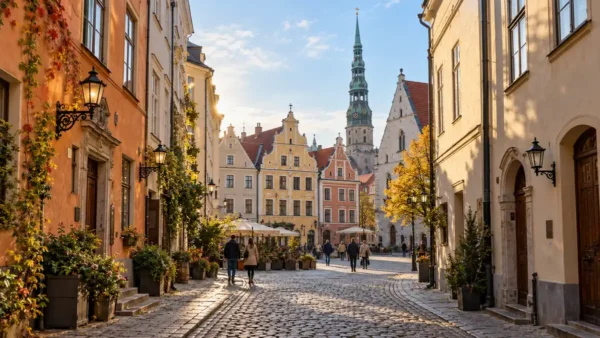
The Old Town loop is the best free thing to do in Riga, and it needs no ticket at any point. The Three Brothers line up merchant houses of different ages, the Cat House keeps its rooftop cats, the Swedish Gate frames the lane behind it, and Līvu Square gives you terraces to pause on.
The loop is the layer itself, not a stop inside it. Courtyards, spires and cobbled lanes fill the gaps between the named sights. Go slowly. For the Old Town in one unhurried loop without a ticket, start here.
House of the Blackheads
The House of the Blackheads is the Old Town’s showpiece interior: a reconstructed guild house on Town Hall Square with ticketed entry. Its gabled façade anchors the square, and inside, the rooms tell the story of the merchants’ brotherhood behind the name.
It is the one Old Town pick where the building itself, not a view or a walk, is the reason to go. The façade is free from the square. The interior is the part you pay for, and it suits a grey afternoon well. Make it your one Old Town interior if a building’s story appeals to you more than a museum’s.
St Peter’s Church tower
St Peter’s Church tower gives the classic view over Riga’s Old Town, and a lift takes you up to the viewing platform. Entry is ticketed, and opening hours change with the season.
What sets it apart from the Academy deck is position. You stand inside the Old Town, looking straight down on its roofs, its spires and the Daugava beyond. It is the one viewpoint that shows the medieval street plan from above. Skip the second tower unless views are the point of your trip. For the postcard view of the Old Town roofs and the river, this is the tower to climb.
Freedom Monument, Bastejkalns Park and the Nativity Cathedral
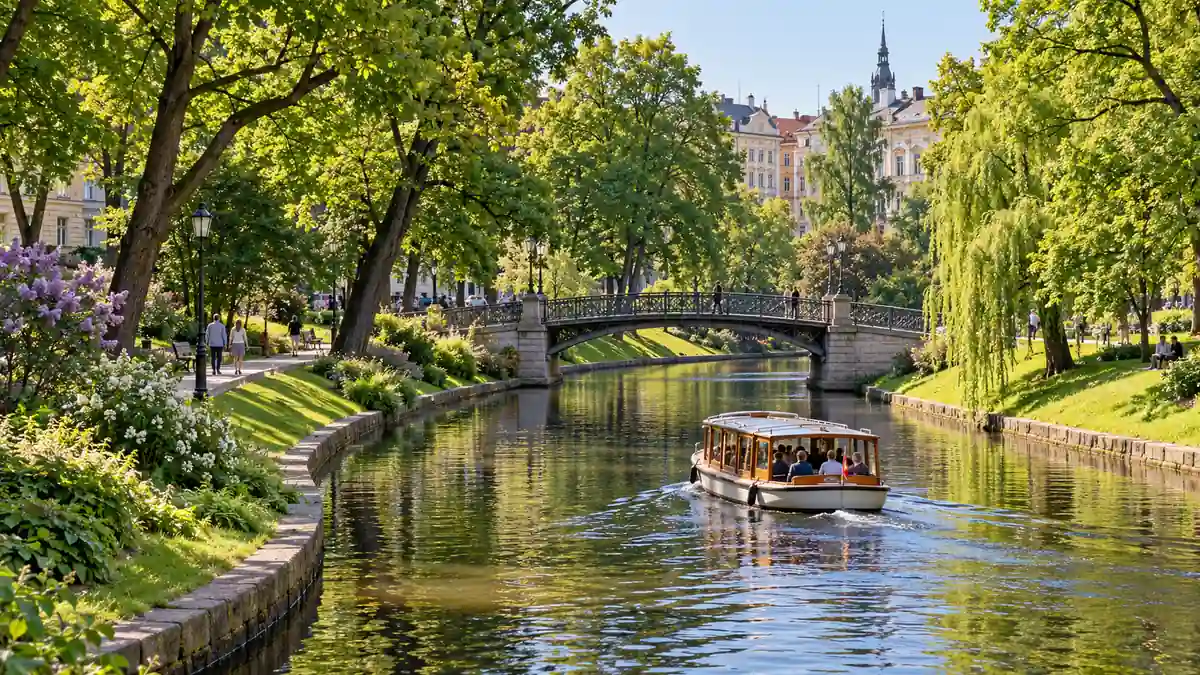
The Freedom Monument, Bastejkalns Park and the Nativity Cathedral form the free green seam between the Old Town and the centre. The city canal curves through the park, and canal cruises leave from its banks.
This pick is about transition. It is open-air, costs nothing and hands you straight to the Art Nouveau streets beyond the boulevards. The cathedral’s gilded domes mark the one interior on the way, and the monument is the city’s main civic landmark. Cross it once, as the free, open-air link between the Old Town and the Art Nouveau streets.
Is a canal cruise or a kayak worth it in Riga?
A canal cruise is worth it for a slow, seated look at Bastejkalns Park and the Old Town’s edge. Boats leave from the canal banks inside the park. A kayak suits active travelers who want the water under their own power; treat either as an extra, not a core pick.
Tours and activities
Book skip-the-line tickets, day trips and local tours with free cancellation on most activities.
You can also browse everything on getyourguide.com.
Tripstou may earn a commission if you book through this link, at no extra cost to you.
Art Nouveau Riga Is the Strongest Reason to Leave the Old Town
Roughly a third of central Riga’s buildings are Art Nouveau, and the Quiet Centre is where they concentrate. It sits only 10–15 minutes’ walk from the Old Town, so the city’s most distinctive layer costs little time to reach. Alberta iela is the showcase; the Art Nouveau Museum and Elizabetes iela add an interior and a longer walk.
This layer is mostly free. Only the museum charges, and the streets around it are residential, so the pace is quieter than in the Old Town.
Alberta iela
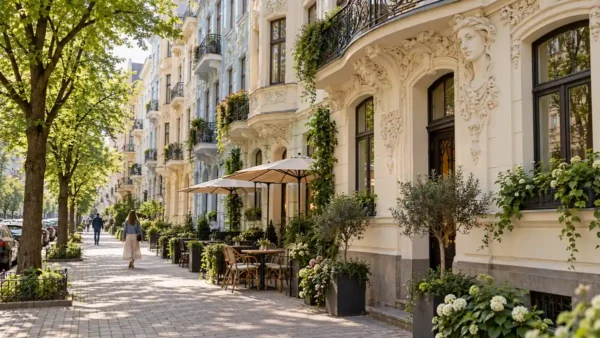
Alberta iela is Riga’s Art Nouveau showcase: a single street built between 1901 and 1908, with façades by Mikhail Eisenstein and Konstantīns Pēkšēns. You see all of it from the pavement, so it costs nothing.
No other street in the city packs this many decorated fronts into so short a walk. Light matters here. Come in the morning or late afternoon, when the faces, masks and relief on the façades read best and the street is at its calmest. For the densest run of façades in the city, with no ticket, this is the street to walk.
Riga Art Nouveau Museum
The Riga Art Nouveau Museum sits on Alberta iela inside a Pēkšēns building, and its restored period apartment shows how the style was lived in. Entry is ticketed.
Nowhere else on this page do you step inside Art Nouveau. The staircase, furniture and rooms complete what the street only shows from outside, so the two work as one visit. Do the street first. The interior then makes more sense. Go in to see an Art Nouveau interior, not just the façades.
Elizabetes iela and the wider Quiet Centre walk
Elizabetes iela extends the Art Nouveau walk beyond Alberta iela, anchored by the Eisenstein façade at number 10b. The surrounding Quiet Centre streets carry the style block after block, all free from the pavement.
Elizabetes is the long version. Alberta iela concentrates the style in one street; the wider Quiet Centre shows how far it spread through ordinary apartment blocks. It rewards a second hour on foot. Look up at every corner. Save it for when Alberta iela leaves you wanting more and there is another hour to spare.
Central Market, Spīķeri and the Riverside Beyond the Walls
The Central Market’s five Zeppelin-hangar pavilions are Riga’s working heart, and the riverside beside them is the natural continuation. The market is free to enter and sits inside the UNESCO-listed historic centre. Together with the riverside, it shows daily trade, old warehouses and the open Daugava — a side of Riga the Old Town does not.
This is the layer for everyday Riga. It takes little planning and fits easily around a meal.
Riga Central Market
Riga Central Market fills five pavilions built on former German Zeppelin hangar frames and opened in 1930, inside the UNESCO-listed centre. It is free to enter and still works as a food market locals shop in.
Unlike every other pick here, it was never built for visitors. Fish, dairy, meat and produce fill the halls under the curved roofs. For what to taste as you walk through, the Latvia food guide covers the dishes and drinks worth trying. Treat it as a food hall and it earns its place; treat it as a sight and one pavilion looks much like the next. Come for a place locals actually use.
Spīķeri quarter and the Daugava promenade
The Spīķeri quarter is the converted warehouse district behind the market, and the Daugava promenade runs from it toward the Stone Bridge. Across the water rises the angular silhouette of the National Library of Latvia.
Spīķeri is the quiet half of this layer. Old brick warehouses now hold studios, galleries and cafés, and the river opens the wide view the Old Town lanes keep closed. Walk it after the market. The contrast is the point: the market without the crowd of it, and an open riverside walk to finish.
Can you visit the National Library of Latvia?
Yes. The National Library of Latvia is a working public library on the left bank of the Daugava, facing the Old Town across the Stone Bridge. The main draw is the building’s angular silhouette, which reads best from the Spīķeri promenade. Walking over the bridge suits travelers who want one modern landmark to balance the medieval core.
Soviet-Era Riga: the Academy Deck and the Corner House
Riga’s Soviet-era layer is two buildings, one you climb and one you tour, and it rewards history readers most. The Academy of Sciences is a Stalinist high-rise with a 17th-floor viewing platform. The Corner House (the former KGB headquarters) is the one pick on this page where a guided slot decides what you see.
The Museum of the Occupation of Latvia is the natural companion stop for the same reader, covering the Soviet and Nazi occupations in one place. It adds context. The two picks below add the buildings.
Academy of Sciences viewing platform
The Academy of Sciences is a 1950s Stalinist high-rise with a viewing platform on the 17th floor. Access costs a small fee, and the deck opens seasonally.
It is the other tower view, and the reverse of St Peter’s. From here you look back at the Old Town skyline, spires and all, while standing on the city’s most visible Soviet building. The building is part of the story, not only the platform. Its ornament rewards a look from street level too. Climb it to look back at the Old Town skyline instead of standing in it.
Corner House (former KGB headquarters), Brīvības iela 61
The Corner House at Brīvības iela 61 is the former KGB headquarters, and its cells and basement are shown only on a guided tour. Tours are not open to children under 12, and a slot needs booking ahead.
Here the building is the evidence, not a backdrop to it. Book first. Walking up to the door will show you the façade and little else, since the cells are the reason to come. Its guided slot is the only fixed time on this whole shortlist. This is the history reader’s pick: the occupation told from inside the building where it happened.
Is the Museum of the Occupation of Latvia worth visiting?
Yes, for history readers: it covers the Soviet and Nazi occupations of Latvia in one place. It turns the Soviet-era picks from sights into a story, and it works well on a grey day. Travelers short on time or focused on architecture can skip it without losing a core Riga layer. With time for only the museum or the Corner House, pick the building if you can book a slot.
What’s Free in Riga and What Needs a Ticket
Most of Riga’s best things to do are free on foot; interiors, viewpoints and the Corner House tour are not. The ticketed list is short: the House of the Blackheads, St Peter’s tower, the Art Nouveau Museum and the Academy deck. The Corner House cells need a booked guided slot.
- Free on foot — the Old Town loop, the Freedom Monument and Bastejkalns, Alberta iela and Elizabetes iela, the Central Market, Spīķeri and the riverside. Suits budget travelers and first-timers, who see façades and squares, not interiors.
- Ticketed interiors and viewpoints — the House of the Blackheads, the Riga Art Nouveau Museum, St Peter’s tower and the Academy deck. Worth the spend for architecture lovers and view-seekers. The two towers overlap, though, so pay for one.
- Guided only — the Corner House cells and basement. Made for history readers travelling without children under 12, and its fixed tour slot shapes the rest of your day.
Riga’s free list keeps three of its four layers intact; only the Soviet layer shrinks to street level without a ticket or a tour.
| Layer | Free on foot | Ticket or guided slot | Time to allow |
|---|---|---|---|
| Old Town | Set-piece loop, Freedom Monument, Bastejkalns Park, Nativity Cathedral | House of the Blackheads interior and St Peter’s tower | The longest layer; allow most of a morning |
| Art Nouveau Quiet Centre | Alberta iela and Elizabetes iela façades from the pavement | Riga Art Nouveau Museum and its period apartment | Shorter; best in morning or late-afternoon light |
| Market and riverside | Central Market pavilions, Spīķeri quarter and the Daugava promenade | Nothing ticketed; spending here goes on food | Flexible and easy to fit around lunch |
| Soviet-era Riga | The Academy of Sciences building seen from street level | Academy deck for a small fee; Corner House guided tour | Set by the Corner House tour slot you book |
Which Picks Fit Your Kind of Trip?
A short first visit needs only the Old Town, Alberta iela and the Central Market; the rest can wait. Architecture lovers should trade Old Town time for the Quiet Centre and the Art Nouveau Museum. History readers drop the Blackheads interior for the Corner House tour and the Academy deck.
Each tier drops something. That is the point of choosing.
- Short first visit — keep the Old Town loop, Alberta iela and the Central Market. Drop the towers and the Soviet layer. These three give each of the core layers its best moment within a short walk.
- Architecture lover — keep Alberta iela, the Art Nouveau Museum, Elizabetes iela and St Peter’s tower. Drop the Corner House, because the Quiet Centre is where Riga’s architecture stands apart, and the tower shows the Old Town’s plan from above.
- History reader — keep the Corner House, the Academy deck, the Museum of the Occupation of Latvia and the Old Town loop. Drop the Blackheads interior and the Art Nouveau Museum: the twentieth century is told in these buildings, and a reconstructed guild hall adds less.
To put these picks in order across a weekend, the 2 days in Riga itinerary sequences them. Staying close to the layer you chose saves walking, and where to stay in Riga matches bases to each one. If you are still deciding how long to stay, start with the Riga guide.
Which things to do in Riga suit families with children?
Riga’s open-air picks suit families best, and most of them are free. Children tend to enjoy the Cat House on the Old Town loop, Bastejkalns Park, a canal cruise and the Central Market halls. The Corner House tour does not admit children under 12, so history-minded families can climb the Academy deck instead.
What can you do in Riga when it rains?
Riga handles rain well because its best interiors sit close together. Spend a wet day in the House of the Blackheads, the Riga Art Nouveau Museum and the Museum of the Occupation of Latvia. The Central Market’s covered pavilions keep you dry between visits. Save the towers and Alberta iela’s façades for a clearer day.
About These Riga Picks
This page is a curated shortlist of things to do inside Riga, from the Old Town to the Soviet-era buildings, grouped by layer and judged on cost and traveler fit; it is not a full Riga guide, a day-by-day itinerary, a day-trip list or a hotel and food roundup.
The text of this Riga shortlist was written with AI assistance, and Alex Perrut, working in tourism since 2015, went over the picks for the Tripstou editorial team. What that pass covers is on our editorial process page.
Official sources consulted: Latvia Travel, Ministry of Economics of Latvia, Live Riga.
Did this guide save you time or money? Tripstou is independent and reader-funded — if you'd like to give something back, you can support the site with a crypto contribution of any size.