The best things to do in Jūrmala are Majori beach with Jomas iela, the wooden villa streets and the Ķemeri bog boardwalk. Grouped as beach, architecture and nature, they suit day-trippers and overnighters from Riga taking one anchor per half day, because the resort is a long strip and every extra stop costs train time. Families and cold-sea days belong at Līvu Akvaparks; quiet-beach seekers get off at Bulduri or Dzintari.
Jūrmala is a thin resort strip of about 24 km along the Gulf of Riga, strung along a single railway line. That shape decides everything. The useful question is which stretch of the strip suits your trip, and how much of it one day can hold. This guide groups the picks by trip style. Beach days centre on Majori and the quieter sand on either side of it. Architecture and culture live in the wooden villa streets and around Dzintari. Nature means Ķemeri National Park at the far western end. Every pick names the traveler it suits and the trade-off that comes with it. A later section splits the options into half-day, full-day and overnight plans, and the final section matches each pick to the station where you get off the train from Riga.
Best for a Beach Day: Majori, the Quieter Stations and the Akvaparks
For a classic beach day get off at Majori; for a quiet one, choose Bulduri or Dzintari. Both sit on the same quartz-sand shore, but Majori adds the Jomas iela promenade and the crowds. Līvu Akvaparks is the fallback when the Baltic is too cold, which it often is even in summer.
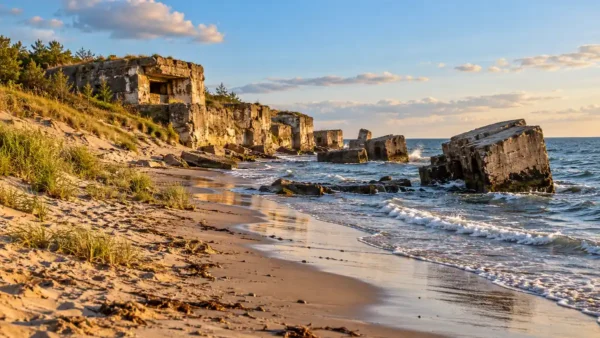
The shoreline runs about 24 km with 11 maintained beaches, so a crowded patch is always a choice. The water is the catch. The Baltic stays cold even in summer, and many visitors wade more than they swim. The sand runs unbroken past every station, so the stop you choose picks the crowd, not the beach.
Near the Lielupe end, the Jūrmala Open Air Museum at Buļļuciems preserves a fishing household from the 19th and early 20th centuries, a short add-on for anyone curious about the coast before the resort. Travelers who want a longer beach trip on Latvia’s west coast can weigh the things to do in Liepāja instead.
Jomas iela and the Majori beachfront
Majori is the stop most first-time visitors should use. Jomas iela, the pedestrian street, runs parallel to the sea close to the station, and a short path through the dunes puts you on the main beach. Cafés, terraces and the busiest stretch of sand all sit around one stop, about 30 minutes from Riga Central Station.
What sets it apart is density. No other pick puts a promenade, food and a swim this close together, so it works even with two or three hours to spare. The trade-off is company. On warm summer weekends, Majori is the most crowded part of the strip, and the promenade feels more resort than seaside. On a first visit with a half day or less, it is still the stop to choose.
The quieter beach between Bulduri and Dzintari
Bulduri and Dzintari, one or two stops before Majori, open onto the same quartz-sand beach with far fewer people. Pine forest runs down to the dunes here. The stretch feels residential, with none of the bustle of the resort centre.
Its advantage over Majori is space. You trade the promenade cafés for room to spread out, and the walk back to the station passes wooden villas that preview the architecture picks. The limitation is services: there are fewer places to eat near the sand, so bring water and snacks on a hot day. The water is just as cold, so this beach rewards sunbathing and long walks more than swimming. It suits anyone who came for sand and pines, not a promenade.
Līvu Akvaparks for families and cold-sea days
Līvu Akvaparks is a year-round indoor water park, and it is the one pick on this page that does not depend on the weather. When the sea is too cold or the sky turns grey, it keeps a family day on track, whether you are travelling with children or the sea is simply off the table.
It stands apart because it swaps the Baltic for pools and slides. Children who refuse the sea after one toe get a full day of water anyway, and parents get a predictable plan in a resort that otherwise leans on sunshine. Inside, though, you give up the beach, the pines and the villas that make Jūrmala distinctive. Opening hours change by season.
Tours and activities
Book skip-the-line tickets, day trips and local tours with free cancellation on most activities.
You can also browse everything on getyourguide.com.
Tripstou may earn a commission if you book through this link, at no extra cost to you.
Best for Architecture and Culture: Villas, the Forest Tower and Dzintari
Walk the villa streets between Dzintari and Dubulti; the forest tower and concert hall sit on the same stretch. The wooden Art Nouveau villas across Dzintari, Majori and Dubulti make Jūrmala look like nowhere else in Latvia. The tower adds a view over the strip, and the concert hall adds a summer evening.
All three picks are walkable from one another, so a single afternoon can hold two of them. The concert hall changes the plan. An overnight stay is worth it mainly for a sunset on the beach or an evening concert; without either, Riga is close enough to return the same day.
The villa walk costs nothing and fills the hours the cold sea leaves empty. It is the pick that turns a grey beach afternoon into a full Jūrmala day.
The wooden villa walk from Dzintari to Dubulti
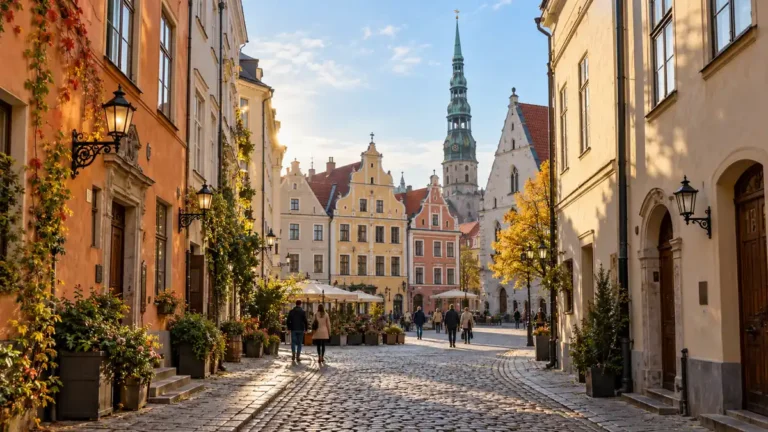
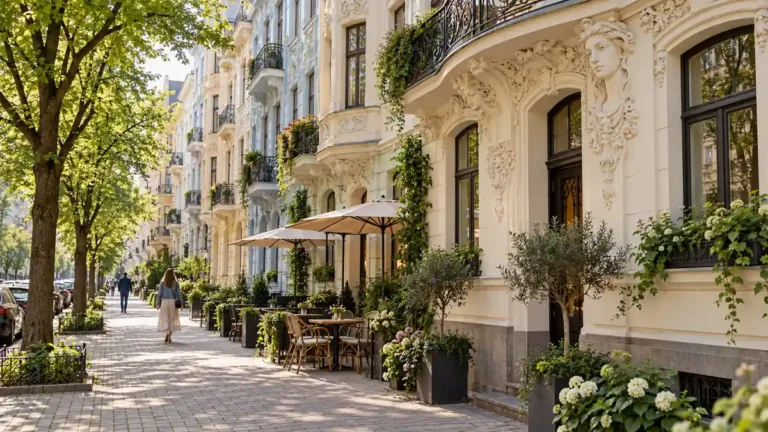
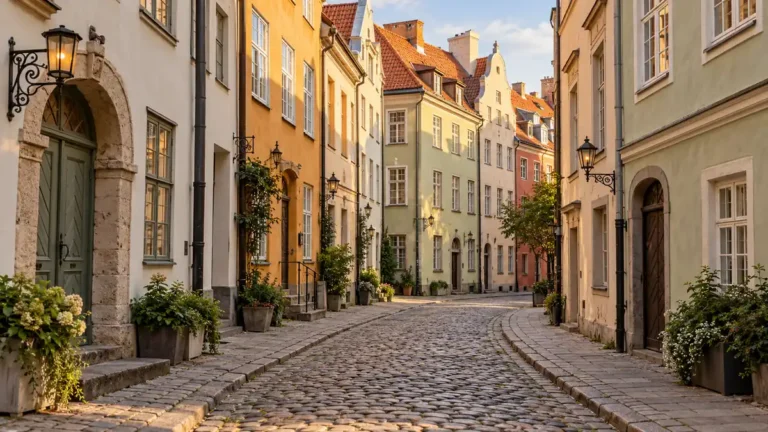
The villa walk from Dzintari to Dubulti shows Jūrmala’s architecture in its natural setting: carved verandas, turrets and lacy trim on houses set back among the pines. Most villas are private homes, so this is a streetscape viewed from the pavement. The route passes through Majori, which makes it easy to link with the beach picks.
Its distinction is that it needs no ticket, no season and no sunshine. In Dubulti, the route passes the Aspazija House, linked to the Latvian poet whose name it carries. The limitation is access. Most interiors stay closed, so expect facades, and keep your voice down on residential lanes. Anyone who would sooner walk than sunbathe will get the most from it.
Dzintari Forest Park and its viewing tower
Dzintari Forest Park is a stand of pine forest behind the beach with a viewing tower above the treetops. From the top, the strip reads like a map: sea on one side, forest and river on the other, villa roofs in between.
It is the elevated view closest to the beach and the villas, which makes it the best way to grasp Jūrmala’s shape before walking it. The park also has playgrounds and shaded paths, so it doubles as a family break between the beach and the villas. The trade-off is scale. The visit is short, and on its own it rarely justifies the train ride from Riga. Treat it as a stop inside the villa walk, for the whole strip in one look or a playground break.
Dzintari Concert Hall in summer
Dzintari Concert Hall pairs an indoor hall with an open-air summer hall by the sea, and its summer programme is the main reason to stay in Jūrmala past sunset. The setting does much of the work. Pines, sea air and live music make it a long-standing fixture of the resort’s summer evenings.
It differs from every other pick because it belongs to the evening. The beach and villa picks fill the daylight; the concert hall fills the hours after it, and that is the case for a night on the coast. It depends on timing, though: the open-air hall is a summer venue, and the programme decides whether anything suits your dates. Book the night around a concert, not the other way round; for a summer overnight, this is the evening plan.
Ķemeri National Park Is Worth the Extra Train Leg
Ķemeri National Park is worth the extra train leg if you give it its own half day. The Great Ķemeri Bog Boardwalk is the most distinctive walk in Jūrmala. The short loop takes about an hour, and the long one takes about an hour and a half with its observation tower.
Ķemeri is Latvia’s third-largest national park, and it sits at the far western end of Jūrmala. That distance is the trade-off. Pairing the bog with Majori beach means a longer train leg and a tighter day, so treat Ķemeri as one anchor and the beach as the other. Nature lovers should start here.
The loops are short; the walk in is not. About 3 km each way from Ķemeri station is what turns a one-hour boardwalk loop into a half-day outing.
The Great Ķemeri Bog Boardwalk
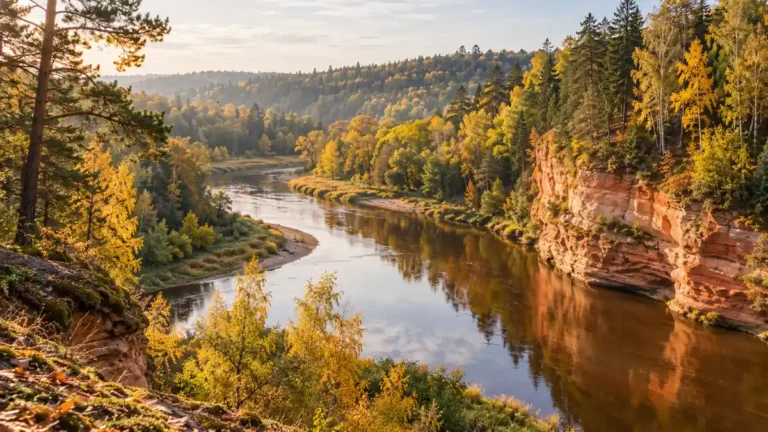
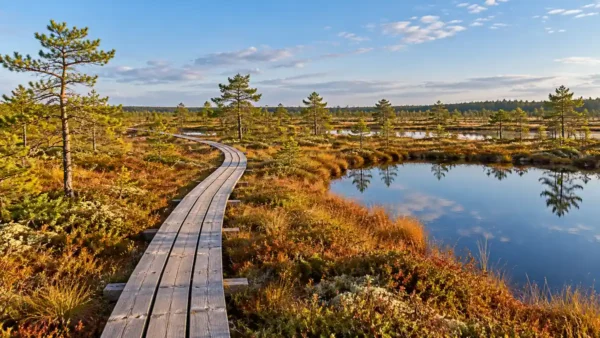
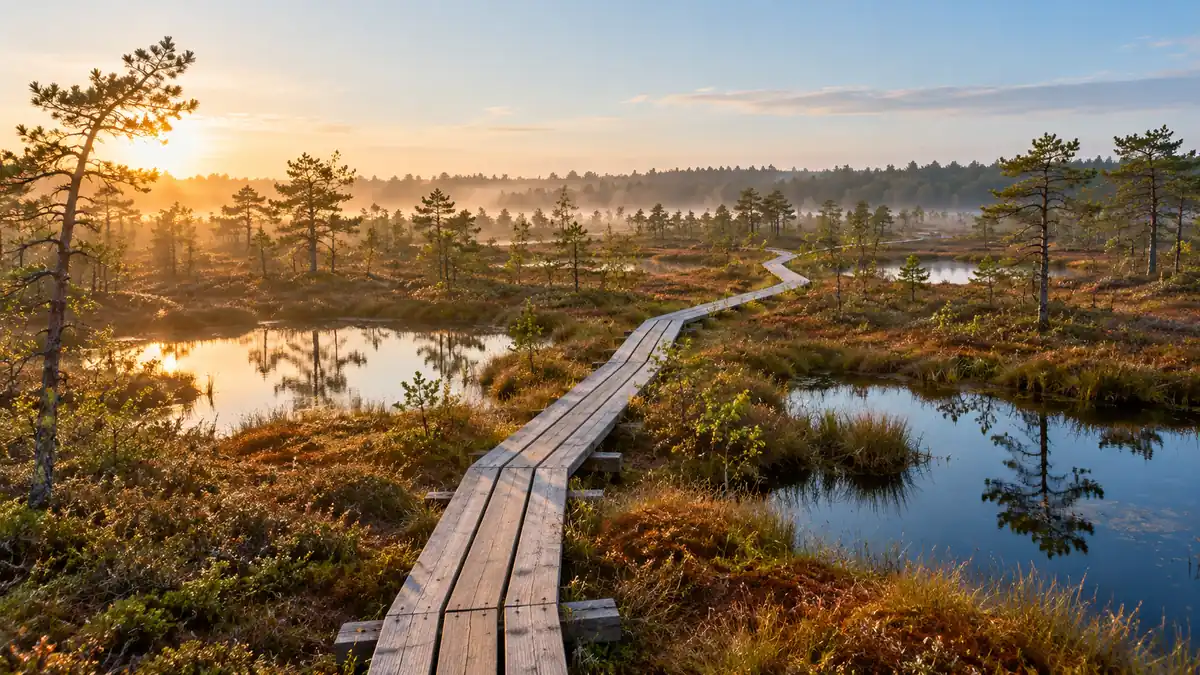
The Great Ķemeri Bog Boardwalk crosses a raised bog of dark pools, moss and stunted pines on two loops: about 1.5 km (roughly one hour) and about 3.5 km (roughly an hour and a half). The longer loop includes the observation tower. Entry is free.
No other pick shows this landscape, and it is why Jūrmala works for nature travelers as well as beachgoers. Reaching it takes more effort. You can walk about 3 km from Ķemeri station, drive, or use a seasonal summer bus. The boards are not suitable for wheelchairs, turn slippery in rain and are not cleared of snow in winter, so sturdy shoes matter. Choose it when nature matters more to you than the beach, and give it a full day or an overnight.
Ķemeri Resort Park and the historic water tower
Ķemeri Resort Park is the spa-town half of Ķemeri: landscaped paths around the historic water tower, in the part of town where the old spa resort took shape. It sits a flat stroll from the station and explains why a resort grew up at this end of the coast at all.
It is distinct as the only pick that blends nature with the spa story, and it asks for no long approach. It is also low-key. This is a gentle walk, and on its own it is a thin reward for the longer train leg. Pair it with the boardwalk when time allows, or use it as the easy half of a Ķemeri day when legs or weather say no to the bog: it gives you Ķemeri without the boardwalk’s 3 km approach.
Half Day, Full Day or Overnight in Jūrmala?
A half day covers Majori; a full day adds either the villa walk or Ķemeri, never both comfortably. An overnight is what adds the Dzintari concert hall and a slower Ķemeri visit. The limit is the strip itself: every extra anchor costs travel time along the same rail line.
The picks fall into three groups. The beach group clusters around Majori and the stations just east of it, and it suits first visits and hot days. The architecture group runs from Dzintari to Dubulti and overlaps the beach zone, so the two combine easily on foot. The nature group sits at Ķemeri, well west of everything else.
| Stretch | Picks there | Best for | Time to allow |
|---|---|---|---|
| Majori | Jomas iela and the main beachfront | First visits with limited time | A half day with a swim or stroll |
| Bulduri–Dzintari | Quieter beach, with villas on the walk back | Sand and pines without the promenade crowds | A half day, easily stretched to a full one |
| Dzintari–Dubulti | Villa walk, forest park tower and concert hall | Architecture, a viewpoint and summer evenings | An afternoon on foot, plus an evening concert |
| Ķemeri | Bog boardwalk and the historic resort park | Nature over beach, unhurried travelers | A half day including the walk in |
- Half day — Majori beach and Jomas iela, with a swim or a stroll — fits travelers taking a break from a Riga city stay.
- Full day — the beach plus either the villa walk (same stretch, easy) or Ķemeri (longer leg, bigger reward) — fits day-trippers with one clear interest beyond the sand.
- Overnight — a summer concert at Dzintari, a beach sunset and an unhurried morning at Ķemeri — fits slow travelers and summer visits.
Bad weather reshuffles the plan. On a cold or rainy day, swap the beach for Līvu Akvaparks or the villa walk, both of which hold up without sun. Peak season runs June to August; off-season Jūrmala is quieter, and some venues shorten their hours.
For a full day with Ķemeri, go there first and stop at Majori on the way back to Riga. The long leg is done early. The beach then absorbs the evening, and a late train home is easy from the hub. If you are still weighing Jūrmala against other options, the guide to day trips from Riga shows where it fits.
For many travelers Jūrmala is one stop on a wider route. The Latvia travel guide sets it against the rest of the country and helps decide how much of your trip the coast deserves.
How to Get From Riga to Jūrmala and Which Station to Use
Take the train from Riga Central Station; Majori, about 30 minutes away, is the stop for most first visits. Trains run frequently along one line. Get off at Majori for the beach and Jomas iela, at Bulduri or Dzintari for a quieter beach, and at Ķemeri for the bog.
The stations run in this order from the Riga side:
- Lielupe — the river end of the strip, closest to the Buļļuciems open-air museum.
- Bulduri — quieter beach backed by pines.
- Dzintari — quieter beach, the forest park tower and the concert hall.
- Majori — Jomas iela, the main beach and the start of most first visits.
- Dubulti — the western end of the villa walk and the Aspazija House.
- Sloka and Ķemeri — further west; Ķemeri serves the resort park and the bog boardwalk.
Tickets are cheap. Fares run around €2.30–2.80 depending on the station, and buying on board costs more, so get a ticket before boarding. Minibuses from Riga International Bus Terminal are an alternative on some stretches. Cyclists can follow the EuroVelo 10 route from Riga, about 20 km, and arrive with a bike for the flat villa streets.
Is there a fee to drive into Jūrmala?
Yes. Cars pay an entry fee of €5 per day to enter Jūrmala, collected at the Priedaine toll point when arriving from Riga or at Vaivari when coming from Tukums. You can pay by cash, card or app. Travelers arriving by train or bike pay no entry fee, which is one more reason to leave the car behind.
Train and bus tickets
Compare routes, schedules and prices across rail and bus operators in one search, with mobile tickets on your phone.
New to Omio? Code NEW10 takes 10% off your first booking — or APPNEW10 if you book inside the Omio app. Both apply to bookings up to €80.
Search routes and compare prices on Omio →
Tripstou may earn a commission if you book through this link, at no extra cost to you.
How These Jūrmala Picks Were Checked
This page is a curated selection of things to do along the Jūrmala coast, from the Majori beachfront to the Ķemeri bog, chosen by trip style, traveler fit and time from Riga; it is not a full Jūrmala travel guide, an itinerary, a hotel list or a ranking of day trips from Riga.
The reviewer behind this Jūrmala shortlist is Alex Perrut, working in tourism since 2015, who signed it off for the Tripstou editorial team. The draft was produced with AI assistance; our editorial process describes both steps.
Official sources consulted: Latvia Travel, Ministry of Economics of Latvia, Visit Jūrmala.
Did this guide save you time or money? Tripstou is independent and reader-funded — if you'd like to give something back, you can support the site with a crypto contribution of any size.