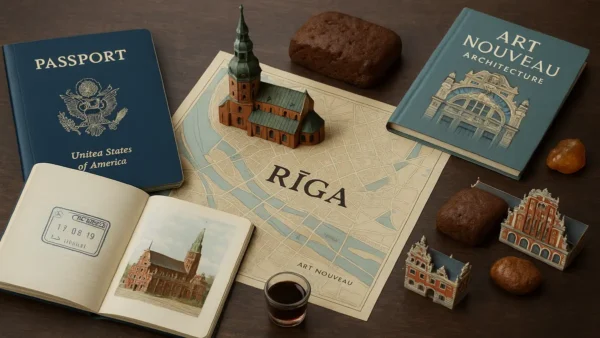

Riga’s centre is compact, so the choice of base turns on atmosphere against sleep. Old Town puts the city’s sights, cafés and bars at the door, and the same streets run loud on weekend nights. The boulevard belt of Centrs and the calmer Quiet Centre sit a short walk away and trade some of that buzz for quieter nights and better value. Across the Daugava, Agenskalns and Kipsala offer a lived-in neighbourhood for travelers staying longer.
This guide gives a verdict on each of those options, sets out the room checks that matter before you book, and maps every traveler type to the area that fits: first-timers, couples, families, nightlife fans, light sleepers, budget travelers and long-stayers. It also covers the fringe areas that turn up in searches and explains why they sit outside the main list.
Quick Answer
Old Town (Vecriga) is the best area in Riga for first-time visitors because everything is walkable. The tradeoff is weekend noise and tourist pricing on the core streets. Centrs or the Quiet Centre gives a calmer, better-value base within a short walk, while Agenskalns across the river suits a local, longer stay.
Trust Layer
Tripstou stay guide for travelers choosing where to base. Covers area atmosphere, budget, convenience, noise, and traveler fit.
Produced with AI assistance and reviewed by Alex Perrut, working in tourism since 2015, for the Tripstou editorial team. See our editorial process for details.
Last factual review: September 29, 2026.
Official sources consulted: Latvia Travel, Latvian Ministry of Economics, Live Riga.
Key Takeaways
- First-time visitors should base in Old Town (Vecriga), where every main sight is a short walk from the door.
- Old Town’s tradeoff is weekend noise: a street-facing room on a core lane for a Friday–Saturday stay is the classic booking mistake.
- Light sleepers and architecture lovers should book the Quiet Centre, the Art Nouveau district about a 10-minute walk from Old Town.
- Centrs is the value pick: its edge toward Central Station has the cheapest central rooms, best on a side street set back from the station.
- Agenskalns and Kipsala across the Daugava suit stays longer than three or four nights; on a weekend break, the bridge crossing costs time.
- Jurmala is a beach base, not a Riga base: book it for a beach-first trip, never for city sightseeing.
Table of Contents
Old Town (Vecriga) is the best overall pick for first-timers
Old Town (Vecriga) is the best base for a first visit because every main sight is within a short walk. It suits short stays and travelers who want to step out the door into the city. The tradeoff is weekend noise on the core streets and tourist pricing on rooms and terraces.
Day to day, Old Town is cobbled lanes, church spires and café terraces that stay busy from breakfast to late evening. It is also the nightlife base of the city. Bars fill from early evening, and Friday and Saturday nights run loud on the main streets.
Convenience is the reason to pay for it. Old Town is Riga’s UNESCO-listed historic centre, and most of Riga’s main sights sit inside or beside it. A two-day Riga itinerary works entirely on foot from here, with no transport to plan.
Rooms sit at the mid-range to high-end end of the city. The premium buys location more than space or quiet.
Not every Old Town street is loud. Addresses toward the city canal and the park side, away from the main bar streets, are noticeably calmer at night while keeping the walk-everywhere benefit. An Old Town edge address near the canal delivers the walkability that justifies the Old Town premium without the weekend soundtrack of the core.
Best for: first-timers who want to walk out the door into the sights.
Hotels and places to stay
Compare hotels, apartments and stays for your dates in one search.
Search hotels and stays on hotels.com →
Tripstou may earn a commission if you book through this link, at no extra cost to you.
Centrs is the strongest alternative for value and calm
Centrs is the best alternative to Old Town for travelers who want central walkability without weekend noise. The boulevard and canal belt sits just outside the old core, a short walk from it. It suits return visitors and mid-range travelers who still want to be central, at better value than Old Town.
Centrs feels like a working city centre. Wide boulevards, office streets, cafés and the green edge of the park and canal set the tone by day. Evenings are calmer.
Old Town stays within easy walking distance, and the Freedom Monument works as the landmark between the two. Areas further out are a short tram or bus ride away. For how the centre fits the wider trip, the Riga guide covers orientation and getting around.
Price positioning runs budget to mid-range relative to Old Town, with more choice of apartments and larger rooms for the same spend. Centrs suits the traveler who spends evenings in Old Town and sleeps somewhere else: the walk home is short, and the noise stays behind.
Best for: travelers who want to be central but sleep well.
The Quiet Centre is where architecture lovers and light sleepers should book
The Quiet Centre is the best area for a calm central stay, about a 10-minute walk from Old Town. Also called the Art Nouveau or Embassy district, it holds Riga’s main Art Nouveau concentration and few late-night venues. It suits couples and architecture lovers; the tradeoff is fewer bars and restaurants on the doorstep.
Staying here feels residential. Embassy buildings, tree-lined streets and apartment blocks set a slower pace than anywhere else in the centre. Alberta iela is the showcase street, and Elizabetes iela and Strelnieku iela carry other major Art Nouveau buildings.
Old Town and Centrs are both reachable on foot, and the Art Nouveau streets count among things to do in Riga anyway. Nights are quiet. For dinner and drinks, most guests walk back toward Centrs or Old Town.
Price positioning runs mid-range to high-end, in line with the area’s period buildings and embassy setting. Staying near Alberta iela puts Riga’s Art Nouveau streets on the walk to breakfast; most visitors only see them on a timed detour.
Best for: couples and architecture-focused travelers who want quiet nights.
Agenskalns and Kipsala suit a local, across-the-river stay
Agenskalns and Kipsala are the best choice for a quiet, local stay if you accept being across the river. They suit longer or repeat stays and travelers who want a neighbourhood feel. The tradeoff is distance: Old Town is about 20 minutes on foot from Agenskalns, which is less convenient late at night.
Both sit on the left bank of the Daugava, Kipsala on its island. Agenskalns keeps streets of 19th-century wooden houses, and Kalnciema Quarter holds a Saturday market that gives the area its weekend rhythm. Kipsala adds riverside walks and views back across to the Old Town skyline.
Getting to the centre means crossing a bridge. By day the walk is pleasant. After dark it is less appealing on foot, and a short tram or bus ride takes over; the Riga guide covers the wider getting-around picture.
Price positioning runs budget to mid-range, and apartments dominate over hotels here, which suits self-catering stays. Agenskalns pays off past three or four nights; on a weekend break, the bridge crossing eats time better spent in the centre.
Best for: longer or repeat stays by travelers who want a lived-in neighbourhood.
Should you stay in Old Town or outside it?
Stay in Old Town for atmosphere on a first visit; stay outside it for quiet nights and value. Centrs and the Quiet Centre stay walkable because Riga’s centre is compact. For three nights or more, or for any light sleeper, outside wins; for one or two nights, Old Town usually does.
Choose Old Town for atmosphere, not silence. If you do book there, these checks decide how well you sleep:
- Room orientation: a courtyard-facing room cuts most street and terrace noise; a street-facing room on a core lane takes all of it.
- Floor: an upper-floor room puts distance between you and late-night foot traffic.
- Nights of the week: Friday and Saturday are the loud nights; a midweek stay in the core is far calmer.
- Distance from the bar streets: one or two streets away from the main bar strip changes the night.
- Edge or core: the canal and park edge keeps the walkability and drops much of the noise.
For a short break, either central choice works. The 2 days in Riga plan walks from Old Town or Centrs alike.
Price positioning is relative between areas, not a rate guide.
| Area | Atmosphere and noise | Walk to Old Town | Price positioning | Suits |
|---|---|---|---|---|
| Old Town | Historic and lively, loud on weekend nights | Already there, everything within walking distance | Mid-range to high-end, tourist premium | First visits and short weekend breaks |
| Centrs | Working boulevards and cafés, calmer after dark | A short walk, no transport needed | Budget to mid-range, better central value | Return visitors wanting central value |
| Quiet Centre | Residential Art Nouveau streets, quietest central nights | Around 10–15 minutes on foot | Mid-range to high-end positioning | Couples, architecture fans and light sleepers |
| Agenskalns–Kipsala | Local and quiet, wooden-house streets across the river | About 20 minutes on foot, over a bridge | Budget to mid-range, mostly apartments | Longer stays and repeat visits |
| Station–Central Market fringe | Busy by day, less pleasant after dark | Short walk to the Old Town edge | Budget, the cheapest central option | Budget travelers who pick a side street |
Where to Stay in Riga on a Budget
The best budget base is the edge of Centrs toward Central Station, cheaper than Old Town and still walkable. The streets around Central Market sit in the same budget bracket. The caveat: the station and market fringe is busy by day and less pleasant after dark, so pick a quieter side street.
- Budget: hostels and self-catering apartments on the Centrs edge and the station fringe; the compact centre means walking replaces most transport spend.
- Mid-range: hotels and apartments in Centrs and the Quiet Centre; Riga is kind to this style, with central rooms that skip the Old Town premium.
- High-end: the Old Town core and the Quiet Centre, where the premium buys location and period buildings.
The station and market area is busy, and pickpocketing is more common there than in the rest of the centre. Choose a street set back from the station. One block back from the station square keeps the budget price and drops most of the crowd. Maskavas Forstate, just beyond the market, is cheaper still but less tourist-oriented after dark; it is covered with the other fringe areas below. For wider cost and trip planning, see planning a trip to Riga.
Best Areas in Riga by Traveler Type
First-time visitors should book Old Town, light sleepers the Quiet Centre, and budget travelers the edge of Centrs. Couples lean to the Quiet Centre, families to the park side of Centrs, nightlife fans to Old Town, and longer or local stays to Agenskalns. Each pick trades some atmosphere for sleep, or the reverse.
- First-timers → Old Town: the sights are at the door, so a short stay loses no time getting around.
- Couples → Quiet Centre: tree-lined evening walks and calm streets suit a slower, two-person pace.
- Families → park side of Centrs or the Quiet Centre: more space in apartments, green space nearby and calmer nights for children.
- Nightlife → Old Town: the bars are here; book a courtyard-facing room to sleep afterwards.
- Quiet, away from party noise → Quiet Centre or Agenskalns: the fewest late-night venues of any area.
- Budget → Centrs edge or station fringe: the cheapest central rooms, as long as you choose a side street.
- Design and architecture → Quiet Centre: Alberta iela and Elizabetes iela sit on the doorstep.
- Longer or local stay → Agenskalns or Kipsala: apartments, the Saturday market and a neighbourhood rhythm.
- Two-day trip → Old Town or Centrs: both keep a two-day Riga itinerary fully on foot.
Two areas cover most trips. Old Town wins the first visit, and the Quiet Centre wins every stay where sleep matters more than the view from the terrace.
Other Areas Worth Knowing Before You Book
The station fringe, Maskavas Forstate, Miera iela and Jurmala are bookable, but none beats the main areas above. Each suits a narrower traveler: the budget-first visitor, the curious repeat visitor, the long-stayer or the beach-first trip. None of them is the right first base in Riga.
- Central Station and Central Market fringe: the cheapest central option, busy and prone to pickpocketing; it suits budget travelers who mostly need a bed and pick a side street.
- Maskavas Forstate (Moscow Suburb): cheap and characterful, but less tourist-oriented after dark; better for a repeat visitor who already knows the city.
- Miera iela and Avoti: creative, café-led streets that suit a longer or second stay, with a longer walk or a short tram ride into Old Town.
- Jurmala: a beach base, not a Riga base; fine for a beach-first trip, wrong for sightseeing in the city.
Keep these for a second visit. For how the city fits together as a whole, see the Riga guide.
Frequently Asked Questions
What is the safest area to stay in Riga?
Old Town, Centrs and the Quiet Centre are the most comfortable areas to stay in Riga, because their streets stay busy with visitors and residents into the evening. The Quiet Centre is the calmest at night. Take extra care with bags around Central Station and Central Market, where pickpocketing is more common than elsewhere in the centre.
Is it safe to stay near Riga Central Station or Central Market?
Yes, for most travelers, as long as you book on a side street set back from the station square. The station and market area is busy by day and less pleasant after dark. Keep valuables close in the crowds, where pickpocketing is more common, and walk back at night along the main, well-used streets.
Is Riga walkable from most hotels?
Yes. Hotels in Old Town, Centrs and the Quiet Centre put the historic centre within a short walk, so most visitors rarely need public transport for sightseeing. Across the river, Agenskalns is about 20 minutes on foot from Old Town, and a short tram or bus ride is easier after dark.
Is Jurmala a good base instead of Riga?
Jurmala is a good base only for a beach-first trip, not for seeing Riga. It is a resort town on the coast, so every city day starts with a trip in and ends with one back. For sightseeing, stay in central Riga and treat the beach as a day out.
Do you need a car if you stay in central Riga?
No. A car is unnecessary if you stay in Old Town, Centrs or the Quiet Centre, because the compact centre is walkable and trams and buses cover the rest. Old Town’s narrow cobbled lanes make driving and parking a burden, so a car only earns its place for trips beyond the city.
Is it better to book a hotel or an apartment in Riga?
Book a hotel for a short Old Town break and an apartment for a longer or family stay. Centrs offers more apartment choice than Old Town, and apartments dominate across the river in Agenskalns. The extra space and a kitchen pay off over several nights; a hotel’s front desk matters more on a quick weekend.
Related Guides
- Riga guide — plan the wider trip once the base is chosen.
- 2 days in Riga — how two days walk from a central base.
- Things to do in Riga — what is within reach of each area.
Did this guide save you time or money? Tripstou is independent and reader-funded — if you'd like to give something back, you can support the site with a crypto contribution of any size.