
You have read three Paris lists and they named the same twelve things. That is the problem with them. Almost nobody disagrees about which sights in Paris are famous, and fame is all a list can rank. The disagreement that actually decides whether your days feel brilliant or wasted is narrower and more useful: which version of each thing you took, and when you turned up. Two travelers can both say they did the Eiffel Tower and have had completely different afternoons. One came down delighted. The other paid more, waited longer, and stood in the wind looking at a city too far below to read. This guide ranks Paris experiences by what they return per hour and per euro, gives every one a verdict, and names the ones that do not repay the time. Several of the highest scorers are free, which is exactly why the count-driven lists bury them near the bottom.
Quick Answer
The best things to do in Paris come down to which version you book and when, not which famous sight. The Eiffel Tower and Louvre repay only in the right version, while free markets, canals and wandering score highest per hour. Book the two headline sights properly and give the rest to the free city.
Trust Layer
Tripstou attraction guide for travelers deciding whether an experience is worth doing and how to do it well. Covers value, booking versions, timing, access, and traveler fit.
Produced with AI assistance and reviewed by Alex Perrut, working in tourism since 2015, for the Tripstou editorial team. See our editorial process for details.
Last factual review: August 23, 2026.
Official sources consulted: France.fr, Atout France.
Key Takeaways
- In Paris the version you book decides the day far more than which famous sight you picked.
- Buy the second-floor Eiffel ticket over the pricier summit: the cheaper view is the better one.
- Never plan the Louvre for a Tuesday, book ahead, and enter with a shortlist of two or three departments.
- The Museum Pass is arithmetic, not a discount: it only wins if you genuinely enter several paid sights daily.
- Market mornings, canal-side hours and neighbourhood wandering cost nothing and outscore most ticketed sights on payoff per hour.
- Skip the Mona Lisa scrum, Champs-Élysées shopping and peak-hour Place du Tertre; each returns less than it costs.
Table of Contents
The Best Things to Do in Paris, Ranked by Payoff
Ranked by payoff per hour, the free Paris wins: market mornings, canal-side afternoons and unhurried neighbourhood walking. The famous paid sights come next, and only in the right version. A handful of household names finish last because they cost more hours than they return.
The ranking runs on payoff, not fame. Payoff is what an experience gives back for the hours and euros it takes out of a short trip, which is a completely different question from how recognisable it is. Fame and payoff are barely correlated in Paris, and the correlation gets worse the more famous the item gets.
Three things decide where an experience lands. The first is total hours consumed, which includes the queue, the cross-town journey and the recovery afterwards, not just the time inside. The second is whether the memory is specific to Paris or would have been much the same in any large city. The third is whether the experience survives being interrupted — the ones you can leave halfway through without losing anything score higher than the ones that demand a full commitment before they pay out.
For a first-time visitor with two to four days, that produces four tiers:
- The free tier: markets, canals, neighbourhood walking, café sitting. Worth it for everyone, including people on their fourth visit, because the payoff starts the moment you step outside and never involves a ticket. The tradeoff is that none of it photographs as a trophy.
- The paid headliners, in the right version: the Eiffel Tower and the Louvre. Worth it for first-time visitors who would genuinely regret skipping them, and only when booked ahead and kept small in scope. The tradeoff is real money plus a fixed slot inside an otherwise loose day.
- The conditional tier: Montmartre, a Seine cruise, the big-name viewpoints. Worth it or worthless depending entirely on the version and the hour, which is why they cause the most argument. The tradeoff is that they demand a decision from you before you go; turn up without one and the crowd picks the version for you.
- The famous items that do not repay: the Mona Lisa as a goal in itself, Champs-Élysées shopping, Place du Tertre at peak hour. Worth it for almost nobody, and named honestly in the final section. The tradeoff of ignoring them is a mild fear of missing out that fades by your second afternoon.
Notice what happens to fame as you move down that list. The tiers run almost perfectly inverted against recognition: the top tier is the hardest to name in advance and the easiest to enjoy, while the bottom tier is the one you could have described before leaving home. That inversion is why a count-driven list ranks Paris badly — a numbered list has no way to say that the fifth-most-famous thing beats the first.
This is a value ranking, never a schedule. Which of these lands on which day, and in what order, is a separate question answered in our 2 days in Paris itinerary and 3 days in Paris itinerary. If you are still deciding whether Paris deserves the days at all — against Lyon, Provence or the Riviera — settle that first with our guide to the best places to visit in France.
Is Going Up the Eiffel Tower Worth It?
Going up the Eiffel Tower is worth it once, on the second floor, booked in advance. First-time visitors and anyone travelling with children get the most from the ascent. Everyone else can skip it honestly, because the best views of Paris contain the tower instead of coming from it.
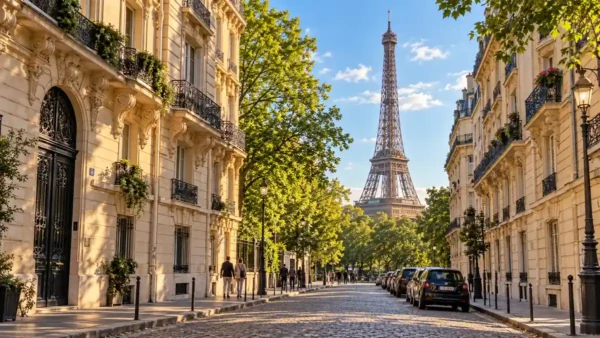
The ascent is not the same experience as the tower. Standing underneath the iron and looking up is free, takes minutes, and is the image most people actually came for. Going up adds a panorama that Paris, being low-rise and uniform, delivers in a fairly similar form from several places. That is why the honest verdict splits by traveler. If the tower is on your list because you want to have been up it, go up. If it is on your list because it is the Eiffel Tower, the ground and the Champ de Mars already give you the thing you came for.
Second Floor or Summit: Which Ticket to Buy
Four official ticket versions exist, each sold in three age bands, and they are not equally good value.
- Stairs to the second floor. The cheapest official version. Suits fit travelers who would prefer not to stand in a lift queue and who like the view opening gradually through the ironwork. The tradeoff: no summit access on this ticket, and the climb is fully exposed in bad weather.
- Lift to the second floor. An adult ticket is priced at €23.50, subject to change, and this is the version most visitors should buy. Suits first-timers, families and anyone who does not want the stairs. The tradeoff: it is the busiest level of the tower.
- Lift to the summit. An adult ticket is priced at €36.70, subject to change, which is materially more than the second floor. Suits travelers who want the altitude itself, and repeat visitors who have already done the lower level. The tradeoff: the view flattens and the space is tight.
- Stairs to the second floor plus lift to the summit. The hybrid, cheaper than taking the lift the whole way. Suits fit travelers who still want the top. The tradeoff: you commit to the climb before you know how you will feel about the crowd up there.
The age bands matter more than most families expect. Every version is sold in three bands, with children and young adults paying substantially less than adults, so the gap between a second-floor family ticket and a summit family ticket multiplies with each person you add. Groups feel the price ladder far more sharply than a solo traveler does.
Here the price ladder runs opposite to the view. From the summit, Paris flattens into a map and the streets stop being readable; from the second floor the city stays legible, with rooftops, boulevards and the river at a scale your eye can hold. Reviewers consistently rank the cheaper view above the expensive one.
Treat summit access as conditional. It can close in high wind or bad weather, and availability tightens in peak periods, so any plan that depends on reaching the top should have a second-floor version you would still be happy with. Published prices change. Confirm the current figure on the official ticket page before you book.
Montparnasse Tower vs Eiffel Tower for the Best View of Paris
Montparnasse wins the view; the Eiffel Tower wins the experience. The one view of Paris you cannot get from the Eiffel Tower is the Eiffel Tower, and that absence decides the comparison for most photographers. Both are worth doing for different reasons, and almost nobody needs both on a short trip.
| Viewpoint | What the panorama contains | Worth it for | Main tradeoff |
|---|---|---|---|
| Eiffel Tower, second floor | Readable rooftops, boulevards and the river below | First-time visitors who want the classic ascent | Busiest level, and queues persist with timed tickets |
| Eiffel Tower, summit | A flattened map of the whole Paris basin | Travelers who want the height as the point | Costs materially more and can close in weather |
| Montparnasse observation deck | The Eiffel Tower standing inside the skyline | Photographers and anyone on a repeat visit | The building is charmless when seen from below |
| Arc de Triomphe terrace | Twelve avenues radiating out beneath your feet | Travelers who prefer city structure to altitude | The lowest vantage point of the four |
The tiebreaker is what you want to take home. If the answer is a photograph with the tower in it, the tower is the wrong place to be standing. If the answer is the memory of having been up there, pay for the iron and skip the rest.
Tours and activities
Book skip-the-line tickets, day trips and local tours with free cancellation on most activities.
You can also browse everything on getyourguide.com.
Tripstou may earn a commission if you book through this link, at no extra cost to you.
Is the Louvre Worth Visiting?
The Louvre is worth visiting for almost everyone, on one condition: you go in with a shortlist. Treated as a museum with three or four things you actually want to see, it is a highlight of the trip. Treated as a building to be finished, it eats a day and returns sore feet.
The collection is genuinely extraordinary, and the building is half the reason to go. What defeats people is scale. The Louvre punishes completeness, and nobody has ever walked out of it wishing they had covered one more wing. Visitors who pick a department, walk it properly and leave while still interested rate the museum far higher than those who tried to see everything.
Three visit shapes work, and they suit different people:
- The short raid: one department, an hour or two. Suits travelers who want to have seen the Louvre without giving it a morning, and anyone travelling with children whose patience is the real constraint. The tradeoff: you will walk past a hundred things you would have liked.
- The half-day: two or three departments chosen in advance. Suits first-time visitors who genuinely care about the collection and can pace themselves. The tradeoff: it takes the largest single block of time any indoor experience in this guide will ask of you.
- The late-evening return. Suits repeat visitors and anyone who found the daytime crowd unbearable the first time. The tradeoff: it spends an evening, which in Paris competes with the strongest free hours of the day.
What fails is the fourth shape, the one most people default to: arrive without a plan, follow the signs to the famous objects, and let the building’s own traffic decide the route. That version produces the exhausted, faintly disappointed Louvre visit everyone has heard about, and it is entirely avoidable.
Is the Mona Lisa Worth Seeing?
The Mona Lisa is worth a brief detour and never worth building a visit around. The painting sits behind glass at the far end of a moving crowd, and the experience is of the crowd more than the picture. Walk past it on the way to something you chose yourself, and keep going.
The exception is honest and common. If you would spend the rest of the trip mildly regretting that you were in the building and did not look, then look. Families ticking it off with children usually find the scrum itself the memorable part. Anyone on a second visit, or anyone who came for the collection instead of the checklist, loses nothing by skipping it entirely.
The practical version of the verdict is short: know where the painting hangs before you go in, so the detour costs you minutes and not the shape of the whole visit.
How to Do the Louvre Without Losing the Day
A handful of execution facts decide how the visit goes, and they matter more than any route through the galleries.
- Never on a Tuesday. The museum is closed that day, and it catches out a steady stream of visitors every week.
- Use a late-opening evening. The Louvre runs extended hours on Wednesday and Friday, and those late slots are the calmest ticketed hours of the week, once the organised groups have moved on.
- Book ahead. Advance booking is required during the summer window and sensible at any time of year; walk-up entry is the fastest way to lose a morning.
- Know which rate applies to you. Admission runs on two tiers: €22 for visitors from the European Economic Area and €32 for non-EEA visitors.
- The free window is narrow. Entry is free on the first Friday of the month after 6pm, excluding July and August, plus 14 July. Older guides still circulate a different monthly free-day claim that no longer applies, so ignore it and check the official site.
A small group should skip it outright. Travelers who know they bounce off large museums lose nothing by giving those hours to the Orsay, the Orangerie or the street, and they lose a great deal by dutifully queuing for a building they will not enjoy.
Pick your wings before you arrive, not at the pyramid. Two or three departments chosen in advance turn the Louvre into a highlight of the trip; the same museum entered without a plan turns into a corridor.
Is the Paris Museum Pass Worth It?
The Paris Museum Pass is worth it only if you genuinely enter multiple paid sights per day. It is arithmetic, not a discount: the pass buys density, and density is what most trips actually lack. Count the paid entries your plan really contains, honestly, before you buy anything.
The honest count is the whole decision. Most travelers price a pass against the trip they imagine, then take the trip they actually want, which involves fewer museums and more sitting outside. If your realistic day holds one paid entry plus a long lunch and a walk, the pass loses. If it holds several ticketed sights back to back, day after day, it wins comfortably.
Run the count per day, not across the whole trip. A pass only earns during the days it actually covers, so an afternoon spent by the canal inside that window is an afternoon of the pass you paid for and did not use. Travelers who buy the longest option to feel covered usually get the worst value of anyone.
- Count entries, not intentions. Write down only the paid sights you would pay for individually with no pass in hand. That list, not the wish list, is the one the arithmetic runs on.
- The non-EEA tier raises the stakes. Visitors paying the higher Louvre rate cross the break-even faster than EEA visitors doing the identical itinerary, so the same pass is a better deal for some passports than others.
- Skip it if your trip leans free or slow. Travelers built around markets, neighbourhoods and long meals will never enter enough turnstiles, and a pass quietly pressures you into a pace you did not want.
Buy passes and tickets last, once the shape of the trip is settled. For the wider budget and logistics picture that this decision sits inside, our Paris travel guide is the next step.
Montmartre Is Worth It — Before the Crowds Arrive
Montmartre repays the climb, and it repays it best before the coach groups arrive. The neighbourhood itself is the experience: stairs, quiet streets and a working village grafted onto a hill. Place du Tertre at peak hour is the version that disappoints, and it disappoints reliably.
Go early, while the bakeries are the busiest thing on the street. The timing here is a sequence, not a clock: what decides your Montmartre is whether you arrive before or after the organised groups, and the two outcomes barely resemble each other.
Montmartre comes in three versions, and they are barely the same place:
- The early walk, ahead of the groups. Suits anyone who likes a neighbourhood to reveal itself slowly: open shutters, residents on the stairs, the vineyard and the western lanes with room to stand in them. The tradeoff: you give up a slow start to the day, and the cafés are still waking up.
- The Sacré-Cœur steps at their busiest. Suits first-time visitors who want the postcard view and are content to share it with several hundred people. The tradeoff: the crush on the steps becomes the memory most people take home, and it is not the good one.
- The evening version, once the coaches have gone. Suits travelers happy to climb twice and repeat visitors who already have the daytime photographs. The tradeoff: the streets are darker and steeper than they looked at midday, and the hill is unforgiving on the way down.
If only one version fits your trip, take the early one. It is the only version where the neighbourhood, and not the crowd, is the thing you actually experienced.
The further you drift from the Sacré-Cœur steps, the better Montmartre gets, and it takes only two or three streets to get there. That is the whole trick. Hardly anyone applies it.
Montmartre suits travelers who like walking and are happy for a neighbourhood to be the attraction in its own right. It suits families less well, because the hill is steep and the stairs are relentless. The free version is the strong one: the walk, the views between buildings, the quieter western streets. Paid add-ons up here are optional extras, not the reason to come.
The Best Free Things to Do in Paris Beat Half the Paid Ones
The highest payoff-per-euro experiences in Paris cost nothing, and listicles rank them last because they rank by fame. Market mornings, the Canal Saint-Martin and unhurried wandering deliver more memory per hour than most ticketed sights. They also scale: they work on a first visit and on a fifth.
Free experiences carry a structural advantage nobody mentions. They have no sunk cost, so you abandon them the moment they stop being good, while a paid sight gets finished out of stubbornness because the money is already gone. In a city as walkable as Paris, that freedom is worth more than any skip-the-line upgrade.
The free tier is not one experience but four, and they suit different people:
- A market morning. Suits travelers who want to see the city working instead of performing, and anyone who would sooner assemble lunch than book it. The tradeoff: mornings only, and the good ones are crowded in a way that has nothing to do with tourism.
- An hour on the Canal Saint-Martin. Suits people happy to sit and watch a neighbourhood move at its own pace. The tradeoff: nothing happens, which is precisely the point and precisely why some travelers hate it.
- Unhurried walking, especially the covered passages and the smaller Marais streets. Suits anyone who finds things by accident and is not chasing a list. The tradeoff: it resists planning, so it works only if you leave genuinely unbooked hours in the day.
- Sitting outside a café for longer than feels reasonable. Suits travelers who came for the texture of the place more than its monuments. The tradeoff: it costs a coffee and it feels like doing nothing, which is why most visitors cut it first.
Free does not automatically mean worth it. The sunset crush on the Sacré-Cœur steps and the peak-hour picnic scrum on the Champ de Mars both cost nothing and both return a photograph you have already seen, taken from inside a crowd you did not want. Cost is one axis of payoff. It was never the whole of it.
The strongest free experiences share a texture you cannot photograph: a canal bank at the end of an afternoon, a covered passage found by accident, an hour on a café terrace watching a street work. This tier suits repeat visitors above all, plus anyone who has already dealt with the big two and wants the rest of the trip to feel like a stay instead of a checklist. For how the same logic plays out beyond the capital, see our guide to things to do in France.
The Markets Worth Crossing Town For
Go in the morning, while the stalls are still full and the traders still have patience. That one habit matters more than which market you pick, but a few are worth the journey.
- Marché d’Aligre. Worth it for travelers who want a market Parisians actually shop at, with a covered hall and a scrappy open-air section side by side. The tradeoff: it is genuinely crowded and not arranged for photographs.
- Marché des Enfants Rouges. Worth it for anyone who wants lunch more than groceries, in the oldest covered market in the city. The tradeoff: it has become a food court with a heritage roof, and prices reflect the Marais around it.
- Rue Mouffetard. Worth it for first-time visitors who want a sloping market street with cheese shops and bakeries rather than a hall. The tradeoff: the tourist-facing end has thinned out, so keep walking downhill.
Market days and opening hours differ by site and change over time, so check the current schedule for the specific market before you cross town for it.
What’s Overrated in Paris — and What to Do Instead
Four Paris fixtures cost more hours than they return, and each has a better substitute nearby. The Mona Lisa scrum, Champs-Élysées shopping, peak-hour Place du Tertre and queue-for-the-photo restaurants share one flaw. Each spends unrepeatable Paris hours confirming something you already knew from photographs.
- The Mona Lisa as a destination. Costs you the calm half of a Louvre visit and returns a glimpse over shoulders. Still worth it for anyone who would otherwise regret it. Instead: pick a department you care about and walk it properly.
- Champs-Élysées shopping. Costs an afternoon on a wide, loud avenue selling the same brands as your own city. Still worth it for the walk up towards the Arc de Triomphe, which is genuinely good. Instead: shop the Marais or Saint-Germain, where the streets themselves are the point.
- Place du Tertre at peak hour. Costs the best part of a Montmartre visit and returns a queue for a caricature. Still worth it if you arrive ahead of the groups. Instead: walk the quieter streets on the far side of the hill.
- Queue-for-the-photo restaurants and bakeries. Costs an hour standing still in a city built for walking. Still worth it if the queue is short and you are already passing. Instead: eat at the second-best place on the same street, which is usually excellent and usually empty.
The pattern behind all four is easy to spot in advance. Ask whether the queue is longer than the experience, and whether you already hold the image in your head from photographs. If both answers are yes, the thing has nothing left to give you but confirmation, and confirmation is the cheapest thing Paris sells.
Versailles is not overrated; it simply is not in Paris, and treating it as a city attraction is what wrecks people’s days. It belongs to a different kind of outing, covered in our guide to day trips from Paris.
So how does a first-timer with limited days choose across the tiers? Choose the version before you choose the sight. Decide which paid headliners you would actually regret missing, keep that list short, book those properly, and give everything left over to the free tier without guilt about what you skipped. Paris rewards the traveler who did four things well far more than the one who did twelve things badly, and that is the only ranking on this page that never changes.
Frequently Asked Questions
How Many Museums Do You Need to Break Even on the Paris Museum Pass?
No fixed number works, because what matters is your entries per covered day. Stacking several ticketed sights into each day of the pass is what clears its cost; a plan holding one paid entry a day, plus meals and walking, never gets there however long the pass runs.
Is the Louvre Closed on Tuesdays?
Yes, the Louvre is closed every Tuesday, which quietly wrecks more Paris mornings than any queue. If Tuesday is the only slot your trip has, treat that as a decision made: give the day to the free city or another collection instead of reshaping everything else around one museum.
When Is the Louvre Free to Enter?
Free general admission runs on the first Friday of each month after 6pm, excluding July and August, plus 14 July. Separately, and far more usefully, entry is always free for under-18s and for EEA residents under 26 with ID, along with several other listed categories.
Do You Need to Book the Louvre in Advance?
Yes in the peak summer window, when time-slot reservations are required for every visitor, and sensible year-round. The detail most guides miss is that the museum recommends a booked slot even for visitors entitled to free entry, so the entitlement alone is not a shortcut past the queue.
Why Is the Louvre More Expensive for Non-EU Visitors?
The Louvre runs a two-tier admission rate: €22 for visitors from the European Economic Area and €32 for everyone else. It is a stated pricing policy, not a surcharge applied at the door. Practically, it means non-EEA travelers reach the point where a multi-site pass pays off faster.
Is a Seine River Cruise Worth It?
A Seine cruise is worth it for first-time visitors who want the monuments lined up in one pass. It suits families and anyone footsore by the third day of walking. The tradeoff is a commentary track and a fixed seat, so travelers who prefer finding things on foot gain little from it.
Is Sainte-Chapelle Worth Visiting?
Sainte-Chapelle is worth it for anyone who reacts to stained glass, and largely wasted on anyone who does not. The upper chapel is one small room, so the visit is short and the payoff is concentrated. Go on a bright day; the windows depend entirely on the light behind them.
Is the Moulin Rouge Show Worth It?
The Moulin Rouge is worth it only if the cabaret itself is the draw, not the address. It suits travelers who want a full evening staged around a table and are relaxed about the price. Anyone hoping for a bohemian Montmartre survival will find a polished, heavily scheduled production instead.
Related Guides
- Paris travel guide — where to stay, how to get around, and what the trip costs.
- 2 days in Paris itinerary — how to sequence a short first visit without wasting hours.
- 3 days in Paris itinerary — what the extra day is genuinely worth adding.
- Day trips from Paris — Versailles and the rest, judged by whether they earn the journey.
- Things to do in France — the national picture, ranked by experience instead of postcard.
- Best places to visit in France — how Paris compares when you are still choosing regions.
Did this guide save you time or money? Tripstou is independent and reader-funded — if you'd like to give something back, you can support the site with a crypto contribution of any size.