Milan is one of Europe’s most visited cities, and safety is the question that quietly sits behind most trip plans. The honest answer is reassuring: this is a broadly safe city where petty crime, not violence, is the real thing to manage. Below is a calm, practical look at the areas that warrant awareness, how the common scams and pickpockets actually work, night safety, solo and female travel, and getting around by metro and tram.
Quick Answer
Yes, Milan is generally safe for travellers, and the main risk is pickpocketing and scams rather than violent crime. Staying alert in crowds, stations, and at night is what keeps you safe. Standard city-travel precautions are enough for tourists, solo travellers, and families exploring the city on foot.
Trust Layer
Tripstou planning guide for travelers resolving one travel decision. Covers the main variable, traveler context, and practical tradeoffs.
Produced with AI assistance and reviewed by Alex Perrut, working in tourism since 2015, for the Tripstou editorial team. See our editorial process for details.
Last factual review: July 17, 2026.
Official sources consulted: italia.it, enit.it.
Key Takeaways
- Milan is a broadly safe city where opportunistic pickpocketing and scams, not violent crime, are the risks travellers actually manage.
- Risk tracks crowds and empty extremes, so stations, packed sights, and rush-hour metro carriages deserve your sharpest awareness.
- Central nightlife districts like Brera and Navigli stay safe after dark; save caution for deserted, poorly lit peripheral streets.
- Solo and female travellers move around comfortably using ordinary street sense, confident body language, and busy, well-lit routes at night.
- Keeping bags zipped and worn in front in any crowd neutralises most of the city’s petty-crime risk instantly.
Table of Contents
Is Milan safe for tourists?
Yes, Milan is generally safe for tourists. Petty crime like pickpocketing and opportunistic scams is the real concern, while violent crime against visitors is rare. Millions of travellers pass through without incident. The city feels comparable to other major European capitals: lively, walkable, and low-risk as long as you stay aware in crowds.
The verdict holds across most of the tourist experience. Daytime sightseeing around the Duomo, Brera, and the fashion district is relaxed, and evenings in busy nightlife zones feel comfortable. What trips people up is treating Milan as either dangerous or risk-free. It is neither. It is a low-violent-crime city where staying switched-on in a crowd does almost all the work of keeping you safe.
If you want the wider context on the city before diving into safety specifics, our Milan travel guide covers neighbourhoods, sights, and how the city fits together. Read this page as the safety layer on top of that overview: what to notice, and what to shrug off.
Which areas of Milan call for extra caution?
No Milan neighbourhood is off-limits to tourists, but a few contexts deserve extra awareness. Busy transport hubs, crowded tourist sites, and some peripheral areas late at night are where petty crime concentrates. The risk is about situation and timing: the same street can feel relaxed by day and warrant more care once it empties out after dark.
Instead of memorising a list of “bad” postcodes, it helps to recognise the settings where pickpockets and scammers work. These are the recurring ones:
- Major train stations and their immediate surroundings, especially late at night.
- Packed tourist spots such as the Duomo square and the Galleria at peak hours.
- Crowded metro platforms and carriages during rush hour.
- Quiet, poorly lit peripheral streets far from nightlife when walking alone late.
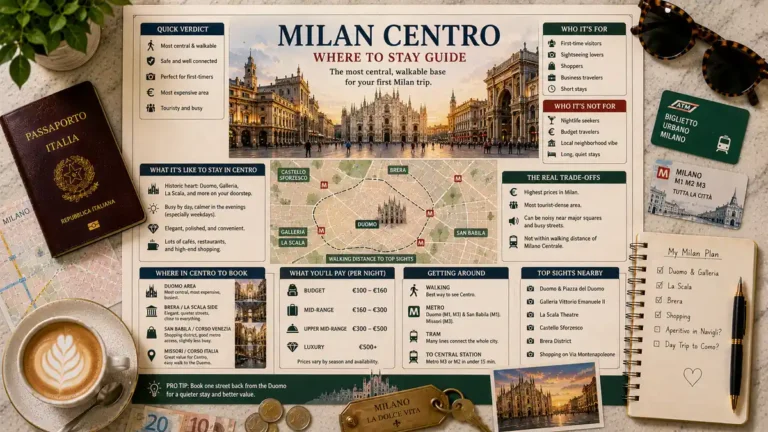
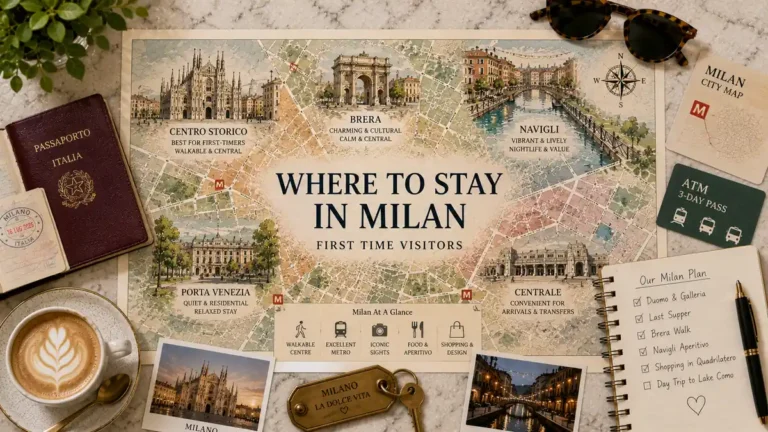
The pattern worth remembering is that Milan’s risk tracks crowds and empty extremes more than any particular area. A tourist-packed square and a deserted 2am side street sit at opposite ends of the same rule: both reduce the number of ordinary bystanders paying attention. Choosing where to base yourself is a separate booking decision, and our guide to where to stay in Milan weighs the neighbourhoods for convenience and comfort.
Common scams and pickpocketing in Milan (and how they work)
Scams and pickpocketing are the most common safety issue in Milan, concentrated where crowds gather. Train stations, the metro at rush hour, the Duomo area, and packed trams are the classic hotspots. Thieves rely on distraction and close contact, so the counter-move is almost always awareness plus keeping valuables secured and out of sight.
Most tactics follow a familiar script once you know the shape of it. Here are the common ones and how to shut each down:
- The distraction bump: someone jostles or crowds you while an accomplice lifts your wallet or phone. Counter: keep bags zipped and in front, and reset your awareness after any sudden contact.
- The friendship bracelet or “free” gift: a stranger ties something on your wrist or hands you an item, then demands payment. Counter: keep hands to yourself and walk on without engaging.
- The petition or clipboard: a group surrounds you asking for signatures while hands go for pockets. Counter: decline firmly and keep moving.
- Fake officials or “helpers” at ticket machines: someone offers to help you buy a ticket, then pockets change or your card details. Counter: use machines yourself or a staffed window.
- Unlicensed taxi touts: approaching you at stations offering rides. Counter: use official taxi ranks or a trusted ride app.
The reliable tell is proximity. In Milan’s crowds, anyone who manufactures sudden physical contact or a small drama in front of you is often buying a moment for someone else’s hands. Treat unexpected closeness as your cue to check your bag, not to look up at the distraction.
Is pickpocketing a big problem in Milan?
Pickpocketing is the most common crime tourists encounter in Milan, but it is preventable rather than pervasive. It clusters tightly in crowded, predictable places: stations, the metro, and marquee sights. The vast majority of visitors never experience it, and simple bag discipline in those specific settings removes most of the risk entirely.
Is Milan safe at night?
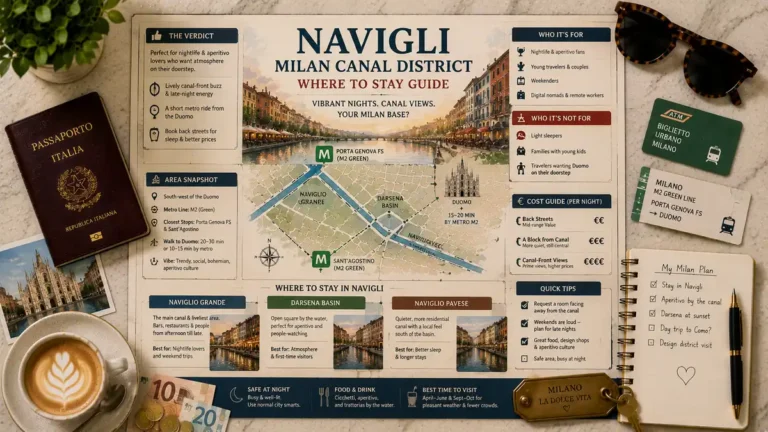
Yes, central Milan is safe at night with normal precautions. Well-trafficked areas around the Duomo, Brera, and the Navigli canals stay busy and comfortable well into the evening. The main caution is deserted spaces: quiet station edges, empty underpasses, and unlit peripheral streets are better avoided when walking alone late at night.
Milan’s nightlife districts are among its liveliest and best-lit spaces, and moving between them on foot or by taxi is straightforward. The sensible adjustments are the ordinary ones. Stick to streets with people and light. Keep your phone in your pocket, not your hand. If a route home runs through a long, empty stretch, a short taxi or ride-app trip is worth the small cost for peace of mind.
Is Milan safe for solo and female travellers?
Milan is generally safe for solo and female travellers. The same awareness that suits any solo city trip applies here, and petty theft is the main concern for most visitors. Walking confidently, sticking to lively streets at night, and trusting your instincts about a place or a person cover most of what matters.
Solo travellers move around Milan comfortably every day, and the city’s compact, well-connected centre makes independent exploring easy. Practical habits do the heavy lifting: share your plans with someone, keep your phone charged, and favour busy, well-lit routes after dark. Unwanted attention is uncommon and usually ends with a firm, unbothered response. Confidence and ordinary street sense go a long way here.
Is Milan’s public transport and metro safe?
Yes, Milan’s metro, trams, and buses are safe and efficient. The network is one of the easiest ways to move around the city, and the only real concern is pickpocketing at its busiest stops. Keep your bag closed and your phone secure when boarding packed carriages, especially during rush hour and around major stations.
The system is clean, frequent, and well-used late into the evening, so you rarely feel isolated on it. Pickpockets work the same crowded moments everywhere: the squeeze at the doors, the shuffle on a full platform. Position valuables in front of you before you board, and stay aware in the seconds when everyone presses together. That single habit handles nearly all transport risk.
Is Milano Centrale station safe?
Milano Centrale is safe to use and one of the busiest stations in Italy, with a constant flow of travellers and visible security. The awareness it calls for is the standard station kind: keep luggage within reach and valuables secured, stay alert on crowded platforms, and use official taxi ranks, not the touts approaching you inside or outside.
How to stay safe in Milan: practical habits
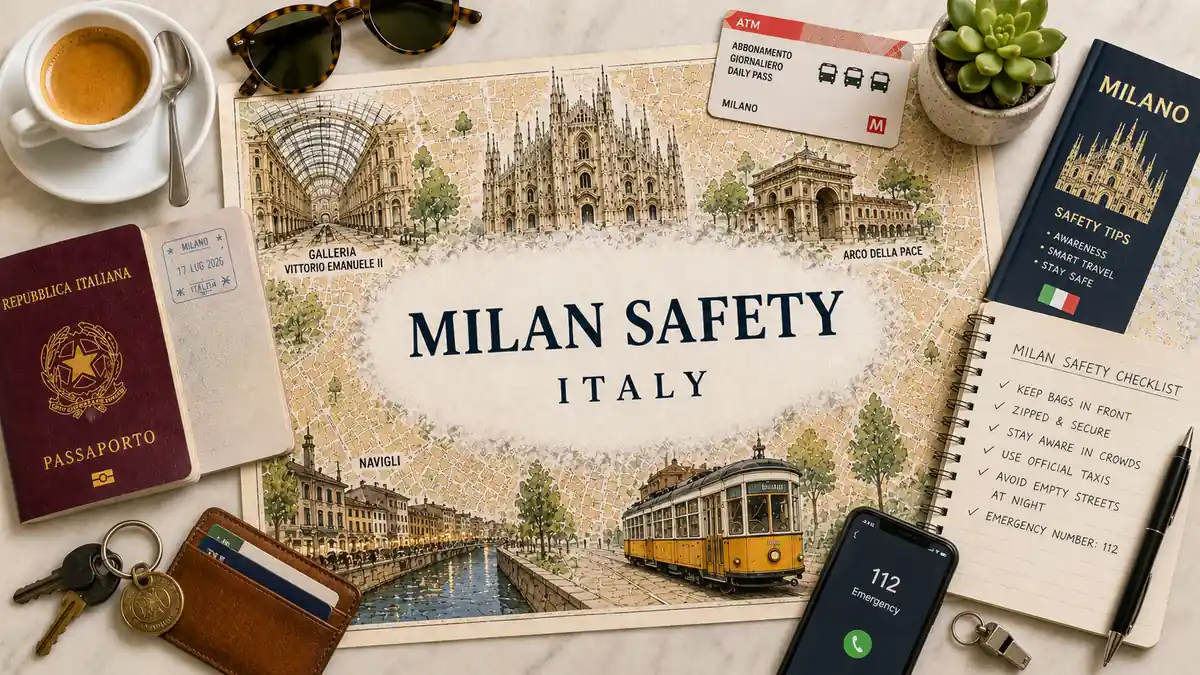
A few simple habits neutralise most of Milan’s petty-crime risk. Keep valuables secured and out of sight, stay aware in crowds and on transport, use licensed taxis or trusted ride apps, and avoid flashing phones or cash. None of it is unusual for a big city, and it becomes second nature within a day.
Boiled down, the safety-specific routine is short:
- Carry bags zipped and worn in front in any crowd or on transport.
- Split your money and cards so a single loss is never total.
- Keep your phone away except when you genuinely need it.
- Use official taxi ranks or a trusted ride app after dark.
- Stay aware, not anxious, in the predictable hotspots: stations, the metro, and top sights.
These are safety essentials only. For the broader practical and etiquette side of a Milan trip, from tipping and dress codes to getting around like a local, our Milan travel tips pick up where safety leaves off. Get these few habits right and safety mostly stops being something you think about.
Frequently Asked Questions
Is Milan safe for families with kids?
Yes, Milan is a comfortable, family-friendly city for travelling with children. The main risk is the same petty pickpocketing adults face, so keep bags secured in crowds and at busy sights. Parks, museums, and the central sights are easy with kids, and busy, well-lit areas feel relaxed by day and evening.
Is the Duomo and Galleria area safe?
Yes, the Duomo and Galleria area is safe, but it is Milan’s number-one pickpocketing hotspot. The dense crowds that make it a must-see also make it easy for thieves to work unnoticed. Enjoy the square and the arcade freely, keep bags zipped and in front, and stay alert to sudden jostling or staged distractions.
What is the emergency number in Milan and Italy?
The single emergency number across Milan and all of Italy is 112, connecting you to police, ambulance, and fire services. Operators can assist in English. For the full picture on national safety, emergency contacts, and what to do in an incident, see our Italy safety guide, which covers the country-wide detail.
Is Milan safe for LGBTQ+ travellers?
Yes, Milan is one of Italy’s most welcoming cities for LGBTQ+ travellers. It has a visible, established gay scene around Porta Venezia and a generally open, cosmopolitan atmosphere. Public affection draws little attention in central and nightlife areas, and the usual big-city awareness in crowds and quiet late-night streets is all most visitors need.
Are taxis and ride apps safe in Milan?
Yes, licensed taxis and established ride apps are safe and reliable in Milan. Use official white taxi ranks outside stations and major sights, or book through a trusted app, and avoid unlicensed drivers who tout for fares. Both are a sensible choice for getting home after dark through quieter or unfamiliar areas.
What should you do if your phone or wallet is stolen in Milan?
Report the theft to the local police to get an official report, which you will need for any insurance claim. Cancel affected cards immediately and remotely lock or wipe a stolen phone. Keep digital copies of key documents so replacing a passport through your embassy is faster and less stressful.
Related Guides
Continue planning your trip with these resolved siblings from the Milan and Italy clusters:
- Milan travel guide — the full city overview: neighbourhoods, sights, and how it all fits together.
- Where to stay in Milan — choosing a base for convenience, comfort, and easy access.
- Milan travel tips — practical and etiquette advice beyond safety.
- Italy safety guide — national-level safety context and the emergency-number detail.
Did this guide save you time or money? Tripstou is independent and reader-funded — if you'd like to give something back, you can support the site with a crypto contribution of any size.