A trip to Bulgaria costs about €35–55 per person per day on a budget, about €65–110 a day at mid-range and about €150 or more a day at the high end, flights excluded. Travel style moves the number more than anything else, and every band stays low because Bulgaria has the lowest price level in the EU by Eurostat’s measure. For a first trip, the mid-range band is the realistic default.
The figures below break that daily number into its parts: what a bed, a meal, a metro ride and a sight ticket cost in Sofia, then what Plovdiv, Veliko Tarnovo and the Rila Monastery add on a day out. Two trips sit outside the normal bands and get their own sections: a summer week on the Black Sea coast and a week in a ski resort.
In This Cost Guide
How much does a trip to Bulgaria cost per day?
A day in Bulgaria costs about €35–55 per person on a budget, €65–110 at mid-range and €150 or more at the high end, flights excluded. What separates the three bands is how you sleep and where you eat; transport and sight tickets barely move the total.
| Travel style | Per person per day | Where you sleep | How you eat and get around |
|---|---|---|---|
| Budget | About €35–55 | Dorm bed or simple private room | Bakery and mehana food, public transport |
| Mid-range | About €65–110 | Mid-range hotel or apartment | Sit-down meals, the odd taxi and sight tickets |
| High-end | About €150 or more | Upper-tier hotel | Restaurant dinners with wine, private transfers or tours |
Mid-range is the band to plan around for a first trip based in Sofia with day trips out. It covers a mid-range hotel or apartment, sit-down meals, a taxi when the metro does not reach, and the sight tickets you want. Sofia sits in the upper half of each band. Plovdiv, Veliko Tarnovo and the inland towns sit lower.
The budget band suits travelers happy in dorms or simple rooms who eat at bakeries and mehanas and ride public transport. At Bulgarian prices, that style stays comfortable. The high-end band covers an upper-tier hotel, wine with dinner and a private driver or tour for the day trips; above €150 the ceiling is whatever you choose to spend.
How much money do you need for a week in Bulgaria?
A week in Bulgaria costs about €245–385 per person on a budget, €455–770 at mid-range and €1,050 or more at the high end, flights excluded. Those totals are the daily bands multiplied by seven:
- Budget: about €245–385 a week
- Mid-range: about €455–770 a week
- High-end: about €1,050 or more a week
A week on the coast in July or August, or in a ski resort in season, pushes the total towards the top of its range or past it; both are priced further down. To plan the rest of the trip to Bulgaria around this budget, start with how long to stay and which regions to combine.
Is Bulgaria expensive to visit?
No. By Eurostat’s latest price comparison, Bulgaria has the lowest price level for consumer goods and services in the EU, 37% below the EU average, and the gap shows most in restaurants and hotels.
Eurostat also ranks Bulgaria lowest in the EU for transport services. In traveler terms, the two lines that make up most of a daily budget (the bed and the meals) are the ones where Bulgaria is cheapest. A mid-range traveler lives well here on a budget that buys little in Western Europe. Prices have risen in recent years, yet the country still sits at the bottom of the EU table.
Place is the second variable. Sofia and the big coastal resorts in summer cost the most; Plovdiv, Veliko Tarnovo and the inland towns cost less for the same standard of room and meal. Choosing where to go in Bulgaria therefore shapes the budget as much as the itinerary.
Season comes third. The coast peaks in July and August, the ski resorts in the ski season and over the holidays, and Sofia stays steadier through the year.
Is Bulgaria cheaper than Greece or Croatia?
Yes. On Eurostat’s price level index (EU = 100), Bulgaria scores 62, against 78 for Croatia and 87 for Greece; neighbouring Romania scores 65 and the euro area 103. The comparison covers price level only. On those numbers, the same euro stretches further in Bulgaria than in either country.
Hotel Prices in Sofia and What a Night Costs Elsewhere
A night in Bulgaria costs about €10–12 for a dorm bed, about €20–60 for a private hostel room or simple apartment, from about €50 for a mid-range hotel double and about €120–140 and up for a high-end hotel. Accommodation is the largest line of every daily band, so the bed you pick sets the trip’s cost.
- Dorm bed, about €10–12 a night: the backbone of the budget band, for solo travelers who mostly need a place to sleep.
- Private hostel room or simple apartment, about €20–60 a night: the upper end of the budget band or a cheap mid-range trip, and the obvious pick for couples who want a door that locks.
- Mid-range hotel double, from about €50 a night: the core of the mid-range band; split between two, the room leaves plenty of the daily budget for food.
- High-end hotel, about €120–140 a night and up: the high-end band, where the room alone can take most of a €150 day.
Sofia sits at the upper end of each range, and the inland towns sit lower for a similar room. Summer prices on the coast run on their own scale and are covered in the Black Sea section below.
How much is a meal in Bulgaria?
A main course in a mehana, a traditional tavern, costs about €7–15, and a full day of eating runs about €15–30 per person. Where you eat is the second driver of the bill after the bed.
The cheapest food is a bakery pastry at €1–2.50, eaten standing or on the go. A salad in a sit-down restaurant costs €3–5, so a salad and a main make an easy mid-range lunch. An espresso is about €1.20 and a cappuccino about €2.60–3.15. Supermarket beer costs about €1. A budget traveler who mixes bakeries with one mehana meal a day stays at the low end of the daily food range; two restaurant meals with drinks move a day towards the top of it. Drinks and dinners in the beach resorts cost more, and those figures sit in the Black Sea section.
Sofia Metro Ticket Prices and What Getting Around Costs
Getting around costs little in Bulgaria: a Sofia metro ticket is €0.80, the same ticket covers the ride from the airport, and even the 72-hour card with night transport is €7.60.
Sofia metro tickets and day cards
- Single metro ticket, €0.80: one metro ride, for a day with only one or two journeys.
- “30 plus” ticket, €0.80: transfers within 30 minutes, paid by tapping a bank card at vehicle validators or metro barriers, for travelers who do not want to buy paper tickets.
- “60 plus” ticket, €1.10: the longer window for a trip with a change of line or vehicle.
- One-day card, €2: pays for itself on the third ride of the day.
- 24-hour card, €3: includes night transport, for a late arrival or a night out.
- 72-hour card, €7.60: includes night transport, the card for a three-day stay in Sofia.
Taxis are cheap by EU standards; use a reputable company or app.
How much is it from Sofia Airport to the city centre?
Sofia Airport to the city centre is the M4 metro, one €0.80 ticket. The station is at Terminal 2. A taxi costs more.
Do you need a vignette to drive in Bulgaria?
Yes. A hire car on the paid road network needs an electronic vignette bought on bgtoll.bg; there is no sticker. Car hire runs from around €20 a day outside high season, fuel and parking extra. Travelers without a car will find intercity buses and trains cheap by EU standards.
Sight Tickets Are the Smallest Line of a Bulgaria Budget
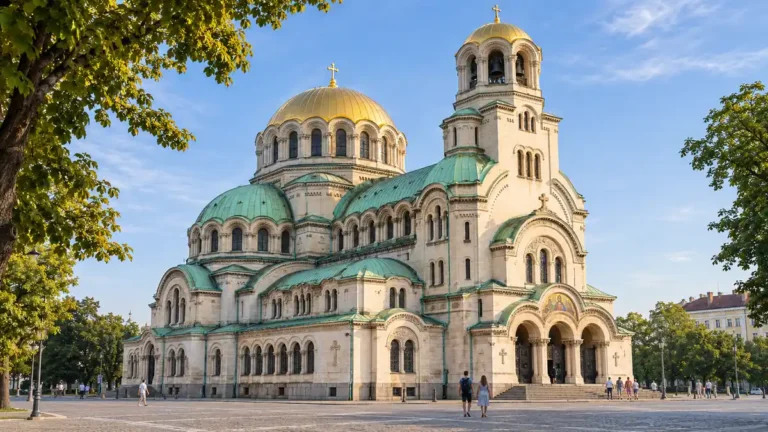
Bulgaria’s headline sights cost €10 or less each, with Boyana Church and the Alexander Nevsky Cathedral crypt both at €10, so a full day of tickets in Sofia stays at a few tens of euros at most. Next to the bed and the meals, tickets barely register in any band.
| Sight | Adult ticket | Worth knowing |
|---|---|---|
| Boyana Church | €10 | Free on the last Monday of the month after 15:00 |
| Alexander Nevsky Cathedral crypt | €10 | Museum of Christian Art; €4 reduced |
| National Gallery combined ticket | €15 | €2 per branch on Thursdays |
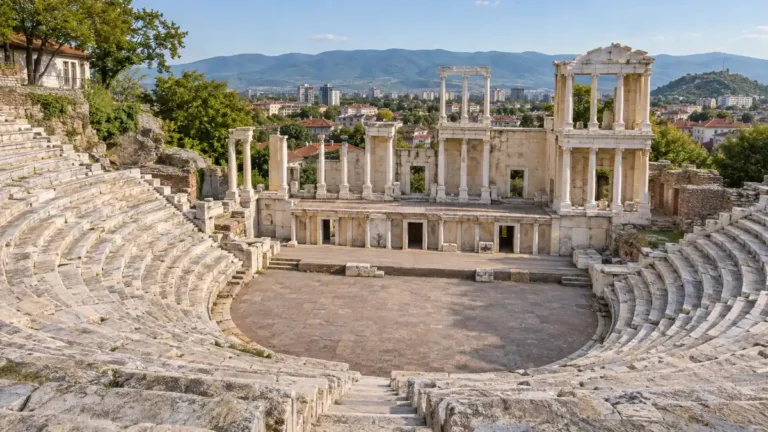
| Plovdiv Old Town, per site | €3.58 | Ancient Theatre included |
| Plovdiv combined ticket | €10.74 | Up to 5 sites |
| Tsarevets, Veliko Tarnovo | €7.67 | Family ticket €10.23 |
Boyana Church costs €3 for students. It lets in at most 9 visitors at once, for 10 minutes inside the medieval parts, and individuals and groups of up to 5 need no reservation. The crypt’s €4 price applies to pensioners, visitors over 65 and students. The National History Museum costs €9 and only belongs in the budget as a second museum stop. For what to see and how to plan the days, the Sofia travel guide takes over.
Is Plovdiv cheaper than Sofia?
Yes. Plovdiv sits lower than Sofia in each daily band, and its Old Town sights cost about €3.60 each, the Ancient Theatre included. The Bishop’s Basilica costs €7.57. The €10.74 combined ticket covers up to 5 sites: it costs the same as three single tickets, so every site after the third is effectively free.
What does a Rila Monastery day trip cost?
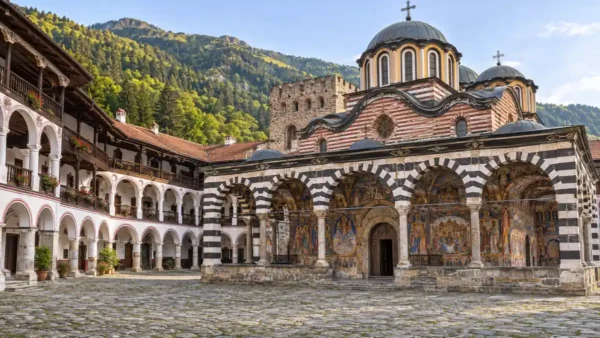
At the Rila Monastery, the combined ticket for all museum exhibits costs €12 and is sold only at the monastery. Getting there from Sofia is the larger part of the day’s cost.
- Church History Museum: €5
- Icon Gallery: €2.50
- Ethnographic museum: €4
- “Economy of the Monastery” museum: €3
- Hrelov Tower: €3
- English-language tour: €15
The five single tickets add up to €17.50. The combined ticket pays for itself once your picks reach €12, which the Church History Museum, the Ethnographic museum and one of the €3 exhibits already do. Transport decides the rest of the day’s price, whether that is a public bus, a hire car or an organised day tour from Sofia.
How much does a Black Sea holiday in Bulgaria cost?
A July or August week on the Black Sea coast lands at the top of its travel-style band or above it, and the room is the reason: a seaside apartment runs about €55–80 a night, a three-star hotel about €55–100 and a four-star beachfront hotel about €90–180.
Eating and drinking in the resorts costs more too. Dinner for two with drinks runs €30–45, and a draught beer €2–3. Loungers and umbrellas are paid per item on many beaches and cost the most at the big resorts.
Sunny Beach and Golden Sands are the dearest places on the coast in summer. Nessebar and Sozopol, the smaller towns, and the cities of Burgas and Varna cost less for a similar stay. July and August buy the surest beach weather at the coast’s highest prices; outside those two months the same room and dinner cost less.
A Ski Week Costs More, and the Lift Pass Is the Reason
A ski week in Bulgaria sits above the same travel style anywhere else in the country because it carries three lines a city trip does not have: the lift pass first, then equipment hire and ski school.
Bansko is the largest resort and usually the dearest; Borovets and Pamporovo cost less. The ski season and the holidays are the peak.
Check the resort operator’s current lift-pass price before fixing the budget, since that one line decides how far above its band a ski week lands.
What currency does Bulgaria use, and is it cash or card?
Bulgaria uses the euro. Cards work in hotels, shops and most restaurants, and some cash covers small places.
Pay in euros. When a card terminal or cash machine offers to charge a foreign card in your home currency, decline that dynamic currency conversion. Larger purchases can qualify for a VAT refund in Bulgaria, so check the rules before you buy.
Spending money abroad
A Wise account converts your money at the mid-market exchange rate and shows every fee upfront, with a card you can spend in the local currency.
Check Wise’s rates and fees for your currency →
Tripstou may earn a commission if you sign up through this link, at no extra cost to you.
How to Save Money in Bulgaria Without Shrinking the Trip
The savings that matter in Bulgaria are the bed and where you eat; after those, a handful of official discounts and transport cards trims the rest without cutting a sight.
- Visit the National Gallery on a Thursday: every branch charges €2 that day, against €15 for the combined ticket.
- Time Boyana Church for the last Monday of the month: entry is free after 15:00, against €10 on other days.
- Buy Plovdiv’s combined ticket: €10.74 covers up to 5 Old Town sites.
- Take the combined museum ticket at Rila: €12 for every exhibit, sold only at the monastery.
- Ride the metro from the airport: the M4 metro, one €0.80 ticket, replaces a taxi.
- Pick the right Sofia transport card: the 24-hour card at €3 or the 72-hour card at €7.60, both with night transport.
- Choose inland towns in July and August: Plovdiv and Veliko Tarnovo cost less than the big resorts in peak summer.
How These Prices Were Checked
This page settles one planning question: how much to budget for Bulgaria per day and per week by travel style, with Sofia’s line items and what a coast or ski week adds. It is not a destination guide, an itinerary or a resort guide.
This budget was put together with AI assistance and read through by Alex Perrut, working in tourism since 2015, for the Tripstou editorial team; our editorial process describes each step.
Official sources consulted: Metropolitan (Sofia metro), Eurostat, Rila Monastery, Boyana Church, National Gallery.
Did this guide save you time or money? Tripstou is independent and reader-funded — if you'd like to give something back, you can support the site with a crypto contribution of any size.