A week in Croatia is best spent on the Dalmatian coast: Split for 2–3 nights, one island (Hvar) for 2 nights and Dubrovnik for 2–3 nights, flying into one end and out of the other. Ten days adds Zagreb for 1–2 nights and a Plitvice overnight at the start, travelling north to south. Where your flights land decides which way you run it. The route suits a first trip that favours two or three unhurried bases over ticking off every region.
This page plans that one route at two lengths. It argues the two choices that shape it before you book anything: which end of the country to fly into, and whether a car earns its place or boats and buses do the job. Each stop gets only the sights that justify the nights you spend there.
How many days do you need in Croatia?
Seven days is enough for a coast-only first trip, and ten days is the number that lets you add Zagreb and Plitvice without rushing. The reason is simple arithmetic: every extra stop costs a travel morning, and on this coast a travel morning means a ferry queue or a long bus ride.
- Under a week: one base with day trips, Split or Dubrovnik, and nothing that needs a suitcase repacked.
- A week: the coast core of Split, Hvar and Dubrovnik, three bases and two moves.
- Ten days: Zagreb and the Plitvice Lakes in front of the same coast week, north to south in one line.
- Two weeks: the ten-day route plus one region, usually Zadar and Šibenik with Krka.
Five or more stops in under ten days feels rushed. Count the moves, not the places: five stops means four packing mornings, and a week with four of them leaves three full days of actual Croatia. The ten-day version pays off for first-timers who want the capital and the lakes as well as the sea; repeat visitors who already know Zagreb can spend those three days on a second island instead.
Season, budget and entry questions shape the trip too, but they do not change the route. Those decisions sit in the Croatia travel guide, which covers when to go and what the country costs.
Should you start in Zagreb or on the coast?
Let the flights decide. Fly into Zagreb and out of Dubrovnik, or the reverse, and run the country in one direction; with only a week, fly into Split or Dubrovnik and skip the north entirely instead of backtracking to it.
Open-jaw flights beat a loop on this coast because Croatia is long and thin. Zagreb sits inland, about two hours by car from Plitvice, while Dubrovnik is at the far southern tip. A loop that starts and ends in Zagreb spends a full day retracing the coast road, which is the day a ten-day trip cannot spare.
Arriving in Dubrovnik simply reverses the order: Dubrovnik, then Hvar, then Split, with Plitvice and Zagreb last on a ten-day trip. The one case for finishing in Zagreb over Dubrovnik is the long-haul flight home, when departures from the capital are cheaper or better timed. Price both directions before you fix the order: the route works either way, and the flights often do not cost the same.
The Route at a Glance: Stops, Nights and What Each Adds
The route is three coastal bases of two to three nights each, with Zagreb and a Plitvice overnight added in front for the ten-day version. Nothing else joins the route before the stays reach these lengths.
| Stop | Nights (7 days) | Nights (10 days) | Role in the route |
|---|---|---|---|
| Zagreb | — | 1–2 | Capital and arrival |
| Plitvice Lakes | — | 1 | Overnight on the drive south |
| Split | 2–3 | 2 | Central base and ferry port |
| Hvar | 2 | 2 | The island leg; Korčula as the quieter alternative |
| Dubrovnik | 2–3 | 2–3 | Finale and departure |
Three bases is the stay split that holds the route together. Spreading the same nights across five coastal towns would turn every second day into a transfer, and two nights is the floor at which a stop gives you one full day that is not a travel day. Readers who would rather unpack only twice can drop to two bases without a car; that variant is set out under the car question below.
Seven Days on the Coast: Split, Hvar and Dubrovnik
The week runs Split, then Hvar, then Dubrovnik, because each hop is short and the sequence ends at the airport you leave from. This coast week is the core every longer version keeps.
Split: 2–3 nights as the central base
Split is where the route lands, the ferry port for the islands and the best base for day trips on the central coast. Diocletian’s Palace is the reason to sleep inside the old centre, the Riva is where the evening happens, and Marjan Hill gives the morning walk with the view over the harbour. The third night buys a day trip to Trogir or up to Klis Fortress. For the full list beyond those anchors, see the guide to things to do in Split.
Leaving Split, a fast boat reaches Hvar Town in about an hour. Car ferries land at Stari Grad instead, on the other side of the island, so drivers should book their beds with that in mind.
Hvar: 2 nights, the island leg
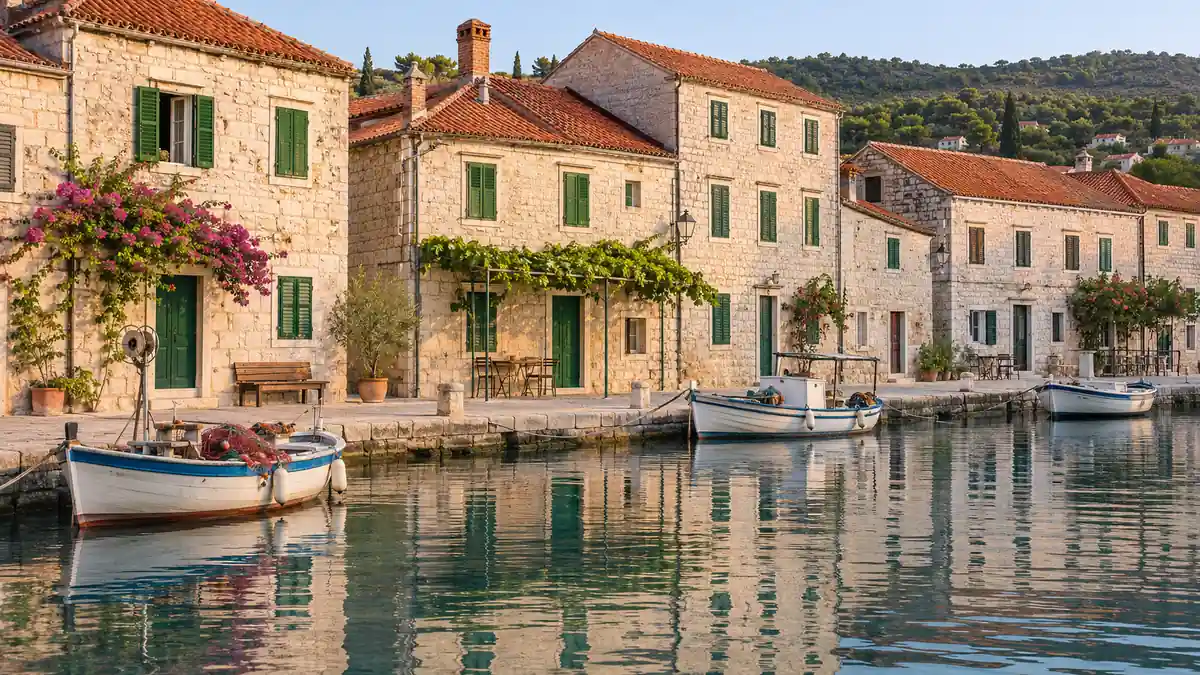
Hvar is the one island on the route, with two distinct bases: Hvar Town for the harbour and the nightlife, Stari Grad for a slower, older town on the north shore. Korčula is the quieter alternative: Korčula Town is a walled old town on a small peninsula, and drivers reach the island from Orebić by a short car ferry.
- Choose Hvar Town when the evenings matter as much as the beaches.
- Choose Korčula when you want the island to feel like a pause between Split and Dubrovnik.
Swapping the island or adding a second one is a different trip; Croatia island hopping covers how to choose and chain them.
Hvar has no direct year-round link to Dubrovnik. A summer-season catamaran runs down the coast via the islands; outside that season, you return to Split and take the bus or drive the coast road south.
Dubrovnik: 2–3 nights, the finale
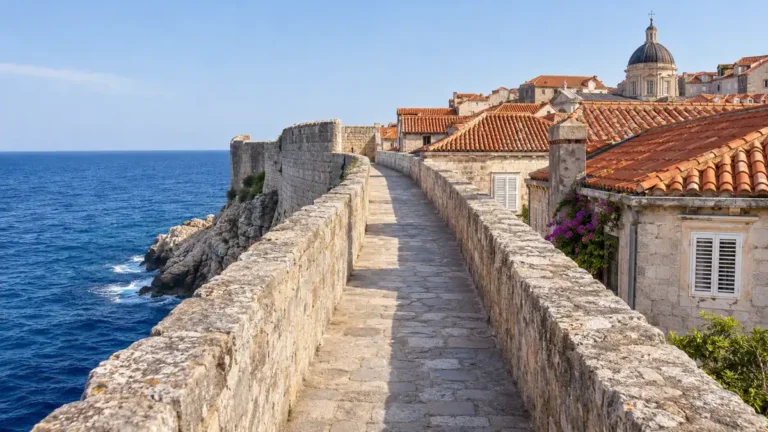
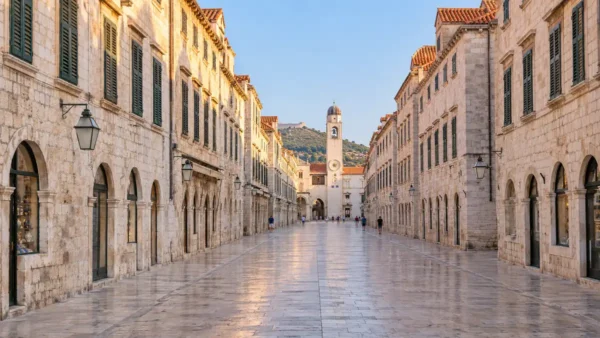
Dubrovnik closes the route because it is the far southern end of the country and has its own airport for the flight home. The city walls, the Stradun and either Lovrijenac fortress or the cable car up to Srđ fill two full days without hurry. The Old Town is car-free, so drivers either return the car on arrival or park outside the walls.
For a day-by-day plan of the finale, follow the 3 days in Dubrovnik itinerary; for where to stay and how the city works, read the Dubrovnik travel guide. From here you fly out. Ending the week in Dubrovnik is what makes the coast route a straight line, and a straight line is what keeps seven days from feeling like five.
Tours and activities
Book skip-the-line tickets, day trips and local tours with free cancellation on most activities.
You can also browse everything on getyourguide.com.
Tripstou may earn a commission if you book through this link, at no extra cost to you.
Ten Days Puts Zagreb and Plitvice First
With ten days, start in Zagreb, overnight at Plitvice and drop down to Split. The extension sits in front of the coast week, not after it, so the route never backtracks inland.
Zagreb: 1–2 nights
Zagreb is the arrival city and the only inland capital on the route. The Upper Town is the anchor: the old hilltop quarter that explains the city in an afternoon. One night covers arrival and a walk; a second night gives you a full day, which the one day in Zagreb plan lays out.
Leaving Zagreb, Plitvice is about two hours by car. A bus covers the same road for travelers without a car, with less freedom over when you arrive at the lakes.
Is Plitvice worth an overnight stop?
Yes: a night beside the lakes beats a long day trip from Split. From Split, Plitvice is a long half-day drive each way, which leaves the lakes squeezed into the middle of the day. Sleeping nearby lets you walk the boardwalks early and splits the Zagreb–Split drive into two easy halves. Entry tickets are timed and bought ahead online.
From Plitvice, you drive or take the bus south to Split, where the coast week begins. Put together, Zagreb to Plitvice to Split to Dubrovnik is the spine of a Croatia road trip, with the island leg as the one detour off the mainland.
Do you need a car for this route?
Not for the coast week. Bus and ferry cover Split, Hvar and Dubrovnik, and a car is a burden in both old towns. A car earns its place only for the Zagreb–Plitvice–Split leg of the ten-day version.
- Bus and ferry the whole way. The car-free option, and the easiest one on the islands, since the fast boats to Hvar Town carry passengers only. The cost is time on the mainland: the bus from Split to Dubrovnik takes roughly four to five hours, longer in July–August traffic.
- Car for the north only. Rent in Zagreb, drop the car in Split, then continue by boat and bus. This is the best ten-day fit: freedom at Plitvice, no parking problem on the coast.
- Car the whole way. Worth it for Krka, Ston and the small towns between the bases. The price is parking outside Dubrovnik’s walls and a car ferry to Stari Grad for the island leg, since cars do not land in Hvar Town.
Travelers who would rather not pack up three times can run the coast from two bases without a car. Split covers Trogir, Klis or Krka as day trips; Dubrovnik covers Ston and Mali Ston or the island of Mljet. That variant answers both the one-base question and the no-car question at once, at the cost of a night on an island. Mode-by-mode detail, airport transfers and the Split–Dubrovnik options are in the guide to getting around Croatia.
What to Cut First and What to Add First
Cut the island before you cut a base. With fewer days, drop Hvar and stay in Split or Dubrovnik; with more, add Zadar and Šibenik with Krka before you add a second island or Istria.
Cut, in this order:
- Hvar first: it saves two ferry mornings, and Split already gives you the sea.
- Zagreb and Plitvice next: the week is the coast, and the north needs its own three days.
- Never cut Split or Dubrovnik to a single night: a one-night base is a travel day with a bed.
Add, in this order (up to 14 days):
- Zadar and Šibenik with Krka National Park, between Plitvice and Split, because they sit on the road you already drive.
- A second island: Brač, for the beach at Bol, or Korčula alongside Hvar.
- Istria, with Rovinj and Pula, as a separate northern block that fits best with a Zagreb start.
These are variants of the one route, not new itineraries; each keeps the north-to-south line and the two-night floor. For everything else the country holds, browse the full list of things to do in Croatia.
Before You Book Flights
- Seven days covers the coast core of Split, Hvar and Dubrovnik, and ten days adds Zagreb and a Plitvice overnight without rushing.
- Book open-jaw flights into one end of the country and out of the other, because a loop on this long, thin coast costs a full day of backtracking.
- Give every base two nights or more, since anything shorter leaves no full day that is not spent travelling.
- Leave the car out of the coast week and rent one only for the Zagreb–Plitvice–Split leg, where it buys freedom at the lakes without parking trouble in the old towns.
- When days run short, drop the island before you shorten Split or Dubrovnik.
- With days to spare, add Zadar and Šibenik with Krka first, because they sit on the road between Plitvice and Split.
How We Checked This Route
This page sets out a single route through Croatia, its stop order, the nights at each stop and how it stretches from a week to ten days; it is not a sights list, a hotel roundup, a ferry guide or a general Croatia planner.
Written with AI assistance, this itinerary was then gone over by Alex Perrut, working in tourism since 2015, for the Tripstou editorial team. How we work is set out in our editorial process.
Official sources consulted: Croatian National Tourist Board, Jadrolinija.
Route Questions Travelers Still Ask
Can you do Croatia in 5 days?
Yes, from one base with day trips. Base in Split for Trogir, Klis or a day on Hvar by fast boat, or in Dubrovnik for Ston and Mljet. A second base only works when your flights land at one end and leave from the other; otherwise the island is the first thing to drop.
Can you visit Mostar or Kotor on a Croatia trip?
Yes, as a day across the border from Dubrovnik: Mostar is in Bosnia and Herzegovina and Kotor in Montenegro, so expect a passport check in both directions. Either trip uses up a Dubrovnik day, which suits the ten-day route better than the week. Check the entry rules that apply to your passport before booking.
Is there a ferry from Split to Dubrovnik?
Only in summer, when a summer-season catamaran runs down the coast via the islands. Year-round, the link is the bus, roughly four to five hours and longer in summer traffic, or the coast road south by car. The guide to getting around Croatia compares the modes for this leg.
Keep Planning the Trip
- Croatia travel guide: when to go, what it costs and the rest of the country plan.
- Getting around Croatia: bus, ferry and car detail for every leg of the route.
- Croatia island hopping: choosing the islands and chaining more than one.
- 3 days in Dubrovnik: the finale of the route, day by day.
Did this guide save you time or money? Tripstou is independent and reader-funded — if you'd like to give something back, you can support the site with a crypto contribution of any size.