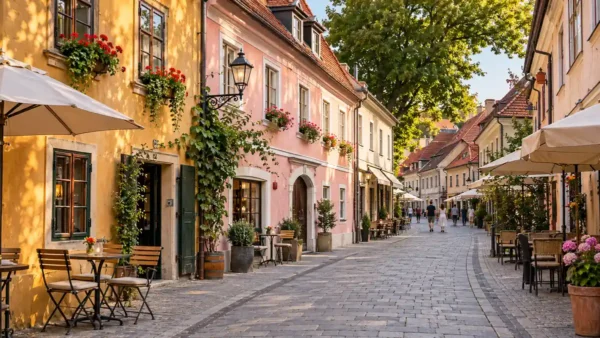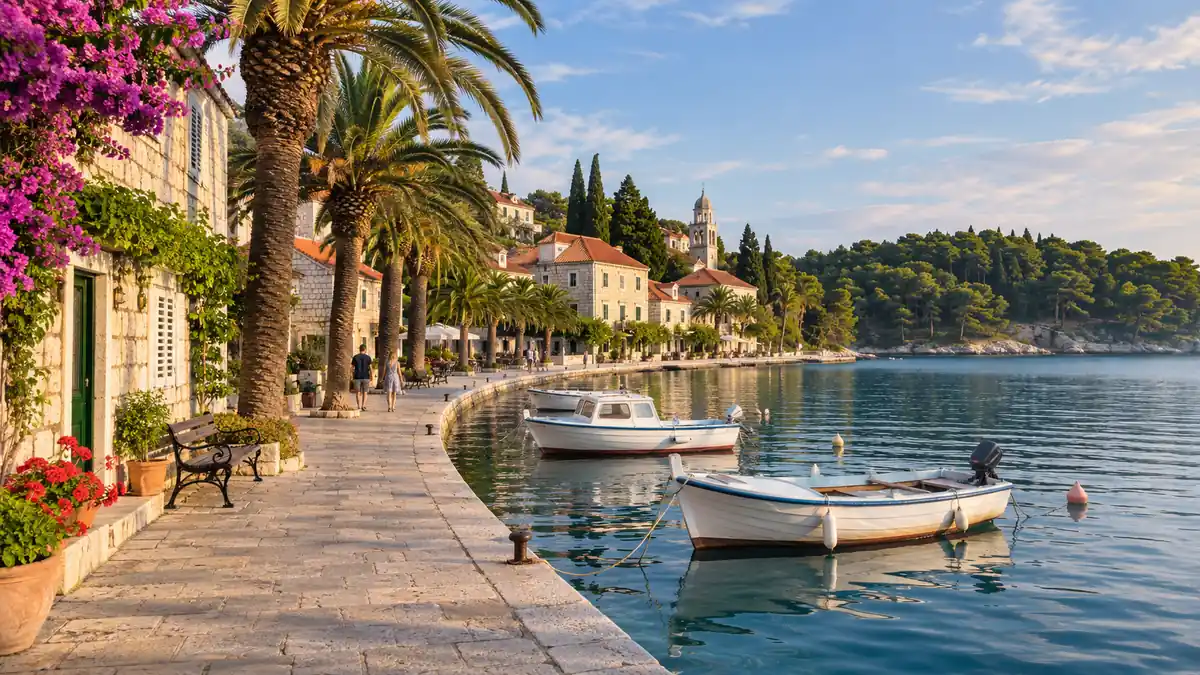
For a first stay of two or three nights, book inside the Old Town walls or right on their edge at Pile or Ploče. You wake up a few steps from the Stradun and have it before the day crowds arrive. In return you get stairs, crowds, late-night noise and the highest room rates in the city. The strongest alternative is Lapad, with Babin Kuk at its tip: beaches, pools and family hotels, and a frequent bus to Pile.
The layout explains the choice. The Old Town is a walled, car-free centre built on steps. Pile sits against its west gate and Ploče against its east gate. Lapad and Babin Kuk form a beach peninsula a bus ride to the west, Gruž is the working port, and Cavtat is a separate small town down the coast near the airport.
On This Page
How Dubrovnik is laid out, and what that means for your base
Dubrovnik’s lodging falls into three zones: the walled Old Town with its two gate districts, Pile and Ploče; the Lapad and Babin Kuk peninsula to the west; and the port and outskirts, meaning Gruž and, further out, Cavtat. The zone you book decides whether you walk to the walls each morning or ride a bus to Pile.
| Area | Best for | Getting to the Old Town | Relative price | Main drawback |
|---|---|---|---|---|
| Old Town | First visit, short stay | You are in it | Highest | Steps, crowds, late noise |
| Ploče | Views, couples, luxury | Short, steep walk to the Ploče gate | Highest | Hills and top-end rates |
| Pile | Walls without the stairs | Short walk to the Pile gate | High | Traffic and bus-stop bustle |
| Lapad | Beaches, families, longer stays | Bus line 6 or 4 to Pile | Mid to high | Not a walk to the walls |
| Babin Kuk | Resort hotels, quiet | Bus line 6 to Pile | Mid to high | Furthest point of the peninsula |
| Gruž | Budget, ferries, onward buses | Bus lines 1A or 1B to Pile | Lower | Little atmosphere |
| Cavtat | Calm seaside, near the airport | Bus line 10 or the seasonal boat | Lower | A commute every day |
Two facts shape every choice on this list. City buses do not enter the Old Town: the routes converge at Pile, so every bus-based area means a ride to Pile and then a walk through the gate. The Old Town itself is pedestrian-only, with no parking at the door and many lodgings up flights of stone steps. Distances on this page are measured to that centre, where the walls, the Stradun and the cable car sit (see things to do in Dubrovnik). Arrival from the airport and the best time to go are in our Dubrovnik city guide.
Hotels and places to stay
Compare hotels, apartments and stays for your dates in one search.
Search hotels and stays on hotels.com →
Tripstou may earn a commission if you book through this link, at no extra cost to you.
Should you stay inside the Old Town walls?
Yes, for a first visit of two or three nights with light luggage, because nothing else puts you on the Stradun before the day crowds arrive and after they leave. No, if you travel with heavy cases, a hire car or mobility limits, or if you are staying a week.
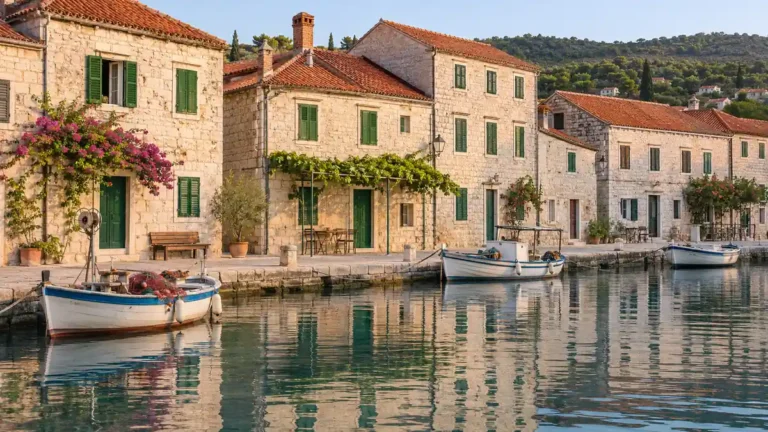
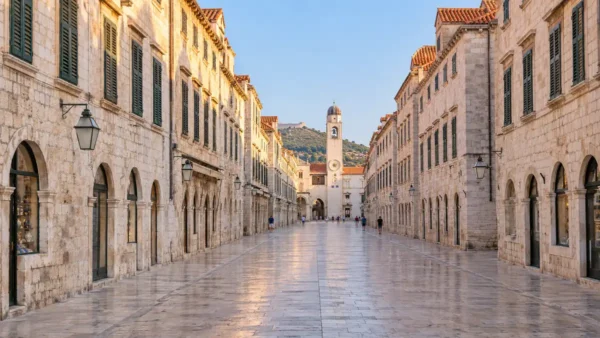
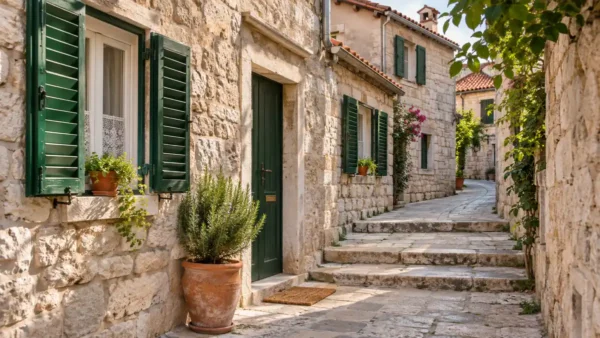
Staying inside means stone lanes, steps to most front doors and street sound that starts early and ends late. The Old Town is a lived-in, regulated historic centre: residents share the lanes with visitors, and many rooms sit in converted houses above them.
The trade-off comes in pairs. You gain atmosphere and walk everywhere; you carry bags up stairs. You see the lanes empty at dawn; you share them with tour groups by mid-morning. You sleep inside a monument; you pay the city’s highest rates for a smaller room. Hostels cluster in and near the Old Town too, which keeps a walls-side stay possible on a tighter budget.
Pucić Palace, Prijeko Palace and Boutique Hotel Stari Grad are examples of hotels inside the walls. A two- or three-night stay favours the walls or their edge, because every hour saved on transfers goes to the centre; the 3-day Dubrovnik itinerary shows how those days run. The Old Town suits the first-timer who packs light and wants the evening streets, not the traveler who judges a hotel by its parking and lift.
Is the Old Town noisy at night?
Yes, in season. Bars and late diners carry on into the night, and cleaning and delivery crews start early in the morning. Rooms on the inner lanes and on upper floors are quieter than those above the Stradun. If sleep matters more than the address, Ploče or Pile give you the walls on foot without the midnight noise under the window.
Ploče has the views and the priciest hotels
Ploče, just east of the walls, is where the cliff-side luxury hotels look back at the Old Town across the water. Pick it for the view and a short but steep walk to the Ploče gate, and expect the city’s top rates.
Day to day, Ploče is quiet and residential, built on steep streets that climb from the sea, with the cable-car lower station nearby. It suits couples and anyone who will pay for the view of the walls from the balcony. It does not suit budget travelers or anyone who dislikes hills: every return from the Old Town is uphill.
Hotels that define the area include:
- Hotel Excelsior
- Villa Dubrovnik
- Villa Orsula
The view is what you pay for here. A room facing the walls is the reason to choose Ploče over Pile; a room facing the hill costs nearly as much and gives that reason away.
Pile is the convenient compromise just outside the gate
Pile sits at the west gate, where the city bus routes converge. It gives you a flat arrival, the walls on foot and a direct bus to the beaches, without sleeping inside the stone. The price is traffic and the constant bustle of the bus stop.
Pile is a transport hub with cafés, evening traffic and nightlife on the doorstep. It works for first-timers who want the walls but not the stairs, for anyone arriving with heavy luggage and for short stays where convenience counts most. The Pile gate is a walk away, and the buses to Lapad and Babin Kuk leave from the same spot.
Hilton Imperial Dubrovnik stands a short walk from the gate. Hotel Bellevue and Rixos Premium Dubrovnik lie toward Boninovo, on the cliffs west of Pile, with a longer walk in. Rates are high, though usually below the peaks of Ploče and the Old Town.
Pile is the base for the traveler who wants the gate on foot and the beach bus outside the door, and who does not mind a busy street under the window.
Lapad and Babin Kuk for beaches, families and resort hotels
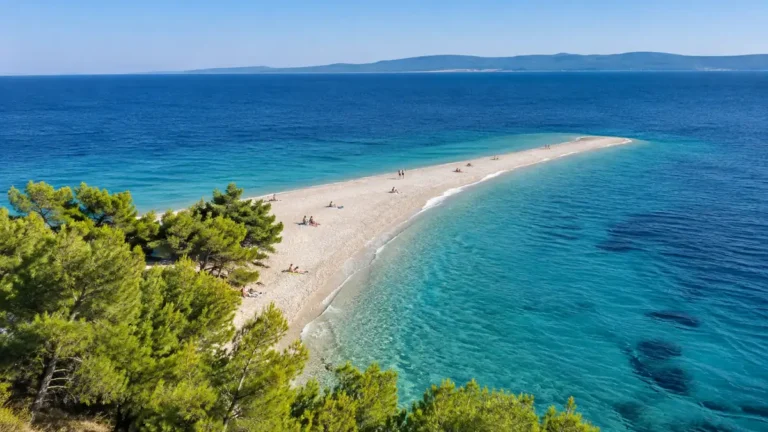
The Lapad peninsula is Dubrovnik’s beach-and-family base: pebble beaches, a car-free promenade, pools and resort hotels, with Babin Kuk at its quieter tip. The Old Town is a frequent bus ride away, not a walk: line 6 runs from Babin Kuk to Pile and line 4 from Hotel Palace to Pile.
- Lapad has the promenade, Uvala bay and more everyday local life, with cafés and shops between the hotels. It is the better pick for families who want a beach in the morning and a choice of places to eat at night.
- Babin Kuk is a cluster of resort hotels at the end of line 6, calm and self-contained. It is the better pick for a pool-and-sea holiday where the walls are a planned outing, not a daily one.
Getting from Lapad to the Old Town means taking line 6 or line 4 to Pile, then walking through the gate. Buses run frequently, and they stop at Pile because none enter the Old Town. Babin Kuk is about 4–5 km from the walls, so walking in is a long outing, not a commute.
Lapad hotels include Hotel Dubrovnik Palace, Hotel Kompas, Boutique Hotel Kazbek and L’Orangerie. On Babin Kuk, Valamar Dubrovnik President, Valamar Lacroma and Valamar Tirena are part of the resort cluster. Rates run mid to high for resort hotels, below the Old Town peaks.
The peninsula suits families, beach-first travelers, longer stays and anyone who wants calm after a day inside the walls. It does not suit the first-timer on two nights who wants to step out into the Old Town after dark.
Gruž: the budget base at the ferry port and bus station
Gruž is the best area near the ferry port: the ferries, the main bus station and the market are all here, and rooms cost less than anywhere else with a city address. It is the right base for island-hopping or an early bus out, and the wrong one for atmosphere.
Gruž is a working harbour neighbourhood of apartments, local shops and hostels, which cluster here as well as in and near the Old Town. Lines 1A and 1B pass through Gruž on the way to Pile, and line 8 links Viktorija with Gruž. Berkeley Hotel & Day Spa sits in Gruž, and Hotel Lero stands on the Gruž and Boninovo edge.
Budget travelers, self-caterers and anyone catching a ferry or onward bus get the most from Gruž. The cost is distance: everything most visitors came for is a bus ride away. Book Gruž for the last night before a morning ferry, even if the rest of the stay is elsewhere.
Is Cavtat a good base for visiting Dubrovnik?
Yes, if you want a quieter, cheaper seaside town near the airport and are happy to commute in by the line 10 bus, which runs all year, or by the seasonal boat to the Old Town port. No, if Dubrovnik itself is the point of the trip and you have only two or three nights.
Cavtat is a small harbour town with a promenade, places to swim and calm evenings. Its hotels range from small family-run places to larger resort properties, and rates sit below the city’s. The town lies roughly 20 km from Dubrovnik by road.
Cavtat suits families, travelers with late or early flights, car hirers and repeat visitors who have already seen the walls. The trade-off is the commute: each trip into the Old Town and back takes a slice of the day, and that adds up fast on a short stay.
Stay in Cavtat if the trip is a seaside holiday with Dubrovnik as an outing. Stay in the city if the walls are the reason you came.
Boninovo, Mlini and Srebreno: the areas outside the main list
Three more names show up in searches, and each is a sound base for one kind of traveler without needing a full section: Boninovo for cliff-top hotels between Pile and Gruž, and Mlini and Srebreno for a beach-village stay on the road to Cavtat.
Boninovo is the cliff-top strip between Pile and Gruž, with sea-view hotels and a walk or short bus ride to Pile. It suits travelers who want the sea from the room and the gate within reach. For most decisions it folds into Pile, which is why it has no section of its own.
Mlini and Srebreno are small coastal villages on the line 10 corridor to Cavtat, with the seasonal boat as a second way into the Old Town. Sheraton Dubrovnik Riviera stands in Mlini. Both villages suit a beach stay with a car or a relaxed pace, and they share Cavtat’s drawback of a daily commute.
Which Dubrovnik area fits your kind of trip
The decision compresses to five pairings: a first-timer on a short stay takes the Old Town or Pile and Ploče, a couple after the view takes Ploče, a family or beach trip takes Lapad and Babin Kuk, a budget or ferry-onward trip takes Gruž, and a quiet, airport-near or car-hire trip takes Cavtat.
- First-timer: the Old Town, for evenings in the lanes after the crowds leave.
- Couple: Ploče, for the view of the walls across the water.
- Family: Lapad, for the promenade, pools and choice of restaurants.
- Beach first: Babin Kuk, for resort hotels on the sea.
- Budget: Gruž, for the lowest rates with a city address.
- With a car: Cavtat or Mlini, for hotel parking and the coast road.
- Island-hopping: Gruž, for the ferry port at the door.
- Longer stay: Lapad, for everyday shops and a slower rhythm.
The common mistake runs in two directions. Some travelers book Babin Kuk expecting to stroll to the walls, then find every visit means a bus to Pile. Others book inside the Old Town with heavy cases and a hire car, then haul bags up steps and leave the car far from the room. Match the base to how you travel, not just to the map.
Do you need a car in Dubrovnik, and where do you stay with one?
No, not for a city stay: the Old Town is car-free, Pile is the bus hub and the Lapad peninsula is a bus ride away. If you are hiring a car for the wider coast, base yourself in Lapad, Babin Kuk, Cavtat or Mlini and Srebreno, where hotels have parking, and never inside the walls.
In the centre a car is a liability. There is no parking at the door of an Old Town room, the lanes are stepped and pedestrian-only, and traffic around Pile is heaviest exactly where you would want to stop. The resort and suburban areas absorb a car far better: hotels there have parking, and the coast road starts on their doorstep.
- No car: stay in the Old Town, Pile, Ploče or Lapad and use the buses.
- Car for day trips along the coast, to Kotor or to Mostar: stay in Cavtat, Mlini or Babin Kuk and leave the car at the hotel on Old Town days.
The Short Version
- For a first stay of two or three nights with light luggage, the Old Town or its gate districts, Pile and Ploče, put you on the Stradun before the day crowds arrive.
- Sleeping inside the walls trades atmosphere and walking access for stairs, crowds, late-night noise and the city’s highest rates.
- Lapad and Babin Kuk are Dubrovnik’s beach-and-family base, but every visit to the walls means a bus to Pile, since no city bus enters the Old Town.
- Gruž is the cheapest city address and the practical pick before a morning ferry or an onward bus, at the cost of atmosphere.
- Cavtat works when the trip is a seaside holiday with Dubrovnik as an outing; on a short city break, the daily commute eats the time you came for.
- With a hire car, base in Lapad, Babin Kuk, Cavtat or Mlini, where hotels have parking, and never inside the car-free walls.
- The usual booking mistake is Babin Kuk chosen as if the walls were a stroll away, or an Old Town room taken with heavy cases and a car.
Sources and Review
This page helps you decide which part of Dubrovnik, or nearby Cavtat, to book and what each base costs you in stairs, buses or atmosphere; it is not a city guide, a hotel roundup, a bus guide or an itinerary.
Written with AI assistance, these area verdicts were then gone over by Alex Perrut, working in tourism since 2015, for the Tripstou editorial team. Our editorial process sets out how each page is checked.
Official sources consulted: Libertas Dubrovnik city timetable, Libertas Dubrovnik suburban timetable, Croatian National Tourist Board.
Keep Planning Dubrovnik
- Dubrovnik city guide: arrival, when to go and the wider plan once your base is chosen.
- Things to do in Dubrovnik: the walls, the Stradun and the other sights every area here is measured against.
- 3-day Dubrovnik itinerary: how to pace a short stay from the base you picked.
Did this guide save you time or money? Tripstou is independent and reader-funded — if you'd like to give something back, you can support the site with a crypto contribution of any size.