A trip along the coast and out to the islands works without a car in Croatia. Long-distance buses link Zagreb, Split and Dubrovnik, and ferries or catamarans reach the islands. A car pays off in Istria, for the inland national parks and small towns, or for a group splitting the cost. Many travelers settle on a hybrid: hire a car for the mainland stretch and return it before the island hops begin.
One fact of geography drives every choice. Croatia’s coast runs a long way from north to south, Dubrovnik sits at the far southern end, and the islands are reached only by boat, so the best mode changes from one leg to the next.
The Short Version
- A coast-and-islands trip needs no car: long-distance buses connect Zagreb, Split and Dubrovnik, and ferries or catamarans cover the islands.
- A car earns its place in Istria, at the inland national parks and in small towns off the bus routes, so the common plan is to drive the mainland stretch and hand the car back before the islands.
- Take the car ferry when a vehicle is coming or you want time on deck, and the catamaran when you are on foot and short on time.
- The Pelješac Bridge keeps the drive to Dubrovnik on Croatian territory, while the Neum road crosses Bosnia and Herzegovina, so carry a passport on that route.
- Summer means booking catamaran seats and long-distance buses ahead; outside summer, services thin and some catamaran lines stop, so check the current timetable before fixing an island night.
On This Page
Do you need a car to get around Croatia?
No, not for a trip built on the coast cities and the islands: the bus network and the boats cover it. Yes, if the plan includes Istria’s hill towns, the inland national parks such as Plitvice and Krka, or small villages off the bus routes, or if a group is sharing the cost. For many trips the best answer is both, in sequence.
The coast is well served without a car. Buses run between Zagreb, Zadar, Split and Dubrovnik, and boats fan out to the islands from Split and other ports. On that circuit a car becomes a burden. Split’s old town is closed to cars, parking near the historic centres is scarce and charged, and every island crossing with a vehicle means a slower ferry and a queue at the port.
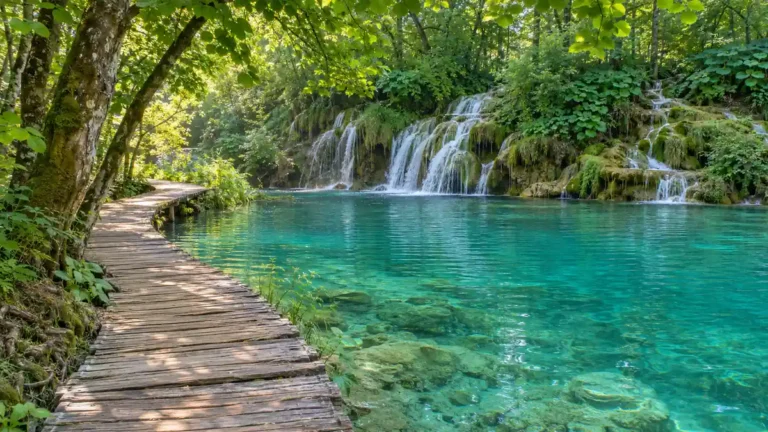
A car earns its place on the mainland. Istria’s hilltop towns, the lakes at Plitvice and the countryside between the coast and Zagreb are slow or awkward by bus, and a car lets you stop where the timetable would not.
Plan the car around the islands. Pick it up for Istria or the national parks, drop it in Split or another coastal city, then switch to catamarans and buses for the islands and the run south.
Because the coast runs north to south, a one-way route saves you from driving or riding the same road twice. The order and the number of days belong in a one-way Croatia itinerary; here, the point is that the mode can change at each stop.
| Mode | Best for | Relative speed | Book ahead? |
|---|---|---|---|
| Long-distance bus | City to city along the coast and from Zagreb | Moderate | Yes in summer on the main coastal corridors |
| Car ferry | Taking a vehicle to an island; deck time | Slow | Vehicles mostly board first-come, first-served |
| Catamaran | Foot passengers hopping between islands | Fast | Yes in summer: seats are limited |
| Rental car | Istria, national parks, small towns, groups | Fast on the motorway | Advisable in summer |
| Train | Zagreb and the north; scenery on the Split line | Slower than the bus | Seat reservation compulsory on the Zagreb–Split IC |
| Domestic flight | Zagreb to Split or Dubrovnik on a short trip | Fastest | Yes: usually the most expensive mode |
Buses are Croatia’s main public transport
The long-distance bus is how people without a car move between Zagreb, the coast cities and Dubrovnik. Services are dense between the main cities and patchier on the islands and in inland Istria, where a car or a careful look at the timetable matters more.
Zagreb is the hub. Many intercity routes start or pass through its main bus station, and the coast road links Rijeka, Zadar, Šibenik, Split and Dubrovnik. The bus is slower than flying and, for one or two people, cheaper than renting a car.
Tickets are sold on the operators’ websites and apps or at the station counter. Hold luggage often carries a small separate charge, paid to the driver when the bag goes under the bus, so keep some cash handy. In July and August, book long-distance seats ahead on the main coastal corridors: the popular departures fill.
The names you will see on the timetables:
- Arriva, FlixBus, Čazmatrans, Autotrans and Croatia Bus — the intercity operators between Zagreb and the coast cities.
- Promet Split — buses in and around Split.
- Libertas — buses in and around Dubrovnik.
Train and bus tickets
Compare routes, schedules and prices across rail and bus operators in one search, with mobile tickets on your phone.
New to Omio? Code NEW10 takes 10% off your first booking — or APPNEW10 if you book inside the Omio app. Both apply to bookings up to €80.
Search routes and compare prices on Omio →
Tripstou may earn a commission if you book through this link, at no extra cost to you.
Ferry or catamaran: how Croatia’s island boats work
Croatia’s islands are served by two kinds of boat. Car ferries carry vehicles, move slowly and have open deck space; catamarans carry foot passengers only, run faster and keep you mostly indoors. Jadrolinija, the largest and state-owned operator, runs both, alongside Krilo (also sold as Kapetan Luka) and TP Line. The boat you choose decides whether your car comes and where you land.
Car ferry vs catamaran: which one for your trip
Take the car ferry if you are bringing a car, because it is the only way to get a vehicle onto an island. It also suits anyone who wants open air and the view: the crossing is slower, and the deck is part of the trip. Foot passengers short on time are better off on the catamaran, which is quicker but has little or no outside space. Aggregators such as Ferryhopper list several operators in one search, which helps when routes overlap.
Do you need to book ferries in advance?
Book catamarans ahead in summer, because seats are limited and popular departures sell out. Car ferries work differently: vehicles board largely first-come, first-served, so in summer you queue at the port and do not reserve a slot.
The practical result is a split plan. Foot passengers lock in catamaran seats once dates are fixed; drivers build queue time into the day and avoid tight connections after a ferry. Which islands to combine, and in what order, is the job of Croatia island hopping.
Check the landing port before you book. The car ferry from Split to Hvar arrives at Stari Grad, on the other side of the island, while catamarans tie up in Hvar Town. A ticket to “Hvar” can mean either; a local bus links Stari Grad port with Hvar Town, and that ride is part of the day you did not plan for.
Driving in Croatia and how the motorway tolls work
Driving in Croatia is easy on the modern motorway spine and the coastal road. The car earns its place for Istria, the national parks and small towns; it costs you in the old towns, where cars are kept out and parking is scarce, and on the islands, where every crossing means a ferry.
Renting is straightforward in the main cities and at the airports. Drivers with a non-EU licence may need an International Driving Permit; check with your rental company before you travel. Split shows the downside well: the old town is car-free, so a car brought into the centre spends its stay in a paid car park.
Taking a rental car onto a ferry ties you to the slower boats and the summer queues described above. On an island-heavy trip, that is the moment to hand the car back.
How to pay motorway tolls
Croatian motorway tolls are charged by distance and vehicle category, collected by HAC (Hrvatske autoceste). The network is moving to a barrier-free electronic system: cars may use an ENC device, other vehicles are identified by number-plate recognition, and manual collection is being removed. Payment options depend on where the transition stands on your route, so check HAC’s current instructions before you drive.
Split to Dubrovnik by road: Pelješac Bridge or Neum?
Take the Pelješac Bridge route for most journeys: it keeps the coast road to Dubrovnik on Croatian territory the whole way. The older corridor through Neum crosses a short strip of Bosnia and Herzegovina, with two border crossings at an external Schengen border. Both routes are open, and the bridge is the default for most drivers and buses.
The bridge leaves the mainland near Komarna, crosses to the Pelješac peninsula and rejoins the road south towards Dubrovnik. The Neum route stays on the old coastal road beyond Ploče and runs through Bosnia and Herzegovina before re-entering Croatia.
The route matters for three kinds of traveler. Drivers in a rental car should confirm the contract covers a crossing into Bosnia and Herzegovina before taking the Neum road. Bus passengers on a Neum routing face stops at both border posts. Non-EU passport holders go through border checks twice. The road ends at Dubrovnik; getting from the airport into town and moving around the city are covered in the Dubrovnik guide.
Do you need a passport to drive through Neum?
Yes, carry your passport: the Neum corridor crosses an external Schengen border twice. Non-EU arrivals are registered biometrically at the border instead of having passports stamped, under the EU Entry/Exit System. The full Croatia visa and entry requirements set out which rules apply to your passport. The same applies to day trips across the border to Mostar or Kotor.
Trains and domestic flights: when they are worth it
Rarely. Croatia’s rail network is small and centred on Zagreb, and its only line to the coast, Zagreb–Split, is slower than the bus on the same corridor, with few trains a day and compulsory seat reservations on the IC services. The line ends at Split, so everything further south is bus or boat.
The train still suits some travelers. It is a calmer ride with luggage, the inland scenery on the Split line is a draw, and lines out of Zagreb reach Rijeka, Osijek and Varaždin. Tickets come from HŽPP, through its app or at the station.
Domestic flights on Croatia Airlines are the quickest way from Zagreb to Split or Dubrovnik and usually the most expensive. A flight makes sense on a short trip, when a long bus day would eat into time at the destination; on a longer trip, the bus or a one-way coastal route serves better.
Summer and the off-season change which modes run
In summer everything runs and everything is full: book catamaran seats and long-distance buses ahead, and expect queues for car ferries. Outside the summer season services thin sharply, some catamaran lines stop altogether and the seasonal airports go quiet, so the no-car verdict weakens and a car or the bus becomes the default.
Planning around the season comes down to timetables. Check the operator’s current timetable before fixing a night on an island, because a crossing that runs all day in summer may not run at all off-season. Keep island hops flexible outside summer, with a mainland base as the fallback.
Off-season travel also shifts the weight towards the mainland. Zagreb, Istria and the coast cities stay reachable by bus and car all year, while the smaller islands become harder to reach and leave.
Which airport fits which part of the coast
Three airports run year-round — Zagreb for the capital and the inland parks, Split for the central coast and most islands, Dubrovnik for the far south — while Zadar, Pula and Rijeka are mostly seasonal. Flying into one and out of another saves you from retracing the long coast.
- Zagreb — the gateway for the capital, the inland parks and the road or rail north; the starting point for a trip that works down the coast.
- Split — the centre of the coast and the main port for the islands; the natural base for an island-heavy trip.
- Dubrovnik — the southern end of the coast; the best exit for a north-to-south route. Arrival and the ride into the old town are covered in the Dubrovnik guide.
Zadar, Pula and Rijeka serve the northern coast and Istria, mostly in summer. Each main airport has a shuttle bus into its city. Arriving at one end and leaving from the other is the open-jaw logic behind a Croatia itinerary, and the regions each airport serves are mapped in the Croatia travel guide.
Phone data on arrival: EU roaming or a local SIM
An EU or EEA mobile subscription roams in Croatia at home rates under fair-use rules. A SIM from outside the EU is not covered, so visitors from beyond the EU buy a local SIM or an eSIM, before the trip or on arrival.
Data matters more on this trip than on most. Bus operators sell through apps, catamaran seats need booking ahead in summer, and ride-hailing in the cities needs a connection. An eSIM set up before departure works the moment you land; a local SIM from a shop or kiosk in a city suits a longer stay and a phone that takes a physical card.
Tickets, luggage and the mistakes that catch people out
A handful of mechanics prevent most wasted days on Croatian transport:
- Croatia uses the euro; keep small notes for the bus luggage charge.
- Bus tickets come from the operator’s website or app, or the station counter; hold luggage often carries a small separate charge paid to the driver.
- Train tickets come from HŽPP, and a seat reservation is compulsory on the Zagreb–Split IC.
- Car ferries load vehicles largely first-come, first-served; catamaran seats sell out in summer.
- The landing port can differ by boat: the Split car ferry for Hvar lands at Stari Grad, the catamarans at Hvar Town.
- Motorway tolls are charged by distance, the network is going barrier-free, and HAC publishes how to pay.
- The Neum corridor crosses Bosnia and Herzegovina, so carry a passport on that road.
- A non-EU driving licence may need an International Driving Permit; check with the rental company.
How We Checked This
This page settles how to move between Croatia’s cities, coast and islands, and whether a rental car is worth it; for timetables, fares, toll prices, island routes or getting around Dubrovnik itself, look elsewhere.
Alex Perrut, working in tourism since 2015, went over these transport choices for the Tripstou editorial team, and the page was written with AI assistance. How we work is set out in our editorial process.
Official sources consulted: Hrvatske autoceste (HAC), Your Europe, Pleso prijevoz, Platanus.
Two Questions People Still Ask
Is there a train to Dubrovnik?
No. No passenger rail line reaches Dubrovnik: the train from Zagreb goes as far as Split. To finish the journey, continue from Split by bus down the coast, or skip the rail leg and fly from Zagreb to Dubrovnik with Croatia Airlines.
Do Uber and Bolt work in Croatia?
Yes. Uber and Bolt both operate in Croatian cities, and they suit short hops across town, such as a bus station or ferry port to your accommodation with luggage. They are not the way to travel between cities: for those legs the long-distance bus is the realistic option.
Keep Planning Croatia
- Croatia travel guide — where to go and how to shape the whole trip.
- Croatia island hopping — which islands to combine and in what order, once you know ferry from catamaran.
- Croatia itinerary — the one-way coast route, day by day.
Did this guide save you time or money? Tripstou is independent and reader-funded — if you'd like to give something back, you can support the site with a crypto contribution of any size.