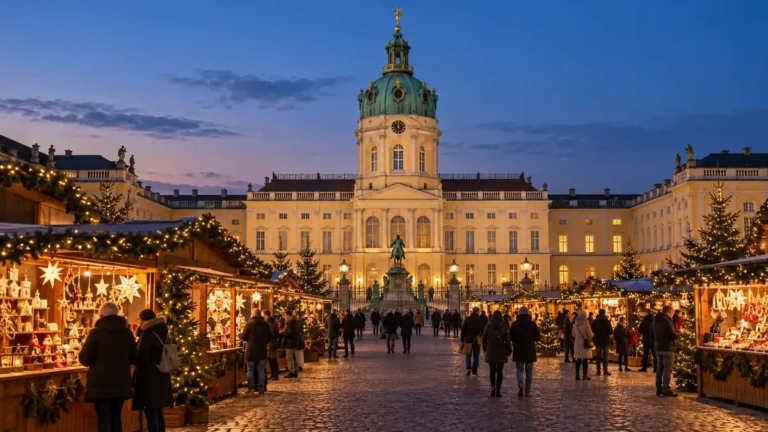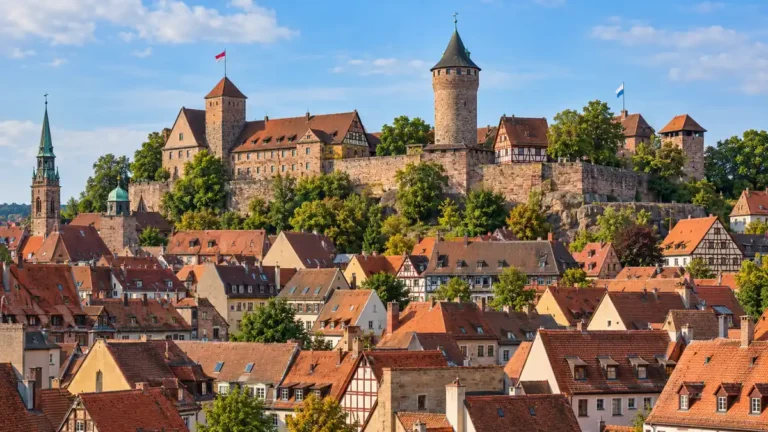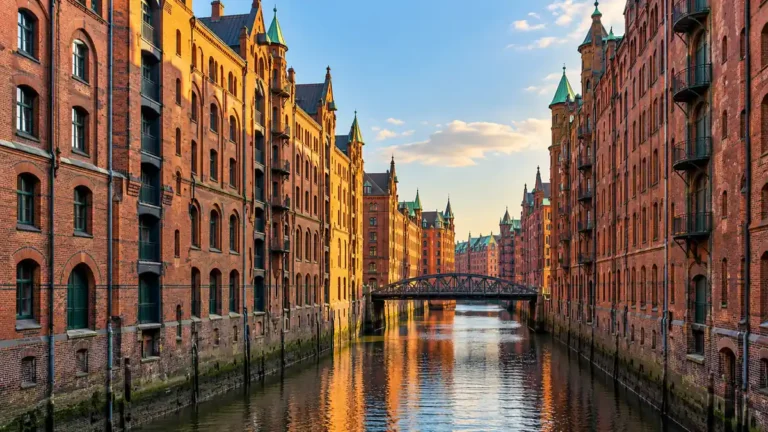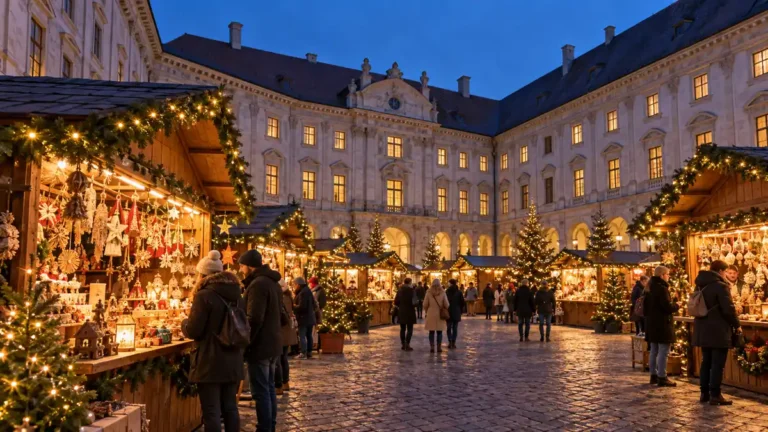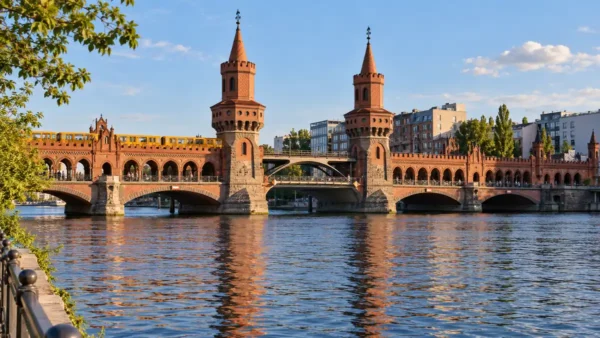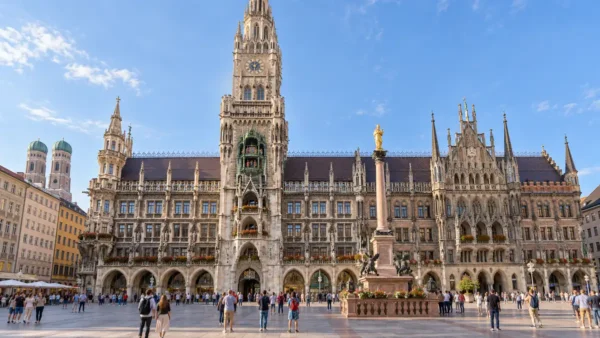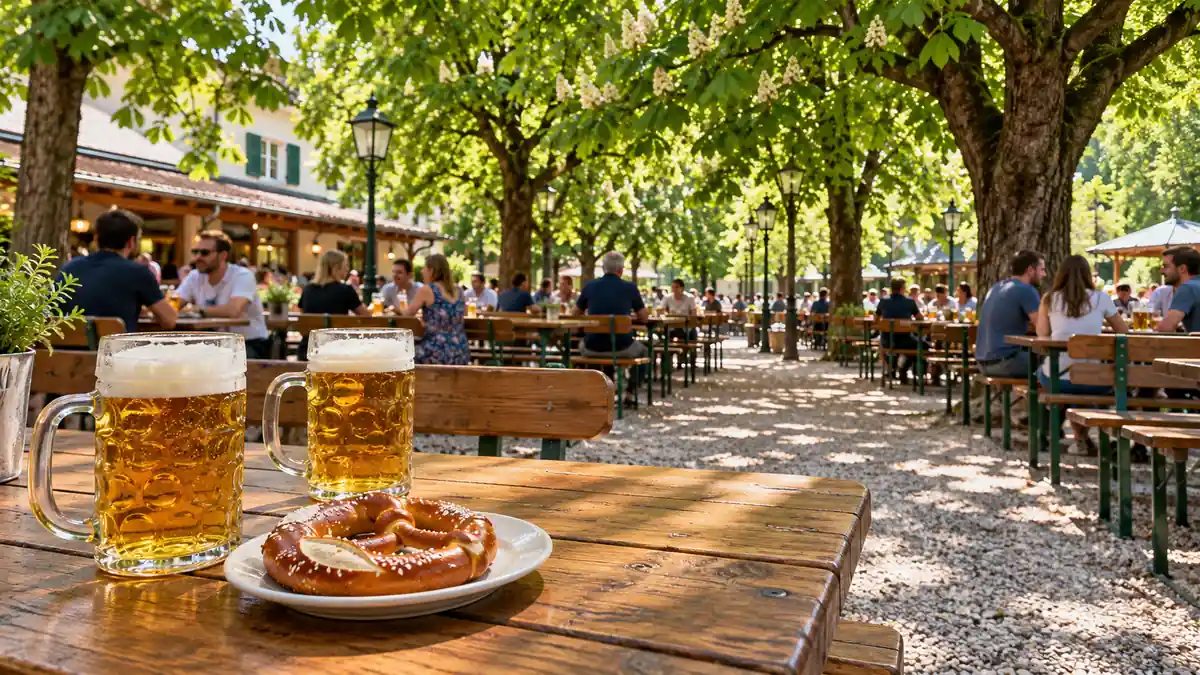
A realistic Germany budget runs roughly €70–100 per person per day on a budget, roughly €140–230 mid-range and €300 or more at the high end, excluding flights. Travel style sets the band first; after that, where you sleep moves it most, because Munich beds cost more than Berlin’s and both cities climb when your dates hit Oktoberfest or a big trade fair. A first-timer splitting a week between Berlin and Munich should plan on the mid-range band.
How These Costs Were Checked
This page sizes a Germany trip per person, per day and per week, by travel style, using official city fares and attraction prices; choosing a Berlin neighbourhood, planning a route, entry rules and the VAT refund are left to other pages.
Alex Perrut, working in tourism since 2015, went over these costs for the Tripstou editorial team, checking the fares, taxes and ticket prices against the sources below. Written with AI assistance and published under our editorial process.
Official sources consulted: Berlin city portal, Berlin Senate Department for Finance, Munich city portal, Deutsche Bahn, Bavarian Palace Administration.
How much does a trip to Germany cost per day?
A trip to Germany costs roughly €70–100 per person per day on a budget, €140–230 mid-range and €300 or more at the high end, flights excluded. The bed you pick decides which band you land in; food, transport and sightseeing move the total far less.
Each band buys a different trip, and the table below shows what goes into each one. Sightseeing sits inside every band: a budget day leans on free memorials and parks, a mid-range day adds one or two paid museums, and a high-end day adds guided visits.
Approximate per person per day, flights excluded; verify prices before booking.
| Travel style | Beds | Food and drink | Getting around | Daily total |
|---|---|---|---|---|
| Budget | Hostel dorm, roughly €20–50 a night | Bakery, Imbiss and supermarket meals, around €10 each | One city day ticket (€10.10 Munich, €11.20 Berlin AB) | €70–100 |
| Mid-range | Private room in a 3-star hotel | Sit-down meals, mains roughly €15–35 | Day tickets, singles on light days | €140–230 |
| High-end | 4- or 5-star hotel | Tasting menus and fine dining | Taxis between neighbourhoods | €300+ |
Flights sit outside every figure here. What you pay to reach Germany depends on where you fly from and when, and for a short trip from outside Europe it can rival the whole on-the-ground budget.
Spending money abroad
A Wise account converts your money at the mid-market exchange rate and shows every fee upfront, with a card you can spend in the local currency.
Check Wise’s rates and fees for your currency →
Tripstou may earn a commission if you sign up through this link, at no extra cost to you.
Is Germany expensive to visit?
Germany is mid-priced for Western Europe: cheaper than its northern and Alpine neighbours for beds and food, pricier than southern and eastern Europe, and transport is where a careful traveler saves most. Four things set your actual number, in this order.
Travel style comes first. The gap between a dorm bed and a 4-star room is wider than any other line on the budget, which is why the bands above are split by style before anything else.
City comes second. Munich is the most expensive major city for beds and Berlin sits clearly lower; the bed section below explains the gap.
Dates come third. Oktoberfest, trade-fair weeks and Christmas-market season lift room rates hard, while food and transport barely move. Anyone still weighing when to go and which regions to combine should start with our Germany travel guide.
How you move between cities comes last, yet it is the line you control most. A long-distance train booked weeks ahead and the same seat bought on the day can differ several times over.
What a week in Berlin and Munich costs by travel style
A week in Germany costs roughly €500–700 per person on a budget, €1,000–1,600 mid-range and €2,100 or more at the high end, flights excluded. The Berlin half of the week usually comes in cheaper than the Munich half, almost entirely because of beds.
- Budget: roughly €500–700 for seven days, hostel dorms in both cities.
- Mid-range: roughly €1,000–1,600, 3-star rooms and sit-down dinners.
- High-end: €2,100 or more, with the bed line growing fastest in Munich.
A common split is three or four nights in each city. A budget traveler spending 3 days in Berlin can sit at the lower edge of the budget band, since dorms, street food and free memorials keep the Berlin leg lean. The same traveler spending 3 days in Munich drifts toward the top of the band, and past it in an event week.
The train between the two cities is the one line item to book early. It is the only cost in the week that changes with the booking date as much as with your travel style.
Beds are the biggest variable, and Munich costs more than Berlin
Beds decide a Germany budget: hostel dorms cost roughly €20–50 a night, Berlin’s average hotel room rate is a little above €100 a night before VAT, and Munich runs higher, sharply higher in event weeks. Several cities also add a bed tax at check-in, Berlin among them.
Berlin has a large stock of hotel and hostel beds spread across many districts, so its prices hold steadier through the year. Munich’s busy trade-fair calendar and Oktoberfest push its room rates up, and can double or triple them when demand peaks. Treat the Berlin figure as a market average: individual hotels sit well above and below it, and a 4-star room costs clearly more.
Berlin on a budget is realistic largely because of beds. Dorms and simple guesthouses are easy to find outside the most central blocks, and districts with good U-Bahn and S-Bahn links let you sleep cheaper without losing time. Our guide to where to stay in Berlin matches each area to a budget.
Hamburg and Cologne each charge their own bed tax at check-in. Cologne also hosts big trade fairs, so its hotel prices deserve the same date check as Munich’s.
Food and drink: what a meal and a beer cost in Germany
A budget meal in Germany costs around €10 from a bakery, an Imbiss or a supermarket, a main course at a mid-range restaurant runs roughly €15–35, and a half-litre of beer at a bar costs roughly €3.50–5. Food is the line where Germany is kind to budget travelers.
Which meal you sit down for decides where you land on the food line. Bakeries sell filled rolls and pastries for breakfast at little cost, and many restaurants offer a lunch menu that costs less than the same dishes at dinner. Biergarten self-service, where you queue for food and carry it to a shared table, keeps a full meal with beer near the budget end. Two sit-down meals a day with drinks are what push a traveler into the mid-range band.
A beer habit adds up quietly, and event venues charge more than a neighbourhood bar.
Getting around Berlin and Munich: official fares and which ticket to buy
A single public transport ride costs €4 in Berlin’s AB zone and €4.20 in Munich’s Zone M, and a day ticket (€11.20 in Berlin AB, €10.10 in Munich) pays for itself by the third ride. Trips to either airport cost more, because both airports lie outside the central fare zone.
| Fare area | Single ticket | Day ticket | Covers |
|---|---|---|---|
| Berlin AB | €4 | €11.20 (24-hour) | City centre and inner districts |
| Berlin ABC | €5 | €12.90 (24-hour) | Adds the outer zone and BER airport |
| Munich Zone M | €4.20 | €10.10 (single day ticket) | City of Munich |
Each city has a cheaper option for light use. Berlin’s short-trip ticket costs €2.80 for a few stops, and Munich’s stripe card costs €18.70 for several short rides you validate as you go. For the airports, buy Berlin ABC to reach BER; Munich airport lies in zone 5, so you need an M–5 ticket. A day of two rides is cheaper on singles; anything more is cheaper on a day ticket, which is why the budget row of the daily table carries one per day.
Train tickets between cities: saver fares, flexible fares and the Deutschland-Ticket
Advance saver fares on Germany’s long-distance trains cost a fraction of the flexible fare for the same seat, so booking early saves more than any other transport choice. The Deutschland-Ticket covers local transport and regional trains only, never the fast ICE, IC or EC services between big cities.
How do you get cheap train tickets in Germany?
You get cheap train tickets in Germany by booking a Super Sparpreis or Sparpreis fare as early as you can and travelling off-peak. Super Sparpreis fares start low but are non-refundable. Sparpreis costs more and can be cancelled for a fee. Flexpreis is the flexible fare, and it is much higher.
Off-peak trains are the second lever after booking early, so a midweek departure is worth checking before a Friday or Sunday one. For shorter hops between nearby cities, regional trains cost less than the fast services. A rental car rarely beats an early-booked train between the big cities once fuel and city parking are counted; it pays its way mainly in rural areas the rail network serves thinly.
Is the Deutschland-Ticket worth it for tourists?
The Deutschland-Ticket is worth it for tourists staying around a month and moving slowly on regional trains, or for anyone who would otherwise buy many city day tickets. It is not worth it for a one-week Berlin–Munich trip on fast trains.
The ticket is a monthly subscription, cancellable month by month if you cancel by the 10th, and it is personal, so it cannot be shared. It covers local transport, including buses, trams, U-Bahn and S-Bahn, plus regional trains in second class. It is not valid on ICE, IC or EC trains. The Berlin–Munich leg, the one most first-timers need, therefore costs the same with or without it.
What sightseeing costs, from free city walks to Neuschwanstein
Much of Germany’s sightseeing is free or cheap: parks, memorials, many churches and the old centres themselves cost nothing, paid museums and castles sit in a modest range, and the headline ticket, Neuschwanstein, costs €21 for adults, with under-18s free and a €2.50 online booking fee per ticket. Sightseeing is the smallest line in most budgets.
Within each daily band, sightseeing follows how many paid doors you go through. A budget day leans on free memorials, walking routes and riverbanks, with an occasional paid entry. A mid-range day usually includes one or two museums or a palace. City museum passes bundle several entries into one price; add up the entries you will actually use before buying one, because a pass only saves money on a museum-heavy stay.
When Germany gets expensive: Oktoberfest, trade fairs and market season
Beds are what spike in Germany, not food or transport: Munich room rates run 2–3x during Oktoberfest and major trade fairs, and Christmas-market season lifts city hotel prices across the country. Shoulder weeks outside those windows are the cheapest time to book.
Event weeks are easy to miss because they are not holidays. A large trade fair can fill Munich’s hotels on dates that look ordinary on a calendar. Check the city’s trade-fair calendar before fixing your dates, and treat a sudden jump in hotel prices for one week as a sign that something is on.
Summer adds steady demand without the sharp spikes. Moving your trip by a single week can change the budget more than any saving lever below, because it touches the largest line on the bill.
How to spend less in Germany without skipping anything
Three levers move a Germany budget most: booking saver train fares early, keeping your Munich nights out of event weeks, and eating German lunches at bakeries, Imbiss stands and restaurant lunch menus. The rest trims the edges.
- Book Super Sparpreis or Sparpreis fares as soon as your dates are fixed, and pick off-peak trains.
- Use regional trains for short hops; on a stay of around a month, the Deutschland-Ticket folds those trips and all city transport into one subscription.
- Buy a day ticket on any day with three or more rides, singles on lighter days.
- Shop at supermarkets and bakeries for breakfast and picnics, and keep the sit-down meal for lunch.
- Build days around free sights: memorials, parks, churches and the old centres.
- Give Berlin the longer share of a two-city trip; its beds cost less than Munich’s.
- Travel in shoulder weeks, clear of Oktoberfest, trade fairs and Christmas-market season.
Visitors who live outside the EU and make a large purchase can also reclaim part of the tax through the Germany VAT refund for tourists.
The Budget at a Glance
- A Germany trip costs roughly €70–100 per person per day on a budget, €140–230 mid-range and €300 or more at the high end, with flights on top.
- Beds swing the total most: Munich costs more than Berlin, and Munich room rates run 2–3x in Oktoberfest and trade-fair weeks.
- Saver train fares booked early cost a fraction of the flexible fare for the same seat between cities.
- The Deutschland-Ticket covers local transport and regional trains only, so it suits month-long slow travel, not a one-week Berlin–Munich trip on ICE trains.
- In Berlin and Munich a day ticket beats single tickets from the third ride of the day.
- Berlin adds a 7.5% city tax to the room price, collected by your hotel at check-in.
Money Questions Travelers Ask About Germany
Is there a city tax on hotels in Germany?
Yes, in several cities: a bed tax is added to the room price and collected by the accommodation at check-in. Berlin charges 7.5% of the room price, business stays included. Hamburg and Cologne charge their own versions, so check whether the price you booked already includes the tax.
Do you tip in Germany, and how much?
Yes, modestly: round up the bill or add about 5–10% in restaurants. Tell the server the total you want to pay as you hand over the money, since leaving the tip on the table is less usual; in cafés and bars, rounding up is enough.
Do you need cash in Germany?
Carry some, yes. Cash is still widely used in Germany, and although card acceptance keeps improving, bakeries, market stalls, small bars and some Imbiss stands may take cash only.
What is Pfand in Germany?
Pfand is a deposit included in the price of drinks sold in bottles and cans: €0.25 on single-use bottles and cans. You get it back by returning the empties to the collection machines in supermarkets, which print a voucher you redeem at the till.
Keep Planning Germany
- Planning a trip to Germany: when to go, which regions to combine and what to see.
- Which Berlin area to base in: each district matched to a budget and a kind of trip.
- 3 days in Berlin: the Berlin stop costed above, day by day.
- 3 days in Munich: the Munich stop costed above, day by day.
Did this guide save you time or money? Tripstou is independent and reader-funded — if you'd like to give something back, you can support the site with a crypto contribution of any size.