Yes, for the right person: Spain is a viable long-term base for non-EU remote workers thanks to its dedicated digital nomad visa. Whether it fits you hinges on your tolerance for bureaucracy and tax complexity versus the climate, cost, and community payoff. It works best for nomads who resolve the visa, city, tax, and cost decisions before committing.
Moving to Spain to work remotely is a bigger commitment than a holiday, and the fit question comes before you start comparing apartments in Valencia. This guide resolves the feasibility question: whether Spain works as a long-term nomad base, who it genuinely suits, and what the trade-offs feel like once the novelty wears off. Spain offers what most nomads are shopping for — reliable weather, established communities, and living costs below much of northern Europe. It also demands more paperwork, patience, and tax awareness than almost any comparable base. Living here full-time runs on different rules from a short visit: a dedicated visa, potential tax residency, and long-term housing all enter the picture. Below you’ll find the honest fit assessment, the legality basics, the language question, and the four decisions — visa, city, taxes, and cost — each resolved in its own dedicated guide.
Who is Spain right for as a digital nomad, and who should skip it?
Spain suits nomads who value community, climate, and affordability over speed and low-friction admin. It rewards people planning a genuinely long stay and willing to deal with paperwork — some of it in Spanish. Nomads who want instant setup, minimal tax exposure, and constant movement between countries should look elsewhere.
The strongest fit is a remote worker with stable income who wants to stay put for a while — someone who values plugging into an existing community over pioneering, and who treats learning Spanish as part of the experience instead of an obstacle. Spain also rewards nomads escaping expensive northern European bases: the lifestyle upgrade per euro is real. The visa process, apartment hunting, and community building all involve upfront effort that pays off over a year or more, not weeks.
The anti-fit is just as clear. If your model is fast rotation — a few weeks per country, minimal admin, no tax entanglements — Spain’s paperwork-heavy system works against you, and tourist-stay limits cap the casual version of the plan. High earners who are sensitive to tax exposure should also examine the residency question early, because staying long enough to settle in usually means becoming a Spanish tax resident.
Spain filters nomads by patience more than by budget. The people who leave early are rarely priced out — they’re worn down by appointments.
What are the real pros and cons of nomad life in Spain?
The payoff is climate, community, and lower costs than northern Europe; the friction is bureaucracy, enforcement, and tax complexity. Few countries match Spain’s mix of established nomad hubs and liveable weather. Few make you work as hard for the paperwork that lets you enjoy them.
What Spain does well:
- Climate variety — work-friendly weather nearly year-round in the south and the islands, proper seasons in the north
- Established communities — meetups, coworking scenes, and international networks already exist in every major hub
- Cost relative to northern Europe — everyday living stretches further than in most western European capitals
- Transport — an extensive high-speed rail network makes trying several cities before settling genuinely practical
- Lifestyle — food, walkable cities, and a social culture that makes solo relocation easier
Where it grinds:
- Bureaucracy — appointment systems, slow processes, and documentation demands recur throughout your stay
- Tightening scrutiny — visa and residency checks are getting stricter, so cutting corners carries more risk
- Tax complexity — residency rules and filing obligations catch out nomads who ignore them until year-end
- Language — English fades fast outside the big cities and inside any government office
- Housing pressure — the most popular nomad hubs face real competition for long-term rentals
Connectivity is one of Spain’s quiet strengths. Fibre coverage is widespread even in smaller towns, and mobile data is cheap and simple to arrange — our guide to getting a Spain SIM card covers staying connected from arrival. Only remote rural areas and some island interiors deserve a check before you commit to a long stay.
Spain’s cost advantage is real but unevenly distributed — the cities with the biggest nomad communities are exactly the ones where that advantage shrinks fastest, so the pros-and-cons balance depends heavily on which Spain you choose. Big hubs like Barcelona and Madrid cost noticeably more than smaller cities or the south.
Can you live in Spain as a digital nomad on a tourist visa?
Not for long: short stays fall under standard Schengen visitor limits, and a longer nomad base requires the dedicated digital nomad visa, not tourist entry. Spain is a realistic base for remote workers who secure the right visa and accept the trade-offs: it has a dedicated digital nomad visa for non-EU citizens, some of Europe’s largest nomad communities, and infrastructure built for remote work. The catch is administrative friction at almost every step, so plan the visa before the flight.
The route exists and it is deliberate. Spain introduced its digital nomad visa under the Startup Law specifically to attract non-EU remote workers and freelancers, and the ecosystem has grown around it: coworking spaces in every major city, active nomad communities in Barcelona, Madrid, Valencia, Málaga, and the Canary Islands, and landlords increasingly familiar with remote-worker tenants. Unlike tourist entry, the visa opens a renewable residence period built for long stays.
Tourist status was never designed for people effectively living in Spain, and treating it as a workaround gets riskier as checks tighten. Answering emails during a genuine visit is one thing; building a life on repeated tourist entries is the pattern immigration checks increasingly look for. Spain created a legal route for exactly this situation — the Spain digital nomad visa — so the grey-zone approach now competes with a proper alternative. The workaround era is ending.
Living in Spain is a different project from visiting it. A holiday runs on tourist entry, short-term lets, and restaurant menus in English; a real base means a residence visa, a rental contract, local registration, and eventually a tax file. If you’re still deciding between a scouting trip and a move, start with the Spain travel guide for the visiting side, then come back to the residency question.
For what tourist entry itself allows, and how Schengen rules apply to your nationality, see the Spain entry requirements guide.
Can EU citizens work remotely from Spain without a visa?
Yes. EU and EEA citizens can live and work remotely from Spain under free movement — no visa needed, just local registration for longer stays. Tax residency still applies once you settle, though, so read how digital nomads are taxed in Spain before treating the move as paperwork-free.
Do you need to speak Spanish to live and work remotely there?
English works for remote work and big-city nomad hubs, but everyday admin and smaller towns need some Spanish. You can land in Barcelona, Madrid, Valencia, or Málaga and function in English from day one. Government offices, landlords, banks, and healthcare are a different story.
In the main hubs, the nomad ecosystem itself runs in English — coworking spaces, meetups, and international landlords all function without Spanish, and your work language depends on your employer, not on Spain. Admin is the exception. Immigration appointments, town-hall registration, banking, and rental negotiations default to Spanish, and outside the big cities English coverage drops quickly.
Basic conversational Spanish repays the effort faster than almost any other preparation for the move: it unlocks cheaper housing outside expat channels, smoother appointments, and most of the social life beyond the nomad bubble. In Catalonia, the Basque Country, and Galicia you’ll also encounter Catalan, Basque, and Galician — day-to-day life still works in Spanish everywhere.
The four decisions you must sort out before moving
Four decisions gate a move to Spain — visa, city, taxes, and cost — and they resolve best in that order. Each one shapes the next: eligibility determines whether you move at all, the city sets your daily life, and tax and budget decide whether the plan survives contact with reality. Skipping ahead creates expensive backtracking.
Work through them in sequence:
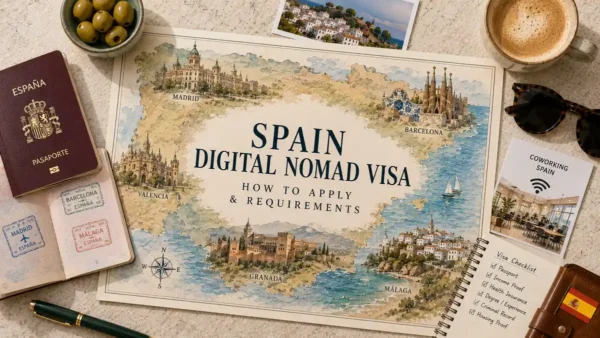
- Visa. Confirm you qualify for the digital nomad visa — it targets non-EU remote workers and freelancers, and the income requirement is tied to Spain’s minimum wage and revised regularly, so check the current bar before planning anything else.
- City. Pick your base with the best cities in Spain for digital nomads — the right choice depends on whether you optimise for community, climate, cost, or quiet.
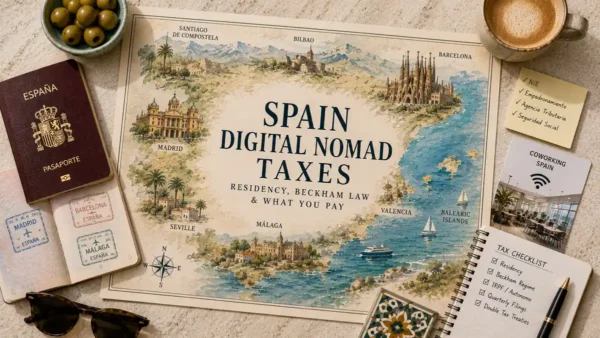
- Taxes. Understand residency before you trigger it — how digital nomads are taxed in Spain explains when you become a tax resident and the special regime that may apply.
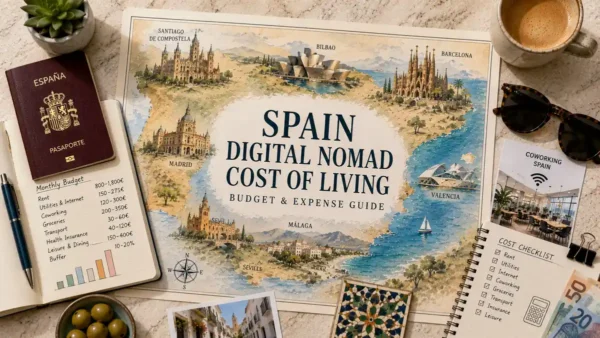
- Cost. Stress-test your budget against the cost of living for nomads in Spain so the income that qualifies you for the visa also funds the life you’re planning.
On taxes, the stakes are concrete: once you become a tax resident, your worldwide income generally comes into scope, though a special regime for incoming remote workers can soften the hit.
Most abandoned Spain plans die at the visa or the taxes — people fall in love with a city first, then discover eligibility or residency doesn’t fit, and unwinding that is far costlier than checking it on day one.
Who Wrote This
This page settles one planning decision, whether Spain works as a long-term base for a remote worker and for whom; it is not a Spain travel guide, a visa how-to, a city ranking, a tax explainer or a budget breakdown, which the linked guides cover.
Produced with AI assistance. Alex Perrut, working in tourism since 2015, then reviewed the trade-offs on this page for the Tripstou editorial team; our editorial process sets out how.
Last factual review: July 17, 2026.
Official sources consulted: Spain.info, Tourspain.
Did this guide save you time or money? Tripstou is independent and reader-funded — if you'd like to give something back, you can support the site with a crypto contribution of any size.