Mallorca, the largest of Spain’s Balearic Islands, with Palma as its capital, is worth the trip for far more than its resort beaches: the stone villages of the Serra de Tramuntana, the sheltered north bays and the coves of the east coast give it real range. For travel to Mallorca on a first trip, base in Palma or in one other zone, and give the island about a week if you want more than the city and a single mountain day. Your trip style decides which second base makes sense.
This guide follows the order the decisions come up: which zones to use, where to base, how many days, which season, how to get there and whether you need a car.
Mallorca Planning at a Glance
- Palma is the easiest base for a first trip or a long weekend, and a week-long stay earns a second base in the Sóller valley, the north bays or the east coast to save long day-drives.
- A long weekend covers Palma plus one day in the Tramuntana villages, while about a week lets you see two or three zones without living out of a suitcase.
- A car pays off only for part of the trip: Palma, Sóller and the north bays work by bus and train, but the east-coast coves and the Formentor road need your own wheels.
- May to June and September to October balance a warm sea, open hotels and thinner crowds, while July and August bring the fullest roads and the highest room prices.
- Flying into Palma is the default way in, and the ferry from Barcelona, Valencia, Dénia or Ibiza earns its longer crossing mainly when you are bringing a car.
- The Tramuntana villages are at their best early or late in the day, once the coach groups from Palma have left.
Is Mallorca Worth Visiting Beyond the Beach Resorts?
Mallorca is worth visiting, and mostly for what sits outside the package-resort belt. Its strengths are mountain villages and hiking in the Tramuntana, small coves on the east coast, a genuine city in Palma, and easy, shallow bays in the north that suit families. It suits travelers less well if they want quiet roads in July and August, or if they want no resort feel but never leave the southwest strip.
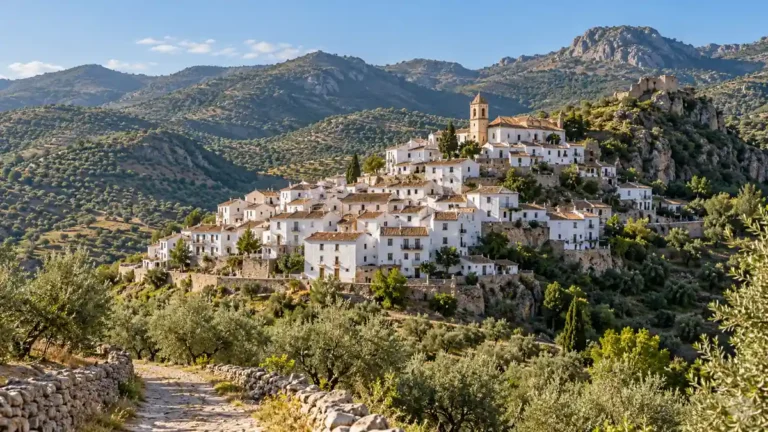
The resort image is accurate for a slice of the coast and misleading for the rest. Magaluf and the beaches near the airport are what most people picture. Head inland or up into the mountains and the island turns into terraced olive groves, honey-coloured villages and switchback roads.
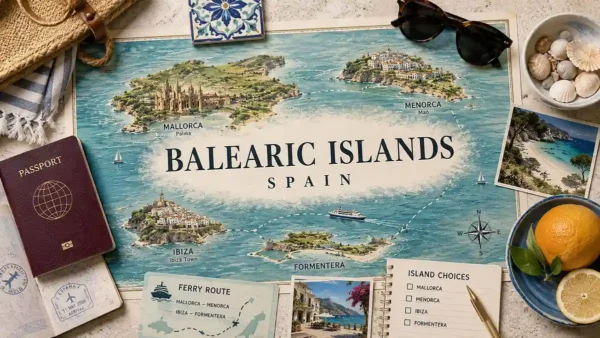
Mallorca works as a standalone week or as a few days added to a mainland trip; the section on days below sets out both. If you are still choosing between Mallorca, Menorca, Ibiza and Formentera, our Balearic Islands guide compares them, and the island groups beyond the Balearics are covered in our look at Spain’s other islands. For the mainland side of the trip, start with our guide to planning a wider trip to Spain.
Mallorca’s Island Zones and What Each One Is For
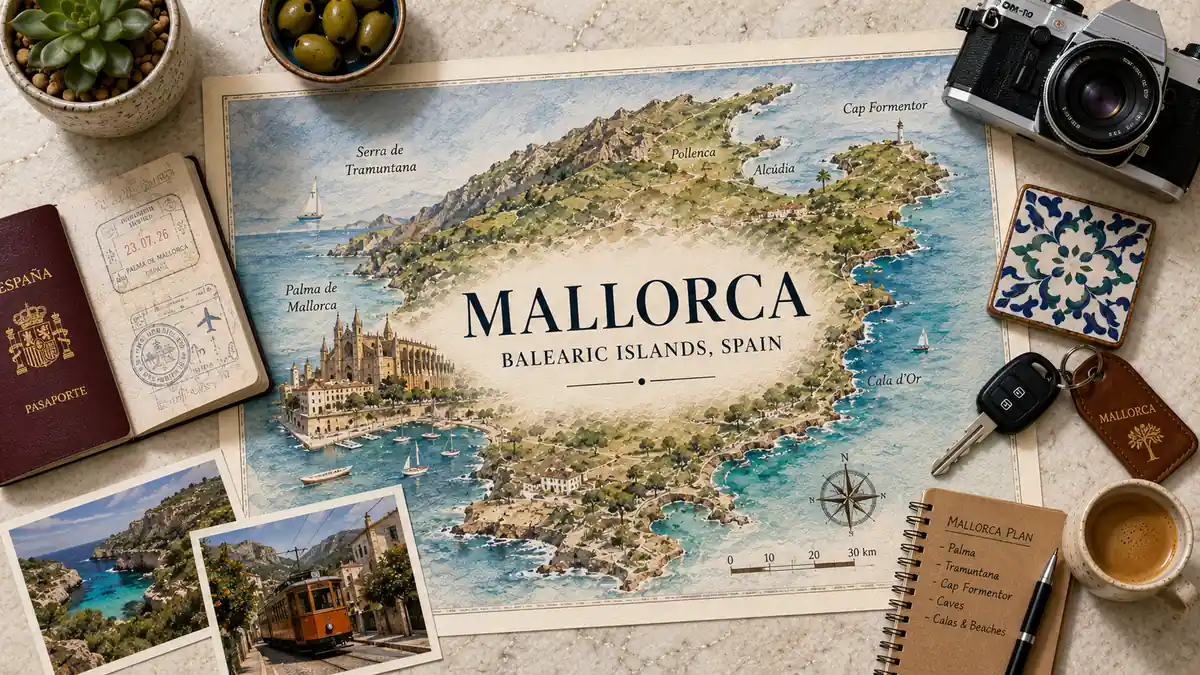
Mallorca divides into a handful of zones with distinct jobs. Palma sits on the big bay in the south. The Serra de Tramuntana runs along the west and northwest coast. The Pollença and Alcúdia bays open to the north, and coves and caves line the east coast. The busiest resort belt fills the southwest, between Palma and the western headlands.
Palma: The City Base
Palma is a working Mediterranean city, not a resort, and the natural base for short stays and car-free trips. It has the airport on its doorstep, the island’s bus and train hubs, and enough restaurants, museums and old-town streets to fill evenings without a drive.
La Seu, the Gothic cathedral that rises over the seafront walls, is the sight that anchors any Palma day. It sets the city’s skyline from the harbour, and most visitors fit it into their first morning in town.
Behind the cathedral, the old town is a tight grid of lanes, courtyard mansions and small squares that rewards an unhurried walk; if you prefer context, you can book a guided walk through it. The harbour and the seafront promenade frame the old town to the south. Palma fits first-timers and anyone with only a long weekend.
Serra de Tramuntana: Valldemossa, Deià and Sóller
The Serra de Tramuntana is the island’s mountain spine and the reason many travelers come back. UNESCO lists it as a World Heritage cultural landscape for its terraces, dry-stone walls and old irrigation systems. The villages along it (Valldemossa, Deià, Sóller with Port de Sóller below, and Fornalutx) are stone-built, steep and best seen early or late in the day, when the coach groups have gone.
Hikers and cyclists use the range for its marked trails and long climbs. The Sóller valley makes the most practical base: a town with daily life of its own, a harbour reached by tram, and trailheads within reach. The heritage Sóller train from Palma is a scenic way in. Couples and walkers get the most from this zone.
Pollença and Alcúdia: The North Bays
The north bays are Mallorca’s easiest family base. The bays of Pollença and Alcúdia are wide and sheltered, with calm, shallow water and long promenades. Pollença’s old town sits inland around its square and hillside steps; Alcúdia has a walled old town and a working port.
The Formentor peninsula is the drive from here: a narrow road along the cliffs to the lighthouse at the end of the peninsula. Buses connect the bays with Palma, so a family can stay here without a car for most of the week.
The East Coast: Calas and the Drach and Hams Caves
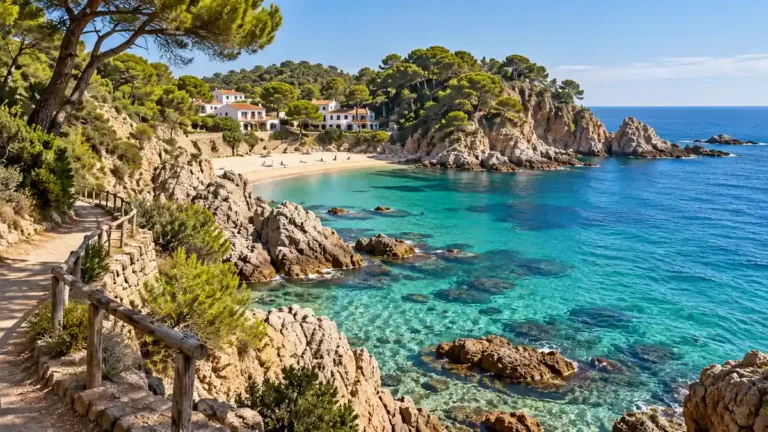
The east coast is where Mallorca’s small coves, the calas, are concentrated, and a car is what makes the coast work. The coves sit at the end of short roads between pine-covered headlands, and the pleasure is in moving between them over a few days. Cala d’Or is the most developed base, with marinas and a run of inlets close together. For beach picks across the country, see our guide to Spain’s best beaches.
Porto Cristo is the gateway to the caves. The Caves of Drach and the Caves of Hams both run timed entry, so book ahead in summer; you can reserve a Hams slot before you travel. For boat trips along this coast and elsewhere, see our list of boat trips and other things to do in the Balearics. Beach-focused couples who like to hop between coves fit this zone best.
The southwest resort belt and the interior round out the map. Magaluf and Santa Ponsa are the nightlife and package-holiday end of the island, while Playa de Palma and El Arenal stretch along the bay near the airport. Inland, Inca and the market towns of the plain show the farming side of Mallorca, and our guide to quieter villages and hidden corners of the Balearics picks up where this map stops.
Tours and activities
Book skip-the-line tickets, day trips and local tours with free cancellation on most activities.
You can also browse everything on getyourguide.com.
Tripstou may earn a commission if you book through this link, at no extra cost to you.
Palma Is the Easiest First Base; a Week Earns a Second
Palma is the easiest base for a first trip and for any stay of a few nights. For a week, split your nights between Palma and one zone that matches the trip: the Sóller valley for hiking, the north bays for families, or the east coast for coves. One hotel change costs you half a day; staying in Palma all week costs you long day-drives to the far ends of the island.
| Zone | Natural base town | Who it suits | Car needed? |
|---|---|---|---|
| Palma | Palma old town or seafront | First-timers, short stays, no-car trips | Not needed |
| Tramuntana | Sóller | Hikers, cyclists, couples | Helpful |
| North bays | Pollença or Alcúdia | Families, car-light stays | Not needed; helpful for Formentor |
| East coast | Cala d’Or or Porto Cristo area | Cove-hoppers, beach couples | Needed for coves |
| Southwest | Magaluf or Santa Ponsa | Nightlife, package holidays | Not needed |
Two bases beat one once the trip runs to most of a week. The island looks compact on a map, but its mountain roads are slow, so a Palma-only week means repeating the same exit routes every morning. Make the second base the zone you would otherwise drive to most often. A hiking trip gains the most from the move: waking in the Sóller valley puts you on the trail before the day-trippers from Palma arrive.
What Each Spend Style Buys in Mallorca
Mallorca can be done on a tight budget or at the top end, and the gap shows most in where you sleep and whether you rent a car.
- Budget: simple stays in Palma or the north bays, buses and the train for getting around, and a set lunch menu (menú del día) as the main meal.
- Mid-range: a boutique hotel in Palma’s old town or a valley hotel near Sóller, with a rental car for part of the week to reach the coves and Formentor.
- High-end: Tramuntana hotels and restored country estates (fincas), with a car throughout and evenings spent in the villages.
July and August punish every style, with the highest room prices and the fullest roads of the year. Every style also pays a per-night tourist tax added to the stay; the FAQ below covers it.
How Many Days Do You Need in Mallorca?
About a week lets you see two or three zones from one or two bases, while a long weekend covers Palma plus one day in the Tramuntana. That is our editorial judgement for a first trip: the island rewards slower travel, and the mountain roads make anything faster feel like a string of transfers.
A long weekend suits city-break travelers. Stay in Palma, give one full day to the old town and the harbour, and spend another in Valldemossa, Deià or Sóller. About a week suits most first visits: a few nights in Palma, then a second base in the zone that matches the trip, with a car for some of those days. A longer stay lets you add a third zone or slow down in the interior and the north, and suits hikers and return visitors.
The strongest first-trip shape is Palma plus one zone base. Hopping to a new hotel every night or two burns the time you came for on packing and check-ins.
Mallorca also works as an add-on. A few days on the island after a mainland route fits easily, since Palma is a short flight from the main Spanish cities; build the mainland part with our itinerary for a week on the Spanish mainland.
Late Spring and Early Autumn Suit Most Mallorca Trips
May to June and September to October suit most Mallorca trips, balancing a warm sea, open hotels and thinner crowds. July and August are the peak, with the busiest beaches and roads. November to February is quiet: the sea is cold for most swimmers and some resort hotels close for the winter.
- Beach trips: June and September give warm water without the peak-season crush on the coves.
- Hiking and cycling: the cooler months suit the Tramuntana, since summer heat turns long climbs into hard work.
- City breaks: Palma works most of the year, because its museums, restaurants and old town do not depend on beach weather.
September and October are the half of the shoulder season first-timers overlook: the sea is still swimmable after a whole summer of warming, while the crowds have thinned. For timing across the rest of the country, see our guide on when to visit Spain more broadly.
Getting to Mallorca: Flight or Ferry?
Most visitors fly into Palma de Mallorca Airport (PMI), about an hour from Barcelona, Valencia or Madrid. The ferry is the half-day or overnight alternative, and it makes sense when you are bringing a car or starting from Barcelona, Valencia, Dénia or Ibiza.
Ferries land at Palma and Alcúdia, and the main routes are run by Baleària, GNV and Trasmed. Crossing times vary by vessel and season, and the faster service runs only in the warmer months.
- Barcelona to Palma or Alcúdia: about 5–8 hours.
- Valencia to Palma: about 7–9.5 hours.
- Dénia to Palma: about 5 hours.
- Ibiza to Palma: about 2–4 hours.
No direct ferry runs from Gandía or Alicante; travelers on the Costa Blanca sail from Dénia. Check the operator’s timetable for your date before planning around a crossing.
From Palma Airport Into Town
The EMT bus A1 runs from the airport to central Palma and is the simplest way into the city. The A2 runs along the bay to S’Arenal. For the resort areas, TIB runs its Aerotib airport lines: the A11 to Camp de Mar, the A32 to Can Picafort, the A42 to Cala Bona and the A51 to Campos. Check the operator’s page for fares and timetables before you land.
Do You Need a Car in Mallorca?
You need a car only for part of a Mallorca trip. Palma, Sóller and the Alcúdia and Pollença bays work well by bus and train, but the Tramuntana coves, the Formentor drive and the east-coast calas really need your own wheels.
The TIB intercity buses link Palma with the main towns, including Sóller, the north bays and the east coast. They serve the towns well and the coves badly. The Sóller railway is a different thing: a slow, scenic heritage ride from its own station in Palma, with a tram on to Port de Sóller. Take it for the journey itself; the TIB bus is the faster everyday option.
The common pattern is a car-free stay with a few days of rental in the middle. Pick the car up for the days you spend on the east coast or the Formentor road, and hand it back before the Palma nights, when old-town parking is more trouble than it is worth. Mallorca’s best driving is also its most demanding: the Tramuntana road is narrow, winding and shared with cyclists, so budget far more time than the distance on the map suggests.
Before you rent, check whether your licence needs an International Driving Permit.
Mallorca Questions Travelers Ask
Is the Sóller train worth it?
Yes, if you ride it for the scenery and not to save time. The wooden heritage train leaves from its own station in Palma and climbs slowly through the mountains to Sóller, where a tram carries on down to Port de Sóller. If you only need to reach Sóller, the TIB bus is quicker, so a good way to use both is the train one way and the bus back.
Is there a tourist tax in Mallorca?
Yes. The Balearic sustainable tourism tax is charged per night on stays in tourist accommodation, and the rate depends on the category of accommodation and the season. Check at booking whether a quoted price already includes it.
Is it Mallorca or Majorca?
Both are correct and name the same island. Mallorca is the Spanish and Catalan spelling used on the island itself, while Majorca is the traditional English form, still common in British usage. In Spanish the double l sounds close to a y, so the name is said roughly “ma-YOR-ka”.
Sources and Review
This guide plans a first Mallorca trip across the whole island (its zones, where to base, how long to stay, when to go, arrival and getting around); it is not a Palma city guide, a day-by-day itinerary, a ferry or transfer deep dive, or a hotel roundup.
Alex Perrut, working in tourism since 2015, went over these zones and routes for the Tripstou editorial team after the page was written with AI assistance; our editorial process sets out the steps.
Official sources consulted: Spain.info, Turespaña, Illes Balears Tourism, Aena Palma de Mallorca Airport, Ferrocarril de Sóller.
Did this guide save you time or money? Tripstou is independent and reader-funded — if you'd like to give something back, you can support the site with a crypto contribution of any size.