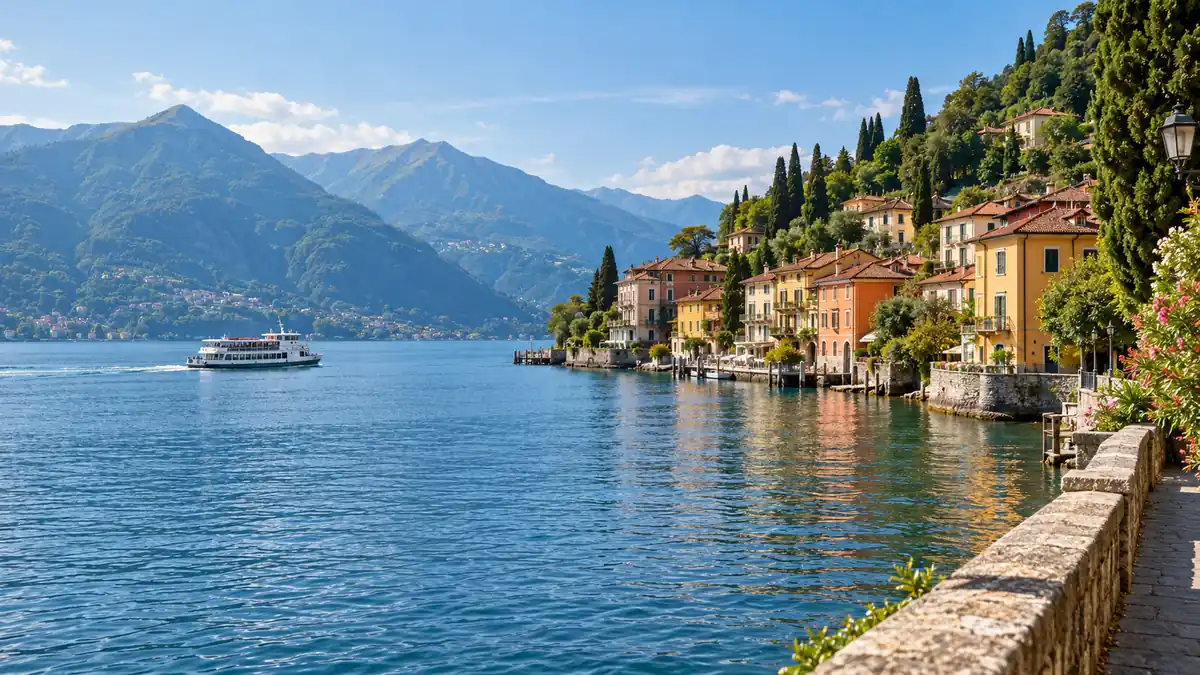
The land around Milan earns extra days, and Milan itself is the right base for most of it. The lakes to the north and Bergamo to the east are easy day trips on direct regional trains, while a slow lake stay and the far corners (Mantua, Lake Garda, the Tirano line into the Alps) are where a night away pays off. Trip length decides the rest: on a short stay, sleep in Milan every night; from about four or five days, one lake night becomes worth the move.
This guide groups Lombardy by direction out of Milan, gives a verdict on each place, then settles how long to stay, where to sleep, how to move and what the trip costs by spend style.
How This Guide Was Checked
This is a planner for using Milan as a base for the lakes, hill towns, art cities and Alpine rail lines of Lombardy, plus Lugano; it is not a Milan city guide, a Lake Como guide, a day-by-day itinerary or a hotel and budget page.
Written with AI assistance, this guide had its train times and day-or-night verdicts checked by Alex Perrut, working in tourism since 2015, for the Tripstou editorial team, following our editorial process.
Official sources consulted: Italia.it, In Lombardia, Trenord, Navigazione Laghi, Comune di Milano.
In This Guide
Which places near Milan make a day trip, and which need a night?
Most of what is worth seeing around Milan sits within about 1 h 15 of Milano Centrale on a direct regional train, so it works as a day trip. Mantua (about 2 h) and Tirano (about 2 h 30) are the exceptions: both are possible in a day, and both are better with a night.
| Destination | Direction from Milan | Direct regional train from Milano Centrale | Day trip or a night? | Best for |
|---|---|---|---|---|
| Monza | North | About 9 min | Half day | Royal villa and its park |
| Pavia | South | About 32 min | Half day | The Certosa and a covered bridge |
| Como (San Giovanni) | North | About 40 min, roughly hourly | Day trip | The shortest lake day |
| Bergamo | North-east | About 48 min | Day trip | A walled upper town |
| Arona (Lake Maggiore) | North-west | About 1 h | Day trip | A calmer lake shore |
| Varenna (Lake Como) | North | About 1 h 04 | Day trip or a night | Mid-lake villages by boat |
| Brescia | East | About 1 h 06 | Day trip | A quieter second city |
| Lugano | North (Switzerland) | About 1 h 15 | Day trip | A Swiss lake city |
| Desenzano del Garda | East | About 1 h 23 | Long day; a night helps | Lake Garda’s southern shore |
| Mantua | South-east | About 2 h, around ten a day | Better with a night | A city ringed by lakes |
| Tirano | North-east (Alps) | About 2 h 30 | Better with a night | The rail line over the Alps |
All times are for Trenord regional trains from Milano Centrale and are approximate, so check the timetable before you set out. Some lines also leave from Milano Porta Garibaldi or Milano Cadorna, which can suit you better depending on where you sleep. The pattern matters more than any single minute: anything under an hour is a relaxed day with time to spare, while the two-hour rides eat a big share of your daylight in each direction.
The lakes north of Milan: Como, Maggiore and Lugano
The lakes are the strongest reason to leave Milan. Lake Como is the easiest and most rewarding lake day, Lake Maggiore is the quieter alternative, and Lugano adds a Swiss lake city on the same kind of direct train.
Lake Como: Como town or Varenna?
Como town is the shorter lake day; Varenna is the better one. Trains reach Como San Giovanni in about 40 minutes, roughly every hour, which leaves a full day for the lakefront and the old town at the southern tip of the lake. It suits a first lake visit squeezed between Milan days.
Varenna, about 1 h 04 from Milano Centrale, puts you in the middle of the lake, among the villages people picture when they say “Lake Como”. From its shore the public boats cross to Bellagio, the lake’s most famous village, so a Varenna-and-Bellagio day by train and boat covers the two names most visitors come for. Boats run to seasonal timetables set by Navigazione Laghi, so look up the current one before you plan the crossing.
Bellagio is the place to visit, not necessarily the place to sleep: rooms there are among the priciest on the lake. Varenna is the natural base when you want a night, with the train back to Milan close at hand. The towns, ferry routes and stays of the lake deserve a guide of their own; on this page, the decision is only how far up the shore you go.
Going on to Varenna instead of stopping at Como costs about 24 more minutes each way and buys you the mid-lake setting and the Bellagio crossing that Como town keeps out of reach.
Lake Maggiore via Arona
Lake Maggiore is the calmer lake, and Arona, about an hour by direct regional train, is the simplest way to reach it. Arona sits at the southern end of the lake. Stresa is the best-known town on Maggiore, on a different line, and makes the natural base if you stay. This lake fits travelers who want water and mountains without the Como crowds.
Lugano, across the Swiss border
Lugano is a day trip, no night needed. A direct train takes about 1 h 15, and the city gives you a lakefront with a distinctly Swiss feel, an easy contrast with the Italian lakes; you can also reserve a guided day that pairs Lugano with Como and Bellagio. It is the pick for anyone who has seen Como and wants a second country in the same week.
Tours and activities
Book skip-the-line tickets, day trips and local tours with free cancellation on most activities.
You can also browse everything on getyourguide.com.
Tripstou may earn a commission if you book through this link, at no extra cost to you.
Bergamo and Brescia are the easiest city days east of Milan
Bergamo is the best non-lake day trip from Milan. Trains take about 48 minutes, and the city splits into a lower town and a walled upper town whose Venetian walls are on the UNESCO list. Brescia, about 1 h 06 away, is the lower-key follow-up for a second city day.
Bergamo works because the two towns feel like two trips. The lower town is where the train arrives; the upper town, on its hill behind the walls, is the reason to come, and it grows quiet once the day visitors leave. That evening calm is the case for sleeping there. A night in the upper town suits travelers who want a smaller, cheaper town than Milan to come back to, and it still keeps Milan less than an hour away.
Brescia asks less of you. It is a working city with a historic centre and fewer visitors, which makes it a good choice on a repeat trip or for anyone who has already done Bergamo. Between the two lies Franciacorta, the sparkling-wine country, and that is the one corner of this direction where a car beats the train: the estates sit among the vineyards, away from the stations.
Bergamo before Brescia, always, on a first visit; the order only flips once you have walked the upper town.
South on the Po plain: Pavia, Cremona and Mantua
The flat country south and east of Milan is for art cities, not scenery. Pavia is a half-day hop of about 32 minutes with the Certosa close by, Cremona is the city of violin-making, and Mantua, about 2 h away, deserves a night.
Each of the three suits a different traveler:
- Pavia is the half day for anyone short on time: the Certosa di Pavia monastery outside town and the covered bridge over the river fill a morning or an afternoon, and you are back in Milan for dinner.
- Cremona is for music lovers, a city whose identity rests on its violin-making heritage; it sits on the regional rail network, though the trip takes more planning than Pavia’s.
- Mantua is the one to sleep in. Built around three lakes, it rewards a slow evening and an unhurried morning, and the ride of about 2 h each way makes a same-day return feel rushed. Stay in Mantua itself.
Lake Garda and the Tirano line are long days, not easy hops
Both are doable from Milan, but both spend much of the day in transit. Regional trains take about 1 h 23 to Desenzano on Lake Garda and about 2 h 30 to Tirano, where the Rhaetian Railway, a UNESCO site, continues over the Alps to St Moritz. Each works better with a night or as a stop on a moving route.
On Lake Garda, the regional train from Milan stops at Desenzano, on the southern shore, and Sirmione, on its narrow peninsula, is a short hop on from there. Sleeping in Sirmione or Desenzano turns a hurried round trip into a proper lake stay; if you only have the day, you can book this day trip that pairs Sirmione and a lake cruise with Verona. Garda suits travelers heading east anyway, since it sits on the way out of Lombardy.
The Tirano line is the most scenic ride on this page and the longest. The regional train runs up into the mountains to Tirano, where the Swiss Rhaetian Railway takes over for the crossing to St Moritz. Done as a return trip from Milan, that is a very long day on rails; a night at either end makes it a journey you enjoy. For a done-for-you version, you can book the Alpine rail day with the logistics handled.
Longer rail hops outside Lombardy follow the same logic. Verona, Venice, Turin, Genoa and Bologna are all reachable from Milan, and all are better as stops on a route than as round trips that leave little time on the ground. If you are weighing which of them deserve days of their own, start with the best places to visit in Italy and build the route from there.
How many days do you need for Milan and the lakes?
Two or three days covers Milan plus one lake or Bergamo day. Four or five days fits Milan plus two or three day trips, or a lake night. A week lets you split the stay between Milan and a lake.
- Two or three days: a city break with one escape. Pick Lake Como or Bergamo, not both, and keep the rest for Milan. It leaves out the Po plain and every long day.
- Four or five days: the range where the region starts to pay. Add Bergamo, a second lake or Pavia, or swap one Milan night for Varenna. Mantua, Garda and the Tirano line still wait for another trip.
- A week: enough to sleep in two places, Milan first and then a lake or Mantua, and to fit one long day like Garda or the Tirano line without cutting into the rest.
The fourth day is the threshold: below it, every hour spent moving bags is an hour lost to sights; from it on, a lake night stops being a luxury and becomes the best use of the evening.
Should you stay in Milan or on Lake Como?
Stay in Milan for up to three or four nights, because every train line on this page starts there. Add one or two nights on a lake, in Varenna or Como town, only when slow lake days, evening boats and quiet are the point of the trip.
The case for Milan is reach. From one hotel you can do Como, Bergamo, Pavia and Maggiore on consecutive days without packing. The case for the lake is the hours Milan cannot give you: the shore after the day crowds go, the evening boats, breakfast facing the water. A lake base costs you onward connections and usually more for the room, Bellagio most of all.
Milan itself is more than a station. The highlight to plan a city day around is the Last Supper at Santa Maria delle Grazie, a UNESCO site, and the rest of a stay is about districts, food and galleries. For neighbourhoods and sights, read our Milan guide before you choose a hotel.
On a week, the two-base option settles the question: Milan for the first half, a lake for the second, and a single train ride between them.
Hotels and places to stay
Compare hotels, apartments and stays for your dates in one search.
Search hotels and stays on hotels.com →
Tripstou may earn a commission if you book through this link, at no extra cost to you.
Getting around Lombardy: trains, lake boats and when a car helps
Regional trains from Milan reach nearly everything on this page, so you do not need a car in Lombardy. Boats take over on the lakes, and a car only earns its keep for Franciacorta and small villages off the rail lines.
- Regional trains do most of the work. Trenord runs the lines from Milano Centrale, with some routes from Porta Garibaldi and Cadorna, and the times in the table above are all on these direct services. From Malpensa, Trenord’s train to Centrale takes about 51 minutes from Terminal 1.
- Lake boats are how you move once you reach the water. Navigazione Laghi runs public boats on Como, Maggiore and Garda to seasonal timetables, so check the current one before building a day around a crossing.
- A car suits wine-country days in Franciacorta and villages the trains skip, and little else. Driving into Milan is the bad trade: the centre sits inside Area C, the city’s paid traffic zone, so a hire car becomes a cost on city days.
When is the best time to visit Milan and the lakes?
Spring and early autumn suit a Milan-and-lakes trip best. Milan itself works year-round, but the lakes depend on the boats, which run to seasonal timetables, and on weather good enough to spend the day on the water.
That makes the city the safe half of the trip in any season and the lakes the half to time. In the colder months, lean towards Milan, Bergamo and the Po-plain cities, which need no boat at all. For the month-by-month detail, see the best time to visit Italy, month by month.
What a Milan-based trip costs, by spend style
Milan is the expensive end of the region, so the thriftiest way to see it is to sleep in a smaller town such as Bergamo or Pavia, or well-located in Milan, and day-trip by regional train. The lake towns, Bellagio above all, are where a comfortable or high-end budget goes.
A tight budget does well here. Regional trains are the cheap part of the trip; Bergamo, Pavia and Cremona cost less than Milan for rooms and meals, and a base in one of them keeps Milan within easy reach. Eating at bars and trattorias away from the main squares keeps food costs down.
A comfortable middle buys a central Milan hotel near a station, sit-down dinners and one lake night in Varenna or Como town. This is the style where the region feels easiest: trains for the days, the lake for the treat.
A high-end trip goes to the lakes. Lakeside rooms in Bellagio and the grand hotels along the shore are where the money disappears, along with private boats and a driver for wine-country days. Milan adds its own premium in design hotels and fine dining, but the lake is where this budget is punished hardest and rewarded most.
The strongest first trip is Milan, two day trips and a lake night
For a first visit, base in Milan, take Lake Como and Bergamo as day trips, then end with a night in Varenna or Stresa. That shape suits first-timers, art-and-food travelers and anyone flying in or out of Milan.
The region rewards people who like cities, lakes and trains in the same week. It disappoints beach-first travelers, who will find water to look at here more than sand to lie on, and anyone hoping to drive a scenic loop, because the trains do this job better than the roads.
It stands on its own as a long weekend or a short week. It also works as the northern start or end of a longer trip, since Milan’s air and rail links make it an easy door into the country; if that is your plan, shape an Italy itinerary that starts or ends in Milan. For everything beyond this region, from transport to planning basics, see our Italy travel guide.
Decide These Before You Book
- Sleep in Milan for up to three or four nights, since every regional line to the lakes, Bergamo and Pavia starts there and day trips need no repacking.
- Como town and Bergamo are each under an hour from Milano Centrale by direct regional train, which makes them the two easiest days out.
- Mantua, Lake Garda and the Tirano line spend much of the day in transit, so give each a night or fold it into a route that keeps moving.
- From about the fourth day, swapping one Milan night for Varenna buys the lake evenings that day-trippers never see.
- Trains and lake boats cover the region; hire a car only for Franciacorta and villages off the rail lines, and keep it out of Milan’s Area C.
- A tight budget goes furthest from a base in Bergamo or Pavia, while a high-end one is spent on lakeside rooms, Bellagio above all.
Quick Questions About Milan Side Trips
Can you do Venice as a day trip from Milan?
You can, but it is a rushed day you will likely regret. Venice lies outside Lombardy and beyond the regional lines in this guide, and the city shows its best side in the evening and early morning, after the day visitors have gone. Give it at least one night, ideally as the next stop on a route heading east from Milan.
Is Monza worth a trip from Milan?
Yes, for a half day. Monza is about 9 minutes from Milano Centrale by regional train, and its royal villa and the park around it fill a morning, so it pairs easily with an afternoon back in Milan instead of taking a whole day.
Did this guide save you time or money? Tripstou is independent and reader-funded — if you'd like to give something back, you can support the site with a crypto contribution of any size.