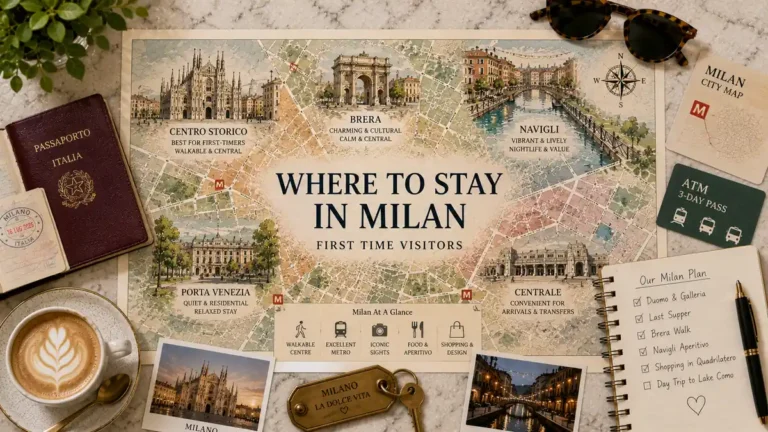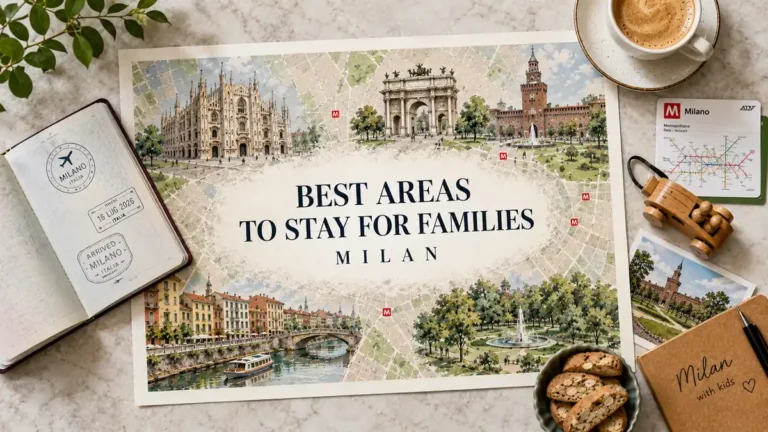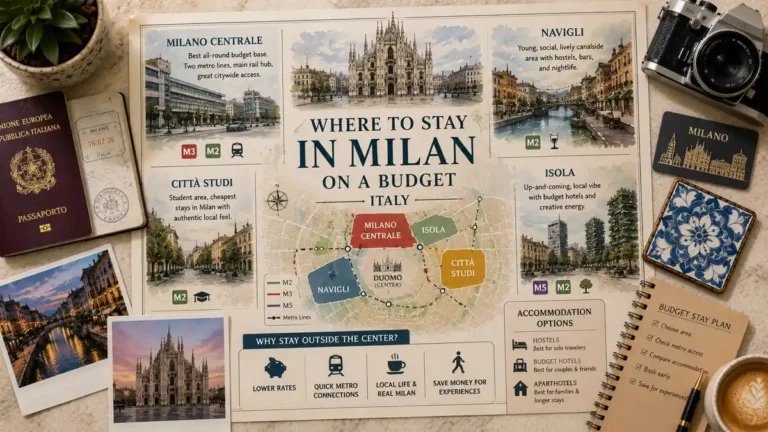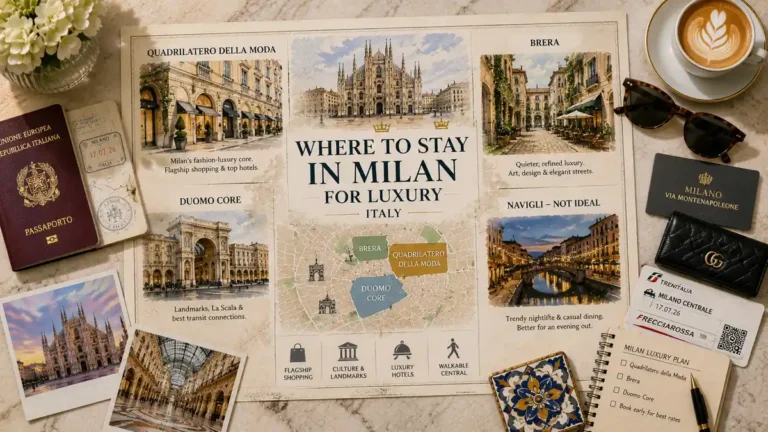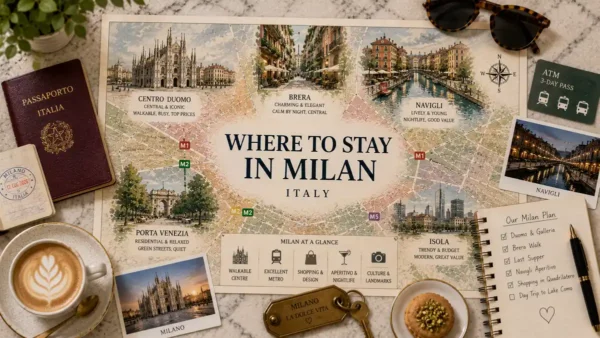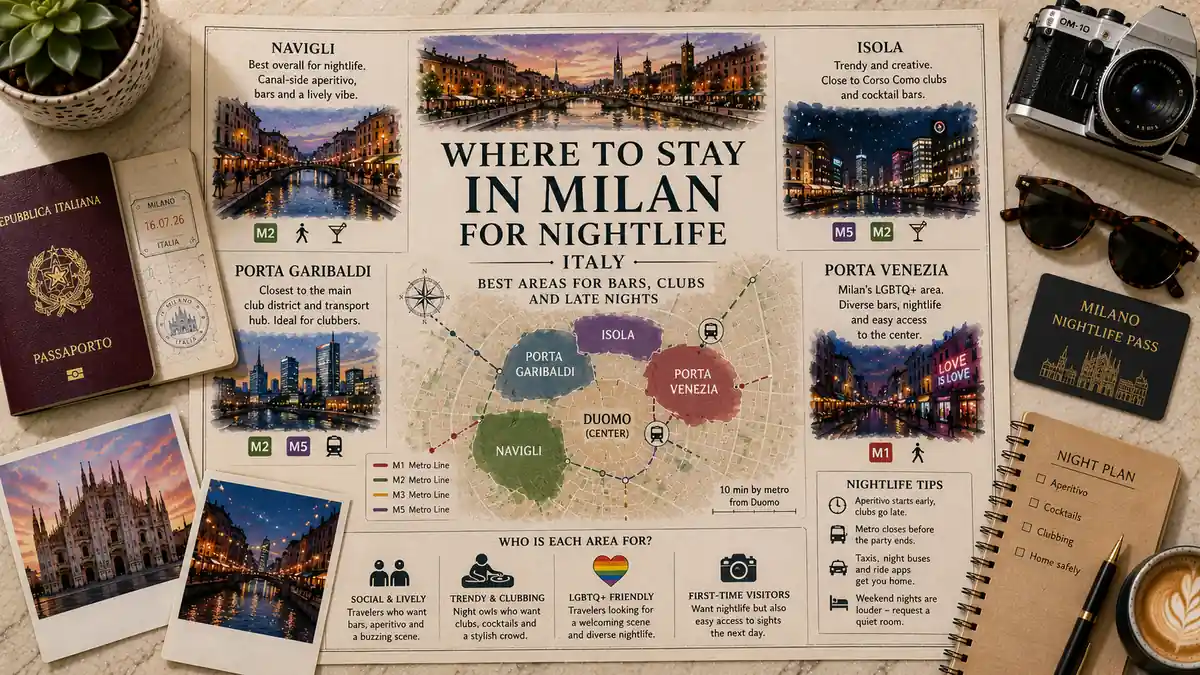
Choosing where to stay in Milan changes your whole night out, and the honest catch is a geographic one: the best party areas are not the most central, and the most central are not the best for going out. If nightlife is the reason you booked the trip, that tension decides everything — you are picking between a livelier, cheaper base a little farther out and a polished, pricier one steps from the Duomo. This guide ranks the areas through the nightlife lens only, tells you who each one suits, and is upfront about the trade-offs that matter after midnight: street noise, room price, and how you actually get home once the metro winds down. No venue directory, no general stay advice — just a shortlist you can book from.
Quick Answer
Navigli is Milan’s best base for a nightlife-first trip, with canal-side aperitivo and dense bars at a cheaper, livelier feel. The trade-off: it gets noisy and sits farther from the Duomo than pricier central bases. For a trendier club crowd, choose Isola or Porta Garibaldi; Porta Venezia suits LGBTQ nightlife.
Trust Layer
Tripstou stay guide for travelers choosing where to base. Covers area atmosphere, budget, convenience, noise, and traveler fit.
Produced with AI assistance and reviewed by Alex Perrut, working in tourism since 2015, for the Tripstou editorial team. See our editorial process for details.
Last factual review: July 16, 2026.
Official sources consulted: Italia.it, ENIT — Italian National Tourism Agency.
Key Takeaways
- Navigli is the best overall base for a nightlife-first Milan trip, packing dense canal aperitivo and bars at a friendlier price.
- Choose Isola or Porta Garibaldi for a younger, trendier crowd chasing clubs and cocktails around the Corso Como spine.
- Porta Venezia is Milan’s welcoming base for LGBTQ nightlife, with a diverse bar scene and an easy link to the center.
- The central Duomo base buys sightseeing convenience and polish but sits pricier and calmer than the real party districts.
- Sleeping near the nightlife means walking home easily, but weekend street noise makes a courtyard or upper-floor room worth requesting.
- Milan’s metro stops before the party ends, so plan a night bus, taxi, or ride app for the late trip home.
Table of Contents
Navigli is Milan’s best base for a nightlife-first trip
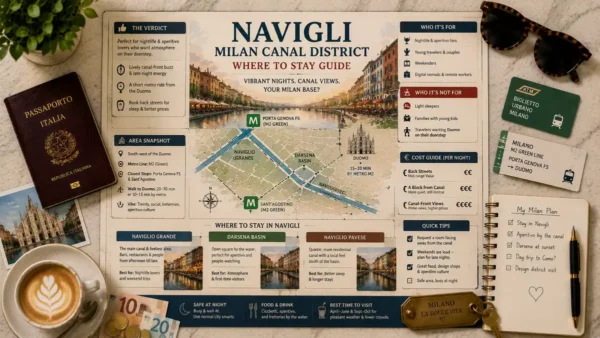
Navigli is Milan’s top base for a nightlife-first trip. The canal district packs the city’s highest concentration of aperitivo bars and late-night spots into a walkable, lively grid, and it feels cheaper and less formal than the center — exactly what most people want when going out is the whole point.
The atmosphere is the draw. Come early evening, the towpaths along the canals fill with aperitivo tables, and the crowd rolls straight from spritz-and-cicchetti into bars and small clubs without anyone needing a taxi. It is loud, social, and unpretentious, and it stays busy on weeknights when smarter parts of town go quiet.
On convenience, Navigli trades central location for self-contained walkability. You are a metro ride or a longer walk from the Duomo and the main sights, but for a night out that barely matters — almost everything you want is inside the district itself. Porta Genova and the M2 line put you a short hop from the center when you do need it.
On price, Navigli lands in the budget-to-mid-range band for Milan, generally softer than the center for comparable rooms — though canal-front addresses carry a premium. It is the rare area where the best nightlife and the friendlier price sit in the same postcode.
The two canals split the scene in a way that shapes where you book: Naviglio Grande draws the busiest, most tourist-facing aperitivo stretch, while the Darsena and Naviglio Pavese side runs livelier and later. Reserve a room one street back from the Grande and you keep the walkability without sleeping over the loudest bar. For the full street-by-street breakdown of hotels and canal-side blocks, see our deep Navigli guide.
Best for: aperitivo hoppers and bar-crawlers who want to walk home instead of hailing a ride.
Hotels and places to stay
Compare hotels, apartments and stays for your dates in one search.
Search hotels and stays on hotels.com →
Tripstou may earn a commission if you book through this link, at no extra cost to you.
Isola and Porta Garibaldi suit the trendy, younger party crowd
Isola and Porta Garibaldi are the base for a younger, trendier party crowd. The two adjoining districts wrap around Corso Como, Milan’s clubbing spine, and lean toward cocktail bars, DJ sets, and modern nightlife over old-school canal aperitivo. Expect a slicker, later, more design-driven scene.
The energy here is contemporary Milan. Skyscrapers, rooftop bars, and the Corso Como cluster pull a fashion-and-finance crowd plus the students spilling out of the surrounding bars. Nights start with cocktails and often end on a dancefloor, so this is the base to pick if a proper club night — not a canal-side spritz — is the goal.
Connectivity is a real advantage. Porta Garibaldi is a major rail and metro interchange, so you are wired into the network and easy to reach when you drift to other districts. That transport hub also means the immediate streets are busy and built-up more than charming.
On price, this is the high-end of the shortlist. Rooms around Corso Como and the business towers skew pricier than Navigli for a similar standard, and the polish comes at a cost. Booking a few blocks into residential Isola pulls the rate down while keeping the bars in walking range.
Corso Como is a short strip that empties out fast once you step off it — the deeper you book into Isola’s low-rise streets, the quieter your sleep and the softer your bill, at the price of a five-minute walk back to the action each night.
Best for: a younger crowd chasing clubs, cocktails, and a see-and-be-seen night.
Porta Venezia is the best base for LGBTQ nightlife
Porta Venezia is Milan’s best base for LGBTQ nightlife. The neighborhood is the heart of the city’s gay scene, with a welcoming, diverse cluster of bars and clubs along and around Via Lecco and Corso Buenos Aires. It stays central-ish and well connected, so nights out don’t strand you.
The scene is the reason to base here. Porta Venezia is where Milan’s queer nightlife concentrates, mixing established gay bars with mixed crowds, casual cocktail spots, and a relaxed, come-as-you-are feel that carries through the week. It is inclusive without being touristy, and it doubles as one of the city’s more international, multicultural pockets.
Location is a quiet strength. The district sits just northeast of the historic core on the M1 line, so you are close to the center and the shopping of Corso Buenos Aires while still having your own nightlife on the doorstep. Getting to Navigli or Corso Como for a change of scene is straightforward.
On price, Porta Venezia generally sits in the mid-range band — softer than the Duomo, a step up from the cheapest corners of Navigli, and fair for how central and connected it is.
Best for: travelers who want LGBTQ-friendly nightlife with an easy, walkable link to the center.
Is Duomo (Centro) good for nightlife, or too upscale?
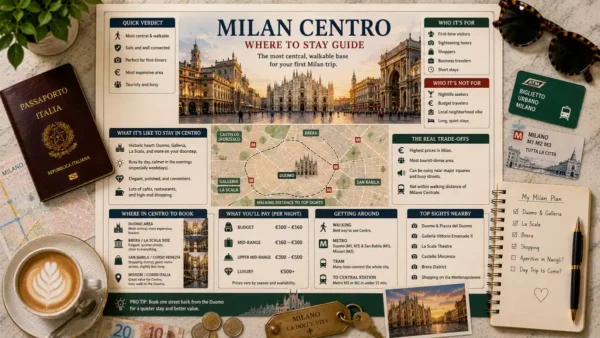
Duomo and Centro work for convenience, not for a big party. The historic core skews toward polished, upscale cocktail bars and hotel lounges over loud clubs, so you pay central prices for a more restrained night. Choose it if walking to the sights beats staying near the dancefloor.
The nightlife here is elegant more than energetic. Think hotel rooftops, aperitivo in grand cafés, and refined cocktail bars around the Duomo and the Quadrilatero — a lovely night, but a quieter and dressier one, with the real party districts a metro ride away. Some of the best central rooftops are attached to the city’s high-end Milan hotels, which is part of the appeal and part of the price.
Convenience is the whole case for Centro. You wake up on top of the sights, everything is walkable by day, and the metro fans out from here to every nightlife district. Price is the counterweight: the Duomo is the most expensive base on this list, firmly high-end for comparable rooms.
Base in Centro when the trip is sightseeing-first and going out is a bonus — you will pay a premium to sleep near landmarks, not near clubs. For the full picture of the district’s hotels and streets, see our deep Centro guide.
Best for: travelers who prioritize a central, polished base and treat nightlife as an occasional, upscale evening.
Other areas worth knowing for a night out
A few more areas earn a mention without making the nightlife shortlist. They either run quieter after dark or work better as an overflow from a livelier neighbor, but each can suit a specific kind of night. Here are the ones worth knowing before you book.
- Brera: elegant, artsy, and pricier, with stylish aperitivo and wine bars but calm nights — a base for a refined evening, not a late one. Compare it against the center in our Centro vs Brera head-to-head, and go deeper in the Brera guide.
- Ticinese and the Colonne: the student-and-bar overflow right beside Navigli, with cheap drinks and a young, casual crowd around the Colonne di San Lorenzo — handy if Navigli is booked out and you still want to walk to the canals.
- Sempione and Arco della Pace: a greener, more residential pocket near the park with a scattering of relaxed bars — pleasant and quieter, better as a calm base than a nightlife hub.
Best Milan area by nightlife style
Match the area to your nightlife style and the choice gets simple. Milan’s scenes are distinct enough that one district usually fits each kind of night better than the rest. Use this map as a shortcut before you weigh price and location.
- Aperitivo and canal bars → Navigli: the densest, most walkable spread of aperitivo and late bars in the city.
- Trendy clubs and cocktails → Isola / Porta Garibaldi: the modern clubbing spine around Corso Como for a proper night out.
- LGBTQ nightlife → Porta Venezia: Milan’s welcoming, diverse gay scene with an easy link to the center.
- Upscale central cocktails → Centro / Brera: polished rooftops and refined bars when you want a dressier, quieter evening.
If you want the full neutral rundown of every district before committing, our Milan where-to-stay overview covers all traveler types, and the closest real dilemma — lively canals versus central polish — is settled in the Centro vs Navigli comparison.
Is it worth staying near the nightlife, or is it too noisy?
Staying near the nightlife is worth it if you value walking home over quiet sleep. Basing in Navigli or around Corso Como means the party is at your door, but you trade that for real street noise on weekend nights. Ask for a courtyard-facing or upper-floor room.
The convenience is genuine. When your bed is a five-minute walk from the last bar, you skip the late-night transport puzzle entirely and you never watch the clock. That convenience alone is why many people book inside a nightlife district: no late commute, no scramble for the last train.
The noise is just as genuine. Canal-front and Corso Como rooms can hear the crowd until the early hours on weekends, so light sleepers should book a room facing an internal courtyard, request a higher floor, and pack earplugs. One street back from the busiest strip is usually the sweet spot between walkability and rest.
Getting home late is the other half of the trade-off. Milan’s metro stops running before the party does, so plan on a night bus, a taxi, or a ride app for the tail end of the evening — costs and timings shift, so treat any figure as a range and check before you rely on it. Staying walkable sidesteps the problem for most of your nights out. For how the city moves after dark and how the districts connect, see our Milan city guide.
Frequently Asked Questions
What time does Milan nightlife start?
Milan nightlife starts early by the city’s aperitivo tradition, with bars filling in the early evening for spritz and snacks. The scene then rolls later, and clubs get going well after midnight. Precise hours vary by venue, day, and season, so treat any timing as a flexible range and check locally.
How do I get back to my hotel after the metro closes in Milan?
After Milan’s metro stops for the night, your options are night buses, taxis, or a ride-hailing app. Night buses roughly shadow the metro lines but run less often, so many people default to a taxi or app for the last leg. Staying walkable to your area’s nightlife avoids the problem on most evenings.
Is Navigli safe at night?
Navigli is generally safe at night, and its busy, well-lit canal crowds mean you are rarely alone on the main stretches. As with any popular nightlife district, watch for pickpockets in the densest bar areas and keep an eye on your belongings. Stick to lively streets and normal precautions apply.
Which Milan area is cheapest for a nightlife-focused stay?
Navigli is usually the best value for a nightlife-focused stay, sitting in the budget-to-mid-range band while still putting you inside the action. Ticinese, just beside it, can run cheaper thanks to its student crowd. Central bases around the Duomo cost the most, so you pay a premium mainly for location, not nightlife.
Do you have to stay in the center for Milan nightlife?
No, staying in the center is not necessary for Milan nightlife and often works against it. The liveliest nightlife areas, Navigli and the Corso Como cluster, sit outside the historic core. A central base near the Duomo buys sightseeing convenience and polish, but the best going-out scenes are a short metro ride away.
Is Isola or Porta Garibaldi better for a night of clubbing?
Both share the Corso Como clubbing spine, so either works for a big night out. Porta Garibaldi puts you closest to the main club-and-cocktail cluster and the transport hub, ideal if connectivity matters. Isola runs slightly more residential and relaxed a few blocks back, trading a short walk for quieter, cheaper rooms.
Related Guides
Ready to lock in a base or dig into a specific district? These guides take the next step from this nightlife shortlist.
- Where to Stay in Milan — the full, all-traveler area overview.
- Navigli neighborhood guide — the top nightlife pick in depth.
- Centro (Duomo) neighborhood guide — the central, upscale base.
- Brera neighborhood guide — the elegant, quieter alternative.
- Centro vs Navigli — the central-versus-canals head-to-head.
- Centro vs Brera — two refined bases compared.
- Luxury hotels in Milan — high-end central lodging and rooftops.
- Milan city guide — how the city moves, day and night.
Did this guide save you time or money? Tripstou is independent and reader-funded — if you'd like to give something back, you can support the site with a crypto contribution of any size.