You have narrowed your Venice base to Dorsoduro and want to know whether that instinct is right — and which corner of the sestiere to book. This guide answers both. Dorsoduro is the quiet, art-heavy southern district that sits one bridge from San Marco, and the decision turns on a single trade-off: you gain calm canals, thinner day-tripper crowds, the city’s densest run of museums, and better value than the tourist core, but you accept a more residential feel, fewer late-night services, and lanes that are genuinely easy to get lost in. Whether that trade lands in your favor depends on how you travel and where inside Dorsoduro you sleep. The sestiere is not one mood — the smart, museum-facing east is a different stay from the quiet university west or the open Zattere waterfront. This page confirms the base decision, grounds it in getting-around detail, and points you to the right pocket.
Quick Answer
Yes — Dorsoduro is a strong base for travelers who want a quieter, art-rich Venice one bridge from San Marco. It runs calmer and better value than San Marco, though it stays residential with fewer late services. It suits culture-minded couples and return visitors most; first-timers wanting nonstop bustle may prefer elsewhere.
Trust Layer
Tripstou stay guide for travelers choosing where to base. Covers area atmosphere, budget, convenience, noise, and traveler fit.
Produced with AI assistance and reviewed by Alex Perrut, working in tourism since 2015, for the Tripstou editorial team. See our editorial process for details.
Last factual review: July 16, 2026.
Official sources consulted: italia.it, enit.it.
Key Takeaways
- Dorsoduro suits culture-minded couples and return visitors best, delivering quiet canals and museum access one footbridge from San Marco.
- The core trade-off is calm and better value against a residential feel with fewer shops and services open late.
- Dorsoduro generally runs cheaper than San Marco while keeping the main sights within a short walk or vaporetto ride.
- Book the Accademia–Salute east for the shortest walk to art; choose the university west for the gentlest rates.
- The common mistake is underestimating the maze of lanes and expecting evening life outside Campo Santa Margherita.
Table of Contents
Is Dorsoduro a good area to stay in Venice?
Dorsoduro is a good area to stay in Venice for travelers who prize calm over central bustle. It sits directly across the Grand Canal from San Marco, keeps day-tripper crowds thinner than the tourist core, and packs Venice’s best museums into walkable range. The trade-off is a quieter, more residential feel.
The case for basing here is straightforward once you weigh the pros against the costs. Most of what draws people to Dorsoduro also defines its limits.
- In its favor: quieter streets, fewer day-trippers, museum-dense, one footbridge to San Marco, and generally better value than the tourist center.
- Against it: more residential, fewer shops and restaurants open late, and a maze of small lanes that is easy to get lost in on arrival.
The Accademia bridge is the lever that makes Dorsoduro work. It drops you into San Marco on foot in minutes, so you sleep in the calm sestiere without paying the tourist core’s rates for proximity. If you want the direct case for the two districts side by side, that belongs to the dedicated San Marco vs Dorsoduro comparison; if you are still choosing among all of Venice’s neighborhoods, start with the broader where to stay in Venice overview.
Dorsoduro is Venice’s quiet, museum-dense base
Dorsoduro feels like the Venice locals still live in — calm, residential, and built around art rather than souvenir traffic. Students from the university keep it lived-in, canalside cafes stay unhurried, and the Zattere waterfront gives it open sky most sestieri lack. Evenings are low-key outside Campo Santa Margherita.
Day-to-day, the district reads slower than the areas near the Rialto and Piazza San Marco. Mornings belong to museum-goers and residents doing errands; afternoons drift along the Zattere; and by night most lanes go quiet while a single square, Campo Santa Margherita, carries the local social life. This is decision support, not a things-to-do list — the point is that Dorsoduro’s mood is unhurried and grounded, which is exactly why it appeals to travelers who find the tourist core exhausting. For how this district fits the wider city, the Venice travel guide sets the context.
Where to stay within Dorsoduro
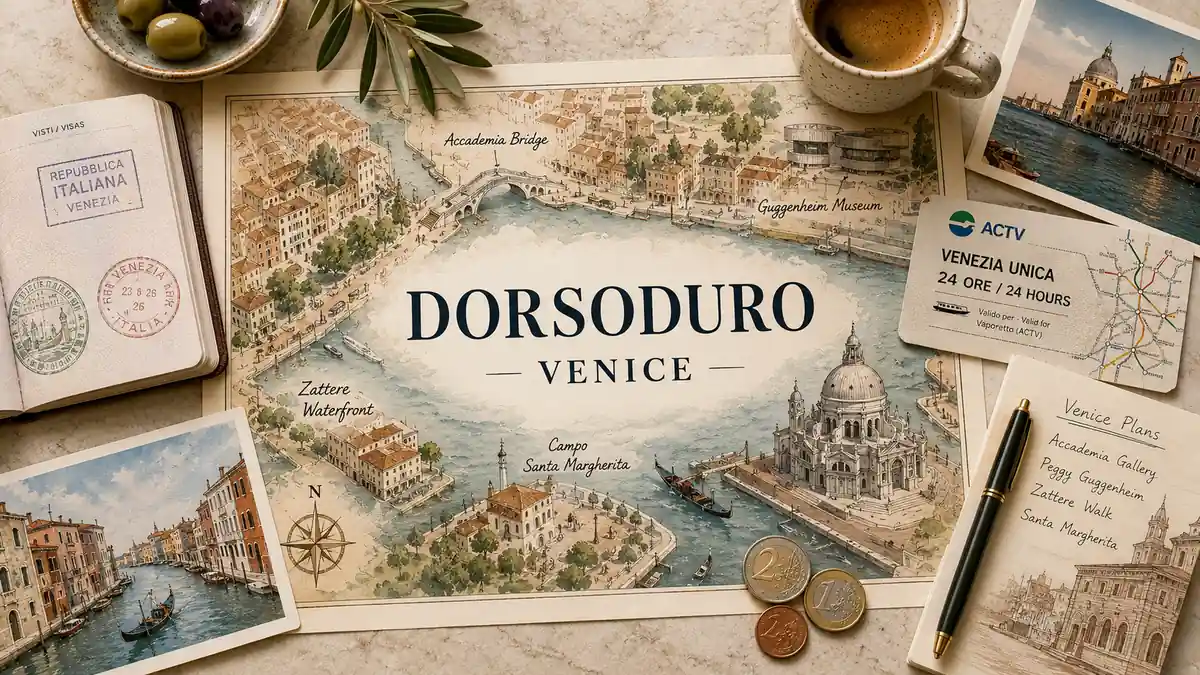
Where you stay inside Dorsoduro shapes your trip more than the sestiere label suggests. The smart, museum-facing east around Accademia and Salute is the most central; the university west is quieter and better value; the Zattere gives waterfront calm; and Campo Santa Margherita is the one pocket with real evening life.
Book the east if minutes to San Marco decide your day; lean west if a calmer canal and a second night’s easy dinner matter more. Inside Dorsoduro, that east–west choice moves your nightly spend more than the star rating does. The four pockets below break down who each one suits.
Accademia–Salute: the smart, art-facing east
The Accademia–Salute corner is the most convenient and polished part of Dorsoduro. It puts you steps from the Gallerie dell’Accademia, the Peggy Guggenheim Collection, and the Accademia bridge to San Marco, wrapped in handsome canal frontage. Atmosphere here is refined and gallery-quiet by day. Convenience is the strongest in the sestiere — you walk to the main sights and cross to San Marco in minutes. Expect the area’s higher-end lodging character and its firmest prices; this is where boutique and upscale stays concentrate, and where you can browse luxury hotels in Venice if you want the top tier. Best for: couples and culture-first travelers who want the shortest walk to art and San Marco.
The quieter university west (San Barnaba / San Basilio)
The western end around San Barnaba and San Basilio is the quietest, most residential, and best-value part of Dorsoduro. Atmosphere is everyday-Venice: students, produce boats, and neighborhood cafes rather than gallery crowds. Convenience is a step down — you are further from San Marco and lean more on the San Basilio and Ca’ Rezzonico vaporetto stops — but nothing is far in Venice. Lodging skews toward simpler, more affordable rooms and small guesthouses, with the gentlest rates in the sestiere. Best for: value-minded and repeat visitors who want a lived-in base and do not mind a slightly longer walk.
The Zattere waterfront
The Zattere is the open-air choice: a long sunny promenade facing the Giudecca canal, with room to breathe that few Venice addresses offer. Atmosphere is calm and panoramic, with wide water views and easygoing waterside cafes. Convenience is solid thanks to the Zattere vaporetto stop, though it sits toward the southern edge, so central sights are a walk away. Waterfront rooms carry a view premium, while streets a lane or two back stay more moderate. Best for: travelers who value light, views, and a quiet stroll home over being in the thick of things.
Campo Santa Margherita for evenings
Campo Santa Margherita is where to stay if you want life after dark inside Dorsoduro. The large square is the district’s social hub, with bars, aperitivo spots, and a student-fueled buzz that most of the sestiere lacks by night. Atmosphere is the liveliest here — energetic in the evening, busier and noisier than the waterfront. Convenience is good, with the Ca’ Rezzonico stop nearby and central Dorsoduro on your doorstep. Lodging is mixed and generally mid-range. Best for: younger travelers and night owls who want dinner, drinks, and a short walk home.
Hotels and places to stay
Compare hotels, apartments and stays for your dates in one search.
Search hotels and stays on hotels.com →
Tripstou may earn a commission if you book through this link, at no extra cost to you.
Who should base themselves in Dorsoduro
Dorsoduro suits culture-minded couples and repeat visitors best — travelers who want museums, quiet canals, and Venice at a local pace. It works for many first-timers too, provided they accept a residential base over a front-row tourist one. Nightlife-first and big-family travelers are the weakest fits here.
Keep this to a quick read on fit — each traveler type has a dedicated Tripstou guide that goes deeper on hotels and areas city-wide.
- First-timers: a good fit if you want calm and culture, a weaker one if you want to step out into the icons; compare options in where to stay in Venice for first-time visitors.
- Couples: one of Dorsoduro’s strongest fits — quiet canals, romantic light, and art within reach; see where to stay in Venice for couples.
- Families: workable in the calmer western lanes, though space and services suit some families better elsewhere; check where to stay in Venice for families.
- Nightlife seekers: only Campo Santa Margherita truly delivers after dark, so weigh where to stay in Venice for nightlife before committing.
- Budget travelers: the university west offers Dorsoduro’s best value; broaden the search with where to stay in Venice on a budget.
- Luxury travelers: the Accademia–Salute east holds the upscale stays; the full picture is in where to stay in Venice for luxury.
Getting around from Dorsoduro: vaporetto stops and the walk to San Marco
Dorsoduro is well connected despite feeling tucked away. Vaporetto stops at Accademia, Salute, Ca’ Rezzonico, San Basilio, and Zattere link it to the Grand Canal, the station, and the islands. San Marco is roughly a 15–20 minute walk over the Accademia bridge, no boat required.
On foot, the Accademia bridge is your main crossing to San Marco, and much of the sestiere is comfortably walkable from there. By water, the stops above put the Grand Canal line and routes toward the station and outer islands within easy reach; treat line numbers, routing, and fares as things to confirm locally before you travel, since they shift. Skip the water taxi from the station on instinct — a single vaporetto line or the walk reaches most Dorsoduro addresses, and hauling luggage over the Accademia bridge’s steps is the one arrival detail most guests underestimate.
What’s nearby: museums, churches, and the Zattere
Dorsoduro’s draw is a dense run of art and water within a few minutes’ walk. The Gallerie dell’Accademia, the Peggy Guggenheim Collection, the Basilica della Salute, Punta della Dogana, and Ca’ Rezzonico cluster here, and the Zattere promenade runs the whole southern edge. You rarely need a boat to reach them.
As base context, this concentration is the real argument for sleeping in Dorsoduro: your headline sights are neighbors, not day trips. The Accademia and the Guggenheim anchor the art scene; the Salute and Punta della Dogana command the point where the Grand Canal meets the basin; Ca’ Rezzonico opens a grand palazzo interior; and the Zattere gives you the long waterside walk that ends most Dorsoduro evenings. Campo Santa Margherita rounds it out as the local gathering square. This is orientation for the base decision, not an attraction how-to — the point is simply that staying here means stepping out into them.
Frequently Asked Questions
Is Dorsoduro safe?
Yes, Dorsoduro is one of Venice’s safest and calmest areas, with low crime and a residential, student-filled character. Petty pickpocketing exists near busier crossings and vaporetto stops, as everywhere in Venice, but violent crime is rare. Walking home late through its quiet lanes is generally comfortable, though an offline map helps.
Is Dorsoduro cheaper than San Marco?
Generally yes. Dorsoduro usually offers better lodging value than San Marco, particularly in its quieter western lanes around San Barnaba and San Basilio. The Accademia–Salute east sits closer to central prices, but even there you typically pay less than equivalent San Marco addresses for similar proximity to the main sights.
How far is Dorsoduro from Santa Lucia train station?
Dorsoduro sits close to Santa Lucia station, roughly a 15–20 minute walk across the Grand Canal bridges, or a short vaporetto ride down the Grand Canal to stops like Ca’ Rezzonico or Accademia. Confirm current vaporetto line numbers and fares locally before you travel, since routing and prices change.
Is Dorsoduro easy to walk around and good for first-timers?
Dorsoduro is walkable, but its maze of narrow lanes and canals can disorient first-time arrivals, so download an offline map. Once oriented, distances are short and the Accademia bridge makes San Marco a quick stroll. First-timers who want calm and culture adapt easily; those set on stepping straight into the icons may prefer a more central base.
Does Dorsoduro get crowded with day-trippers?
Far less than San Marco or Rialto. Day-tripper crowds in Dorsoduro concentrate along the Accademia–Guggenheim museum axis around midday, while the residential western lanes, San Basilio, and the Zattere stay noticeably calmer. Mornings and evenings are quiet almost everywhere, which is a large part of the sestiere’s appeal as a base.
Is Dorsoduro quiet at night?
Yes, Dorsoduro is one of Venice’s quietest sestieri after dark, with most lanes falling silent by mid-evening. The single exception is Campo Santa Margherita, whose bars and student crowd stay lively late. Light sleepers should book toward the Zattere or the western lanes; night owls should aim for the square itself.
Related Guides
- Where to stay in Venice — the whole-city neighborhood overview to compare Dorsoduro against every sestiere.
- San Marco vs Dorsoduro — the direct head-to-head if you are torn between the two bases.
- San Marco vs Cannaregio — a neighboring comparison if Dorsoduro is not the final pick.
- Luxury hotels in Venice — curated high-end stays, including the upscale Accademia–Salute options.
- Where to stay in Venice for couples — the audience guide that best matches Dorsoduro’s strengths.
- Venice travel guide — the city hub for planning the rest of your trip.