The High Tatras are the place to build a first trip to Slovakia around: lakes, granite ridges and a cable-car summit, with Spiš Castle, Levoča and the gorges of Slovak Paradise close by in the east. Bratislava is the pick for travelers who want a city and an easy arrival. The season is the one thing that changes this answer, because the high Tatra trails close for the cold half of the year.
The places below are sorted by what each one is for: mountains, gorges and caves; castles; cities; and historic towns and folk villages. Every pick says who it suits and roughly how much time to give it.
Where Should You Go in Slovakia on a First Trip?
Go to the High Tatras first. They are the one draw every shortlist of Slovakia shares, and three more strong picks (Spiš Castle, Levoča and Slovak Paradise) sit within reach of Poprad, the eastern gateway town. A city-led trip starts in Bratislava instead.
This selection is for first-time visitors choosing between a city, mountains, castles and historic towns. West and east are far apart, so the side of the country you pick shapes everything else.
| Place | What it is for | Time to allow | Season to know |
|---|---|---|---|
| High Tatras | Mountain lakes, ridges, a cable-car summit | At least a full day | Selected high trails closed 1 November to 31 May |
| Slovak Paradise (Suchá Belá) | Gorge walking on ladders, upstream | Half a day | One-way trails; start early in summer |
| Spiš Castle and Levoča | Castle ruins and a Gothic altar | A day for both | Castle closed December to March |
| Bratislava | Compact capital, easy arrival | About a day | Works in any season |
| Košice | Eastern city base | A couple of days | Works in any season |
| Banská Štiavnica | Mining town, mine visits, tajchy lakes | A day | The town works in any season |
Mountains, Gorges and Caves: Slovakia’s Outdoor Picks
The High Tatras are the pick for walkers and for anyone who wants high-mountain scenery without climbing. Slovak Paradise is the alternative for gorges, ladders and water. The caves and the ski slopes of Jasná fill a bad-weather day or a winter trip.
The High Tatras
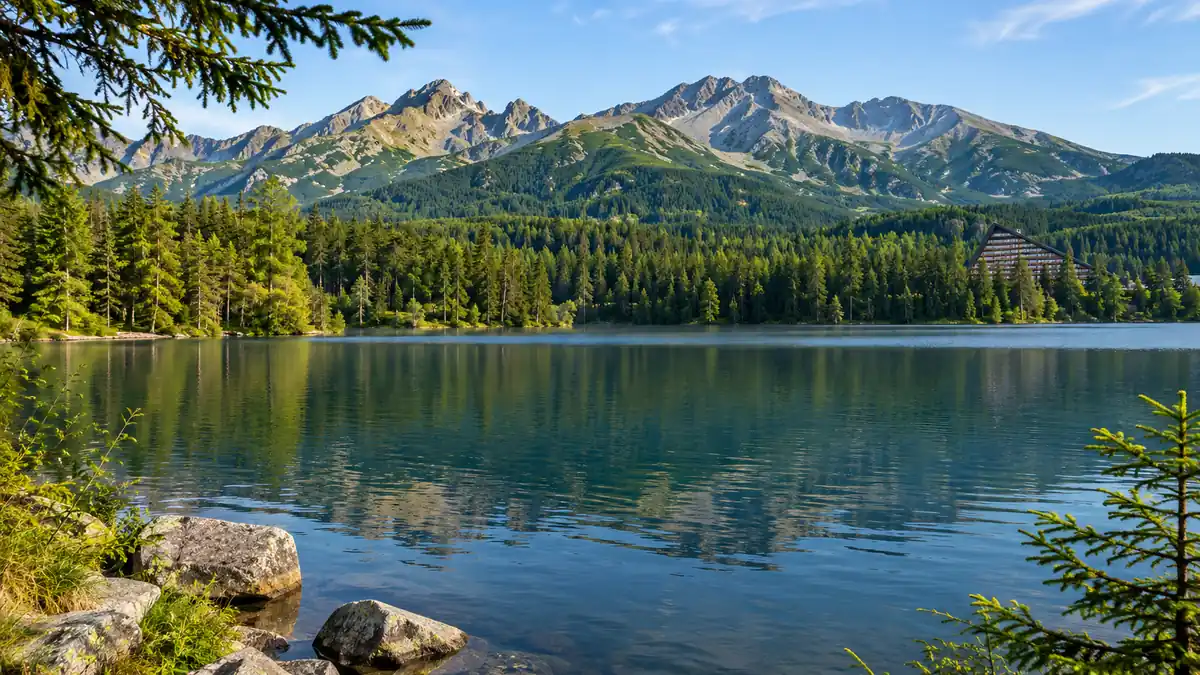
The High Tatras are Slovakia’s most complete mountain day: glacial lakes, rocky ridges and summit views without technical climbing. Gerlach, the highest mountain in Slovakia, rises here. The range continues into Poland on its northern side; the resorts below are all on the Slovak side.
Štrbské Pleso is the easiest first stop. It is a glacial lake with boat rides and walking paths around the shore. Lomnický štít delivers the big view: a cable car climbs to the summit station at 2,634 m, where a café sits at the top.
Starý Smokovec and Tatranská Lomnica are the other resort villages, and Hrebienok is a trailhead for valley walks. The Tatra Electric Railway and the rack railway link Poprad, Starý Smokovec, Tatranská Lomnica, Štrbské Pleso and Štrba. That line is the car-free way to move between the resorts.
Give the Tatras at least a full day. Walkers who want more than the marked trails can hire a local mountain guide. Selected high trails close for the cold months, covered in the winter section further down.
Slovak Paradise and the Suchá Belá gorge
Slovak Paradise trades summits for gorges: you walk upstream through narrow ravines, climbing ladders beside the water. Suchá Belá is the classic route. It follows a green-marked trail of about 3.7 km with about 420 m of climb, which takes about 2 hours.
Every gorge in Slovak Paradise runs one way only, against the flow of the water. The park administration recommends an early start in summer, before the crowds build. The walk begins at Podlesok, and the Hornád gorge, Kyseľ and the Tomášovský výhľad viewpoint lie in the same park.
A “Suchá Belá+” day ticket costs €4.00 for ages 15 to 65 and covers every gorge that day. Plan on half a day. Active travelers who have already seen the Tatra lakes and want something wetter and more hands-on will get the most out of it.
Dobšinská Ice Cave and the show caves
Dobšinská Ice Cave is one of the largest ice caves in Europe and is on the UNESCO list. It opens only from mid-May to mid-September. Outside that window, the Demänovská Cave of Liberty in the Low Tatras runs tours most of the year.
Jasná and the Low Tatras
Jasná, on Chopok in the Low Tatras, is the largest ski area in Slovakia and the place to head in winter when the high Tatra trails are shut.
Spiš, Bojnice and Orava Are the Castles Worth the Detour
Three castles answer three different wants. Spiš is for scale and ruins, Bojnice for a furnished fairy-tale interior, Orava for a fortress on a rock. Each is a half-day stop. Trenčín Castle is a fair extra on a route through the west but does not beat these three.
Spiš Castle
Spiš Castle is partly closed: the upper castle is shut for reconstruction, while the middle and lower courtyards stay open. It closes from December to March, November opening depends on the weather, and it also shuts in bad weather. Free visitor parking sits below the castle on the Žehra side.
It is still worth the stop for its size and its hilltop outline. Spiš is one of the largest castle complexes in Central Europe, and it is on the UNESCO list together with Spišské Podhradie, Spišská Kapitula and Žehra. Pair it with Levoča on the same day.
Bojnice Castle
Bojnice is the castle to see from the inside. Its Loire-inspired, fairy-tale look carries through to the furnished rooms, and a cave runs beneath the castle. The town adds a zoo and a spa, which makes Bojnice the easiest castle day for families.
Bojnice is open year-round: Wednesday to Sunday from November to March, daily from June to August, and closed on Mondays in the other months. Tickets can be bought in advance on the official site. From Bratislava, a guided tour can combine the castle with Trenčín and Čičmany, so you can book this day trip without a car.
Orava Castle
Orava Castle is the setting more than the rooms: a 13th-century fortress built on a rock above the Orava River, used as a filming location for Nosferatu. It opens almost all year, with April limited to some dates. Tickets are sold only at the box office below the castle rock, so buy them before you climb.
Tours and activities
Book skip-the-line tickets, day trips and local tours with free cancellation on most activities.
You can also browse everything on getyourguide.com.
Tripstou may earn a commission if you book through this link, at no extra cost to you.
Bratislava and Košice: The Two Cities Worth Your Time
Bratislava is the compact capital that fits into about a day and suits a first stop or a short break. Košice, the second-largest city, rewards a couple of days and works as the base for the east.
Bratislava
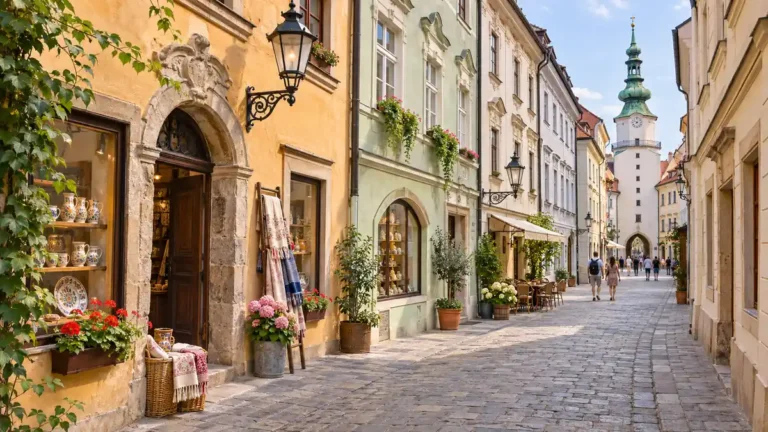
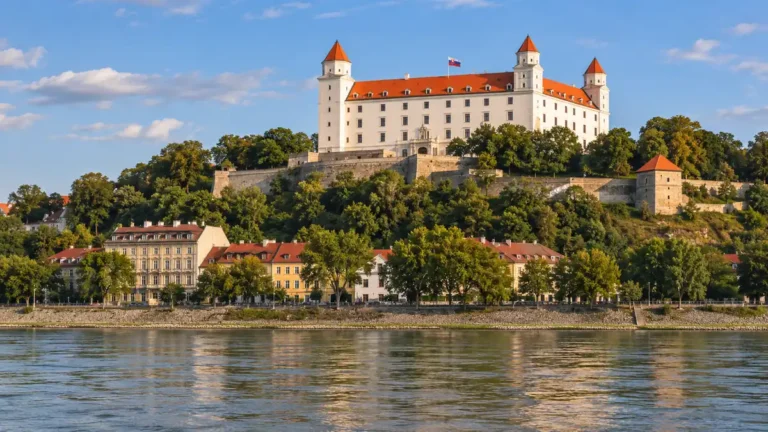
Bratislava is the arrival city and the place for a short city break in Slovakia. Give it about a day. The walk from the Old Town lanes up to Bratislava Castle is the core of a visit, with St Martin’s Cathedral and Čumil along the way. A guided walk covers that Old Town and castle route in one go.
The Blue Church, the UFO deck on the SNP bridge and the Little Carpathians wine area round out a longer stay. Devín Castle stands on the river border with Austria. Our Bratislava travel guide covers the sights, Devín and the wine hills in detail.
Košice
Košice suits travelers heading east who want a city between mountain days. The Cathedral of St Elisabeth, the largest church in Slovakia, anchors Hlavná Street, where the singing fountain plays and Urban’s Tower stands. Allow a couple of days, which also leaves time for the eastern picks around it.
Historic Towns and Folk Villages for a Slower Day
Banská Štiavnica is the strongest small-town pick in Slovakia, followed by Levoča, Bardejov and the villages of Vlkolínec and Čičmany. Most of them carry UNESCO status. The Slovak UNESCO set covers Spiš Castle with Levoča, Banská Štiavnica, Vlkolínec, Bardejov and the wooden churches of the Slovak Carpathians.
Banská Štiavnica
Banská Štiavnica is where to go when there is no full day for the mountains. It is a former silver-mining town set in a volcanic landscape, with a Baroque Calvary above it. Mine visits take you underground in a helmet and lamp.
The tajchy, old mining reservoirs such as Počúvadlo, turn the surrounding hills into lake country. Nearby Kremnica has the oldest continuously operating mint in the world.
Levoča
Levoča holds the world’s largest late-Gothic wooden altar, inside the Church of St James. The town sits close to Spiš Castle, and the two fill one day together.
Bardejov and the wooden churches
Bardejov’s UNESCO-listed old town and the Basilica of St Egidius make it a quieter stop in the north-east. The wooden churches of the Slovak Carpathians are also on the UNESCO list, eight churches that include Hervartov, Tvrdošín, Ladomirová and Ruská Bystrá. It is the corner to save for when the main stops are done and fewer crowds matter more.
Bardejov also has a spa. For a spa day elsewhere in Slovakia, Piešťany is the spa town to start with, and Sklené Teplice and Bojnice have spas of their own.
Vlkolínec and Čičmany
Vlkolínec is a preserved village of log houses with a wooden bell tower. Čičmany is known for its painted wooden houses and is described as the world’s first folk-architecture reserve. Both are short stops on the way somewhere, not destinations for a whole day.
A Short Trip Has to Choose Between Bratislava and the East
Bratislava sits at the western edge of Slovakia, while the Tatras, Spiš and Slovak Paradise lie in the north and east. No single base covers both, so a short trip picks one side.
Choose Bratislava for a city break with an easy arrival and little planning. Choose the east for mountains, gorges and castles: Poprad puts the Tatras, Spiš Castle, Levoča and Slovak Paradise within reach, and Košice adds a city at the end. A longer trip can combine the two by moving east through Poprad or Košice.
How long to stay, when to go and how to get around are covered in our Slovakia travel guide.
Are the High Tatras Trails Open in Winter?
Not the high routes. Selected Tatra trails, mainly above the tree line, close from 1 November to 31 May, though some routes stay open. A hiking-led trip in those months is better planned around somewhere else.
- Jasná suits skiers: the largest ski area in Slovakia turns the cold months into the main season.
- Bojnice and Orava suit castle lovers, since both stay open through the cold months on their own schedules.
- Banská Štiavnica or Bratislava suit a town-led trip, with mines, churches and cafés that do not depend on trail conditions.
Spiš Castle and Dobšinská Ice Cave are also closed in winter, so the eastern loop loses two of its stops. The same alternatives work in any month when there is less than a full day to give: Banská Štiavnica or Bratislava fit a short window far better than the Tatras do.
How These Places Were Chosen
This page selects places across Slovakia for a first trip, sorted by what each is for (mountains, castles, cities, historic towns), with seasonal access taken from the park, cave and castle operators. It is not a country travel guide, an itinerary or a list of Bratislava sights.
For the Tripstou editorial team, Alex Perrut, working in tourism since 2015, went through these picks; AI assistance was used to draft them. Our editorial process sets out how that review works.
Official sources consulted: Slovakia Travel, Slovak Paradise National Park, Tatra National Park, Slovak Caves Administration, Slovak National Museum.
Did this guide save you time or money? Tripstou is independent and reader-funded — if you'd like to give something back, you can support the site with a crypto contribution of any size.