On a first trip to Slovenia, put Lake Bled first and see it from a base in Ljubljana: the island, the castle and the viewpoints sit close together, and the lake is an easy bus ride from the capital. The rest of the shortlist sorts by landscape — lakes, mountains, Karst caves and the coast — and most first trips take one place from each of the first three, adding the coast when there is time. Active travelers who want quieter water and real mountains are better served by Lake Bohinj and the Soča Valley.
Each place below comes with what it is for, who it suits and whether it is a day out of Ljubljana or earns a night. In a country this small, the real price of a place is the time it takes to reach it.
Slovenia’s Best Places to Visit, Sorted by What They Are For
Slovenia is known for four landscapes within reach of a small capital, and its best places sort into them: Lake Bled and Lake Bohinj for the Alpine lakes, the Vršič Pass and the Soča Valley in the Julian Alps, Postojna Cave and the Škocjan Caves in the Karst, and Piran on a short coast shaped by Venice. The choice comes down to which landscape matters most to you and whether a place fits a day out of Ljubljana or needs a night.
Grouping by landscape works because the places inside a group compete with each other. Lake Bled and Lake Bohinj answer the same wish for a mountain lake; Postojna Cave and the Škocjan Caves answer the same wish for a cave. Few first trips need both halves of a pair.
Time is the second filter. Ljubljana sits in the middle of the country, so Bled and Postojna work as days out of the capital. The high Alps, the Soča Valley and the coast repay a night closer to them.
| Place | What it is for | Who it suits | A day from Ljubljana or a night |
|---|---|---|---|
| Lake Bled (with Vintgar Gorge) | An island church, a clifftop castle and lake viewpoints | First-timers, couples, photographers | A day; a night to see the lake early and late |
| Lake Bohinj | A larger, quieter lake with a waterfall and a cable car | Swimmers, hikers, anyone after quiet | A full day, or a night |
| The Vršič Pass and the Soča Valley | A high Alpine road down to a river valley | Drivers, river-sports fans, First World War history | Worth a night |
| Postojna Cave and Predjama Castle | A cave by train and a castle in a cliff | Families and every mobility level | A half to a full day |
| The Škocjan Caves | An underground canyon seen on foot | Nature-first travelers comfortable with steps | A day; the visit fills half of it |
| Piran | A walled Venetian-era port town on the sea | Sea, sunset and seafood seekers | A long day, or one night |
Maribor and Ptuj, in the east, are the pick for a second visit or for a trip that continues toward Hungary or Austria.
This page chooses the places; the Slovenia itinerary puts them in order, day by day. Tickets add up fast: a Lake Bled day plus the two Karst caves comes to about €100 per adult in tickets alone, and every other price sits on the Slovenia trip cost page.
Ljubljana and the Lakes: Where Most First Trips Start
Ljubljana is the base and Lake Bled is the first day out of it. Vintgar Gorge is the add-on to a Bled day between April and October, and Lake Bohinj, larger and quieter, sits further into the mountains for anyone with a second day or a car.
Ljubljana: The Base for Almost Everything Else
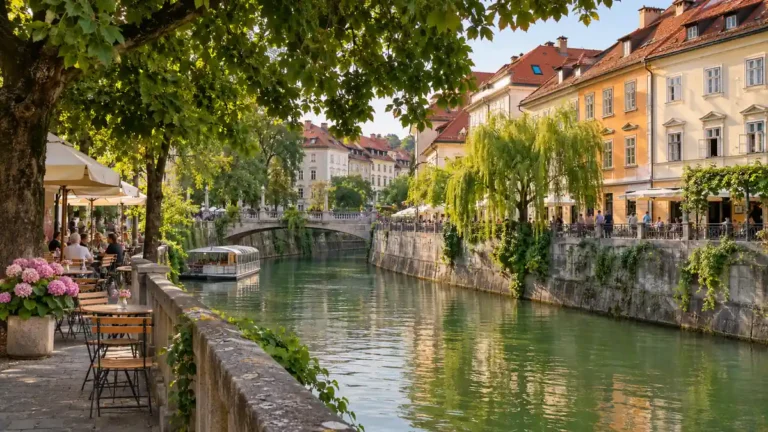
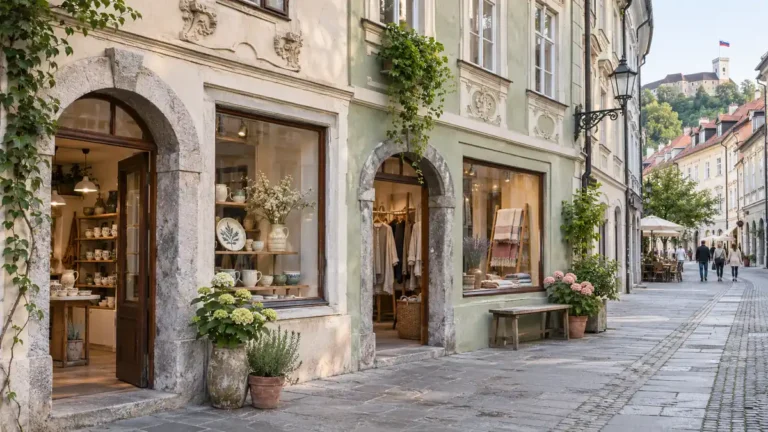
Ljubljana is where a first trip sleeps, eats and sets out from: a small capital whose works by the architect Jože Plečnik are UNESCO World Heritage. The names to know are Ljubljana Castle and its funicular, the Triple Bridge, the Dragon Bridge, the Central Market, the Open Kitchen food market and the Metelkova arts quarter. What to see there, area by area, is in the Ljubljana travel guide.
Lake Bled: The Island, the Castle and the Viewpoints
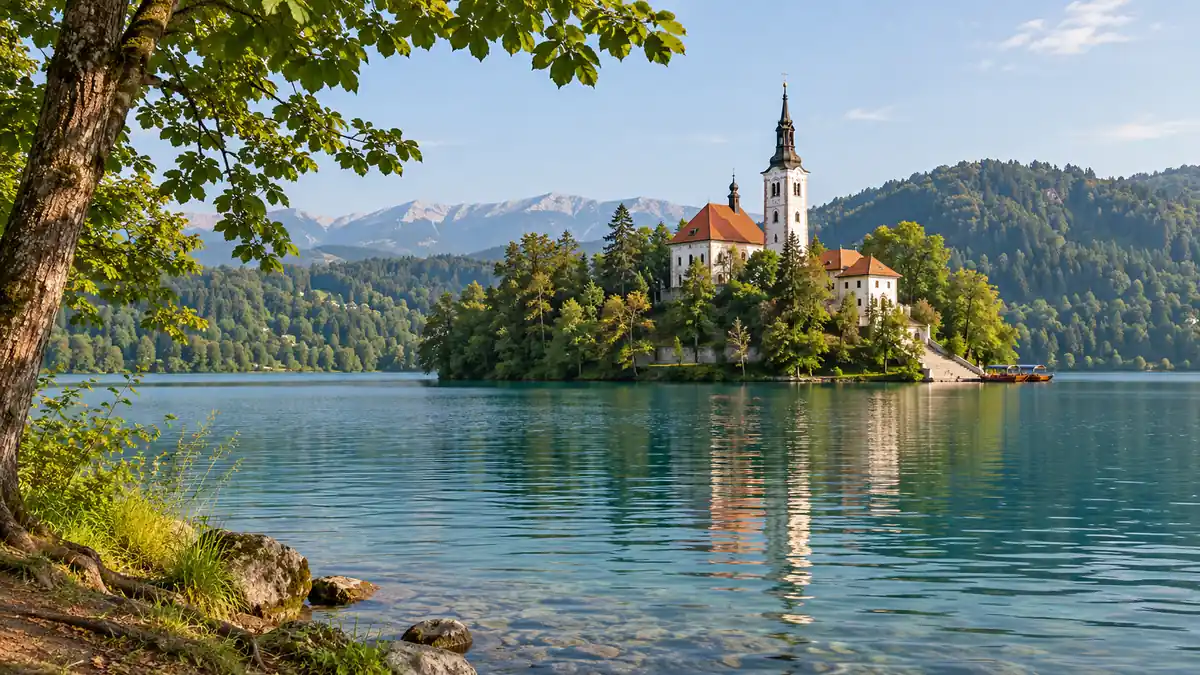
Lake Bled is worth visiting, and it is the strongest first pick in Slovenia: the island, the castle and the viewpoints sit around one small lake in the north-west, an easy bus ride from Ljubljana. The bus takes roughly 1 to 1.5 hours and costs about €5 to €7.50, so the lake works as a day without a car. Guided days from Ljubljana also cover the lake and the castle for anyone who would sooner not handle the bus.
Three sights make the day, each with its own ticket:
- Bled Island: the Bled Boat Line crosses on a fixed timetable all year, weather permitting (€16 adult), and the traditional rowed pletna has its own fare. Stairs climb from the landing to the Church of the Mother of God on the Lake and its wishing bell. Island entrance is €12 adult, separate from the boat.
- Bled Castle: the oldest castle in Slovenia, set high over the water (€19.00 adult).
- Bled cream cake: kremšnita, the local dessert, and the cheapest way to say you did Bled properly.
The island costs more than the castle once the boat is counted: €16 plus €12 against €19. Travelers who must cut one ticket can drop the castle and still have it in view from the hills above the lake.
The best view of Lake Bled is from above it. Mala Osojnica and Velika Osojnica give the classic view over the island and the castle, Ojstrica gives the wider panorama, and Straža adds a fourth angle on the lake.
Bled suits first-timers, couples and photographers. A day covers the three sights. A night lets you see the lake early and late, when the day visitors have not yet arrived or have already left.
Vintgar Gorge: Open in Season, Booked Online
Vintgar Gorge is open in season only, from April to October, and entry is booked online for a chosen date. The path is walked one way: 1.6 km along the gorge, ending at the Šum Waterfall (15 m).
Cars cannot reach the gorge, which lies about 4 km from Bled. Drivers leave the car at the free official car park and take the shuttle, which also runs from Bled’s main bus station to the Visitor Centre. Allow about three hours with the shuttle. Entry is €15 adult. It is the easy nature walk of a Bled day, and the one place on this list that a winter trip loses outright.
Lake Bohinj and the Savica Waterfall
Lake Bohinj is the largest natural lake in Slovenia, set inside Triglav National Park and further into the mountains than Bled. Its shore is far less built-up, which makes it the lake for swimmers, hikers and anyone after quiet.
The lake itself is the main event, but three things give the day its shape. The Church of St John the Baptist, about 700 years old, stands by the water. The Vogel cable car climbs to a viewpoint where hikes start in summer and skiing takes over in winter. Mostnica Gorge, an Alpine river gorge, runs toward the village of Stara Fužina.
The Savica Waterfall is the reason to drive on past the lake. It drops 78 m in an A shape, about 15 minutes (9 km) by car from Ribčev Laz, and the trail up to it has quite a few steps. Entry is paid from age 16, and the entry point closes in bad weather.
Bohinj fills a full day, and a night there keeps the lake to yourself in the morning. Without a car, a guided day from Ljubljana that adds Bohinj and Savica to Bled is the simplest way to reach the waterfall; book this day trip.
Lake Bled or Lake Bohinj: Which Is Better?
Lake Bled is better for a first visit and for anyone travelling by bus; Lake Bohinj is better for space and quiet. Bled packs its postcard sights — island, castle, viewpoints — into one compact lake on the direct bus line from Ljubljana. Bohinj is larger and less built-up, with the waterfall and the cable car as its draws, and it rewards a car. Both lakes in one day is a car or tour day; by bus, pick one.
Tours and activities
Book skip-the-line tickets, day trips and local tours with free cancellation on most activities.
You can also browse everything on getyourguide.com.
Tripstou may earn a commission if you book through this link, at no extra cost to you.
Triglav National Park and the Julian Alps: What to See
Triglav National Park, the only national park in Slovenia, is seen along two lines: the Vršič Pass road from Kranjska Gora over to Trenta, and the Soča Valley below it, with Bovec, Kobarid and Tolmin. Lake Bohinj is its southern, easier edge. The park is a driving day or a guided day, not a public-transport day trip from Ljubljana.
Without a car, Lake Bohinj is the part of the park within practical reach, and the pass and the valley are best left to a tour.
The Vršič Pass and Kranjska Gora
The Vršič Pass is worth driving for a confident driver while it is open. At 1,611 m it is the highest Slovenian road pass, with 50 hairpin bends: 24 on the Kranjska Gora side and 26 on the Trenta side.
Russian prisoners of war built the road during the First World War, which is why it is also called the Russian Road. The stops come in order from Kranjska Gora, in the north-west near the Austrian border: Lake Jasna at the foot of the climb, the Russian Chapel on the way up and, higher, the natural window in the rock face of Prisank.
Two conditions shape the drive. The pass may close for part of the year because of winter conditions and snow, and the car park at the top admits cars only while spaces remain. The Mangart road, the highest mountain road in Slovenia, is a separate drive. Drivers and hikers get the most from Vršič; a passenger who dislikes hairpins gets the least.
The Soča Valley: Bovec, Kobarid and the Tolmin Gorges
The Soča Valley is for river sports and First World War history, and it repays a night. Its three towns each do a different job:
- Bovec is the outdoor hub: rafting, kayaking and canyoning on the Soča, with hiking, biking and paragliding around the town. It is where the adrenaline crowd stays.
- Kobarid holds the Kobarid Museum, which tells the story of the Isonzo (Soča) Front, and the town is known for its restaurants; the Kozjak Waterfall is close by. History readers and anyone planning a long lunch get the most from it.
- Tolmin is the largest town in the valley, and the Tolmin Gorges are the lowest entry point to Triglav National Park: the gentler walk, at the valley’s southern end.
A full driving day covers the pass and the valley, and a night in Bovec or Kobarid leaves time for the river itself. Without a car, a small-group day from Ljubljana or Bled crosses the pass and follows the valley down; reserve a seat.
Postojna or Škocjan: Which Karst Cave Is Better?
The Škocjan Caves are the better single cave for anyone comfortable with steps: a UNESCO-listed underground canyon, seen on a longer walk with no photos allowed. Postojna Cave is the easier visit — a train into the cave, the olm in the Vivarium and Predjama Castle nearby — which makes it the pick for families and anyone with limited mobility. Both caves sit in the Karst, south-west of Ljubljana, and seeing both in one day works only by car or on a tour.
The cheaper cave is the harder one. Postojna costs €34.90 per adult against €16 in winter rising to €24 in high summer at Škocjan, but Postojna’s price buys a ride, and Škocjan’s buys about 1,000 steps.
Postojna Cave and Predjama Castle in One Day
Postojna Cave and Predjama Castle fit into one day: they are about 9 km apart, and together they take a half to a full day from Ljubljana.
Postojna is the only karst cave with a railway. The visit is an hour-and-a-half guided tour on a 5 km visitor trail, with the train carrying you into the cave, and the Vivarium shows the olm, Europe’s only underground vertebrate. The cave is open every day.
Predjama Castle is the largest cave castle in the world, built into a 123 m rock face and standing there for over 800 years. On its own it costs €24.00; a combined ticket with the cave costs less than two singles.
A shuttle bus links the two sites for holders of both tickets for part of the year. Outside that season a car or a tour connects them, and a small-group day from Ljubljana takes in the cave and the castle together; book a guided day.
Postojna is less than an hour from Ljubljana by road. Buses run hourly, and the cave park is about a 25-minute walk from Postojna station.
The Škocjan Caves: The Underground Canyon
The Škocjan Caves are a UNESCO World Heritage Site built around Europe’s largest subterranean canyon, and the Martel Chamber (2.2 million m³) is the moment the visit is remembered for. The tour asks more of you than Postojna:
- The guided tour takes 2 to 3 hours and covers about 5 km and about 1,000 steps.
- It is 12 °C inside.
- Photography is not allowed in the cave.
- In the colder months the tour ends at a shorter exit, after about 3 km.
- Tours run every day except 1 January and 25 December, with fewer departures in winter.
Drivers leave the motorway at the Divača exit. By train, Divača station connects to the caves by a marked 4 km path, about 50 minutes on foot. The visit takes a half day, and it is the cave for nature-first travelers who would trade a train ride for a canyon.
Is Piran Worth a Day or a Night on the Slovenian Coast?
Piran is worth a day, or a night, once the lakes and the caves are covered. It is a walled old port town shaped by Venice on Slovenia’s short Adriatic coast, and it is at its best in the evening light. On a trip of only a few days in the country, it is the first place to drop.
Piran: Tartini Square and the Old Town Walls
Piran’s centre is Tartini Square, named for the composer Giuseppe Tartini, who was born in the town. The old town grew under the influence of Venice, and remnants of its medieval wall still stand. Piran is for travelers who want the sea, a sunset and a seafood dinner after days inland.
Koper, Portorož and the Sečovlje Salt Pans
The rest of the Slovenian coast adds to a Piran stay without competing with it. Koper has the Praetorian Palace and the cathedral bell tower; Portorož is the resort town next door; the Sečovlje salt pans form a landscape park with the Museum of Salt-Making; and Strunjan Landscape Park has the coast’s sea cliff. Italy and Croatia are close, but only as ways in or out: none of their towns is part of a Slovenian coast day.
Maribor, Ptuj and the Quieter Places Off the Alpine Circuit
The east is the pick for wine and old towns once the Alpine circuit is done, or when the trip continues east: Maribor for the Old Vine and Ptuj for the oldest town in the country, best with a night. A handful of smaller places fill a spare day elsewhere.
Maribor and Ptuj
Maribor and Ptuj are worth visiting on a second trip or an onward route, not in place of the lakes or the caves on a first one. In Maribor’s Lent district grows the Old Vine, more than 400 years old and the world’s oldest vine still producing fruit, with its own museum in the Old Vine House. Ptuj is the oldest Slovenian city, the Roman Poetovio, with Ptuj Castle above the old town and the Kurent, the carnival figure who chases winter away at Kurentovanje. Both reward travelers who want wine and old streets off the mountain route, with Hungary and Austria as the onward directions.
Velika Planina, the Logar Valley and Other Quieter Picks
- Velika Planina is one of the largest herdsmen’s settlements in Europe, about 140 huts reached by cable car from Kamniška Bistrica; shepherds live in the huts from June to September.
- The Logar Valley is a mountain valley for walkers who want somewhere quieter than the Julian Alps.
- Lipica is the home of the Lipizzan horses, a breeding tradition on UNESCO’s intangible heritage list, in the Karst near the Škocjan Caves.
- Škofja Loka is a medieval castle town for a slow half day.
- Idrija carries UNESCO World Heritage status for its mercury mining heritage.
Lake Bled Is Not Always the Right First Pick
Three situations change the verdict on Lake Bled. In high summer Bled is at its most crowded, and Lake Bohinj is the calmer lake. On a trip without a car that wants mountains, Bohinj by bus makes a long day, and Bled plus Postojna stay the practical pair. In winter Vintgar Gorge is closed and the Vršič Pass may be too.
Summer crowds gather mostly around the island boats, the castle and the lakeside path, and they tend to thin early and late in the day. Travelers who mind them can sleep at Bohinj and visit Bled at the edges of the day, or skip Bled for Bohinj outright.
Travelling without a car narrows the list without spoiling it. Bled and Postojna are both bus-friendly from Ljubljana; the Vršič Pass, the Soča Valley and both caves in one day need a car or a tour. Whether to rent a car at all, and which season suits the trip, is settled in the Slovenia travel guide.
What to Do in Slovenia in Winter
The caves and Ljubljana carry a winter trip to Slovenia. Postojna and Škocjan both run tours every day, Škocjan on its shorter route and with fewer departures. Vintgar Gorge is closed, and the Vršič Pass may be closed by snow. Lake Bled itself stays visitable, and the Bled Boat Line runs all year, weather permitting. Above Bohinj, Vogel turns into a ski area.
How This Shortlist Was Chosen
This page picks places in Slovenia for a first trip by what each one is for, who it suits and whether it works as a day from Ljubljana; it is not a day-by-day route, a country guide or a full list of prices.
Alex Perrut, working in tourism since 2015, went over this shortlist for the Tripstou editorial team after it was drafted with AI assistance. Our editorial process explains what that review covers.
Official sources consulted: Slovenian Tourist Board, Škocjan Caves Park, Postojna Cave Park, Vintgar Gorge, Bohinj Tourist Board.
Did this guide save you time or money? Tripstou is independent and reader-funded — if you'd like to give something back, you can support the site with a crypto contribution of any size.