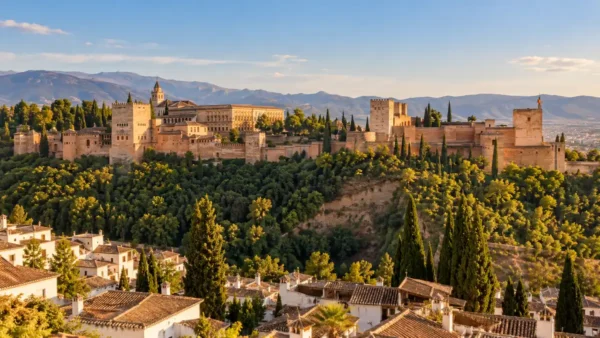
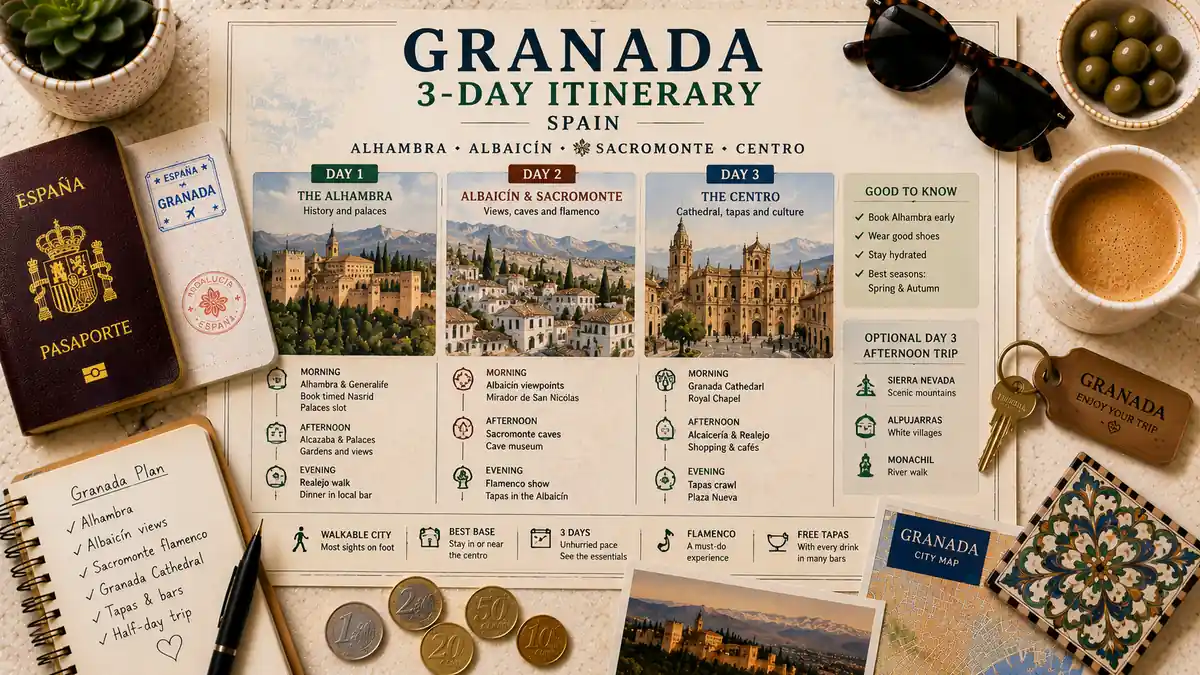
For 3 days in Granada, give Day 1 to the Alhambra, Day 2 to the Albaicín and Sacromonte, and Day 3 to the centro, with an optional half-day trip on that third afternoon. Book the timed Alhambra entry first, because that slot pins the whole sequence, then cluster the rest by neighbourhood so every day stays walkable. The plan suits first-timers looking for an unhurried route: one zone per day, no crossing the hills twice, and evenings that start where the day already ended.
Three days in Granada is less about choosing what to see and more about deciding the order to see it in. The headline sights are fixed and few—the Alhambra, the Albaicín, Sacromonte, and the centro around the Cathedral—so the real planning problem is sequence and pacing, not selection. One constraint shapes everything: the Alhambra’s timed entry. Once that slot is set, the rest of the trip has to arrange itself around it without sending you back and forth across the hills. This guide solves that with a walkable, neighbourhood-clustered plan. Each day stays inside one zone, the Alhambra anchors a single day, and the evenings line up with where you already are. The result is an unhurried three-day route that covers the essentials, leaves room for flamenco and a half-day escape, and never wastes time backtracking.
The 3-Day Granada Route at a Glance
The strongest three-day Granada route runs Day 1 Alhambra, Day 2 Albaicín and Sacromonte, Day 3 centro and Realejo. This order minimises backtracking because each day clusters one walkable zone, and it locks the Alhambra to a single fixed slot so nothing else competes for that timed entry.
The logic is geographic. Granada’s sights sit in distinct pockets on and around a pair of hills, and the quickest way to lose time is to cross between them more than once a day. Grouping each day around one zone keeps you on foot and lets evenings happen where you already are.
- Day 1 — Alhambra + Realejo: the timed entry anchors the morning or afternoon, with the adjacent Realejo filling the rest.
- Day 2 — Albaicín, San Nicolás + Sacromonte: the Moorish quarter by day, cave-quarter flamenco by night.
- Day 3 — Centro + optional half-day trip: Cathedral, Royal Chapel, and a slower core, with an afternoon escape if you want it.
First-timers benefit most from this shape because it never asks you to double back or rush a major sight. The one tradeoff is rigidity: your Alhambra slot dictates which calendar day becomes Day 1, so the sequence flexes around the ticket, not the other way around.
When is the best time of year for a 3-day Granada trip?
Spring and autumn are the best times for a three-day Granada trip. Mild temperatures make the Albaicín and Alhambra climbs comfortable and crowds thinner than peak summer. Summer brings intense midday heat that slows the hilly walking, while winter is quiet and cool but can affect Sierra Nevada side trips.
Day 1: The Alhambra and the Realejo
Dedicate Day 1 to the Alhambra around your timed entry, then walk down into the Realejo. The Alhambra needs several unhurried hours across the Nasrid Palaces, Generalife, and Alcazaba, and the adjacent Realejo lets you fill the rest of the day without crossing the city.
Plan the day around your Nasrid Palaces slot, since that is the one part of the complex with a strict timed entry. Arrive with margin, see the Generalife gardens and Alcazaba fortress on either side of your palace window, and treat the whole visit as a half-day, not a quick stop. Entry is timed and books out, so build the day around the slot you hold instead of hoping to adjust on arrival.
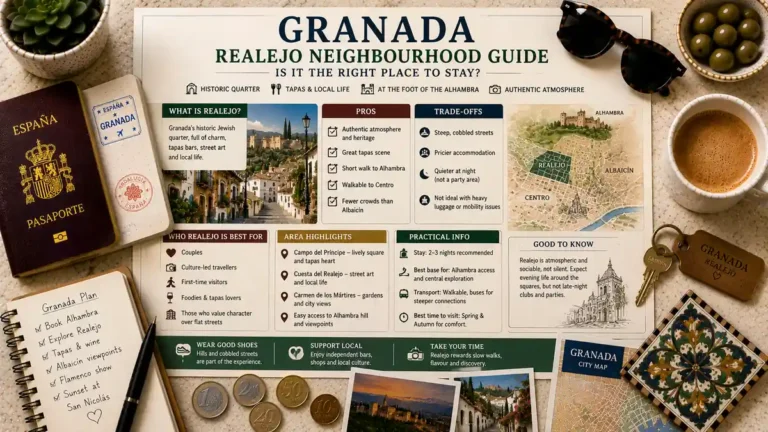
When you leave, the Realejo sits right below the Alhambra hill, which makes it the natural second half of Day 1:
- Granada’s old Jewish quarter, with quiet sloping streets and street-art corners.
- Campo del Príncipe square, a relaxed spot for an early tapas round.
- Carmen viewpoints and gardens looking back toward the Alhambra walls.
This pairing suits anyone who wants a full but unhurried opening day. Energy is the limit here: the Alhambra involves a lot of walking and sun, so keep the Realejo portion loose instead of packing it with more sights.
Tours and activities
Book skip-the-line tickets, day trips and local tours with free cancellation on most activities.
You can also browse everything on getyourguide.com.
Tripstou may earn a commission if you book through this link, at no extra cost to you.
Day 2: Albaicín, Sacromonte and Flamenco
Spend Day 2 climbing the Albaicín to San Nicolás, then head to Sacromonte for evening flamenco. These two neighbourhoods sit side by side on the same hillside, so you can wander the Moorish quarter by day and reach the cave venues without backtracking after dark.
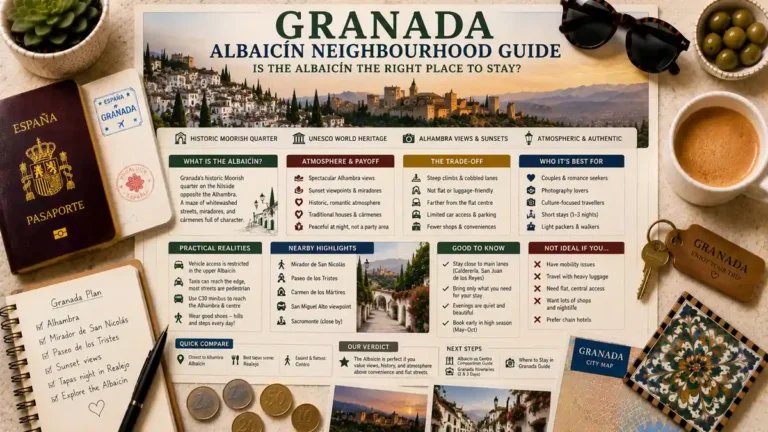
Work uphill through the Albaicín in the morning, when the narrow white-washed lanes are cooler and quieter. The Mirador de San Nicolás is the payoff: the classic frontal view of the Alhambra against the Sierra Nevada. From there it is a short move along the hillside into Sacromonte, the historic cave quarter that flows naturally into the evening.
- Albaicín lanes, Plaza Larga, and the Moorish-era streetscape.
- Mirador de San Nicolás for the headline Alhambra panorama.
- Sacromonte cave dwellings and an evening flamenco show.
Flamenco in Sacromonte is a highlight, not a footnote, so book a show for after dark and eat nearby beforehand. For how tapas rounds and flamenco etiquette actually work here, see our Granada travel tips. Day 2 asks the most of your legs: the Albaicín is steep and uneven, so wear proper shoes and pace the ascent in the heat.
Day 3: Centro, the Cathedral and an Optional Half-Day Trip
Use Day 3 for the centro and Cathedral at a slower pace, with an optional half-day escape. The Cathedral and Royal Chapel anchor a relaxed morning in the historic core, and the afternoon is free for a short trip to the Sierra Nevada or Alpujarras.
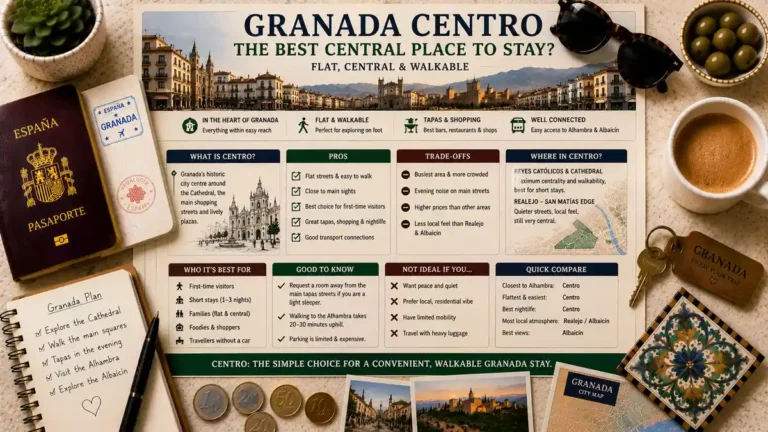
Day 3 is the deliberate decompression day. The centro is flat and compact, so you can take the Cathedral, the Royal Chapel where Ferdinand and Isabella are buried, and the surrounding streets and markets at an easy rhythm. This is the day to slow down, not to chase another major monument.
- Granada Cathedral and the adjoining Royal Chapel.
- Alcaicería lanes and the centro’s main squares and cafés.
- Optional afternoon: Sierra Nevada foothills or a white village in the Alpujarras.
The optional half-day trip is what makes the third day feel generous rather than padded, and it suits travelers who want a taste of the landscape around the city. A side trip eats the afternoon, though, so choose it only if you have already covered the core comfortably.
Why to Book the Alhambra Before Anything Else
Book the Alhambra first—timed Nasrid Palaces entry sells out and pins your whole sequence. Your confirmed slot decides which day becomes Day 1, so every other neighbourhood falls into place around it. Securing the ticket early is the single decision that makes this itinerary work.
The Nasrid Palaces admit visitors in timed waves, and that capacity is limited, so popular dates and slots disappear well in advance. If you wait until you arrive, you risk either no ticket or a slot that forces the rest of the route out of shape. Booking ahead through the official channel removes that risk and lets you build the other two days with confidence.
Treat the booking as step one of planning, before stays or day order. For the wider Alhambra ticketing picture and how it sits within the rest of the trip, see our Granada guide. An early booking does fix your dates, so confirm your travel days before you reserve the slot.
How far ahead should you book the Alhambra?
Book the Alhambra as early as you can, ideally weeks ahead for popular dates. The Nasrid Palaces use limited timed-entry slots that sell out fast, so reserving through the official channel well in advance is the safest way to lock the slot your itinerary depends on.
What the Third Day Adds Over a 2-Day Trip
The third day adds slower pacing plus Sacromonte flamenco, the Realejo, and a half-day option. A two-day trip forces the Alhambra and both hill neighbourhoods into back-to-back days, while the third day removes the rush and makes room for experiences the shorter plan simply cannot fit.
On a two-day plan, something is always squeezed: flamenco gets skipped, the Realejo is cut, or the Albaicín and Alhambra collide on one exhausting day. The third day is what turns a checklist sprint into an actual route with breathing room.
| Aspect | 2-Day Trip | 3-Day Trip |
|---|---|---|
| Daily pace | Rushed, two big zones each day | Relaxed, one main zone per day |
| Sacromonte flamenco | Often skipped for time | Fits naturally on Day 2 evening |
| Realejo exploration | Brief or cut entirely | Paired with the Alhambra on Day 1 |
| Half-day side trip | Not realistic to include | Optional on the third afternoon |
| Backtracking risk | Higher across packed days | Low with neighbourhood clustering |
The third day suits travelers who would rather absorb a city than tick it off, especially first-timers and slower-paced couples. If your days are tight, the shorter route still works—see our 2 days in Granada itinerary for the compressed version and what it leaves out.
Where to Stay and How to Get Around for This Route
Base yourself in or near the centro so the route stays mostly walkable. A central base keeps the Cathedral, Albaicín approaches, and Alhambra access within easy reach, which is what makes a tight three-day plan realistic without relying heavily on transport between neighbourhoods each day.
Granada’s historic core is compact, and most of this itinerary connects on foot. A central location shortens the daily commute to each cluster and means the steep parts—the Albaicín and the Alhambra hill—are the only real climbs you face, not long crosstown transfers. Where you sleep matters more for walkability than for any single sight.
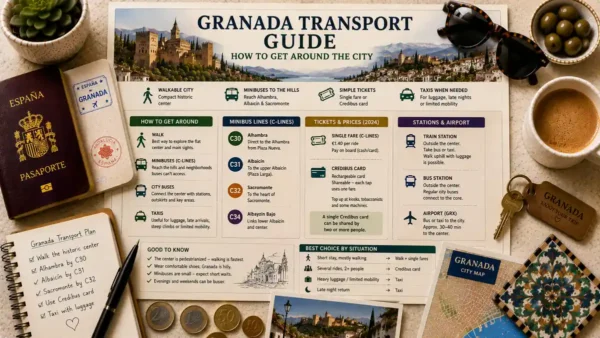
For the full area-by-area breakdown, see where to stay in Granada. The hills and minibus routes have their own quirks, covered in getting around Granada, and if a more central base changes your budget, weigh that against the time it saves using our Granada trip cost guide. The tradeoff is price: central, walkable stays tend to cost more, so balance convenience against budget.
Hotels and places to stay
Compare hotels, apartments and stays for your dates in one search.
Search hotels and stays on hotels.com →
Tripstou may earn a commission if you book through this link, at no extra cost to you.
About This Itinerary
This page plans one 3-day route through Granada: the order of the Alhambra, Albaicín, Sacromonte and centro days, their pacing, and where to base yourself for them. It is not a full Granada city guide, a things-to-do list, a hotel roundup or a general Andalusia planning overview.
Produced with AI assistance for the Tripstou editorial team and reviewed by Alex Perrut, working in tourism since 2015. Our editorial process explains the method.
Last factual review: June 14, 2026.
Official sources consulted: travel-europe.europa.eu, european-union.europa.eu.
Did this guide save you time or money? Tripstou is independent and reader-funded — if you'd like to give something back, you can support the site with a crypto contribution of any size.