The Palace of the Parliament, the Old Town around Lipscani and the open-air Village Museum are the three things most first-timers should do in Bucharest. The Palace is the only one that has to be planned: it needs a phone booking the day before and a physical ID at the door. Everything else rewards wandering, and a traveler who has no patience for guided tours can give those hours to Revolution Square and the Old Town instead.
Below the core trio, the sights are grouped by what you came for: communist-era history, the Old Town and Calea Victoriei, parks and museums in the north, and local life after dark. Most of the central picks sit within walking distance of each other.
Pick These First
- The Palace of the Parliament, the Old Town around Lipscani and the Village Museum are the core picks for a first visit to Bucharest.
- The Palace of the Parliament is seen only on a guided tour booked by phone on a weekday the day before, with a physical ID card or passport checked at the entrance.
- Revolution Square and the Ceaușescu Mansion tell the communist-era story without the Palace, and the square costs nothing and needs no booking.
- A free afternoon in the centre covers the Old Town lanes, Cărturești Carusel and Cișmigiu Garden, with the Unirii fountains on warm-season weekend evenings.
- The Village Museum, King Michael I Park and the Arch of Triumph sit together in the north and fill one unhurried half-day.
- Therme București is in Balotești, just north of the city limits, so plan it as a separate outing from the central sights.
Is Bucharest worth visiting, and what is it known for?
Bucharest is worth a two- or three-day city stop. It is known for the Palace of the Parliament and its communist-era past, set against the Belle Époque boulevards that once earned it the nickname “Little Paris”, with an Old Town that fills up after dark. The Palace, the Old Town and the Village Museum are the three picks that define a first visit.
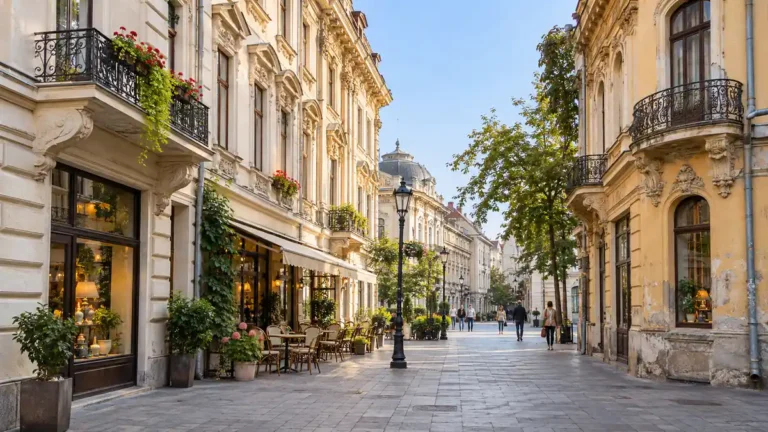
The city’s appeal is the collision. Grey communist blocks stand a street away from ornate mansions, and a small monastery hides between the bars of Lipscani. Visitors who expect a postcard capital in the Prague mould leave underwhelmed; visitors who like cities with rough edges and layered history usually stay a day longer than planned.
Each group below serves a different traveler. Communist-era Bucharest is for history readers and anyone curious about the regime that ended here. The Old Town and Calea Victoriei suit a first evening and a long walk. The northern parks and museums give families and slow travelers a calmer day. Local life and evenings cover coffee, markets, fountains and rooftops for travelers who judge a city by how it feels at night.
A long weekend covers the core. For the full question of how many days to spend in Bucharest and where to base yourself, the city guide sets out the options. Transylvania and the rest of the country belong to a wider trip, covered in the Romania travel guide.
Communist-era Bucharest: the Palace, the square and the family home
Communist-era history is the reason most visitors come to Bucharest. The Palace of the Parliament is the headline and the one sight that needs booking; Revolution Square is free and open to anyone walking past; the Ceaușescu Mansion shows the private side of the same regime. Together they tell the story of Nicolae Ceaușescu’s rule and its collapse in December 1989.
Palace of the Parliament (Palatul Parlamentului)
The Palace of the Parliament is a vast administrative building raised under Ceaușescu, and it can only be visited on a guided tour. Its scale is the point: the building closes the end of Union Boulevard and dwarfs everything around it. The visit only happens if you plan it:
- Individual visitors and groups of 1–9 book by phone, on a weekday, the day before the visit.
- Bring a valid physical ID card or passport; it is checked at the entrance.
- Tickets are bought at the venue on the day of the visit.
This is the pick for anyone who wants to see the most striking building in the city and does not mind fixing the next day’s plan in advance.
Revolution Square (Piața Revoluției) and the Rebirth Memorial
Revolution Square is where the regime collapsed in December 1989. The Ceaușescus fled the crowd by helicopter from the roof of the former Central Committee building on the square. The Rebirth Memorial now stands in the middle of the square, and the National Museum of Art, housed in the former royal palace, faces it (see the Calea Victoriei section below).
Choose the square if you want the history without a tour: it is free, needs no booking and takes as long as you choose to give it.
Ceaușescu Mansion (Primăverii Palace)
The Ceaușescu Mansion is the family’s private home in the Primăverii district, and it is visited only with a guide, in Romanian or English. Built in the mid-1960s, it housed the Ceaușescus for nearly 25 years and is now a museum; the mosaic indoor pool is the room visitors remember. The house is closed on Mondays and Romanian public holidays, groups of more than 10 book ahead, and photography and filming are not allowed inside.
The Mansion suits readers who want the domestic side of the regime in a short visit, and it beats the Palace for anyone who finds monumental buildings tiring.
Communist-era walking tours tie the Palace, the square and the boulevards together. If you want the everyday side of the era that the buildings alone do not show, you can book a communism walk through the centre. Tip-based free walking tours also leave from the centre and cover the same ground more loosely.
Tours and activities
Book skip-the-line tickets, day trips and local tours with free cancellation on most activities.
You can also browse everything on getyourguide.com.
Tripstou may earn a commission if you book through this link, at no extra cost to you.
The Old Town and Calea Victoriei reward wandering more than tickets
The centre’s best hours cost nothing: the lanes of Lipscani, the small ornate Stavropoleos Monastery, Cărturești Carusel and a walk up Calea Victoriei need no plan and no ticket. The one thing worth paying for here is a concert at the Romanian Athenaeum.
Lipscani and the Old Town (Centrul Vechi)
Lipscani is the lane network at the heart of the Old Town, busy with bars by night and quieter in the morning. Stavropoleos Monastery is the small, ornate church most visitors stop at first. The ruins of the Old Princely Court (Curtea Veche) carry a statue of Vlad III, the historical prince of Wallachia, and the Macca-Villacrosse Passage is a covered arcade a few steps away. Caru’ cu Bere and Hanul lui Manuc are the historic places to sit down when your feet give out. To see these with a guide, you can reserve a guided walk of the Old Town highlights.
The Old Town is your first evening in the city, and it needs no plan at all.
Cărturești Carusel
Cărturești Carusel is a bookshop on Lipscani Street, and entry is free with no obligation to buy. It is on every list because its bright, tiered interior photographs well. At peak hours it fills with phones held up on the stairs, so an early visit or a weekday morning is the way to see it as a shop. Book lovers and anyone sheltering from rain get the most from it; a traveler pressed for time can skip it.
Romanian Athenaeum (Ateneul Român)
The Romanian Athenaeum is the domed concert hall on Calea Victoriei, and attending a concert is the best way to see its interior. The exterior takes a minute to admire from the street. Inside, the hall under the dome is the reason to come. This is the one evening ticket in the centre worth planning around.
Calea Victoriei, the National Museum of Art and Kretzulescu Church
Calea Victoriei is the Belle Époque boulevard that gave Bucharest its “Little Paris” reputation, and it is the walk that joins the Old Town to Revolution Square. The National Museum of Art of Romania occupies the former royal palace on the square, and Kretzulescu Church stands beside it. The boulevard goes car-free on summer weekends, when the walk is at its best.
Walk it end to end if you like architecture and window-shopping more than museums; stop at the art museum if Romanian painting is what you came for.
Parks and museums for a slower day in the north
The Village Museum is the second ticket worth buying in Bucharest, and it sits on the lake inside King Michael I Park, the largest park in the city. One half-day in the north covers the museum, the park and the Arch of Triumph. Cișmigiu, by contrast, is the central park for an hour between other sights, not a trip in itself.
Village Museum (Muzeul Național al Satului)
The “Dimitrie Gusti” National Village Museum is an open-air collection of traditional houses brought from across Romania. It stands on Șoseaua Kiseleff, on the shore of Lake Herăstrău beside King Michael I Park. The houses sit along shaded paths, so the visit feels more like a walk through the countryside than a museum.
It is rural Romania without leaving the city: the right pick for families and for anyone who will not make it to Transylvania on this trip.
King Michael I Park (Herăstrău) and the Arch of Triumph
King Michael I Park, formerly Herăstrău Park, is the largest park in Bucharest, laid out around the lake, with rowing boats on the water. The Arch of Triumph (Arcul de Triumf) stands on Șoseaua Kiseleff on the way in. Pair the park with the Village Museum next door and the northern half-day is complete. Save it for a long, green afternoon after a day of streets.
Cișmigiu Garden
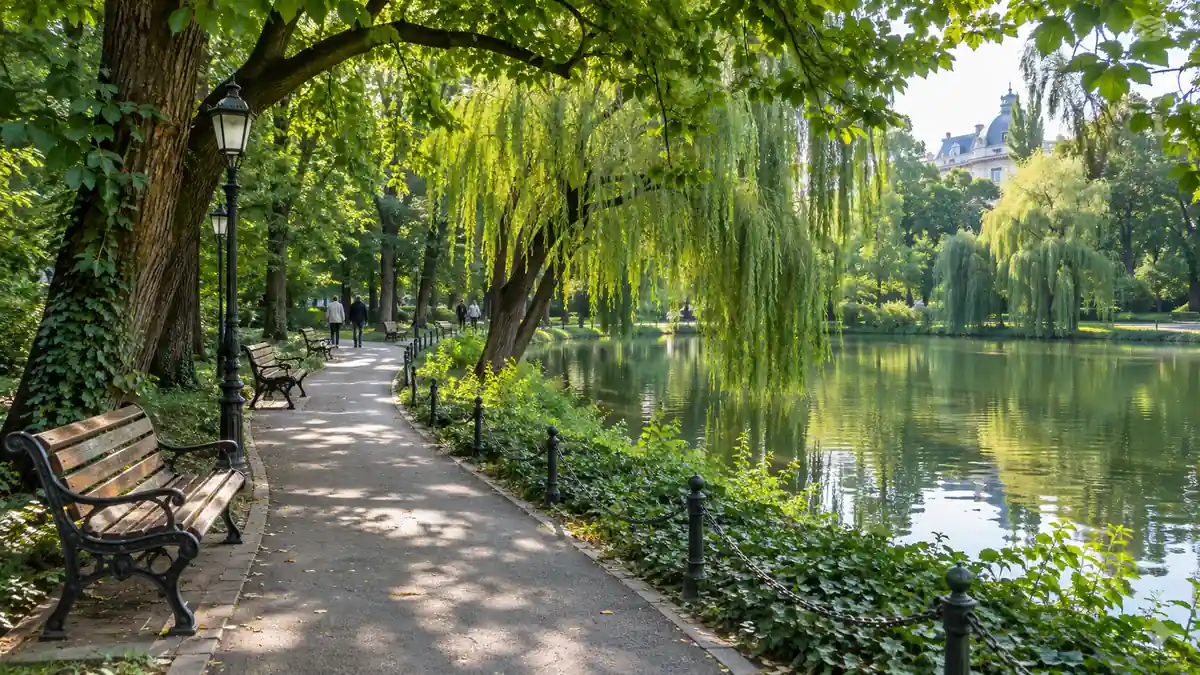
Cișmigiu Garden is a free, historic park in the centre, laid out in the mid-19th century. It sits between the Old Town and Calea Victoriei, which makes it the natural place to sit down mid-walk. Give it an hour, not a morning.
Museum of the Romanian Peasant, Antipa and Văcărești
Three more picks earn a place when you have extra time or a specific interest:
- Museum of the Romanian Peasant: folk culture and village life, on the same northern axis as the Village Museum; the follow-up for anyone the open-air houses won over.
- Grigore Antipa National Museum of Natural History: the family museum and the rainy-day fallback.
- Văcărești Nature Park: wetland and birdlife inside the city, often called the urban delta, for a half-day well off the sights trail.
Plant lovers can add the Botanical Garden to the list.
Local life and evenings: coffee, Obor, fountains and rooftops
Bucharest shows its character after the sights close. By day it runs on a strong specialty-coffee scene; at lunch, mici grilled at Obor Market are the local habit; on warm-season weekend evenings the Unirii Square fountains put on a free show; and at night the Old Town bars and the rooftop terraces take over.
Coffee is the easiest way into daily life here. Independent specialty cafés have spread across the centre and the streets around it, and a slow coffee between sights is how many locals spend the late morning.
Obor Market is a working city market, where grilled mici (small skinless sausages) are eaten standing at the counters. Go for the market’s noise and produce stalls as much as the food.
Pick the evening that suits you:
- Old Town nightlife: bars, terraces and music around Lipscani, loud and late, for groups and anyone out to stay up.
- Unirii fountains: a free show on warm-season weekend evenings at Unirii Square; easy with children.
- Rooftops: bars such as Nomad Skybar look over the Old Town roofs, for a drink with a view instead of a crowd.
- A quiet quarter: the Armenian Quarter and the old mahalale lanes, with the street art of Arthur Verona street, for an unhurried walk among old houses.
What can you do in Bucharest for free?
A full free day in Bucharest is realistic. Revolution Square, the Old Town lanes, Cărturești Carusel, Cișmigiu Garden, King Michael I Park, the Unirii fountains and a tip-based walking tour cost nothing, and together they cover most of what the city is known for.
- Revolution Square: any time of day, ideally at the start of a walk up Calea Victoriei.
- The Old Town lanes: early for Stavropoleos and empty streets, evening for the atmosphere.
- Cărturești Carusel: early or on a weekday, before the stairs fill.
- Cișmigiu Garden: a midday break between the Old Town and Calea Victoriei.
- King Michael I Park and the Arch of Triumph: a long afternoon in the north, after the Village Museum.
- Unirii fountains: warm-season weekend evenings.
- A tip-based walking tour: the first morning, to get your bearings in the centre.
The Palace of the Parliament, the Ceaușescu Mansion, the Village Museum and a concert at the Athenaeum are not free, so budget for those separately.
Therme, Mogoșoaia and the day trips beyond
Therme București is the best-known “Bucharest” attraction that is not actually in Bucharest: it sits in Balotești, Ilfov County, just north of the city limits. Mogoșoaia Palace is the gentle half-day option on the same side of the city.
Therme is a large spa and pool complex, and the right pick for a cold or rainy day when the city’s walking sights lose their appeal. Mogoșoaia is a brick palace with gardens just outside the city, quieter than anything in the centre and suited to a slow afternoon.
Beyond the city, Brașov, Peleș Castle in Sinaia and Bran Castle are the classic day trips into the Carpathians. Bran is the one most travelers ask for: a castle near Brașov marketed as Dracula’s castle, though the Dracula link is marketing, not history; Peleș, the royal palace at Sinaia near Brașov, usually shares the same day. The order and logistics of those trips are set out in the day-trip section of the Bucharest city guide.
Skip the Palace if you will not book a day ahead
The top pick is not the best pick for everyone. If you dislike guided tours, arrive without a physical ID card or passport, or cannot phone on a weekday the day before, give the Palace’s hours to Revolution Square and the Ceaușescu Mansion, or to the Old Town and the Village Museum.
The trade-off is planning against freedom. The Palace asks for a booking, an ID and a fixed slot in your day; the rest of Bucharest is built for wandering and asks for nothing. A history reader loses little by swapping the Palace for the square and the Mansion, which tell the same story more personally. A traveler on a first, short stay who wants the city’s mood more than its monuments does better with the Old Town by evening and the Village Museum by day.
| Sight | Best for | Booking needed? |
|---|---|---|
| Palace of the Parliament | The most striking building in the city | Yes, by phone the day before |
| Ceaușescu Mansion | The private side of the regime | Guided only, closed Mondays; groups over 10 book ahead |
| Revolution Square | History without a tour | No |
| Old Town (Lipscani) | A first evening | No |
| Romanian Athenaeum | One planned evening out | Concert ticket |
| Village Museum | Families, rural Romania | No |
| King Michael I Park | A long green afternoon | No |
| Cărturești Carusel | Book lovers, rainy hours | No |
Sources and Review
This page selects Bucharest’s sights by interest, with who each one suits and the one booking rule that matters; it is not a city planning guide, an itinerary or a Palace of the Parliament ticket page.
The visiting rules on this page were checked against the sources below by Alex Perrut, working in tourism since 2015, for the Tripstou editorial team. Written with AI assistance under our editorial process.
Official sources consulted: Bucharest City Tourism, Ceaușescu Mansion (Casa Ceaușescu), Palace of the Parliament International Conference Centre, “Dimitrie Gusti” National Village Museum.
Questions Before You Go
What are the best museums in Bucharest?
The Village Museum is the best museum in Bucharest for most visitors: an open-air collection of traditional houses from across Romania, beside King Michael I Park. The National Museum of Art of Romania, in the former royal palace on Revolution Square, is the choice for Romanian painting, and the Museum of the Romanian Peasant takes folk culture further. Families do best at the Grigore Antipa National Museum of Natural History, and the Ceaușescu Mansion is the house museum of the communist era, seen only with a guide.
What should you do in Bucharest in one day?
Give one day in Bucharest to the communist-era centre and the Old Town. Start with the Palace of the Parliament if you booked it by phone the day before, or with Revolution Square if you did not; walk Calea Victoriei and the Lipscani lanes in the afternoon; and end in the Old Town or, on a warm-season weekend, at the Unirii fountains. The Village Museum and the northern parks need a second day. For how many days to plan and where to base yourself, the Bucharest city guide covers both.
What is there to do in Bucharest in winter or when it rains?
Indoor sights carry a cold or wet day in Bucharest: the Palace of the Parliament and the Ceaușescu Mansion on their guided tours, Cărturești Carusel, the National Museum of Art and the Antipa museum, with a concert at the Romanian Athenaeum in the evening. Therme București, the spa and pool complex just north of the city, is the all-day option when the weather rules out walking.
Is Bucharest walkable, or are the sights far apart?
The centre of Bucharest is walkable: the Old Town, Calea Victoriei, Revolution Square and Cișmigiu Garden sit close together. The Palace of the Parliament is a longer walk, at the far end of Union Boulevard. The Village Museum, King Michael I Park and the Arch of Triumph are grouped in the north, far enough out that most visitors take the metro or a ride.
Keep Planning Bucharest
- Bucharest city guide: how many days to spend, where to stay, arriving from the airport, getting around, what to eat and the day trips in order.
- Romania travel guide: the wider trip, from Transylvania to the regions, and how Bucharest fits into it.
Did this guide save you time or money? Tripstou is independent and reader-funded — if you'd like to give something back, you can support the site with a crypto contribution of any size.