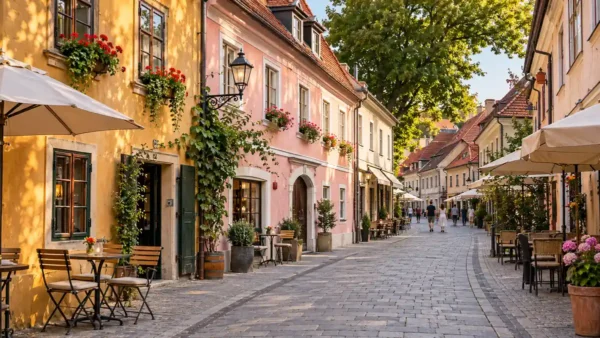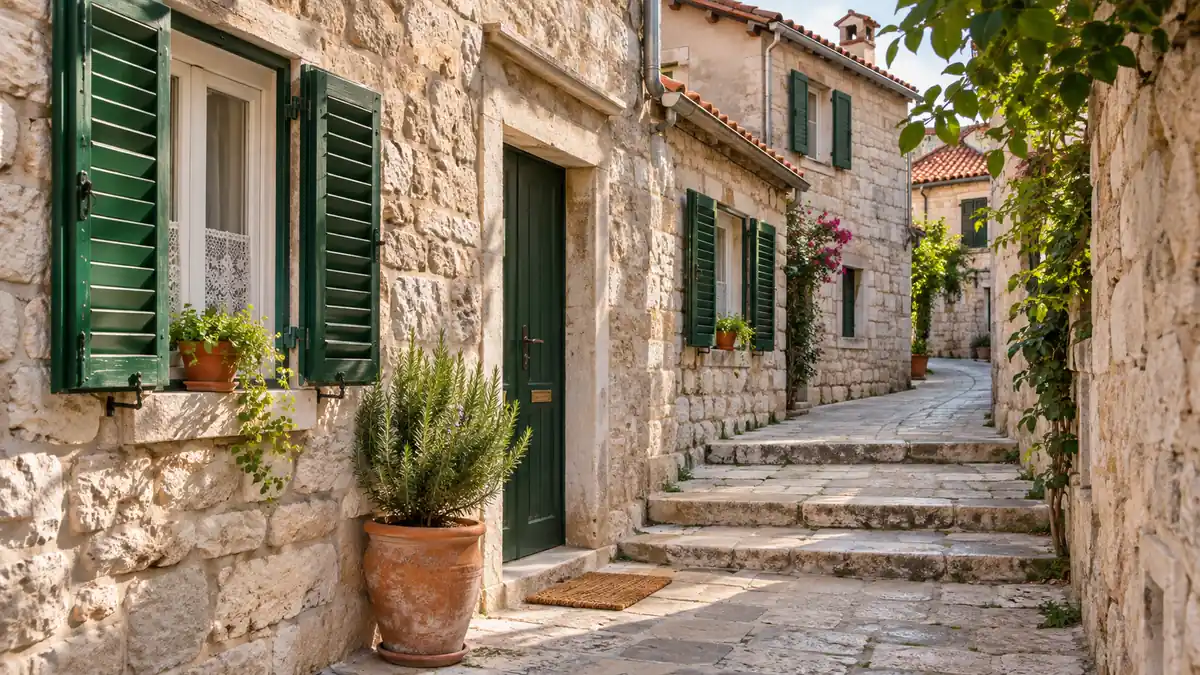
Diocletian’s Palace is the one thing nobody should skip in Split, and the rest of the city’s best sits within a walk of it: the Riva promenade, Marjan Hill and Bačvice beach. Two to three days cover the city itself; give it longer if Split is also your base for Krka, Trogir and the islands.
The palace is not a fenced-off ruin with a turnstile. It is the living centre of Split, with cafés, homes and shops inside Roman walls, and everything else on this page is measured against it. After the palace come the city beyond the walls and Marjan, then the beaches, then food, then the day and boat trips that make Split such a strong base for first-time summer visitors to the Dalmatian coast.
Plan Split Around These
- Diocletian’s Palace costs nothing to walk, and of its few paid sights the two that earn a ticket are the cathedral bell tower and the side halls of the cellars.
- Marjan Hill is the free half-day that takes you out of the summer heat: Vidilica for a short climb, Telegrin for islands on every side.
- Choose Bačvice for picigin and the city beach scene, Kašjuni for the clearest water near the centre, and Žnjan when children need room.
- For one full day out by land, Krka is the pick; for one boat day, the Blue Lagoon suits swimmers and Hvar or Brač gives a real island day.
- Two to three days cover Split as a city, and each day trip you add needs a day of its own.
- When the islands are the goal, give Split more of your nights than Dubrovnik.
On This Page
Diocletian’s Palace Is the Reason to Come
Diocletian’s Palace is free to walk: its squares, lanes and gates are simply the old centre of Split. Only a few sights inside it charge entry, and two of them earn the ticket — the climb up the cathedral bell tower and the cellars beneath the emperor’s quarters.
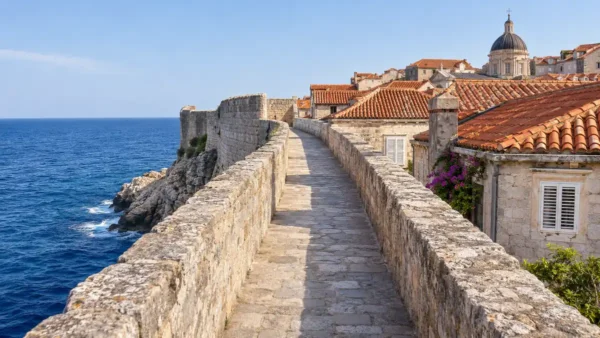
The emperor Diocletian built the complex as a combined villa and military camp, a rectangle of roughly 215 × 180 m with a gate in each wall. It is one of the best-preserved Roman monuments anywhere and sits on the UNESCO World Heritage list. Give it a slow first morning, then come back after dark, when the stone lanes are at their best.
Peristyle and the Vestibule
The Peristyle is the palace’s central square and the natural meeting point of Split. People sit on its steps with a coffee while the walking groups gather around them. Walk south from it into the Vestibule, the domed, open-roofed hall that led to the imperial apartments. Klapa groups sing unaccompanied Dalmatian harmonies here, and the open dome turns a handful of voices into one of the moments people remember from the whole trip.
Cathedral of St Domnius and the bell tower climb
The Cathedral of St Domnius occupies Diocletian’s own mausoleum, converted into a church in the 7th century. The emperor’s tomb became one of the oldest cathedral buildings still in use. The bell tower beside it is the climb to do: after Marjan Hill it gives the best view in Split, straight down onto the palace roofs, the Riva and the harbour.
Queues for the tower build in the middle of a summer day. Go early or late; hours run longer in summer.
Temple of Jupiter and the four gates
The Temple of Jupiter sits a short walk west of the Peristyle, down a lane barely wider than your shoulders. The four gates name the palace’s sides: the Golden Gate to the north, the Silver Gate to the east, the Iron Gate to the west and the Bronze Gate facing the sea. Outside the Golden Gate stands Ivan Meštrović’s giant statue of Gregory of Nin, whose big toe is polished bright by visitors rubbing it for luck. Inside the walls, look for the Jewish Passage, one of the narrowest lanes in the palace, and the Papalić Palace, a Gothic town house that holds the City Museum.
The cellars under the emperor’s quarters
The cellars are the palace’s substructures: vaulted halls under the southern half of the complex that mirror the layout of the emperor’s rooms above. Because the upper floors are long gone, they are the clearest picture of how those rooms were arranged. The central passage from the Bronze Gate up to the Peristyle is free and lined with craft stalls. The side halls beyond it are ticketed.
Worth it if you want to understand the palace and not only walk through it: the ticketed halls are quieter, cooler and far larger than the passage suggests.
Where was Game of Thrones filmed in Split?
Game of Thrones was filmed in the cellars of Diocletian’s Palace. The vaulted halls stood in for scenes set in the show’s eastern cities, so a fan visit and a history visit come down to the same cellars.
What you pay for inside the palace
Each paid sight inside the palace has its own ticket: the cellars, the cathedral and its treasury, and the bell tower. A combined ticket covers the cathedral complex, and the ticket office stands beside the cathedral. Everything else — the gates, the squares, the Vestibule and the free passage through the cellars — costs nothing.
Beyond the Walls: the Riva, Pjaca and Veli Varoš
The best of Split outside the palace is a short loop: west along the Riva, up into the lanes of Veli Varoš, down to Matejuška harbour and back through Trg Republike, Marmontova and Pjaca. It takes about 15 minutes at a straight walk and an evening at a Split pace.
The Riva is the palm-lined promenade along the palace’s sea wall, where all of Split comes to walk, sit and be seen. Pjaca, officially People’s Square, is the medieval heart just outside the Iron Gate, paved in white stone. Trg Republike, known locally as the Prokurative, is the arcaded square that opens onto the sea west of the Riva. Marmontova is the broad shopping street that runs up from the sea past the fish market.
Veli Varoš climbs the slope west of the centre: an old quarter of fishermen and farmers, with stone houses, steep steps and few shops. It is where the city feels least staged. Below it, Matejuška is the small fishing harbour where wooden boats tie up; locals swim off its quay and gather there at sunset.
Split’s museums reward a hot afternoon. The Meštrović Gallery, the sculptor’s own villa on the road towards Marjan, is the one to choose for art. The Archaeological Museum holds finds from Roman Salona, and the Ethnographic Museum, inside the palace, covers Dalmatian dress and crafts. In summer the Split Summer Festival brings opera and theatre to open-air stages in the old town.
Is Marjan Hill worth the climb?
Marjan Hill is worth the climb: it is the one half-day in Split that costs nothing and gets you out of the heat under pine shade. The Vidilica terrace is the short climb from Veli Varoš, with a view over the old town and harbour; the summit at Telegrin is the full climb, with islands on every side.
From Vidilica, paths continue up through the forest park to the small church of St Jerome, built against the cliff, with hermitage chapels cut into the rock nearby. Telegrin, the top, sits an hour or two of steady walking from the centre and looks out over the islands and the open Adriatic. Go early in summer: the last stretch has little shade.
Come down the south side to swim at Kašjuni, or the north side to Bene. For a sunset without the climb, walk to Sustipan instead, a low pine-covered headland just west of the centre, where the sun drops behind the islands.
Which Split beach suits you: Bačvice, Kašjuni or Žnjan?
Bačvice is the beach for the city experience and a game of picigin, Kašjuni has the clearest water close to the centre, and Žnjan suits families who need space. Firule and Bene fill the gaps for anyone after something more local or shadier.
- Bačvice: the sandy, shallow bay just east of the old centre and home of picigin, the Split game of keeping a small ball in the air while splashing in knee-deep water. Busy all day; bars keep it loud after dark.
- Firule: the next bay along from Bačvice, smaller and used mainly by people who live nearby — the escape when Bačvice is packed.
- Kašjuni: a pebble beach on Marjan’s south side with the clearest water within reach of the centre. Bring water shoes and pair it with the hill walk.
- Bene: on Marjan’s north side, with pines close to the water and the most shade of any Split beach.
- Žnjan: a long, open stretch east of the centre with room to spread out. Further to reach, easier with children.
Bačvice is about the scene, not the swim. If clear water is the point, make the extra trip to Kašjuni.
Where to Eat in Split and What to Order
Start at the markets in the morning and book one konoba for dinner. Order the dishes that define the Dalmatian table: pašticada (beef braised slowly in wine and prunes, served with gnocchi), black risotto coloured with cuttlefish ink, soparnik (a thin chard pie from the hinterland) and peka, meat or octopus slow-cooked under an iron bell in the embers.
Green Market and Fish Market
The Green Market, known as Pazar, spreads outside the Silver Gate on the palace’s east side: fruit, vegetables, cheese, dried figs and lavender, at its liveliest in the morning. The Fish Market, the Peskarija or Ribarnica, sits just off Marmontova on the west side of the old town. Come early for the catch and the noise; by the afternoon both markets are winding down.
Where to eat and drink
Zinfandel Food & Wine Bar is the old-town address for Croatian wines by the glass with plates built to match. Konoba Fetivi is the konoba to book for fresh fish and Dalmatian home cooking. Uje Oil Bar pairs local olive oils with small plates. For coffee, D16 is the specialty café that locals and visitors both seek out.
Book ahead for a dinner inside the palace in summer. A konoba a few lanes outside the walls serves the same Dalmatian dishes with far less competition for tables.
Day Trips From Split: Klis, Trogir, Krka and the Long Ones
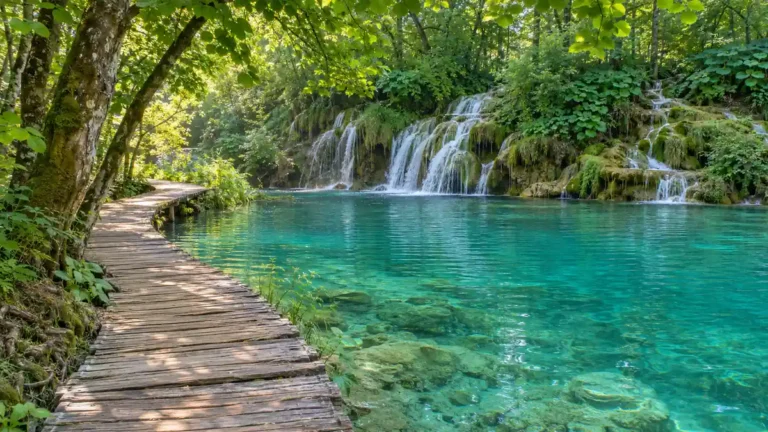
Klis Fortress and Trogir each fit a half day, Krka National Park takes a full day, and Plitvice Lakes is a very long day that works better on the way to Zagreb than as a return trip. Pick Krka if you only take one full day out by land.
| Trip | Type | How long as a day | Best for |
|---|---|---|---|
| Klis Fortress | Hilltop fortress | Half day | The view back over Split |
| Salona (Solin) | Roman ruins | Half day, short | Palace fans who want more Roman Dalmatia |
| Trogir | Walled island town | Half day | A second old town, smaller and quieter |
| Omiš and the Cetina canyon | River and canyon | Half day | Rafting or a gentle boat ride inland |
| Krka National Park | Waterfalls | Full day | The one big nature day |
| Plitvice Lakes | Lakes and waterfalls | Long day | Travelers heading on towards Zagreb |
| Mostar | Other country | Long day | Adding Bosnia and Herzegovina to the trip |
Klis Fortress stands on a rock ridge above the pass behind Split, and its ramparts give the widest view of the city, the islands and the coast in one frame. Entry is ticketed. In Solin, the ruins of the nearby Roman city of Salona pair easily with Klis on the same morning. Trogir packs the Cathedral of St Lawrence and Kamerlengo Fortress into a small island town 6 km from the airport, which makes it an easy first or last stop of a trip.
Omiš sits where the Cetina river leaves its canyon for the sea; rafting runs on the river, and you can book a canyon boat ride if you want the gorge without the paddling.
Krka is the full day most visitors pick, built around the cascades of Skradinski buk. Entry to both Krka and Plitvice is ticketed, and in summer the parks cap visitor numbers, so reserve a Krka day or your own entry before you go. Plitvice is the bigger park and the longer day; it suits a route north better than a return to Split.
Mostar, in Bosnia and Herzegovina, crosses an external border and needs a passport. Check the entry rules that apply to your passport before booking.
Tours and activities
Book skip-the-line tickets, day trips and local tours with free cancellation on most activities.
You can also browse everything on getyourguide.com.
Tripstou may earn a commission if you book through this link, at no extra cost to you.
Boat Trips From Split: Blue Lagoon, Hvar, Brač and the Blue Cave
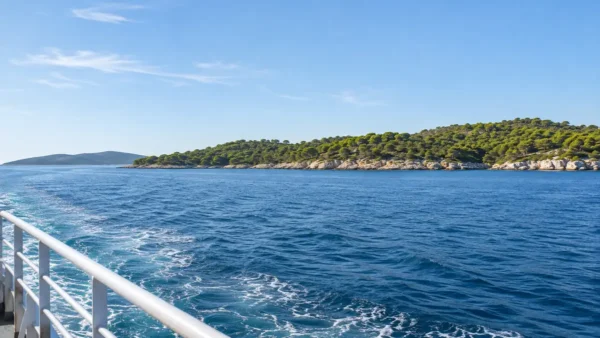
For a first boat day, choose between the Blue Lagoon, a short trip built around swimming, and Hvar or Brač, which give you a real island day. The Blue Cave at Biševo is the long option, and the weather decides whether you get in.
The Blue Lagoon is a shallow, turquoise channel between Drvenik Veli and the islet of Budikovac, sold in Split simply as “Blue Lagoon” trips. Most of the day is swimming and snorkelling; book a small-group speedboat for a quieter version of it.
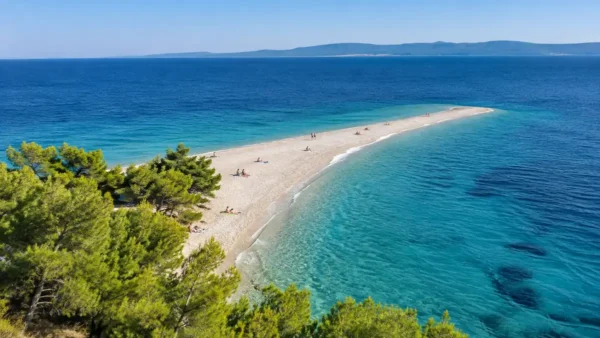
Brač is the closest big island. Its draw is Bol and the Zlatni Rat beach, a long tongue of pebbles reaching into the sea.
Hvar combines a lively harbour town with a lavender-growing interior, and a day there covers both if you keep the town short.
Vis and the Blue Cave make the longest day. The cave on Biševo is reached by small boat, and swell closes its entrance, so a trip can run without the cave. The ferry and catamaran routes, timetables and tickets for doing the islands on your own are in our Croatia island-hopping guide.
How Many Days Split Needs, and Where to Sleep Them
Two to three days cover Split as a city; add a day for each day trip you want. Base yourself inside or beside the palace, unless the beach comes first.
How many days do you need in Split?
Split needs two to three days on its own, more if you use it as a base. One day covers the palace, the bell tower and an evening on the Riva. Two days add Marjan Hill in the morning and an afternoon at Kašjuni or Bačvice. Three days or more turn Split into a base: Krka on one day, Trogir or Klis on a half day, one boat day to the Blue Lagoon or an island.
Season and budget shape that count as much as the sights do; when to go and what the country costs are covered in our Croatia travel guide.
Which area of Split should you stay in?
Stay in the Old Town, inside or just outside the palace, if sightseeing is the priority. Every sight is at your door and the bus station and ferry port are a short walk away, at the cost of summer noise and the city’s highest rates. Palace Judita Heritage Hotel, Cornaro Hotel and Plaza Marchi Old Town are all in the old centre.
Veli Varoš is the quieter choice that stays central, with Marjan behind you and the Riva below. Bačvice and Firule suit a beach-and-nightlife trip, a short walk east of the palace. Žnjan is the family pick: more space and a long beach, further from the old town.
Getting Into Split From the Airport and the Ferry Port
The Platanus shuttle is the direct option from Split Airport: it runs without stops to the main bus station, which is about five minutes’ walk from the Old Town and right next to the ferry port. Arrive by ferry and you are already there.
- Where the airport is: in Kaštela, 20 km from Split and 6 km from Trogir.
- Platanus shuttle: the official airport shuttle, boarding at Parking Zone P1 outside arrivals. It leaves about 30 minutes after flights land, from the first flight to the last, and the ride takes about 30 minutes. The operator lists EUR 10 one way and EUR 15 return.
- Public bus: Promet Split public buses to Split and to Trogir stop at the airport; tickets are sold through the Promet Split app or on board.
- Leaving by road in summer: traffic towards the airport is heavy, and the airport advises allowing 1.5 hours.
- Bus station, train station and ferry port: side by side on the harbour, so onward buses and boats start from the same spot.
Intercity buses, car hire and tolls are covered in our guide to getting around Croatia by bus, car and ferry.
Train and bus tickets
Compare routes, schedules and prices across rail and bus operators in one search, with mobile tickets on your phone.
New to Omio? Code NEW10 takes 10% off your first booking — or APPNEW10 if you book inside the Omio app. Both apply to bookings up to €80.
Search routes and compare prices on Omio →
Tripstou may earn a commission if you book through this link, at no extra cost to you.
Split or Dubrovnik: Which Deserves More of Your Nights?
Split deserves more nights if the islands are your goal. It is a lived-in city, the main ferry hub of the coast and a cheaper base for island and Krka days; Dubrovnik is the walled showpiece, best given a shorter, focused stay.
Split’s advantage is that people live inside its monument: the palace is a neighbourhood, not a museum, and the city keeps working after the day-trippers leave. Its harbour puts Brač, Hvar and Vis within a day’s reach, and its land side opens Krka, Trogir and Klis.
Dubrovnik trades that range for one extraordinary walled old town. What to do there, and how long it needs, is in our Dubrovnik guide.
How We Chose and Checked
This page is a curated pick of what to do in and from Split, grouped by kind of experience, with short notes on arrival and where to base yourself. It is not a full city guide, a day-by-day itinerary or a ferry and island-hopping guide.
Written with AI assistance, these picks were then gone over by Alex Perrut, working in tourism since 2015, for the Tripstou editorial team, with the airport details checked against the sources below. Our editorial process sets out how.
Official sources consulted: Split Airport, Platanus airport shuttle, Tourist Board of Split, Croatian National Tourist Board.
Did this guide save you time or money? Tripstou is independent and reader-funded — if you'd like to give something back, you can support the site with a crypto contribution of any size.